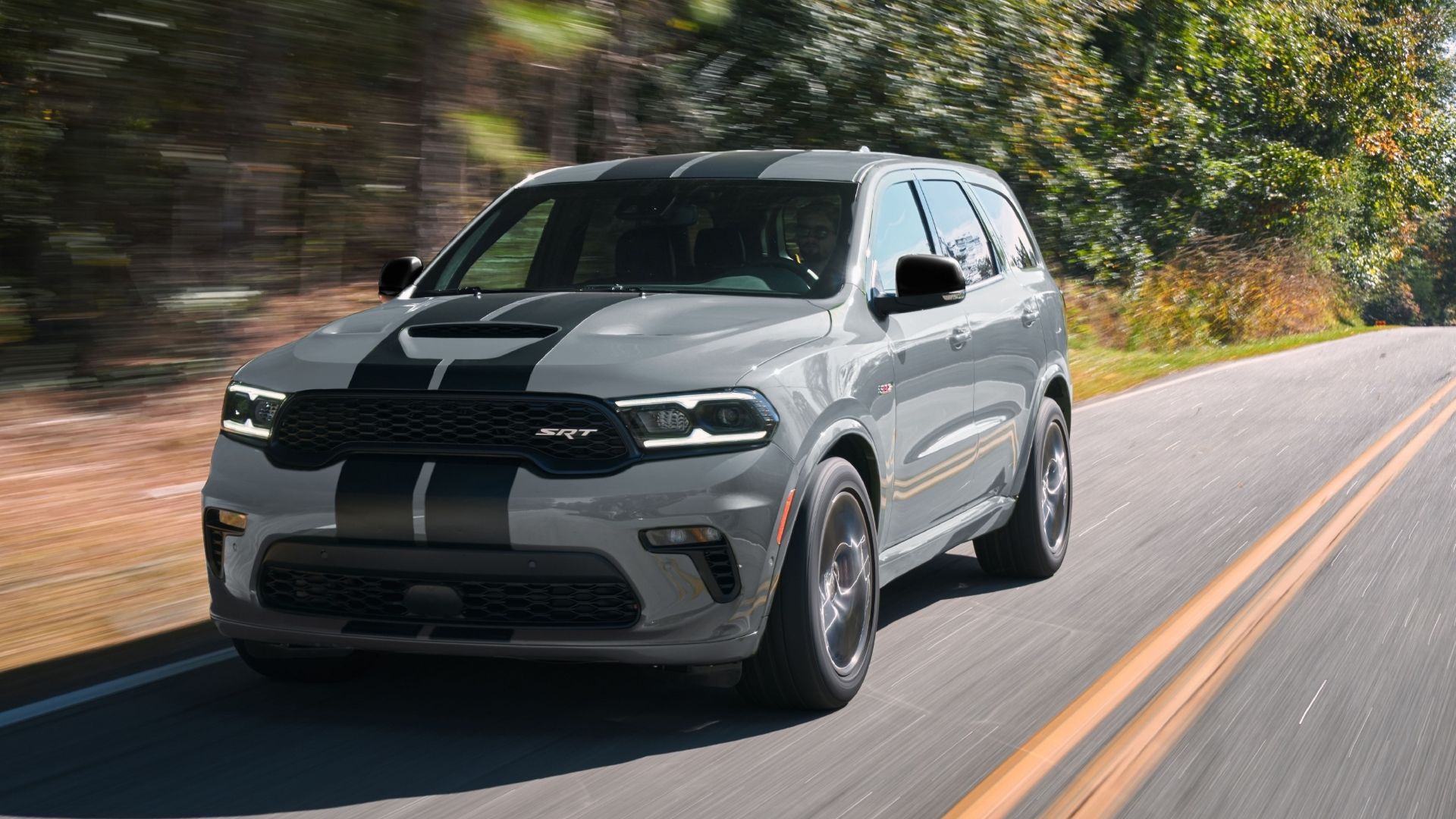
Understanding Dodge Durango Top Speed: Performance Specifications and Real-World Capabilities
The top speed of the Dodge Durango varies significantly by engine configuration, ranging from approximately 118 mph for base V6 models to an electronically limited 180 mph for the high-performance SRT Hellcat. These figures are determi...
The top speed of the Dodge Durango varies significantly by engine configuration, ranging from approximately 118 mph for base V6 models to an electronically limited 180 mph for the high-performance SRT Hellcat. These figures are determined by factory engine output, aerodynamic drag coefficients, and integrated electronic speed limiters designed to ensure tire safety and powertrain longevity.
Contents
Evolution of Durango Performance Engineering
The Dodge Durango has transitioned from a traditional truck-based SUV to a performance-oriented unibody crossover over its lifespan. While the vehicle is marketed primarily for its utility and towing capacity, the inclusion of the HEMI V8 engine family and the supercharged 6.2L powerplant has pushed the Durango into the category of high-performance SUVs. Understanding the top speed requires looking at the powertrain hardware.
Modern Durango models utilize electronic governors that cap the maximum velocity. This is not necessarily because the engines lack the power to push the vehicle faster, but because the suspension geometry, braking capability, and, most importantly, the factory-rated speed index of the original equipment manufacturer (OEM) tires are matched to specific velocity thresholds.
Breakdown of Performance by Engine Trim
The velocity potential of a Durango is inextricably linked to the specific engine installed at the factory. Dodge categorizes these performance tiers clearly, and the top speed is a function of the horsepower-to-weight ratio and the final drive gear ratio.
The 3.6L Pentastar V6
The standard engine across many trim levels is the 3.6-liter Pentastar V6. This engine provides balanced fuel economy and sufficient power for daily driving. Because these vehicles are typically equipped with all-season tires designed for longevity rather than sustained high-speed track use, the top speed is generally governed to 118 mph.
The 5.7L HEMI V8
Moving to the 5.7-liter HEMI V8 introduces a higher output and, consequently, a higher speed threshold. These vehicles are engineered to handle more aggressive driving inputs and are often equipped with tires that carry higher speed ratings. Owners can expect these models to reach speeds of approximately 130 to 135 mph before the electronic speed limiter engages.
The 6.4L HEMI (SRT 392)
The SRT 392 represents the naturally aspirated peak of the Durango lineup. With significant suspension upgrades, larger Brembo braking systems, and performance-oriented rubber, the SRT 392 pushes the top speed into the 155–160 mph range. These vehicles are designed for enthusiast driving and track days, where high-speed stability is a design priority.
The 6.2L Supercharged HEMI (SRT Hellcat)
The pinnacle of the Durango lineup is the SRT Hellcat. Featuring a supercharged 6.2-liter V8, this model is factory-rated with a top speed of 180 mph. Achieving this speed requires specific atmospheric conditions, a closed-course environment, and, crucially, tires that are verified to handle such rotational forces.
Comparative Performance Matrix
| Durango Trim / Engine | Est. Top Speed (mph) | Primary Intended Use |
|---|---|---|
| 3.6L Pentastar V6 | 118 | Daily commuting, family transport |
| 5.7L HEMI V8 | 130–135 | Towing, highway passing performance |
| 6.4L SRT 392 | 155–160 | High-performance driving, track capability |
| 6.2L Supercharged Hellcat | 180 | Maximum output, track-oriented performance |
Critical Factors Influencing Maximum Velocity
Beyond the engine's raw output, several physical and technical constraints dictate whether a Durango can reach or maintain its stated top speed.
Aerodynamic Drag
The Durango is a large, frontal-area-heavy SUV. As velocity increases, aerodynamic drag increases exponentially. To reach high speeds, the vehicle must overcome this air resistance. Modifications such as lift kits, roof racks, or oversized non-factory tires significantly increase drag and can prevent the vehicle from reaching its factory top speed.
Electronic Speed Limiters
Dodge programs the engine control module (ECM) to restrict throttle input or fuel delivery once a set speed is reached. This is a safety feature. Altering these limits through aftermarket tuners can theoretically allow higher speeds, but doing so often voids the powertrain warranty and may exceed the safety tolerances of the vehicle’s cooling system and driveline components.
Tire Speed Ratings
Every tire is stamped with a speed rating (e.g., H, V, W, Y). Driving a vehicle beyond the speed rating of its tires is a severe safety hazard. The rubber compounds and internal structures of tires rated for 118 mph are fundamentally different from those rated for 180 mph. Attempting high speeds on incorrect tires risks catastrophic tread separation.
Operational Safety and Legal Considerations
Driving any vehicle at its top speed is an activity that should be reserved exclusively for closed-course environments or sanctioned race tracks. Public roads are not designed, banked, or maintained for the speeds that high-performance SUVs like the Durango are capable of reaching.
- Braking Distance: While the SRT models feature high-performance braking systems, the sheer mass of the Durango means that kinetic energy at high speeds is immense. Stopping distances increase significantly at higher velocities.
- Cooling Systems: Sustained high-speed operation generates significant heat in the engine oil, transmission fluid, and differential fluid. If these temperatures exceed design parameters, the vehicle may enter "limp mode," where power is intentionally cut to prevent permanent mechanical failure.
- Liability: Modifying a vehicle to exceed its factory-governed top speed may have insurance implications. In the event of an accident, evidence of performance modifications that deviate from manufacturer specifications can lead to denied claims or legal liability issues.
Frequently Asked Questions
Can I increase the top speed of my Durango with a chip or tuner? While some aftermarket tuners claim to remove or raise the electronic speed limiter, this is not recommended. It can void your factory warranty and may cause mechanical stress that the cooling and braking systems were not designed to accommodate.
Does tire pressure affect top speed? Yes. Tires must be inflated to the manufacturer’s recommended pressure to maintain their structural integrity at high speeds. Under-inflated tires generate excessive heat, which, when combined with high-speed rotational forces, can lead to tire failure.
Why is my Durango's top speed lower than the specifications suggest? Variables such as elevation, ambient temperature, vehicle load, and the condition of your air filter can affect power output. Furthermore, if you are using tires with a lower speed rating than those provided from the factory, the vehicle’s ECU may automatically restrict performance.
Are there different top speeds for different model years of the Durango? While engine specifications for the 5.7L and 6.4L engines have remained relatively consistent in recent years, electronic safety protocols and tire specifications can change by model year. Always refer to your specific owner's manual for performance metrics related to your production date.
Final Recommendation
The Durango is a versatile vehicle, but its performance capabilities are tiered by design. If you intend to operate your vehicle at high speeds, ensure that your tires are correctly rated for those velocities and that all mechanical systems—particularly cooling and braking—are maintained according to the factory service schedule. For most drivers, the advertised top speed serves as a testament to the powertrain's capability rather than a performance target for public roads. Always prioritize safety and adhere to local traffic laws when operating your vehicle.
Image Gallery