Why the Dodgers Pitching Staff Costs So Much
The Los Angeles Dodgers’ pitching staff costs so much due to a combination of unprecedented free-agent mega-contracts, strategic market acquisitions, deferred payment structures, and heavily funded pitching depth designed to mitigate h...
The Los Angeles Dodgers’ pitching staff costs so much due to a combination of unprecedented free-agent mega-contracts, strategic market acquisitions, deferred payment structures, and heavily funded pitching depth designed to mitigate high injury rates. By leveraging revenue from their market size, Guggenheim Baseball Management aggressive contract structuring, and heavy investment in top-tier starting pitching and elite relief arms, the Dodgers have committed historic financial resources to build an elite, resilient pitching rotation and bullpen.
Contents
The Financial Blueprint Behind the Dodgers' Pitching Roster
The Los Angeles Dodgers operate with a distinct financial strategy that sets them apart from most Major League Baseball (MLB) franchises. Rather than relying solely on home-grown talent or short-term free-agent contracts, the Dodgers’ front office, led by President of Baseball Operations Andrew Friedman, has aggressively targeted elite pitching talent through long-term, high-value commitments. Starting pitching is widely recognized across professional baseball as the most volatile, injury-prone asset class in sports. Despite this risk, the Dodgers treat elite pitching as the primary foundation of modern postseason success.
To secure top-tier starting arms, the franchise has shown a willingness to set market records. Acquisitions such as Japanese star Yoshinobu Yamamoto (12 years, $325 million) and extensions like Tyler Glasnow (5 years, $136.5 million) illustrate an organizational philosophy: to secure rare, premier pitching talent, a team must pay top-of-the-market rates and offer maximum long-term security.
| DODGERS PITCHING CAPITAL ALLOCATION |
|---|
| 1. Top-of-Rotation Mega-Contracts (Yamamoto, Glasnow, Ohtani) |
| 2. Deferral-Heavy Financial Engineering (NPV Tax Optimization) |
| 3. Multi-Layer Rotation & Bullpen Depth (Injury Mitigation) |
| 4. International Capital Outlays (NPB Posting Fees & Scouting) |
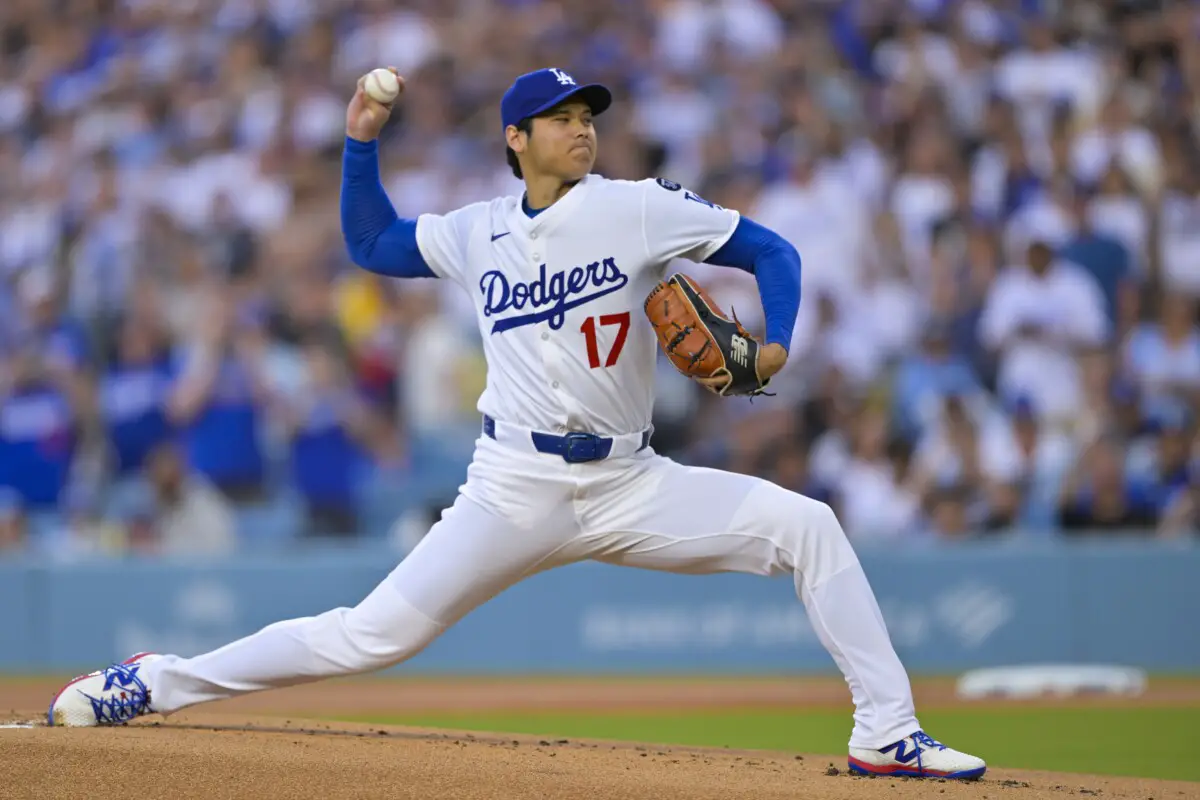
Furthermore, multi-positional superstars like Shohei Ohtani represent unprecedented investments that blur traditional positional spending. Ohtani’s record-setting 10-year, $700 million contract reflects both elite offensive production and top-of-the-rotation pitching capacity. When accounting for the pitching component of Ohtani's salary alongside committed starter contracts and high-end bullpen pieces, the total capital committed to the Dodgers' pitching staff exceeds that of entire franchise payrolls across MLB.
Deferred Money and Competitive Balance Tax (CBT) Optimization
A core reason the Dodgers can maintain such a massive, expensive pitching roster without completely crippling their operational agility is their sophisticated deployment of deferred compensation. Under MLB’s Collective Bargaining Agreement (CBA), teams face penalties when their luxury tax payroll exceeds set limits, known as the Competitive Balance Tax (CBT) thresholds.
- UN-DEFERRED CASH OUTFLOW
- Year 1-10: $70M/yr Cash OUT
- DODGERS DEFERRED STRUCTURE (CBT Math)
- Year 1-10: $2M Cash + Present Value Calculation: ~$46M CBT Hit
- Year 11-20: $68M Deferral Cash Paid Out (Zero CBT Impact in future years)
Deferred payments permit teams to structure contracts so that a significant portion of the cash salary is paid out years—or even decades—after the contract term ends. Under CBA accounting rules, the tax hit of a deferred contract is calculated based on its Net Present Value (NPV) rather than its nominal face value:
- Discounted Annual Hit: When a player defers tens of millions of dollars without interest, the future value of that money is discounted using the Federal Reserve's Prime Rate rules specified in the CBA.
- Payroll Flexibility: Deferrals lower the team’s annual CBT luxury tax calculation compared to paying cash up front.
- Capital Efficiency: Deferred capital allows the front office to reallocate current cash flow to acquire immediate supporting depth, such as high-leverage relievers and secondary starters.
The most famous example is Shohei Ohtani's contract, which defers $680 million of the $700 million total value until after the 10-year playing window expires. This structure reduces his annual CBT hit to roughly $46 million per year instead of the $70 million average face value. By applying similar deferred or heavily structured terms to other deals, the Dodgers maximize the talent on their active roster while strategically managing their luxury tax surcharge tiers.
Major Dodgers Pitching Investments Breakdown
The table below outlines the primary commitments, payroll valuations, and strategic roles of key pitching assets within the Dodgers organization:
| Pitcher | Contract Structure | Approx. Average Annual Value (AAV) / CBT Impact | Key Terms & Deferrals | Strategic Role / Pitching Profile |
|---|---|---|---|---|
| Yoshinobu Yamamoto | 12 Years / $325 Million | ~$27.08 Million | $50.6M posting fee; opt-outs; traditional structure | Ace starter; long-term durability anchor |
| Shohei Ohtani | 10 Years / $700 Million | ~$46.06 Million (CBT NPV) | $680M deferred; $2M annual base salary during contract | Dual-threat starter & designated hitter |
| Tyler Glasnow | 5 Years / $136.5 Million | ~$27.3 Million | Extension tied to trade; conditional team options | High-velocity front-line starter |
| High-Leverage Relievers | Short-Term / Multi-Year | $7M – $15M per pitcher | Variable incentives; high AAV short-duration contracts | Late-inning shutdown capability & depth |
| Veteran Pitching Depth | 1–2 Year Prove-It Deals | $5M – $13M per pitcher | Performance bonuses; buyout options | Rotation stability & injury replacement coverage |
The High Cost of Pitching Depth and Risk Mitigation
In modern professional baseball, pitching injuries—specifically Ulnar Collateral Ligament (UCL) tears requiring Tommy John surgery or flexor tendon repairs—occur at historic rates due to increased pitch velocity and maximum spin rates. Traditional MLB front offices often construct rotations with five primary starters and minimal high-tier backup options, leaving them vulnerable when injuries occur.
The Dodgers adopt an opposing operational philosophy: over-indexing on pitching depth. Rather than planning for five starting pitchers, Los Angeles builds a roster capable of fielding seven to nine starter-quality pitchers over the course of a 162-game regular season.
- TRADITIONAL ROTATION
- Starter 1 (Elite)
- Starter 2 (Solid)
- Starter 3 (Solid)
- Starter 4 (Average)
- Starter 5 (Average)
- Backups: Triple-A fringe
- DODGERS DEPTH ROTATION
- Starter 1 (Elite)
- Starter 2 (Elite)
- Starter 3 (Front-line)
- Starter 4 (Front-line)
- Starter 5 (High-End)
- Starter 6 (High-End)
- Starter 7 (Pro-proven)
- Starter 8 (Pro-proven)
This strategy carries an extreme price tag for several reasons:
- Paying Starters to Wait or Rest: The Dodgers frequently utilize six-man rotations, extended rest schedules, and short stints on the Injured List (IL) to manage workload. Maintaining starter-caliber arms who are resting or working through recovery requires carrying multiple mid-to-high-tier salaries simultaneously.
- Premium Reliever Market: Bullpen volatility forces the team to invest heavily in proven relief arms. Instead of relying purely on unproven minor-league call-ups, the team spending includes established setup men and closers commanded on top-tier short-term contracts.
- Redundant Rotation Insurance: When top starters experience expected downtime, high-priced veteran depth steps directly into rotation spots without dropping the team's winning percentage.
By funding a deep rotation capable of absorbing 200+ missed starter games a year without falling out of contention, the overall cost of the pitching staff inflates dramatically compared to league averages.
International Posting Fees and Total Capital Outlay
When evaluating the cost of the Dodgers' pitching staff, focusing exclusively on player base salaries obscures significant auxiliary outlays. Signing top international talent—particularly from Japan's Nippon Professional Baseball (NPB)—requires massive capital expenditures before a player ever throws an official pitch in MLB.
For example, when Los Angeles signed Yoshinobu Yamamoto away from the Orix Buffaloes, MLB’s international posting rules required the Dodgers to pay a direct posting fee based on the total value of the contract.
$$\text{Posting Fee} = (15% \times \text{First } $25\text{M}) + (12.5% \times \text{Next } $25\text{M}) + (10% \times \text{Amount Over } $50\text{M})$$
On Yamamoto's $325 million contract, the non-refundable posting fee paid directly to Orix totaled $50.625 million. This fee does not count directly against the team's luxury tax payroll, but it represents raw cash expenditure that dramatically increases the real-world acquisition cost of top international starters.
| YAMAMOTO TOTAL CAPITAL OUTLAY | Amount |
|---|---|
| Player Guaranteed Salary | $325,000,000 |
| NPB Posting Fee (Cash to Orix) | $50,625,000 |
| Total Capital Commitment | $375,625,000 |
In addition to posting fees, the Dodgers invest heavily in auxiliary pitching infrastructure:
- Biomechanics and Motion Tracking: State-of-the-art pitching labs, high-speed cameras, and force-plate technologies installed at their spring training facility and home stadium.
- Specialized Analytics Staff: Proprietary pitch design software and custom data models tailored to maximize spin efficiency and movement profiles.
- International Scouting Operations: Expanded presence throughout East Asia and Latin America to identify elite pitching prospects early.
These technological and operational investments ensure that high-priced pitchers maintain peak efficiency, but they also contribute to the overall capital outlay devoted to the pitching department.
Competitive Impact and Luxury Tax Penalties
Operating a payroll of this magnitude subjects the Dodgers to the maximum penalty brackets outlined in MLB's Competitive Balance Tax rules. Teams that exceed the CBT thresholds for multiple consecutive years face compounding cash surcharges and operational draft penalties:
- Tax Surcharges: Third-time (and beyond) consecutive tax spenders pay up to a 50% tax on dollars spent over the baseline threshold, with additional surcharges reaching up to 110% for spending that exceeds the highest tier ($60M+ over the base threshold).
- Draft Pick Demotions: Exceeding the top luxury tax threshold results in a team's highest draft pick being dropped 10 spots, directly impacting internal minor league talent replenishment.
- International Bonus Pool Reductions: High-spending teams face severe reductions in available cash for signing non-posted international amateur free agents.
Despite these financial and operational headwinds, the Dodgers’ ownership group—backed by Guggenheim Partners' institutional capital—views these spending surcharges as an acceptable cost of doing business. The franchise offsets these tax burdens through massive local media rights revenues (such as their television deal with SportsNet LA), record-setting ticket and sponsorship sales, international merchandise revenue generated by global stars, and consistent postseason appearances.
Frequently Asked Questions
Why does Shohei Ohtani's contract not break the Dodgers' luxury tax limits?
Shohei Ohtani's 10-year, $700 million contract defers $680 million until after the contract period ends (2034–2043). Under MLB’s Collective Bargaining Agreement, deferred money without interest is discounted to its Net Present Value (NPV). This drops his official Competitive Balance Tax (CBT) hit from $70 million per year to approximately $46 million per year, saving the team about $24 million annually in CBT payroll calculations.
What is an NPB posting fee, and how does it add to pitching costs?
An NPB posting fee is a mandatory release payment made by an MLB club to a Japanese Nippon Professional Baseball team when acquiring a player under contract in Japan. The fee is calculated as a percentage of the player's total MLB contract value. For instance, the Dodgers paid a $50.6 million cash fee to the Orix Buffaloes to sign Yoshinobu Yamamoto, adding substantial cash outlay beyond his $325 million salary.
How do pitching injuries make the Dodgers spend more money than other teams?
Because pitchers suffer elbow and shoulder injuries at high rates, the Dodgers invest in deep, starter-quality pitching rosters rather than relying on standard five-man rotations. By carrying 7 to 9 rotation-caliber starters and high-priced relievers simultaneously, Los Angeles maintains performance when key pitchers spend months on the Injured List, inflating overall staff cost.
Does the luxury tax stop the Dodgers from spending on pitchers?
No. While the Competitive Balance Tax imposes cash surcharges (up to 110% on upper spending tiers) and drops top draft picks by 10 spots, the Dodgers generate enough local television, sponsorship, ticket, and international revenue to absorb these financial penalties as standard operating expenses.
How does the Dodgers front office justify paying over $300 million for single starting pitchers?
The Dodgers view elite starting pitching as a mandatory requirement for winning championship series in the postseason. High-velocity starters with elite pitch design and high strikeout capabilities minimize ball-in-play randomness, making top-tier starting arms the single most valuable asset type on a postseason roster.
Strategic Summary and Next Considerations
The Dodgers' pitching staff costs so much because the organization approaches roster construction with an institutional capital strategy: spending premium cash on elite starting talent, absorbing massive international posting fees, utilizing complex contract deferrals to optimize CBT space, and double-funding rotational depth to handle pitching injuries.
To evaluate how payroll strategies impact overall MLB competitive balance, fans and sports business analysts should track:
- Annual CBT threshold adjustments outlined in the MLB Collective Bargaining Agreement.
- Deferred payment schedules and present-value calculations for high-profile free-agent contracts.
- Roster construction trends, such as six-man rotations and high-end bullpen funding, across major market franchises.
Image Gallery