The Evolution of Chuck E. Cheese: The Original Name and Brand History Revealed
The original name of Chuck E. Cheese was Chuck E. Cheese’s Pizza Time Theatre. Founded in 1977 by Atari co-founder Nolan Bushnell, the establishment was the first family restaurant to combine food, animated entertainment, and an indoor...
The original name of Chuck E. Cheese was Chuck E. Cheese’s Pizza Time Theatre. Founded in 1977 by Atari co-founder Nolan Bushnell, the establishment was the first family restaurant to combine food, animated entertainment, and an indoor arcade, fundamentally changing the landscape of the family entertainment center (FEC) industry.
Contents
The history of Chuck E. Cheese is not merely a story of a mascot change, but a complex narrative of corporate mergers, technological innovation, and a branding strategy that has spanned nearly half a century. As of 2026, the brand has largely transitioned away from its mechanical roots toward a digital-first entertainment model, yet the legacy of its original "Pizza Time Theatre" identity remains a cornerstone of American pop culture history.
The Genesis of Chuck E. Cheese’s Pizza Time Theatre
In the mid-1970s, Nolan Bushnell, the visionary behind Atari, sought a way to expand the reach of coin-operated video games. At the time, arcades were often seen as dark, adult-oriented spaces. Bushnell envisioned a family-friendly venue where parents could eat pizza while children played games, effectively creating a "distribution channel" for Atari’s hardware.
The San Jose Debut
The first location opened its doors on May 17, 1977, on Winchester Boulevard in San Jose, California. It was operating under the name Chuck E. Cheese’s Pizza Time Theatre. The concept was revolutionary: it featured a cast of life-sized animatronic characters that performed musical skits, a menu centered on pizza, and a massive floor dedicated to arcade games and token-operated amusements.
The "Rick Rat" Incident
One of the most famous pieces of "revealed" history regarding the old name involves the mascot itself. Before the brand was finalized as Chuck E. Cheese, the mascot was nearly named Rick Rat. Bushnell had purchased a costume he believed was a coyote for his animatronic show, but it turned out to be a rat.
Marketing consultants were understandably concerned that a rat-themed restaurant would fail due to the negative associations between rodents and food service. The name was eventually changed to Chuck E. Cheese to soften the image, though the character remained a rat for several decades before being officially redesigned as a mouse in the early 1990s.
The Full Name: Charles Entertainment Cheese
While "Pizza Time Theatre" was the commercial name of the business, the "revealed" full name of the mascot is Charles Entertainment Cheese. This middle name was confirmed by the company’s official social media accounts and marketing materials as part of a trivia campaign. The "Entertainment" middle name serves as a nod to the brand's primary mission: providing a theatrical experience rather than just a dining one.
The ShowBiz Pizza Place Rivalry and Merger
To understand the brand's "old names," one must navigate the era of the early 1980s, when a significant split occurred. Robert Brock, who was originally a franchisee for Pizza Time Theatre, broke away to form a competitor: ShowBiz Pizza Place.
The Rise of ShowBiz
ShowBiz Pizza Place utilized more advanced animatronics created by Creative Engineering, Inc., most notably the "Rock-afire Explosion" band. For several years, Chuck E. Cheese’s Pizza Time Theatre and ShowBiz Pizza Place were fierce rivals in the emerging family entertainment market.
The 1984 Bankruptcy and Merger
By 1984, the video game crash and rapid over-expansion led Chuck E. Cheese’s Pizza Time Theatre to file for Chapter 11 bankruptcy. In a surprising turn of corporate history, ShowBiz Pizza Place purchased the struggling Pizza Time Theatre, forming a new parent company: ShowBiz Pizza Time, Inc.
For a period in the 1980s, both brands co-existed under the same ownership. However, by the early 1990s, the company decided to unify all locations under a single brand. This led to "Concept Unification," where ShowBiz locations were converted into Chuck E. Cheese’s, and the Rock-afire Explosion characters were retrofitted into Chuck E. Cheese characters.
Historical Timeline of Names and Ownership
The brand has undergone several identity shifts to stay relevant to changing consumer demographics. The following table outlines the major transitions from the 1970s through the 2020s.
| Era | Brand Name | Key Mascot Identity | Significant Milestone |
|---|---|---|---|
| 1977–1984 | Chuck E. Cheese’s Pizza Time Theatre | "Rat" Chuck (Vest & Derby) | First location opens in San Jose; Atari connection. |
| 1980–1992 | ShowBiz Pizza Place | Billy Bob Brockali (Bear) | Major competitor; later merged with Pizza Time Theatre. |
| 1990–2012 | Chuck E. Cheese’s | "Cool Cat" Chuck (Skater/Mouse) | Concept Unification; removal of ShowBiz branding. |
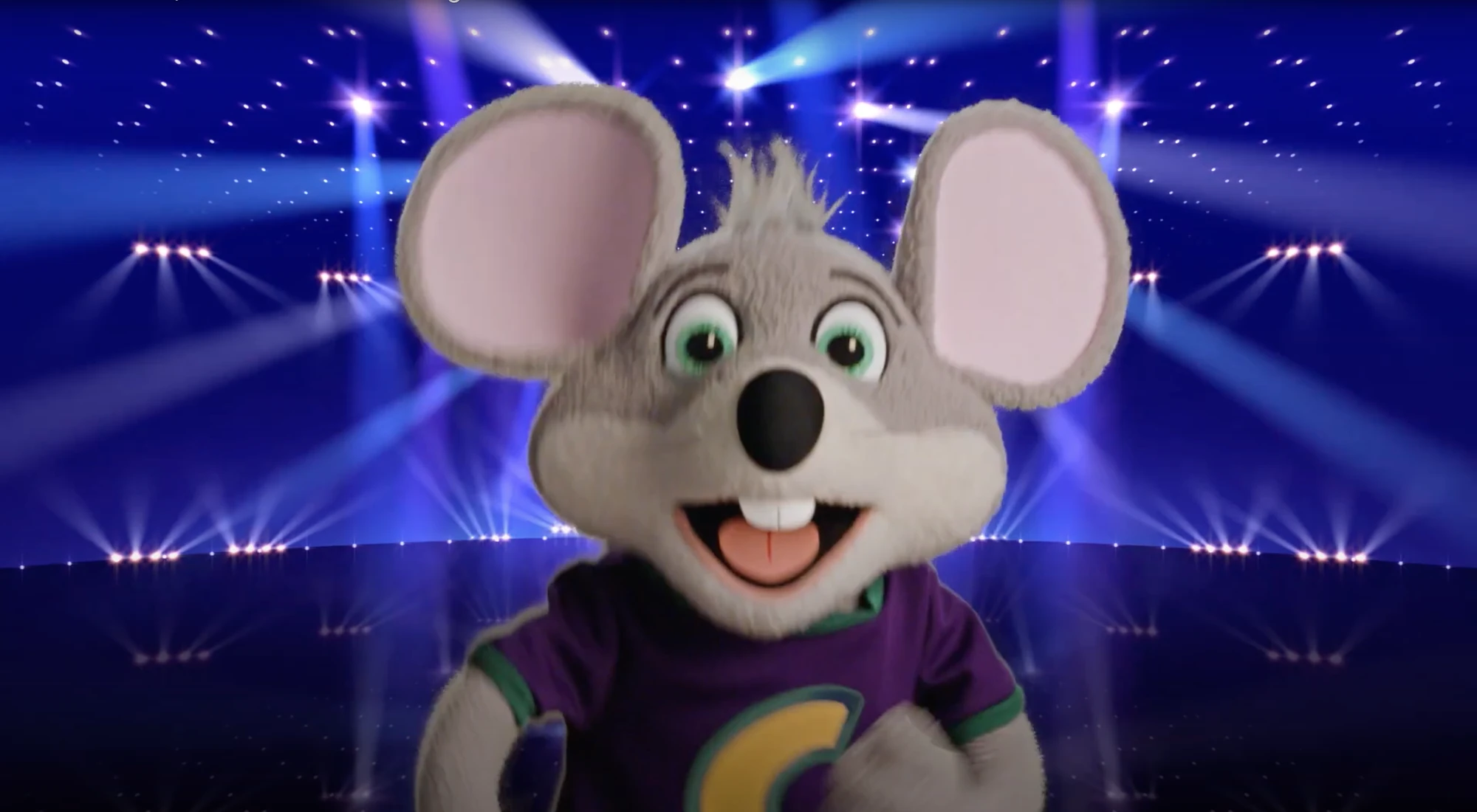
| 2012–2020 | Chuck E. Cheese’s | "Rockstar" Chuck (Modern CGI) | Voice actor change and transition to a "rockstar" persona. |
| 2020–2026 | Chuck E. Cheese | Digital/Dance Floor Chuck | Dropping the 's; phase-out of animatronics in most sites. |
The "Concept Unification" Era
The removal of the "Pizza Time Theatre" suffix coincided with a shift in the way the company presented its entertainment. During the late 1980s and early 1990s, the focus moved away from a "theatre" setting with balcony-style animatronics toward a more integrated "play and eat" environment.
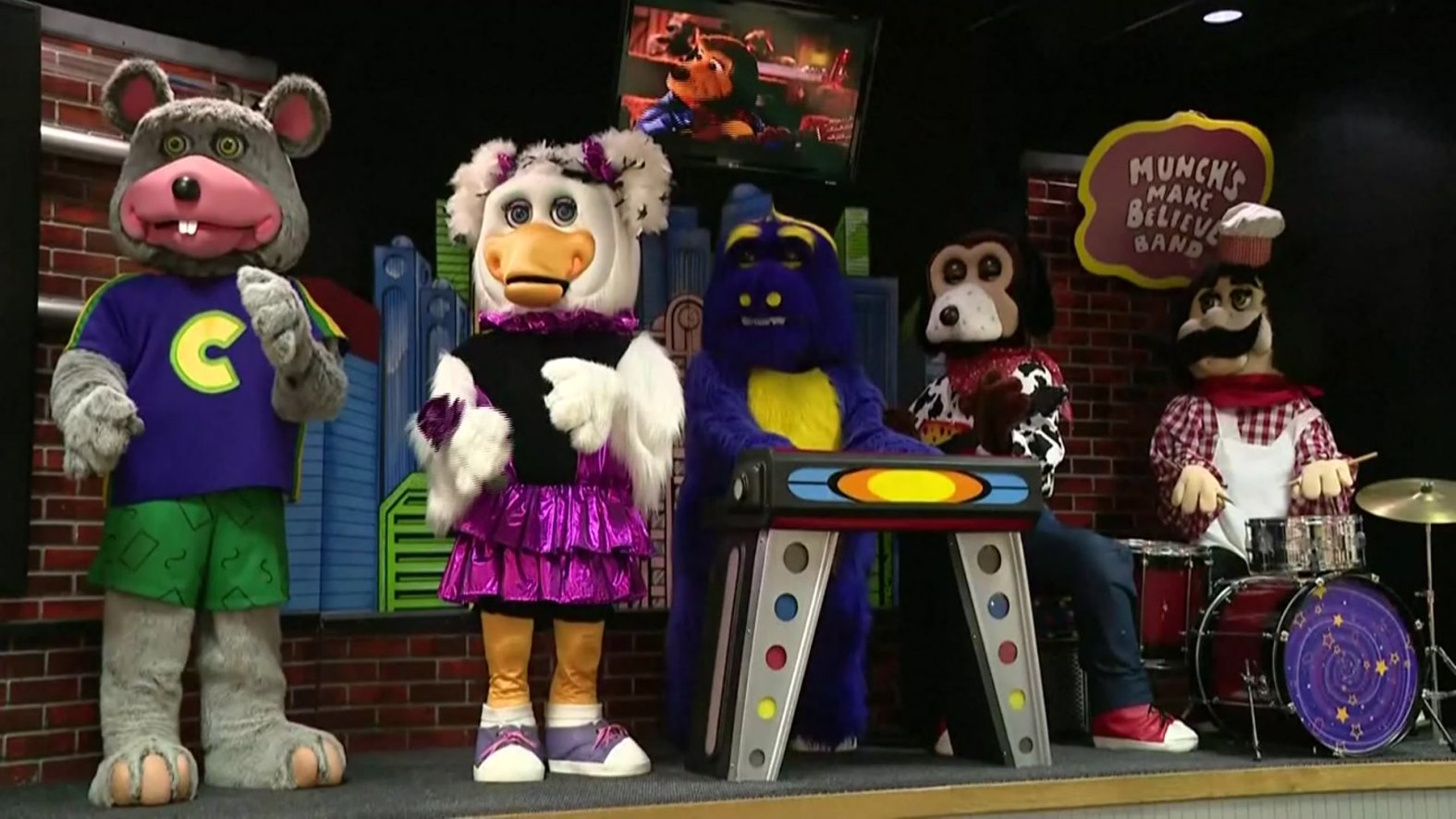
During Concept Unification, the animatronic stages were standardized. The "Cyberamic" characters, which were simpler and more durable than the complex ShowBiz counterparts, became the standard. This move was essential for reducing maintenance costs but remains a point of nostalgia for fans of the original, more elaborate theatrical shows.
Technical Evolution: From Animatronics to Digital Screens
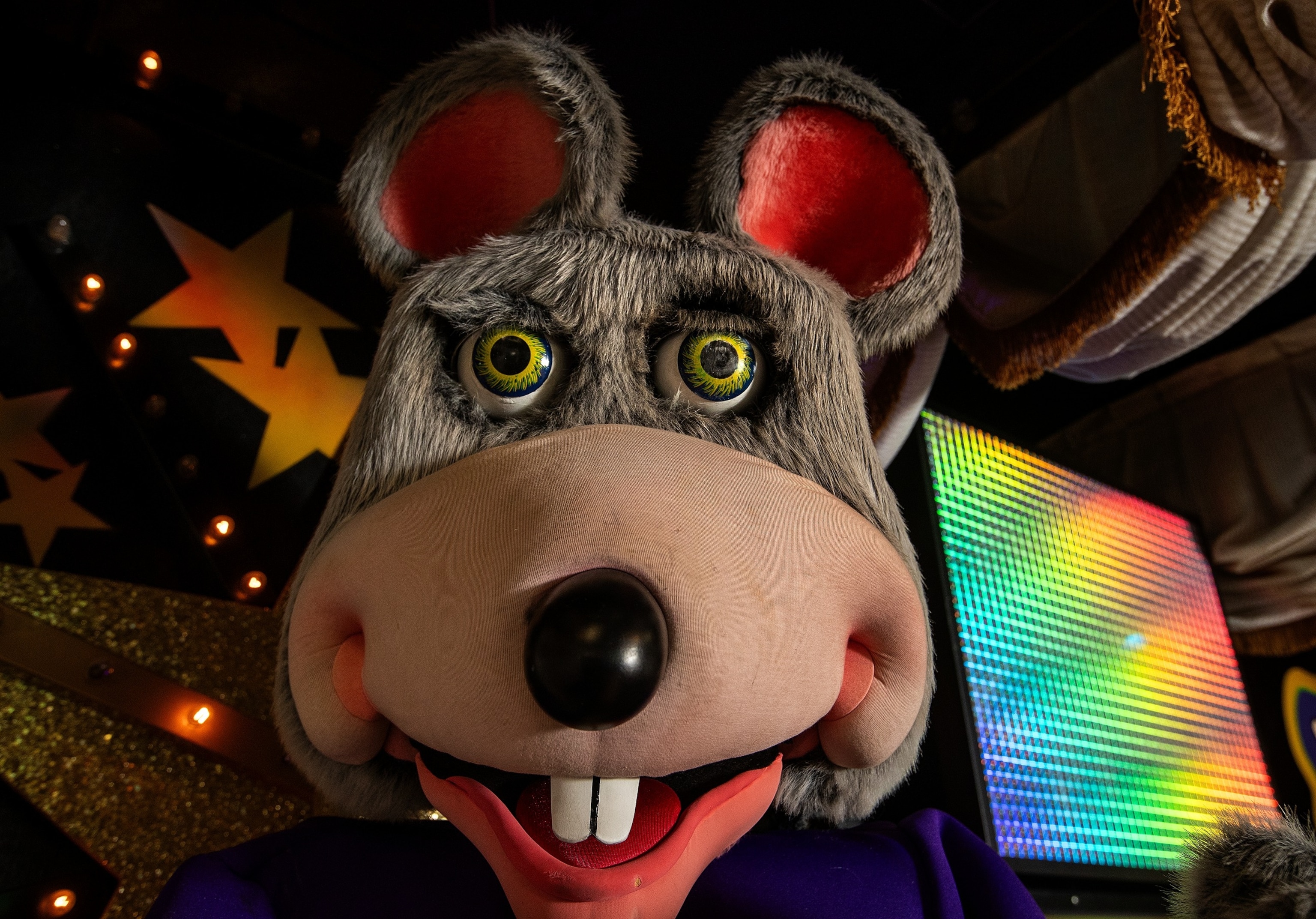
The "Pizza Time Theatre" name was literal—the entertainment was a scripted show. The original animatronics were controlled by 8-bit computers and utilized pneumatic (air-powered) movements. These early systems were prone to breakdown and required significant on-site technical expertise.
As of 2026, the "theatre" aspect of the name is almost entirely historical. In the current "2.0 Remodel" program, the company has replaced the iconic animatronic stages with:
- Large-format video walls: Displaying synchronized music videos and dance instructions.
- Active dance floors: LED floors that interact with children’s movements.
- Augmented Reality (AR): Using mobile devices to interact with the mascot character on-site.
While the "Pizza Time Theatre" name is gone, the core concept of "tainment" (entertainment + dining) that Bushnell pioneered remains the operational foundation of the company.
Frequently Asked Questions
Was Chuck E. Cheese originally a rat or a mouse?
He was originally designed and marketed as a rat. His early designs featured a long tail, a prominent snout, and a more "streetwise" New York persona. In 1993, the company officially rebranded the character as a mouse to make him more appealing and less associated with urban pests, coinciding with a broader refresh of the restaurant’s image.
Is "Charles Entertainment Cheese" the official name?
Yes. Although often cited as a meme or an internet discovery, the company has confirmed in various marketing campaigns that the mascot’s full name is Charles Entertainment Cheese. This was part of a brand expansion intended to give the character a more defined "backstory," which included him being an orphan who loved birthdays because he didn't know his own.
When did they stop using the name "Pizza Time Theatre"?
The company began phasing out the "Pizza Time Theatre" suffix following the merger with ShowBiz Pizza Place and the subsequent reorganization in the late 1980s. By 1990, the brand was almost exclusively referred to as "Chuck E. Cheese’s." The possessive "'s" was officially dropped from the logo in many marketing materials starting around 2017 to simplify the brand as "Chuck E. Cheese."
Does the original San Jose location still exist?
The original location on Winchester Boulevard closed long ago, but it is commemorated by fans and historians of the brand. There have been several "flagship" locations over the years, but most have been updated to the modern "2.0" design, which removes the historical animatronics and replaces them with digital interactive zones.
Why was the name "Chuck E. Cheese" chosen?
Nolan Bushnell chose the name because it was "friendly" and easy for children to remember. The "Chuck E." was a friendly-sounding nickname, and "Cheese" obviously linked the character to the primary food item served at the establishment.
Summary of Brand Identity
The revelation of the "old name"—Chuck E. Cheese’s Pizza Time Theatre—highlights the brand's origin as a tech-forward entertainment experiment. What began as a way for Atari to sell more video games evolved into a global franchise that has survived economic downturns, bankruptcies, and massive shifts in how families consume entertainment. Whether known by its 1977 theatrical title or its modern 2026 digital identity, the core mission of providing a dedicated space for "kids to be kids" has remained consistent for nearly 50 years.
Image Gallery