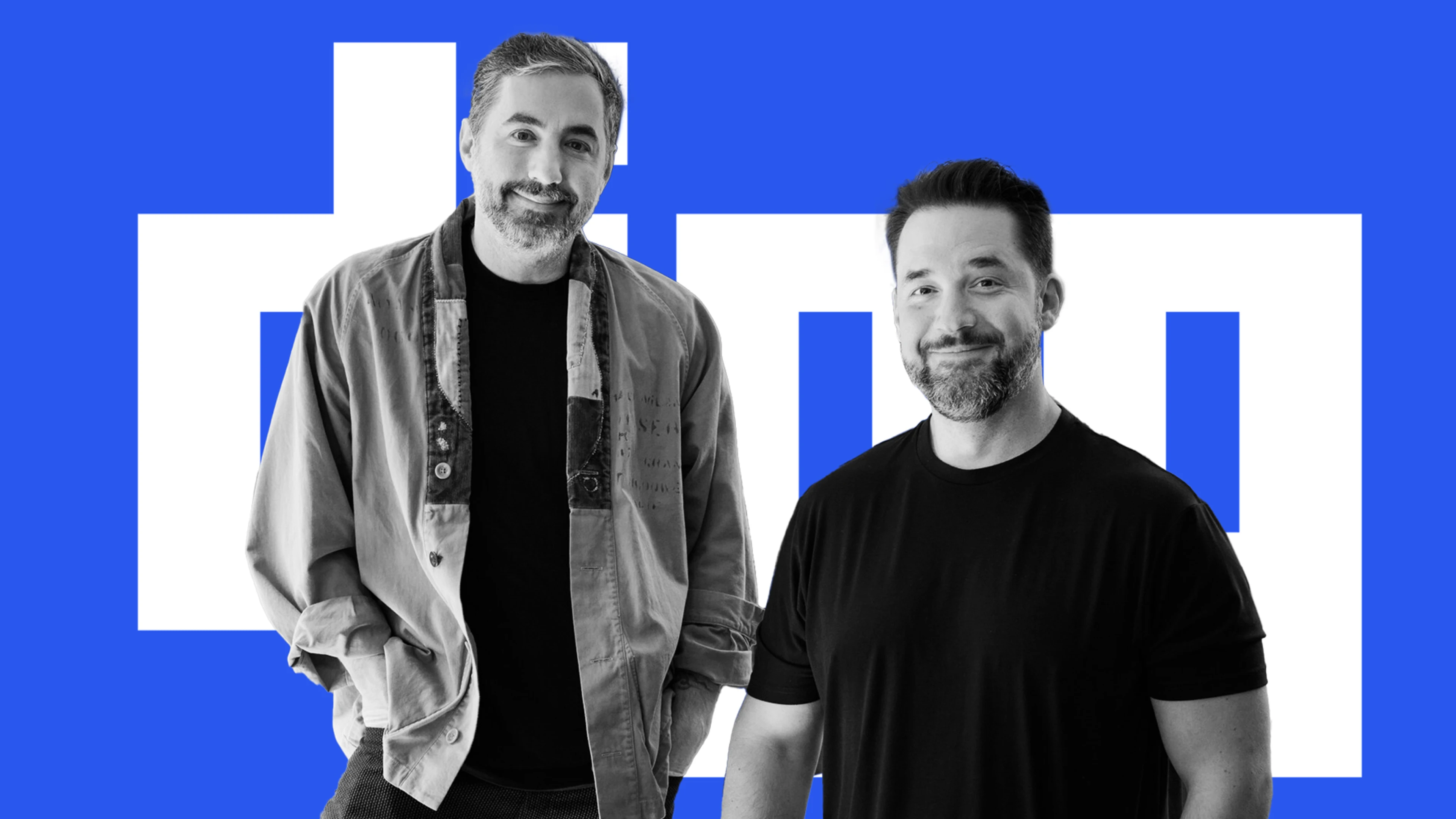
Should Kevin Rose Re-Acquire Digg? An Analysis of a Potential Tech Homecoming
Whether Kevin Rose should re-acquire Digg depends on his willingness to pivot the brand from a legacy news aggregator into a decentralized, human-centric discovery engine. While the brand carries immense nostalgic value and a recogniza...
Whether Kevin Rose should re-acquire Digg depends on his willingness to pivot the brand from a legacy news aggregator into a decentralized, human-centric discovery engine. While the brand carries immense nostalgic value and a recognizable identity, a successful re-acquisition would require overcoming significant technical debt and competing against established giants like Reddit and modern AI-driven discovery platforms.
Contents
The Historical Context of Digg and the Kevin Rose Legacy
To understand the feasibility of a 2026 re-acquisition, one must first look at the trajectory of Digg from its 2004 inception to its eventual fragmentation. Kevin Rose, along with Jay Adelson, Owen Byrne, and Ron Gorodetzky, built Digg as a revolutionary experiment in "democratic news." For several years, the "Digg Effect"—the massive surge of traffic a website received after being featured on the front page—was the most powerful force in the tech ecosystem.
At its peak in 2008, Digg was the undisputed king of social bookmarking. However, the 2010 launch of "v4" proved catastrophic. The update alienated the core user base by prioritizing publisher content over user-submitted links and removing features like the "bury" button. This led to a mass exodus, primarily to Reddit. By 2012, the remnants of Digg were sold to Betaworks for approximately $500,000, a fraction of the $200 million valuation it once held.
In the years following, Digg changed hands multiple times, eventually landing with BuySellAds. By 2026, Digg operates largely as a curated editorial site, a far cry from the community-driven powerhouse of the mid-2000s. For Kevin Rose, re-acquiring the site would not just be a financial transaction; it would be an attempt to reclaim a legacy and solve the modern problem of information overload.
The Strategic Argument for Re-Acquisition
The most compelling reason for Kevin Rose to step back into the Digg arena involves the current state of the internet. In 2026, the digital landscape is saturated with AI-generated content, making "human-vetted" information more valuable than ever.
Brand Equity and "The New Curation"
Digg remains one of the few recognizable brands from the Web 2.0 era that hasn't been completely tarnished by data scandals or political polarization. For Rose, the brand serves as a "clean slate" with high name recognition. In an era where Google Search results are often cluttered with SEO-optimized junk, a return to a community-voted, human-curated homepage could serve as a vital filter.
Integration with Web3 and Decentralization
Throughout the early 2020s, Kevin Rose became a prominent figure in the Web3 space, most notably through his work with PROOF and the Moonbirds NFT collection. A re-acquired Digg could serve as the perfect playground for implementing decentralized governance. Instead of a centralized company controlling the algorithm, Rose could implement a tokenized voting system that rewards high-quality contributors and penalizes bad actors, effectively solving the "v4" problem of top-down control.
The Rise of Niche Communities
While Reddit has grown into a massive conglomerate, it has also become increasingly corporate and complex. There is a market gap for a streamlined, high-signal discovery tool. Rose has a proven track record of identifying what "power users" want. By stripping Digg back to its core mechanics—simple link submission and voting—while adding modern privacy features, he could capture the demographic that feels alienated by the "everything app" trajectory of modern social media platforms.
The Case Against: Why Returning Might Be a Mistake
Despite the romanticism of a founder's return, the business and technical hurdles are formidable. Re-acquiring an aging asset is often more difficult than building a new one from scratch.
The Ghost of Reddit and X
The primary obstacle is the competitive landscape. Reddit has successfully monopolized the "upvote/downvote" community model. Additionally, platforms like X (formerly Twitter) and Threads have integrated real-time news discovery into their ecosystems. For Rose to make Digg relevant again, he would need to offer a utility that these platforms lack, which is a difficult task when most users are already deeply entrenched in their current social habits.
Technical Debt and Operational Overhead
While the Digg brand is valuable, the underlying infrastructure is likely a patchwork of legacy code and modern CMS tools that may not align with a vision for a next-generation platform. A re-acquisition would necessitate a total rebuild. For an entrepreneur like Rose, who has spent the last several years focused on cutting-edge blockchain technology, the "plumbing" of a 20-year-old web property might be a distraction rather than an asset.
Reputational Risk
Kevin Rose’s career has been defined by innovation. Returning to an old project can sometimes be perceived as a lack of new ideas. If a "Digg v6" (or whichever version number would be current in 2026) were to fail, it could overshadow his recent successes in venture capital and the NFT space. The pressure to "fix" what went wrong in 2010 would be immense, potentially leading to over-engineering the product once again.
Comparative Landscape: Digg in 2008 vs. 2026
To understand what Rose would be buying, it is helpful to compare the platform's metrics and market position across two decades.
| Feature/Metric | Digg Peak (Circa 2008) | Digg Current Status (2026 Projection) |
|---|---|---|
| Primary Driver | User-submitted links | Editorial curation & AI-assisted feeds |
| Monetization | Display ads & Sponsored links | Native advertising & Affiliate revenue |
| User Base | Tech enthusiasts & Early adopters | General news readers & Nostalgia seekers |
| Core Value Prop | "Democratic News" | Curation as a service |
| Competitors | Slashdot, Delicious, Reddit | Reddit, X, Threads, AI Search Engines |
| Technical Stack | LAMP (Linux, Apache, MySQL, PHP) | Modern Cloud-native / API-first architecture |
Execution: What a Successful Re-Acquisition Would Look Like
If Rose were to move forward, the strategy would likely involve a "Back to Basics" approach combined with 2026 technology. This would not be a simple restoration of the 2008 site, but a modernization of its philosophy.
- Identity Verification: Using decentralized identity (DID) to ensure that "diggs" and "buries" are coming from real humans, not bot farms. This addresses the primary weakness of the original platform.
- Algorithm Transparency: Making the ranking algorithm open-source. One of the biggest complaints during the v4 era was the "black box" nature of what reached the front page.
- Micropayments for Creators: Implementing a system where high-quality link submitters or original content creators can receive small amounts of cryptocurrency or platform credits.
- The "Slow Web" Movement: Positioning Digg as a deliberate, thoughtful alternative to the "doom-scrolling" nature of modern feeds. Instead of infinite content, a "Top 20" daily list curated by the community could provide more value.
Financial and Legal Considerations
In 2026, the valuation of Digg would likely be based more on its domain authority and historical brand power than its current revenue. Kevin Rose, with his connections in the venture capital world (notably his history with Google Ventures and True Ventures), could easily assemble the capital for an acquisition.
However, the legal hurdles involve the current intellectual property (IP) holders. BuySellAds and any subsequent investors would likely seek a premium for the "nostalgia factor." Rose would need to weigh the cost of the acquisition against the cost of simply launching a new brand called something else. In the tech world, the "Digg" name is a double-edged sword: it brings instant traffic, but it also brings the baggage of a high-profile failure.
Frequently Asked Questions
Does Kevin Rose still have any ownership in Digg?
As of 2026, Kevin Rose does not hold a significant ownership stake in the company that owns Digg. He exited the company operationally in 2010 and the entity was sold in a series of transactions starting in 2012.
Is Digg still a popular website in 2026?
Digg maintains a steady but niche audience. It no longer competes for the top 50 most-visited sites globally, but it remains a respected source for curated long-form journalism and tech-adjacent news, though it lacks the community interactivity of its heyday.
Why did Digg fail originally?
The failure is widely attributed to the "v4" update in 2010. The update removed many community-centric features, introduced numerous technical bugs, and changed the interface in a way that favored large media publishers over individual users, leading to a massive loss of trust.
Could Digg be integrated with Moonbirds or PROOF?
Theoretically, yes. Kevin Rose could use the Digg platform as a distribution layer for his Web3 projects, allowing NFT holders to have weighted voting rights or access to exclusive "sub-diggs." However, this might alienate the general public who are not involved in the Web3 ecosystem.
Who currently owns Digg?
While ownership can shift, Digg was most recently held by BuySellAds, a company specializing in contextual advertising. They pivoted the site away from social news and toward editorial curation.
Final Recommendation
For Kevin Rose, re-acquiring Digg is a high-risk, high-reward move that only makes sense if he intends to use the brand as a vehicle for a broader technological shift, such as the decentralization of social media. If the goal is simply to "bring back the old Digg," the project is likely to fail due to the dominance of Reddit and the changed habits of 2026 internet users.
However, if Rose views Digg as a recognizable "shell" into which he can pour modern, bot-resistant, and transparent curation technology, it could mark one of the greatest comebacks in tech history. The recommended next action for Rose would be a "soft launch" of a similar protocol or a smaller community experiment to gauge if the appetite for human-vetted discovery is strong enough to support the re-launch of such a storied brand.
Image Gallery