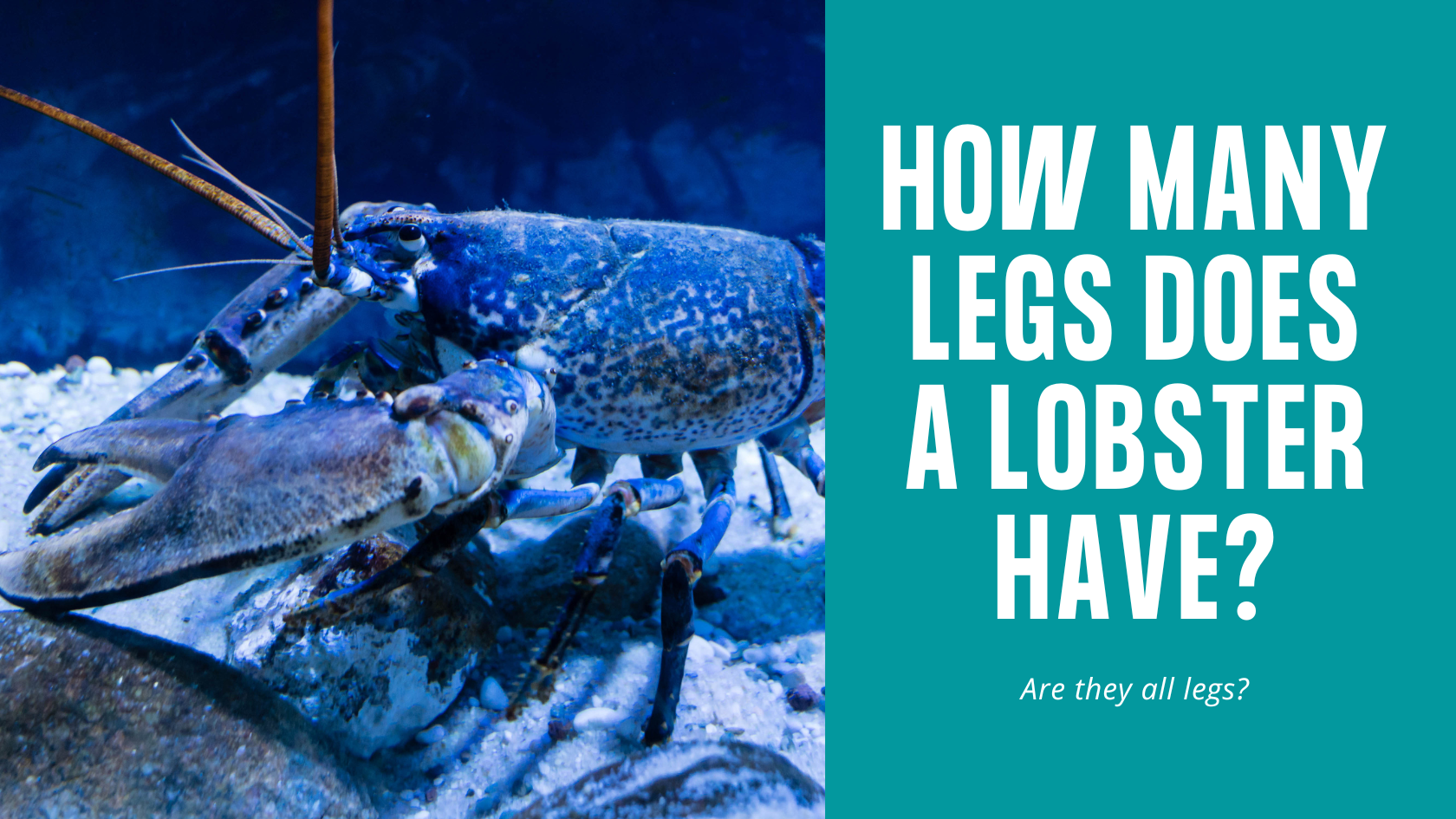
How Many Legs Does a Lobster Have? Anatomy, Function, and Swimmerets Explained
A lobster has 10 primary legs attached to its central body section, classifying it as a decapod crustacean. The front pair consists of large, prominent claws used for hunting and defense, while the remaining eight are walking legs. Und...
A lobster has 10 primary legs attached to its central body section, classifying it as a decapod crustacean. The front pair consists of large, prominent claws used for hunting and defense, while the remaining eight are walking legs. Underneath the tail, lobsters also possess ten smaller, paddle-like abdominal appendages known as swimmerets.
Contents
Decapod Taxonomy: Why Lobsters Have 10 Main Legs
In biological classification, lobsters belong to the order Decapoda, a Greek-derived name that translates directly to "ten-footed." This order encompasses a vast group of crustaceans, including crabs, shrimp, crayfish, and hermit crabs.
The body of a lobster is divided into two primary sections: the cephalothorax (the fused head and midsection, covered by a hard shell called the carapace) and the abdomen (commonly referred to as the tail). All ten primary legs are attached exclusively to the underside of the cephalothorax. In anatomical terminology, these ten thoracic appendages are classified as pereiopods.
[Cephalothorax / Carapace] --> 10 Thoracic Legs (Pereiopods: Claws + Walking Legs) [Abdomen / Tail] --> 10 Abdominal Appendages (Pleopods / Swimmerets)
While lobsters feature several other leg-like structures near their mouths and beneath their tails, marine biologists count only the ten thoracic pereiopods as true legs. This ten-legged structure has remained an evolutionary hallmark of decapod crustaceans for hundreds of millions of years, providing a balance of sensory probing, offensive capability, and physical stability on the ocean floor.
Anatomical Breakdown of the 10 Thoracic Legs
Although all ten legs originate from the thorax, they are far from uniform. Evolution has specialized these appendages into distinct functional pairs designed for feeding, defense, navigation, and tactile exploration.
Front of Lobster (Head) / \ Pair 1: [ Crusher Claw ] [ Cutter Claw ] (Chelipeds / Defense & Feeding) Pair 2: [ Small Pincer ] [ Small Pincer ] (Chelae / Grooming & Food Transfer) Pair 3: [ Small Pincer ] [ Small Pincer ] (Chelae / Probing Substrate) Pair 4: [ Walking Leg ] [ Walking Leg ] (Dactyl / Traction & Movement) Pair 5: [ Walking Leg ] [ Walking Leg ] (Dactyl / Pushing & Propulsion) \ / Rear of Cephalothorax
Pair 1: The Chelipeds (The Claws)
The most prominent pair of legs on clawed lobsters (such as the American lobster, Homarus americanus) is the chelipeds. These are heavy, muscular legs modified into formidable claws.
In most clawed species, these two claws are asymmetrical, serving completely different functions:
- The Crusher Claw: This larger, heavier claw features thick, rounded nodules that function like teeth or molars. It generates immense pressure, capable of cracking open the hard shells of mollusks, clams, sea urchins, and crabs.
- The Cutter (or Seizer) Claw: The smaller, narrower claw has sharp, serrated edges akin to scissors. Lobsters use it to grip, tear, and slice softer prey tissues before passing food toward their mouth parts.
Interestingly, lobsters exhibit a form of handedness. A lobster may have its crusher claw on either the left or right side, determined by early environmental interactions and muscle development during juvenile stages.
Pairs 2 and 3: Small-Pincered Walking Legs
The second and third pairs of legs are relatively slender walking legs, but they end in tiny, functioning pincers called chelae.
These micro-pincers give the lobster precise dexterity. Lobsters use them to pick up small bits of food from the sea floor, manipulate gravel while digging burrows, and transfer morsels directly to their mouthparts. Because these legs are lined with specialized sensory cells, the lobster also uses them to taste objects before grasping them.
Pairs 4 and 5: Standard Walking Legs
The fourth and fifth pairs of legs are traditional walking legs that end in single, pointed tips called dactyls, rather than pincers.
These rear legs provide solid footing and leverage. As the lobster moves across rocky reef floors, mud flats, or sand, the fourth and fifth pairs push the body forward, while the pincer-bearing legs stabilize and probe the terrain ahead.
Swimmerets (Pleopods) vs. True Legs
Anyone examining the underside of a lobster's tail will notice additional leg-like flippers. These structures are called swimmerets, or pleopods.
Lobsters have 5 pairs of swimmerets (10 individual pleopods) lining the underside of the abdomen. Despite their leg-like appearance, biologists do not classify swimmerets as true walking legs due to structural and functional differences:
- Anatomical Position: True legs (pereiopods) attach to the thoracic segments beneath the main shell (carapace), whereas swimmerets attach exclusively to the abdominal segments (tail).
- Structural Complexity: Swimmerets are biramous (forked into two branches), flexible, paddle-like appendages, whereas walking legs are uniramous (single-branched), jointed, hard-shelled limbs.
- Primary Function: Walking legs support weight and facilitate land-like locomotion across the sea bed. Swimmerets serve aquatic transport, egg management, and respiratory circulation.
Functions of Swimmerets
- Water Circulation: By beating rhythmically, swimmerets drive a continuous stream of oxygenated water under the body and over the gill chambers located near the leg bases.
- Egg Carrying (Females): Female lobsters use their swimmerets to carry thousands of fertilized eggs (known as being "in berry"). The eggs adhere to fine hairs on the swimmerets, where the female fans them continuously for up to nine months to keep them clean and oxygenated.
- Swimming (Juveniles): Young, free-swimming lobster larvae rely heavily on swimmerets for vertical movement in the water column before settling onto the ocean floor.
- Reproductive Differences: The first pair of swimmerets (closest to the thorax) reveals the lobster's sex. In males, these appendages are hard, rigid, and calcified, forming copulatory structures called gonopods. In females, the first pair remains soft, slender, and flexible like the rest.
How Lobsters Use Their Legs for Locomotion and Survival
A lobster's legs do more than simply move it from one location to another. They serve as multi-functional tools integral to navigation, chemical sensing, and defensive maneuvers.
Forward Walking vs. Backward Escape
Under normal conditions, lobsters walk forward or sideways across the ocean floor using their eight walking legs, keeping their heavy claws raised off the ground to reduce drag and remain ready for defense.
When threatened by predators like cod, seals, or larger lobsters, they do not rely on their legs for speed. Instead, they execute a rapid backward contraction of their muscular abdomen—a behavior known as the caridoid escape response or "tail-flip." This motion propels the lobster backward at high speed, leaving its claws facing the predator while its walking legs tuck neatly against the body.
Chemical Sensing: "Tasting" with Legs
Lobsters have poor eyesight, especially in the deep, turbid waters they often inhabit. To compensate, their legs are covered in thousands of microscopic, hair-like structures called sensilla.
These hairs contain chemoreceptors that function similarly to human taste buds and olfactory receptors. As a lobster walks across the sea floor, its leg tips constantly touch the substrate, detecting chemical traces left by dead fish, clams, or potential mates. A lobster literally tastes its path through the ocean before deciding to pick up an item to eat.
Autotomy and Limb Regeneration
If a predator grips a lobster's leg, or if a limb becomes trapped under a rock or during a difficult molt, the lobster can intentionally shed the leg. This voluntary self-amputation is called autotomy.
Lobsters possess a built-in fracture plane at the base of each leg, equipped with specialized valves that instantly close blood vessels to prevent blood loss. Following autotomy:
- A protective scab forms over the break site.
- A soft limb bud (blastema) begins developing beneath the scab.
- During the next ecdysis (molting cycle), the lobster sheds its hard exoskeleton, and a fully formed—though initially smaller—replacement leg emerges.
- Over subsequent molts, the regenerated leg grows until it reaches normal proportions relative to the rest of the body.
Structural Comparison Across Lobster Species
Not all lobsters look identical. While all belong to the order Decapoda and possess 10 thoracic legs, major evolutionary differences exist between clawed lobsters, spiny lobsters, and slipper lobsters.
| Lobster Family / Common Name | Total Thoracic Legs | First Pair (Chelipeds) Structure | Primary Sensory Adaptations | Locomotion & Habitat |
|---|---|---|---|---|
| Clawed Lobsters (Nephropidae, e.g., American Lobster) | 10 | Asymmetrical heavy claws (Crusher & Cutter) | Antennules & leg chemoreceptors | Benthic walking; cold-water rocky bottoms |
| Spiny Lobsters (Palinuridae, e.g., Caribbean Spiny Lobster) | 10 | No large claws; simple pointed leg tips | Extremely long, thick, armored antennae | Group walking (queues); warm-water coral reefs |
| Slipper Lobsters (Scyllaridae, e.g., Spanish Lobster) | 10 | No large claws; small modified pincers | Enlarged, plate-like flattened antennae | Slow seabed crawling; camouflage in crevices |
| Reef Lobsters (Enoplometopus, e.g., Debelius Lobster) | 10 | Symmetrical, colorful, moderately sized claws | Fine sensory hairs & long antennae | Nocturnal crevices; tropical coral reefs |
| Squat Lobsters (Galatheidae) | 10 (8 visible) | Long, flattened claws; 5th pair hidden inside gill cavity | Large compound eyes & tactile claws | Rapid backward swimming & crawling |
Research published through the National Oceanic and Atmospheric Administration (NOAA) documents how species like the Caribbean spiny lobster migrate across sea floors in long, single-file queues, keeping constant contact with one another using their long antennae and walking legs.
How to Identify Lobster Sex Using Appendage Morphology
Determining whether a lobster is male or female relies directly on examining its underbody legs and swimmerets.
MALE LOBSTER UNDERSIDE FEMALE LOBSTER UNDERSIDE [Thorax] [Thorax] || || (Pair 1 Swimmerets): HARD/BONY (Pair 1 Swimmerets): SOFT/FEATHERY (Tail Width): NARROW (Tail Width): BROAD (for eggs)
- Examine the First Pair of Swimmerets: Turn the lobster belly-up and look at the first pair of swimmerets located immediately behind the last pair of walking legs where the thorax meets the tail.
- Male: The first pair is hard, calcified, whitish, and curves upward into hooked tubes (gonopods) used to transfer sperm packets.
- Female: The first pair is soft, thin, flexible, and covered in fine hairs like the rest of the swimmerets.
- Inspect Abdomen Width: Female lobsters feature a distinctly wider tail relative to their cephalothorax. This anatomical expansion creates a protective cavity beneath the body to shield egg masses attached to their swimmerets.
- Check for "In Berry" Status: If a female is carrying eggs, thousands of tiny dark-red or black spherical eggs will be visible, clinging tightly to the swimmeret hairs. Harvesting egg-bearing females is strictly prohibited under marine fisheries conservation laws worldwide.
Frequently Asked Questions
Do lobsters regrow lost legs?
Yes, lobsters can completely regenerate lost legs, claws, and antennae through a process called autotomy and limb regeneration. When a leg is lost or self-amputated to escape a predator, a soft limb bud forms at the fracture site. During the lobster's next molt (ecdysis), a new, functional leg emerges. It may take two to three molting cycles for the regenerated limb to match its original size.
Why do spiny lobsters lack big claws if they have 10 legs?
Spiny lobsters belong to the family Palinuridae, which evolved without the massive crushing claws seen in true clawed lobsters (Nephropidae). Despite lacking large claws, spiny lobsters still have 10 fully functional thoracic legs. They defend themselves using sharp spines along their carapace and long, rigid antennae, which they whip toward potential threats.
How many swimmerets does a lobster have?
A lobster has 10 swimmerets arranged in 5 pairs along the underside of its abdomen (tail). While swimmerets resemble small legs or paddles, they are structurally classified as pleopods and are used for swimming, circulating water across the gills, and carrying eggs rather than walking on the ocean floor.
Do lobsters taste food with their legs?
Yes, lobsters possess thousands of microscopic hair-like chemoreceptors (sensilla) along their legs and feet. These sensilla allow lobsters to "taste" and "smell" chemicals dissolved in the water as soon as their legs come into contact with sea floor sediments or potential food sources.
Is a lobster's claw counted as a leg?
Yes, biologically, a lobster's claws are counted as its first pair of legs. Known scientifically as chelipeds, these large claw-bearing appendages originate from the thorax alongside the other four pairs of walking legs, making up the 10 total thoracic legs characteristic of decapod crustaceans.
Practical Recommendations for Marine Observation
Whether observing lobsters in marine aquariums, tide pools, or handling live specimens in seafood markets, keeping these identification principles in mind ensures safe and accurate observation:
- Count Thoracic Attachments: To verify decapod anatomy yourself, count where the limbs attach to the main body carapace. You will find five distinct joints on each side (10 legs total), starting from the front claws back to the rearmost walking leg.
- Handle Claws Safely: Live clawed lobsters in markets carry rubber bands around their chelipeds. The crusher claw can exert pressures exceeding 100 pounds per square inch—strong enough to break a human finger. Never touch a live lobster's claws unless they are properly secured.
- Support the Abdomen: When handling unbanded live specimens in research settings, grip the rear of the carapace from above. Avoid lifting lobsters by their walking legs or antennae, as stress or sudden movements can trigger autotomy, causing the animal to drop its legs unnecessarily.
Image Gallery