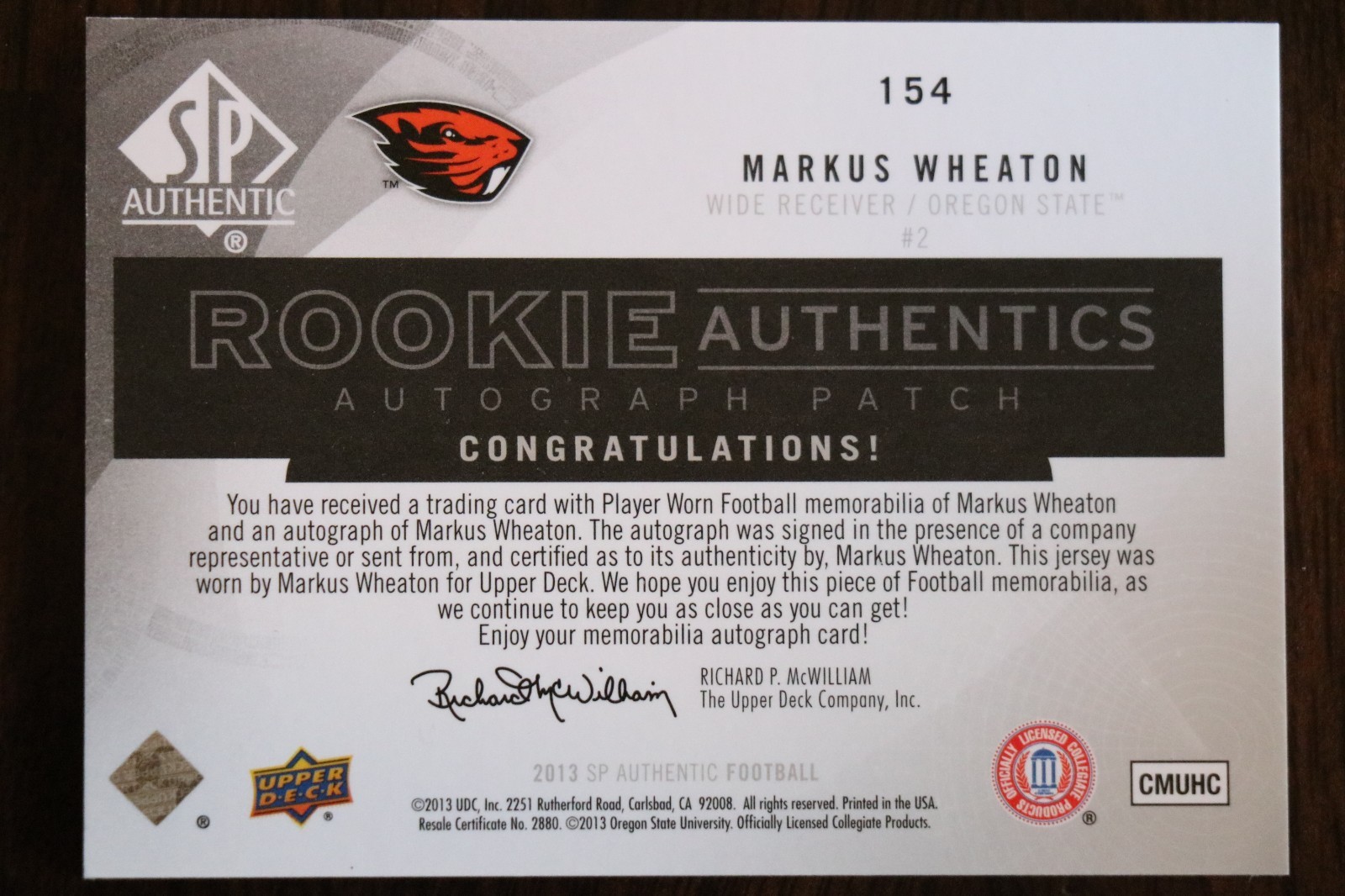
An Analysis of Markus Wheaton’s Career Earnings and Financial Standing
Markus Wheaton, a former professional wide receiver in the National Football League (NFL), earned a significant portion of his wealth through multi-year player contracts during his active career between 2013 and 2018. While specific pr...
Markus Wheaton, a former professional wide receiver in the National Football League (NFL), earned a significant portion of his wealth through multi-year player contracts during his active career between 2013 and 2018. While specific private net worth figures remain unverified by public tax disclosures, his financial standing is primarily attributed to his cumulative NFL career earnings exceeding $9 million.
Contents
Professional Career Overview and Financial Milestones
Markus Wheaton’s financial trajectory was defined by his transition from collegiate football at Oregon State University to the professional ranks of the NFL. Drafted by the Pittsburgh Steelers in the third round of the 2013 NFL Draft, Wheaton entered the league at a time when rookie wage scales were strictly governed by the Collective Bargaining Agreement (CBA). This structure provided a clear, albeit limited, entry-level contract that served as the foundation for his future earnings.
Throughout his tenure in the NFL, Wheaton played for the Pittsburgh Steelers, the Chicago Bears, and the Philadelphia Eagles. His primary source of income was derived from standard NFL player contracts, which included signing bonuses, base salaries, and performance-based incentives. In the professional sports industry, these contracts are often subject to "guaranteed money"—the portion of a contract a player receives regardless of injury or release—and "non-guaranteed money," which is contingent upon remaining on the active roster.
NFL Contractual Structure and Income Factors
To understand the financial profile of an athlete like Markus Wheaton, one must distinguish between "gross earnings" and "net worth." Gross earnings represent the total compensation paid by teams before accounting for federal, state, and local taxes, agent fees (typically 1% to 3% of the contract value), investment losses, lifestyle expenses, and financial management fees.
Key Revenue Components
- Signing Bonuses: Upon signing a contract, players receive an upfront lump sum. While this provides immediate liquidity, it is taxed as ordinary income in the year it is received.
- Base Salaries: These are distributed throughout the duration of the 17-game regular season. For a wide receiver, this amount is determined by market value, years of service, and statistical output.
- Workout Bonuses: Many contracts include incentives for participating in off-season conditioning programs.
- Per-Game Active Bonuses: Players may earn additional income for each game day they remain on the active roster.
| Team | Contract Period | Estimated Compensation Status |
|---|---|---|
| Pittsburgh Steelers | 2013–2016 | Primary Rookie Contract |
| Chicago Bears | 2017–2018 | Veteran Free Agent Deal |
| Philadelphia Eagles | 2018 | Practice/Short-term Contract |
Financial Management and Professional Challenges
The career of an NFL player is statistically brief. The average career length in the NFL hovers around three to four years, making wealth preservation a critical challenge for professional athletes. For Wheaton, his six-year stint in the league placed him slightly above the average longevity, allowing for a longer window of peak earnings. However, the taxation profile for professional athletes is uniquely complex. Because NFL players travel across the United States to compete in various stadiums, they are often subject to "jock taxes"—income taxes levied by the states and municipalities where the games are played.
Financial advisors for professional athletes generally emphasize the importance of diversification. After retirement, an athlete’s ability to generate high-level income often decreases, shifting the focus from active earnings to passive investment growth. While private investments, real estate holdings, or business ventures are common paths for former NFL players, these remain private financial matters. Consequently, any estimate of Markus Wheaton's net worth in 2026 is speculative, as it depends entirely on how his career earnings were allocated, invested, and maintained after his departure from the sport.
Tax Implications and Wealth Preservation
Athletes operating in the United States must navigate a rigorous tax environment. Federal income tax brackets, combined with state-level taxes in high-tax jurisdictions like Pennsylvania or Illinois, can significantly reduce the take-home pay of a professional athlete.
When analyzing the financial standing of a player like Wheaton, it is essential to consider the following:
- The "Jock Tax": A player’s total income is apportioned based on the number of "duty days" spent in each state. If a player plays a game in a state with no income tax, they may pay less on that specific portion of their salary, but the administrative burden of filing in multiple jurisdictions is significant.
- Agent Fees: Professional representation is a standard requirement in the NFL. Agents manage contract negotiations, but their fees represent a recurring reduction in gross earnings.
- Investment Horizon: Athletes who transition to life after sports must pivot to a withdrawal strategy. If an athlete does not generate consistent post-career income, they must rely on the portfolio built during their playing days, which is subject to market volatility.
Comparison of Financial Realities for NFL Players
It is a common misconception that all professional athletes accrue long-term wealth proportional to their gross salaries. The difference between a high net worth and financial insolvency is often determined by the discipline of the athlete’s financial planning during their peak earning years.
- High-Earning Window: Players have a finite number of years to maximize their income.
- Risk Mitigation: Injury risk is constant, and a career-ending injury can stop income flow instantly, though some contracts contain injury guarantees.
- Lifestyle Creep: High visibility and social pressures often lead to elevated expenditures, which can rapidly diminish a professional athlete’s capital reserves.
Frequently Asked Questions (FAQ)
1. Is Markus Wheaton’s net worth publicly available? No. Professional athletes in the United States are not required to disclose their personal net worth. While their gross contract values are public information provided by league data, their actual wealth is a private matter involving assets, liabilities, and investments.
2. What is the biggest impact on an NFL player's take-home pay? Taxes are the most significant factor. Between federal, state, and city taxes, along with escrow payments required by the NFL, a significant percentage of a player's gross salary is deducted before it reaches their bank account.
3. Did Markus Wheaton earn enough to be considered "wealthy" by national standards? By most economic definitions, a cumulative career earning of several million dollars places an individual in a high-net-worth category. However, the sustainability of that wealth depends entirely on the financial management decisions made during and after his NFL career.
4. Does an NFL player's contract guarantee the total amount listed? Not necessarily. Most contracts include non-guaranteed salary components. If a player is released or cut from the team, they generally forfeit the non-guaranteed portion of their salary.
5. How does the 2026 economic environment affect former players? In 2026, former players who invested their earnings in diversified asset classes, such as real estate or traditional equities, are generally in a stronger position than those who did not. Inflation and market fluctuations impact the purchasing power of capital held by retirees from all industries, including professional sports.
Recommendations for Financial Perspective
When evaluating the wealth of a professional athlete, it is advisable to rely on verified salary data rather than third-party estimations, which often fail to account for the complexities of taxes, agent fees, and living expenses. For those interested in the financial structures of professional sports, the NFL Players Association (NFLPA) provides resources and general information regarding the collective bargaining process and standard contract structures. If you are seeking personal financial advice, it is recommended to consult with a certified financial planner (CFP) who specializes in high-net-worth management rather than relying on public figures’ estimated valuations.
Image Gallery