What Kind of Dog Is Snoopy in Real Life? Breed Facts and Look-Alikes
In the real world, Snoopy is a Beagle. While his iconic black-and-white minimalist design and upright posture differ from the physical appearance of a standard tricolor Beagle, Charles M. Schulz officially designated the character as a...
In the real world, Snoopy is a Beagle. While his iconic black-and-white minimalist design and upright posture differ from the physical appearance of a standard tricolor Beagle, Charles M. Schulz officially designated the character as a member of this scent hound breed shortly after the Peanuts comic strip debuted in 1950.
Contents
The Origin of Snoopy: From Spike to the Beagle Legend
To understand Snoopy in real life, one must look at the childhood of his creator, Charles M. Schulz. Although Snoopy is a Beagle, he was actually inspired by a dog named Spike, which Schulz owned during his teenage years. Spike was not a Beagle; he was a mix of a Pointer and some other unidentified hound breeds. Spike possessed a high level of intelligence and an unusual ability to understand human language, traits that Schulz eventually infused into Snoopy’s persona.
When Peanuts premiered on October 2, 1950, Snoopy did not initially have a specific breed identity. He was simply "the dog." However, by the mid-1950s, Schulz explicitly identified him as a Beagle. This choice was likely due to the Beagle's popularity in mid-century America and their reputation as friendly, independent, and vocal companions. By 2026, the Beagle remains one of the most recognizable breeds in the world, largely bolstered by Snoopy’s global fame.
In his earliest iterations, Snoopy moved on all four legs and behaved much more like a biological dog. It wasn't until the late 1950s and early 1960s that he began walking on his hind legs, developing his "Flying Ace" persona, and sleeping on top of his doghouse. This anthropomorphism created a visual gap between the cartoon character and the real-life breed he represents.
Why Doesn't Snoopy Look Like a Real Beagle?
The most common question regarding Snoopy in real life is why he lacks the typical coloring of a Beagle. Standard Beagles are primarily tricolor—a mix of black, white, and tan—or lemon and white. They typically have a "saddle" of black or tan across their back and white-tipped tails, which were originally bred into the dog to help hunters spot them in tall grass.
Snoopy, by contrast, is starkly white with black ears and a few black spots on his back. This coloration is rare but not impossible in the canine world. It most closely resembles a piebald pattern. In the context of 1950s comic strip production, Snoopy’s design was a matter of practical aesthetics. Schulz needed a character that was easy to draw, visually distinct, and high-contrast for black-and-white newspapers. A complex tricolor pattern would have been difficult to render consistently in small comic panels.
Additionally, Snoopy’s floppy black ears are a signature trait. While real Beagles have long, velvety ears that hang close to their heads, they are almost never solid black on a pure white head. The "Snoopy look" is essentially an artistic abstraction of a Beagle’s most endearing features—the ears, the expressive eyes, and the compact, sturdy frame.
The Viral "Real-Life Snoopy": Bayley the Mini Sheedypoo
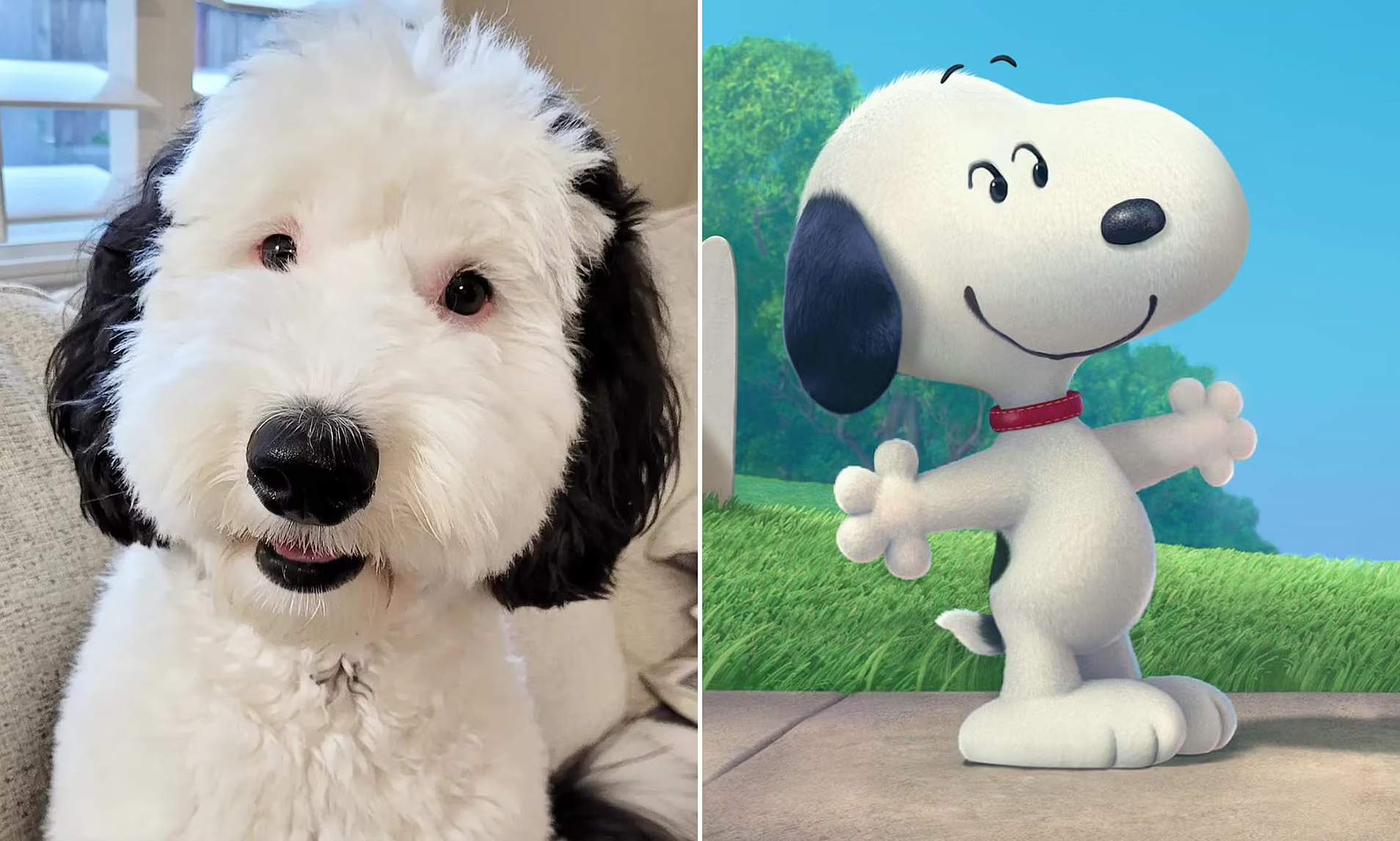
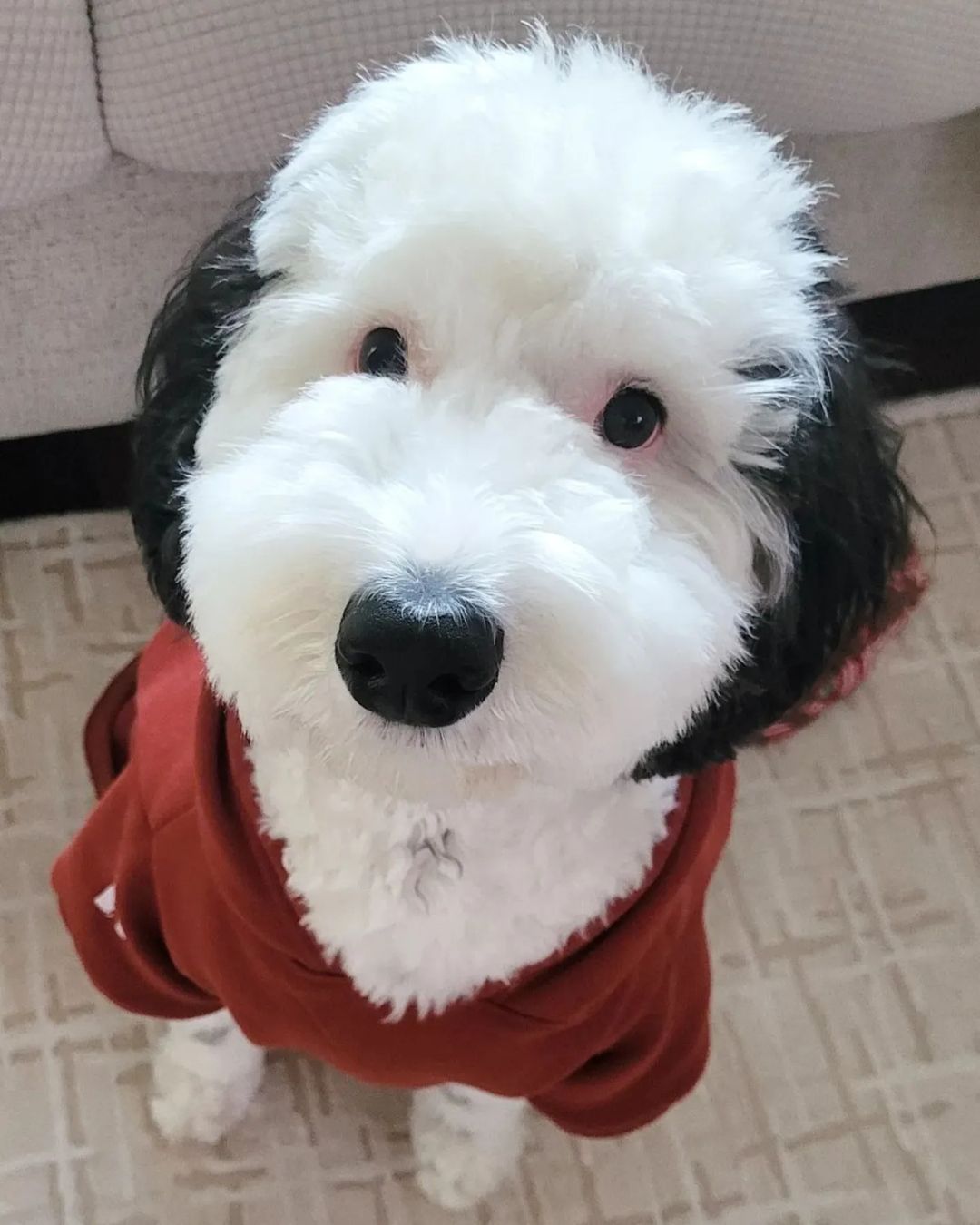
In recent years, the internet identified a dog that looks more like the animated Snoopy than an actual Beagle does. In 2023, an Instagram-famous dog named Bayley went viral for her uncanny resemblance to the character. Bayley is a Mini Sheedypoo, a cross between a Miniature Poodle and an Old English Sheepdog.
This designer crossbreed often results in a "Snoopy-esque" appearance because of the following traits:
- The Black-on-White Contrast: Unlike Beagles, Sheedypoos can naturally have a pure white face with solid black, floppy ears.
- The Rounded Snout: The Poodle and Sheepdog genetics often create a soft, rounded muzzle that mimics Schulz’s drawing style.
- The Button Nose: Sheedypoos often have a prominent, black, "button" nose that sits perfectly against white fur.
As of 2026, the "Snoopy Dog" trend has led to an increase in interest for Sheedypoos and similar Poodle mixes. However, potential owners should note that while these dogs look like Snoopy, their temperament is vastly different from the Beagle breed Snoopy is officially based on. Beagles are scent hounds, while Sheedypoos are a mix of a herding dog and a water retriever, leading to different exercise and grooming needs.
Comparing the Options: Snoopy vs. Real-Life Breeds
If you are looking for a "Snoopy in real life," you generally have to choose between the official breed (Beagle) and the visual look-alike (Sheedypoo or similar mixes).
| Feature | Snoopy (Character) | Beagle (Official Breed) | Mini Sheedypoo (Visual Match) |
|---|---|---|---|
| Official Breed | Beagle | Beagle | Sheepdog / Poodle Mix |
| Coloration | White with black ears/spots | Tricolor or Lemon/White | Black and White |
| Coat Type | Smooth | Short, dense, water-resistant | Curly or wavy, high-maintenance |
| Energy Level | High (in imagination) | Very High (requires exercise) | Moderate to High |
| Vocalization | "Augh!" / Thought bubbles | "Aroo!" (Baying) | Barking |
| Maintenance | Low (drawings only) | Low grooming, high training | High grooming (professional) |
| Lifespan | 75+ Years (Legacy) | 12–15 Years | 12–15 Years |
Beagle Temperament: Does It Match Snoopy?
In the Peanuts strip, Snoopy is known for being aloof, imaginative, and occasionally stubborn—especially when Charlie Brown asks him to do something he finds "beneath" him. In many ways, this is an accurate reflection of the Beagle personality.
1. Independence and Stubbornness
Beagles were bred to hunt in packs, often miles away from their handlers. Because they had to make their own decisions in the field, they are notoriously independent. This often translates to "selective hearing" during training. Much like Snoopy ignoring Charlie Brown's calls for dinner to continue his World War I dogfight, a real Beagle will often ignore commands if they catch a scent they find more interesting.
2. The Power of the Nose
Snoopy often "smells" trouble or food from great distances. In real life, Beagles have approximately 220 million scent receptors (compared to a human's 5 million). They live through their noses. If a real-life Snoopy gets loose, he won't be looking for the Red Baron; he will be following a rabbit or a discarded sandwich for miles.
3. Sociability
Snoopy is a social creature who interacts with a wide cast of characters. Beagles are exceptionally friendly and generally do not make good guard dogs because they are more likely to greet an intruder with a wagging tail than a growl. They thrive in "packs," whether those are other dogs or a human family.
Owning a "Snoopy": Practical Considerations in 2026
If the quest for a "Snoopy in real life" leads you to consider adopting a dog, it is vital to understand the requirements of the breeds involved.
For the Beagle (The Authentic Snoopy)
Beagles are energetic hounds. They require at least an hour of exercise daily. Their "baying"—a deep, melodic howl—can be problematic for apartment dwellers. According to data from the American Kennel Club, they remain a top-tier choice for families due to their sturdy size and gentle nature with children. However, they are "escape artists" and require a secure fence.
For the Sheedypoo (The Visual Snoopy)
If you choose a dog like Bayley for the aesthetic resemblance, be prepared for significant grooming costs. Unlike the Beagle’s "wash and wear" coat, a Sheedypoo requires professional grooming every 6 to 8 weeks to prevent matting. As a 2026 update, designer "Doodle" breeds have faced increased scrutiny regarding ethical breeding; it is essential to find a breeder who performs health clearances for hip dysplasia and eye issues, which are common in both parent breeds.
The Cultural Legacy: Snoopy Beyond the Breed
In 2026, Snoopy’s influence extends far beyond the pet industry. He remains a symbol of aviation and space exploration. Since the Apollo 10 mission in 1969, Snoopy has been the official safety mascot for NASA. The "Silver Snoopy" award is one of the highest honors given to NASA employees and contractors for outstanding achievements in flight safety.
Most recently, during the Artemis missions of the mid-2020s, a Snoopy plush served as the "Zero-G Indicator" aboard the Orion spacecraft. This real-world application of the character keeps the "Snoopy in real life" conversation relevant, even for those who don't own a dog.
Common Mistakes When Seeking a "Snoopy Dog"
When people search for a dog that resembles Snoopy, they often fall into several traps:
- Prioritizing Looks Over Lifestyle: A Sheedypoo might look like Snoopy, but if you don't have the time for daily brushing, the dog will suffer.
- Underestimating the Beagle Nose: People adopt Beagles because they are "cute like Snoopy" but are then surprised when the dog destroys the garden following a scent.
- Expecting Human Intelligence: Snoopy writes novels and plays shortstop. Real Beagles are intelligent but motivated almost exclusively by food and scent.
Frequently Asked Questions
Is there a specific dog breed called a "Snoopy dog"?
No. There is no official breed called a "Snoopy dog." Snoopy is a Beagle. Dogs that look like him are typically mixed breeds, such as the Mini Sheedypoo or certain variations of the Whoodle (Wheaten Terrier and Poodle).
Why did Charles Schulz choose a Beagle for Snoopy?
Schulz chose a Beagle because they were iconic American family dogs in the 1950s. They are small enough to fit into a comic panel easily but have enough personality to carry a story. Interestingly, Schulz initially thought about making Snoopy a Snauzer or a Pointer but settled on the Beagle for its friendly appearance.
Can a real Beagle have Snoopy’s black ears and white face?
It is extremely rare. While some "Piebald" Beagles exist that are mostly white with patches of color, the specific "white face with solid black ears" pattern is not a standard Beagle marking. This look is much more common in Poodle-crosses or Old English Sheepdogs.
Is Snoopy based on a real dog?
Yes. As mentioned earlier, Snoopy was inspired by Schulz's dog, Spike. Spike was a black-and-white dog who supposedly could understand at least 50 human words. However, Spike's physical appearance was more similar to a Pointer than a Beagle.
Do Beagles really sleep on top of their doghouses?
Generally, no. Beagles are "denning" animals and prefer to sleep inside a warm, enclosed space. Snoopy's habit of sleeping on the roof was an artistic choice by Schulz to allow the character to "look up at the stars" and engage in his fantasy life.
Choosing Your Real-Life Snoopy
Whether you choose the Beagle for its historical accuracy and spirited personality or a Mini Sheedypoo for its uncanny visual resemblance, owning a "Snoopy in real life" is a significant commitment.
If you value the adventurous, stubborn, and affectionate nature of a scent hound, the Beagle is your perfect match. If you are more interested in the iconic black-and-white aesthetic and are prepared for high-maintenance grooming, the Sheedypoo offers that "living cartoon" look. Regardless of the breed, the best way to honor Snoopy's legacy is to provide a loving home where your dog can be exactly what they are—even if they never learn to fly a Sopwith Camel.
Image Gallery