The Fastest Train in Europe: Speed, Technology, and the High-Speed Rail Network in 2026
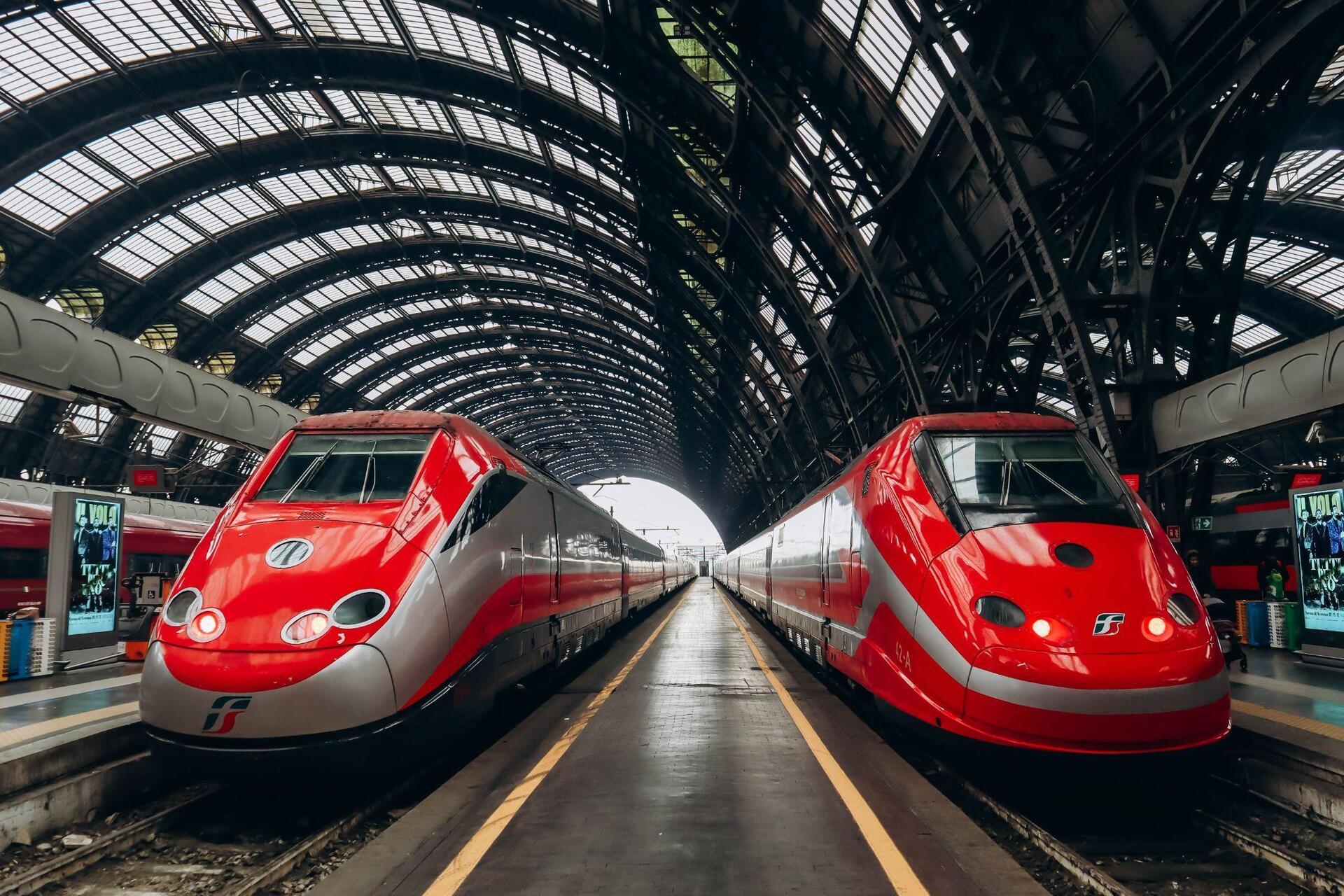
As of 2026, the fastest train in Europe for commercial service is the Frecciarossa 1000 (also known as the ETR 1000), which operates at speeds up to 360 km/h (224 mph) on compatible tracks, though it typically cruises at 300 km/h. It s...
As of 2026, the fastest train in Europe for commercial service is the Frecciarossa 1000 (also known as the ETR 1000), which operates at speeds up to 360 km/h (224 mph) on compatible tracks, though it typically cruises at 300 km/h. It shares the top spot with France’s TGV network, which consistently maintains 320 km/h in daily operations.
Contents
The landscape of European rail has undergone a massive transformation over the last decade. In 2026, the push for sustainable travel has made high-speed rail (HSR) the primary alternative to short-haul flights across the continent. While several train models compete for the title of "fastest," the distinction often depends on whether one measures theoretical design speed, world-record test speeds, or standard commercial operating speeds.
The Frecciarossa 1000: Europe’s Speed Standard-Bearer
The Frecciarossa 1000, operated by Italy’s Trenitalia, represents the pinnacle of current European rail engineering. Developed through a joint venture between Hitachi Rail and Alstom (formerly Bombardier Transportation), this train was built specifically to handle the demands of the Italian high-speed corridors while offering cross-border capabilities.
Technically, the Frecciarossa 1000 is designed for a maximum commercial speed of 400 km/h (249 mph). However, due to infrastructure limitations and energy efficiency mandates in 2026, it is currently capped at 360 km/h on specific segments of the Italian and Spanish networks. Its acceleration is one of its most remarkable features; it can reach 300 km/h in just a few minutes, thanks to its distributed traction system. Unlike traditional locomotives that pull cars, the Frecciarossa 1000 uses motors located under the floor across the entire length of the train, providing better grip and more consistent power.
In 2026, this train is no longer confined to Italy. Under the brand iryo, it has captured a significant share of the Spanish high-speed market, running between Madrid, Barcelona, and Seville. It also operates services between Milan and Paris, directly competing with the French TGV.
The French TGV and the Evolution of the TGV M
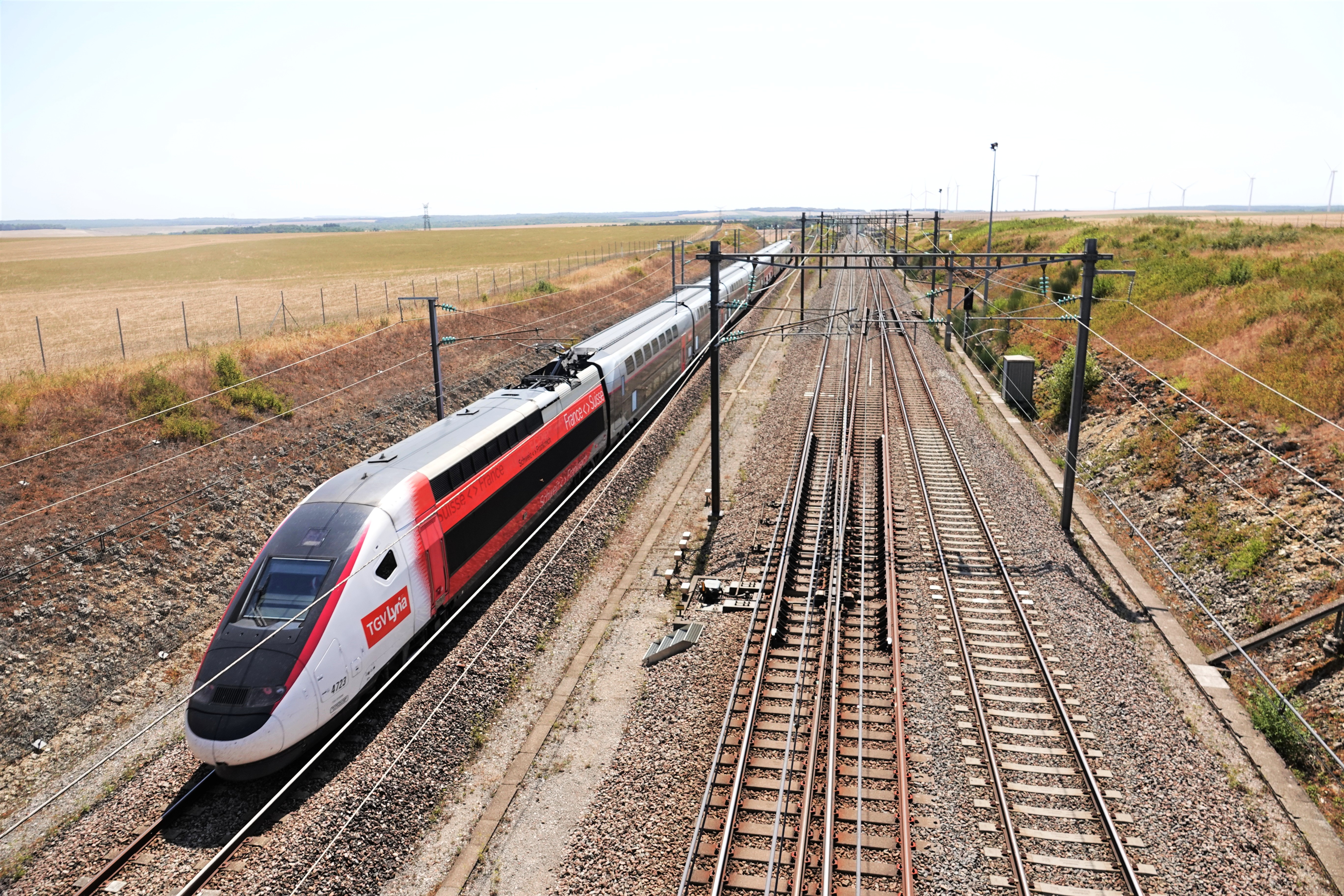
France remains the historical heart of European high-speed rail. The TGV (Train à Grande Vitesse) network, operated by SNCF, still holds the world record for the fastest conventional train, reaching a staggering 574.8 km/h (357.2 mph) during a 2007 test.
In daily 2026 operations, the TGV operates at a standard speed of 320 km/h (199 mph). The newest addition to the fleet, the TGV M (marketed as the Avelia Horizon), has fully entered service as of 2025 and 2026. This fifth-generation TGV focuses less on increasing the top speed and more on efficiency, capacity, and modularity.
The TGV M is significant because it reduces energy consumption by 20% compared to previous models and allows for a 20% increase in passenger capacity. While it still operates at 320 km/h, its aerodynamic design and regenerative braking systems make it the most sustainable high-speed train in Europe today. The TGV's dominance is most visible on the LGV Est and LGV Méditerranée lines, which connect Paris to Strasbourg and Marseille, respectively.
Germany’s ICE 3 and the Velaro Platform
Germany’s high-speed flagship is the ICE 3 (Intercity-Express), specifically the Siemens Velaro platform. The ICE 3 (Class 403 and 406) and the newer ICE 3neo (Class 408) are rated for commercial speeds of 320 km/h (199 mph).
Unlike France’s dedicated high-speed lines (LGVs), the German rail network is more integrated, meaning ICE trains often share tracks with slower regional services. This limits the segments where they can actually reach their 320 km/h potential. The Frankfurt–Cologne and Nuremberg–Ingolstadt lines are the primary corridors where these speeds are realized.
The ICE 3 is widely regarded for its "passenger-forward" design, featuring "lounges" at both ends of the train where passengers can look through a glass partition at the driver and the track ahead. This technical transparency has made the ICE 3 a favorite among rail enthusiasts for decades.
Comparison of Europe’s Fastest Trains in 2026
To understand how these trains compare, it is essential to look at both their design capabilities and their actual daily performance.
| Train Model | Country of Origin | Operator | Top Commercial Speed | Design Speed |
|---|---|---|---|---|
| Frecciarossa 1000 | Italy | Trenitalia / iryo | 360 km/h | 400 km/h |
| TGV M (Avelia Horizon) | France | SNCF | 320 km/h | 350 km/h |
| AVE S-103 (Velaro E) | Spain | Renfe | 310 km/h | 350 km/h |
| ICE 3neo | Germany | Deutsche Bahn | 320 km/h | 330 km/h |
| Eurostar (e320) | UK / France / Belgium | Eurostar | 320 km/h | 320 km/h |
| AVG (Italo) | Italy | Italo (NTV) | 300 km/h | 360 km/h |
Infrastructure: The Gateway to Speed
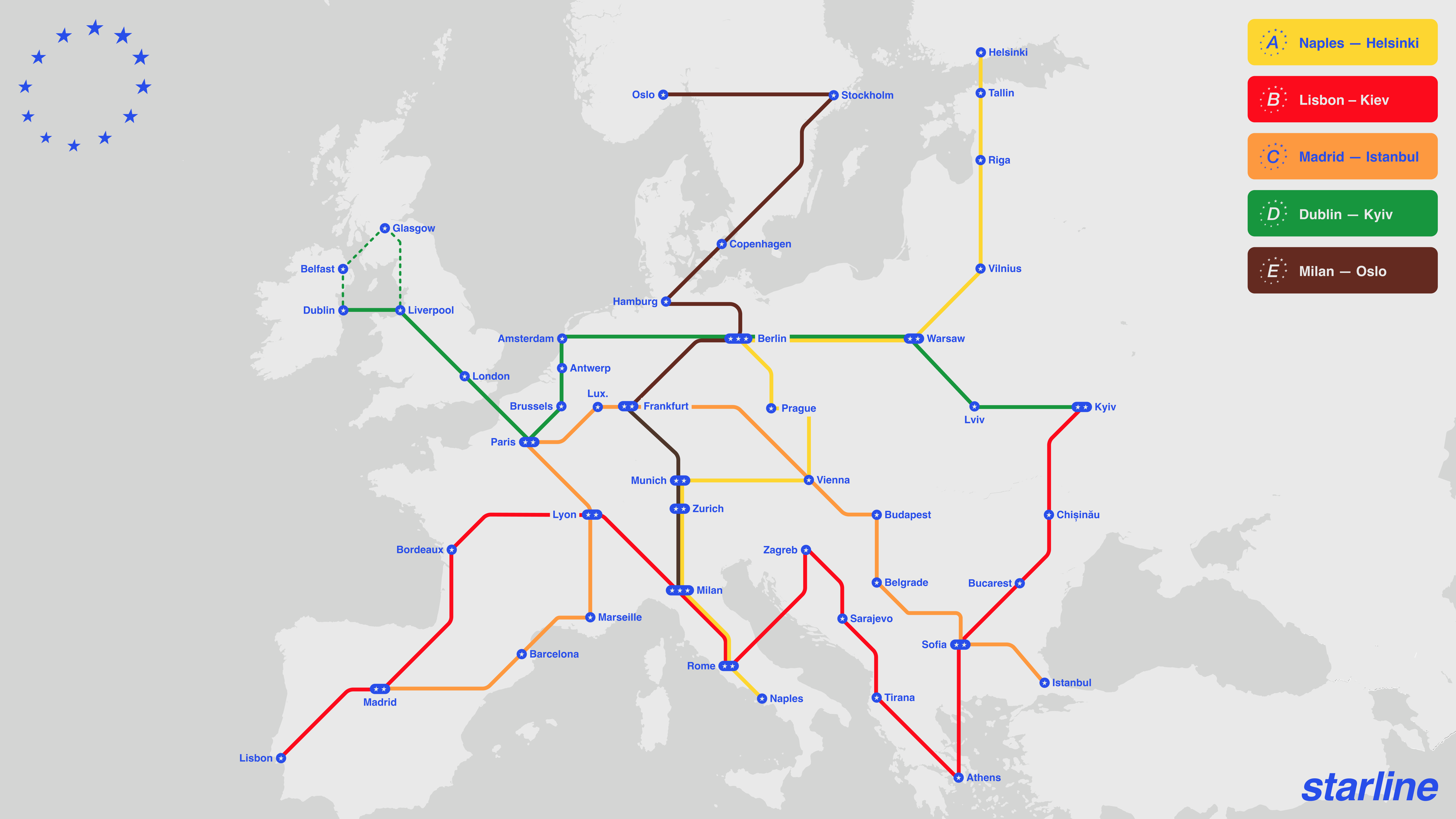
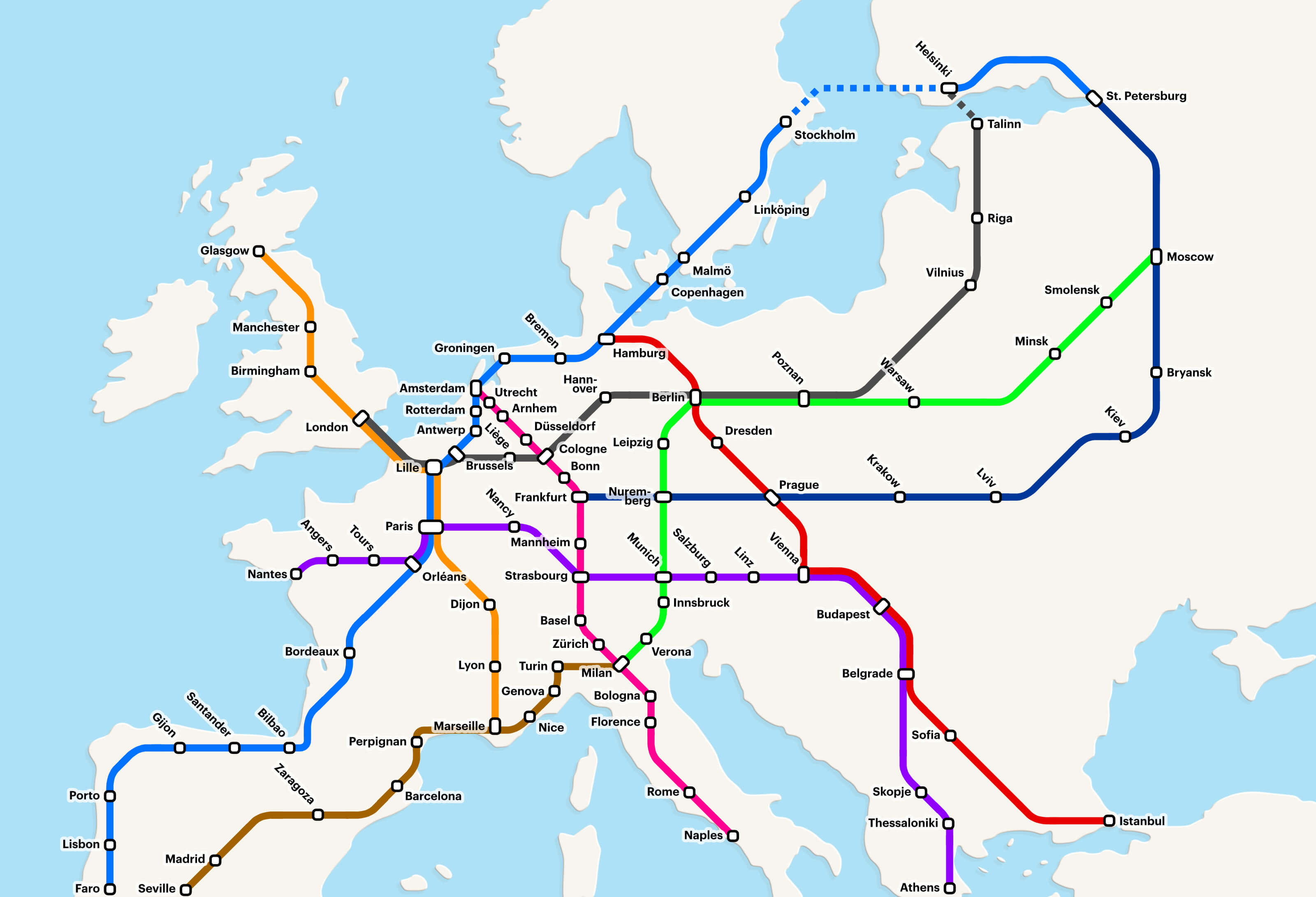
A train is only as fast as the tracks it sits on. In 2026, Europe’s high-speed capability is largely determined by the European Rail Traffic Management System (ERTMS). This is a standardized signaling and control system that allows trains to cross borders without changing locomotives or drivers, and it is the prerequisite for speeds exceeding 250 km/h.
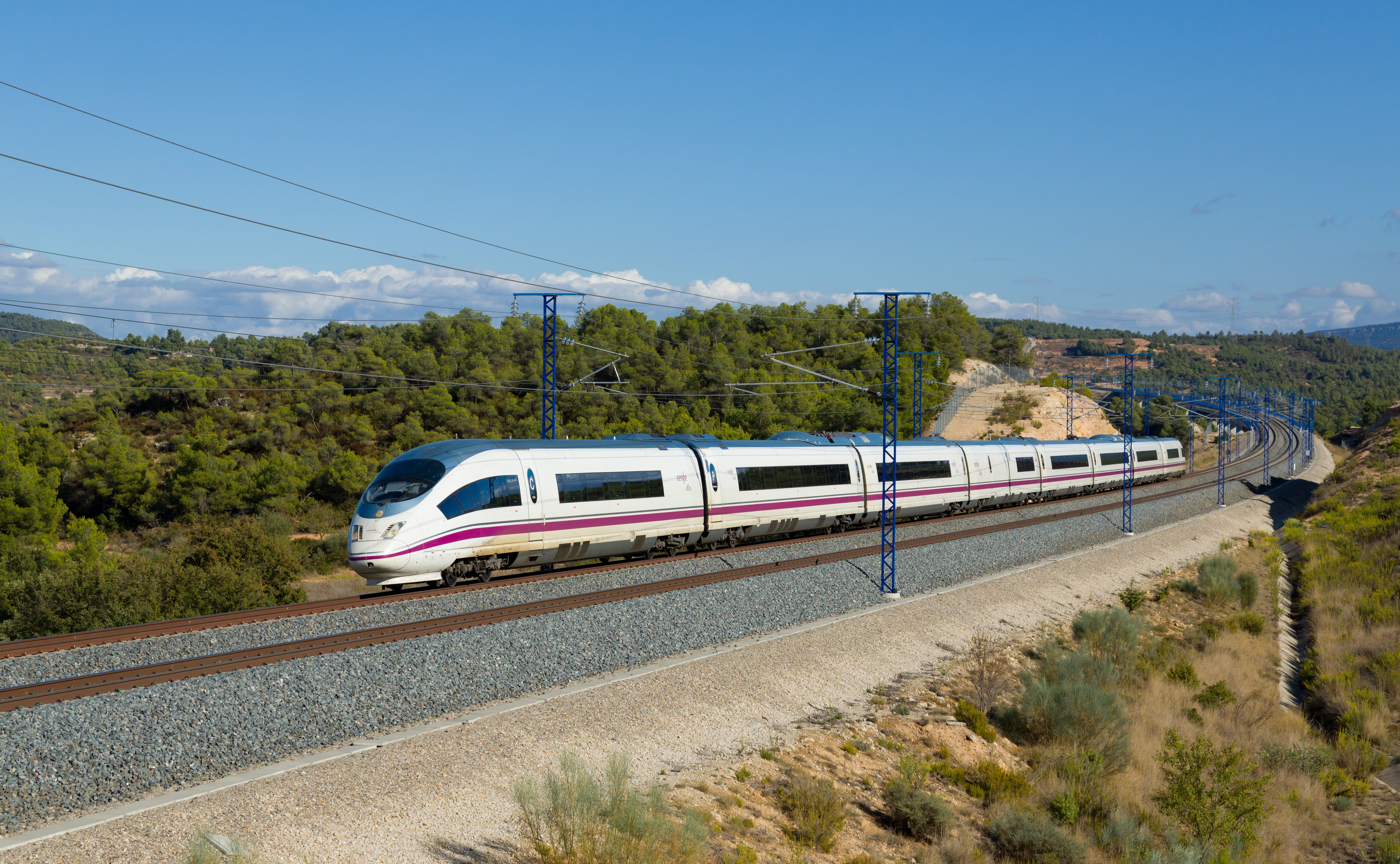
Spain currently holds the title for the most extensive high-speed rail network in Europe, with over 4,000 kilometers of track. The Spanish AVE (Alta Velocidad Española) system utilizes the Siemens Velaro E (S-103), which is technically identical to the German ICE 3 but is permitted to run slightly faster on certain stretches of the Madrid-Barcelona line.
In 2026, several key infrastructure projects have reached completion or major milestones:
- The Lyon-Turin Link: Progress on this massive tunnel project has significantly reduced travel times between France and Italy, allowing Frecciarossa and TGV trains to maintain higher average speeds through the Alps.
- The Fehmarnbelt Fixed Link: While primarily a tunnel, this connection between Germany and Denmark has revolutionized Scandinavian rail, bringing higher speeds to the northern corridor.
- HS2 (United Kingdom): While the project has seen various scope changes, the core high-speed segments in the UK are utilizing rolling stock based on the Frecciarossa 1000 platform, aimed at 360 km/h.
Engineering Challenges and Speed Limits
Why don’t European trains run at 400 km/h or 500 km/h if the technology exists? The answer lies in the physics of rail travel and the economics of maintenance.
- Aerodynamics and Noise: As speed increases, the air resistance (drag) increases exponentially. At 350 km/h, the noise generated by the pantograph (the arm connecting the train to the overhead wires) becomes a significant environmental concern for communities near the tracks.
- Energy Consumption: Running a train at 360 km/h requires significantly more electricity than running it at 300 km/h. In the context of 2026's high energy prices and carbon neutrality goals, many operators have found that 300–320 km/h is the "sweet spot" for efficiency.
- Track Wear: The kinetic energy of a train at very high speeds causes increased wear and tear on both the wheels and the rails. This leads to higher maintenance costs and more frequent service interruptions.
Passenger Experience on High-Speed Rail
Traveling on Europe's fastest trains in 2026 is a premium experience. The competition between operators—especially in Italy and Spain—has driven a massive increase in service quality.
The Frecciarossa 1000 offers four classes of service: Executive, Business, Premium, and Standard. The Executive class features leather rotating chairs and high-end Italian catering. Similarly, the TGV M has introduced massive improvements in Wi-Fi connectivity and accessibility, featuring wider doors and redesigned interior layouts that accommodate more luggage and bicycles without sacrificing legroom.
Booking these trains has also become more streamlined. Under EU regulations, the Open Sales and Distribution Model (OSDM) allows passengers to book multi-country high-speed journeys through a single interface, making the "flight-to-rail" transition easier for international travelers.
Frequently Asked Questions
Which European train holds the absolute speed record?
The French TGV holds the world record for conventional steel-wheel rail, having reached 574.8 km/h (357.2 mph) on April 3, 2007. This was achieved by a shortened, modified V150 trainset and is not the speed at which it carries passengers.
Is there a Maglev train in Europe?
As of 2026, there are no commercial long-distance Maglev (magnetic levitation) trains operating in Europe. While Germany was a pioneer in Maglev technology with the Transrapid, focus shifted toward improving conventional high-speed rail, which is more compatible with existing urban infrastructure.
How much do tickets cost for the fastest trains?
Pricing in 2026 is highly dynamic, similar to airline pricing. A high-speed ticket from Paris to Lyon or Milan to Rome can cost as little as €29 if booked weeks in advance, but last-minute "Business" or "Executive" fares can exceed €200. Competition in Spain and Italy has generally kept prices lower than in countries with a single state-owned operator.
Do I need to arrive early for a high-speed train?
Unlike airports, you do not need to arrive two hours early. However, for the Eurostar (connecting the UK to Europe), you should arrive 60-90 minutes early for border controls. For domestic high-speed services like the TGV or Frecciarossa, arriving 15-20 minutes before departure is usually sufficient, though some Spanish stations require a brief security scan of luggage.
Which country has the best high-speed network?
Spain currently has the most extensive high-speed network in Europe by mileage. However, France is often considered the most efficient for long-distance travel due to its hub-and-spoke model centered on Paris. Italy is widely recognized for having the best on-board service and most modern rolling stock in 2026.
Choosing Your High-Speed Route
For those looking to experience the maximum speed of European rail, the best routes in 2026 are Milan to Rome, Madrid to Barcelona, and Paris to Strasbourg. These lines utilize the newest rolling stock and have the infrastructure capable of supporting sustained speeds of 300 km/h and above. When booking, look for the "1000" designation on Italian trains or "TGV M/Avelia" on French lines to ensure you are on the latest, fastest equipment available.
Image Gallery