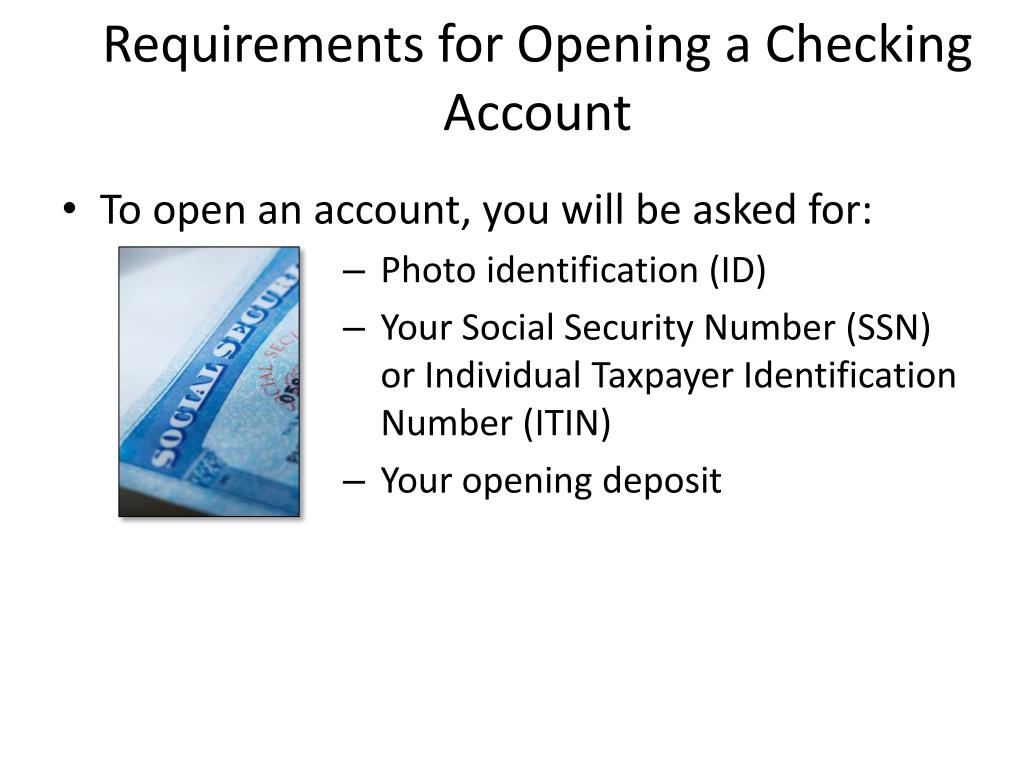
Requirements for Opening a Business Checking Account: A Complete Guide
Opening a business checking account is a fundamental step toward professionalizing your company, separating your personal and business finances, and establishing the formal identity required for tax compliance and credit building. Whet...
Opening a business checking account is a fundamental step toward professionalizing your company, separating your personal and business finances, and establishing the formal identity required for tax compliance and credit building. Whether you are a sole proprietor, a partner in an LLC, or managing a large corporation, financial institutions require specific documentation to verify your business's legal status, your authority to act on its behalf, and your identity as an owner or authorized representative.
Contents
To successfully open a business checking account, you must provide your Employer Identification Number (EIN), formation documents (such as Articles of Organization or Incorporation), a valid government-issued photo ID, and your business address. These requirements ensure compliance with federal "Know Your Customer" (KYC) regulations and anti-money laundering laws designed to prevent financial fraud.
Understanding the Legal and Financial Framework
Banks and credit unions operate under strict federal regulations, primarily the USA PATRIOT Act and the Bank Secrecy Act, which mandate that institutions verify the identity of the beneficial owners of any entity opening a business account. This is not merely a bureaucratic hurdle; it is a vital security layer that protects the integrity of the business banking system.
When you approach a financial institution, you are essentially establishing a contract. The bank needs to be certain that the business exists as a legal entity and that you have the specific, documented authority to manage its funds. Failure to provide consistent documentation can lead to application delays or immediate rejection. Because requirements vary depending on the legal structure of your business—such as whether you are a sole proprietorship, an LLC, or a C-Corp—it is essential to categorize your entity correctly before beginning the application process.
Essential Documentation Checklist
While specific banks may request additional items based on their internal risk assessment policies, the following documents are standard across most financial institutions in 2026.
1. Business Identity and Formation Documents
The type of document required depends entirely on your business structure. You must provide the original or a certified copy of your formation papers:
- Sole Proprietorships: You will typically need a Business License or a Fictitious Name Certificate (DBA - "Doing Business As") if you are not operating under your own legal name.
- LLCs: You must provide the Articles of Organization, which should bear the stamp of your Secretary of State.
- Corporations (C-Corp or S-Corp): You must provide the Articles of Incorporation.
- Partnerships: You need a Partnership Agreement that lists all authorized partners and their respective signing authorities.
2. Tax Identification Numbers
Your Employer Identification Number (EIN) acts as the Social Security Number for your business. Most banks will require the official IRS confirmation letter (CP 575 or 147C). If you are a sole proprietor without employees, some banks may allow you to use your Social Security Number, though an EIN is highly recommended for maintaining a clear separation between personal and business liabilities.
3. Personal Identification
To comply with identity verification laws, every beneficial owner who owns 25% or more of the company, as well as any individual with significant managerial control, must provide:
- A current, government-issued photo ID (driver’s license, passport, or military ID).
- Proof of residential address (utility bills or lease agreements are often used).
- Sometimes, your personal Social Security Number for a background credit check.
Comparing Business Structure Requirements
The complexity of your application will often scale with the complexity of your business entity. The table below outlines the general documentation expectations based on entity type.
| Business Structure | Essential Legal Document | Tax Identifier Required |
|---|---|---|
| Sole Proprietorship | Business License / DBA | EIN (Recommended) |
| General Partnership | Partnership Agreement | EIN |
| Limited Liability Co. | Articles of Organization | EIN |
| Corporation | Articles of Incorporation | EIN |
| Non-Profit Org. | Articles of Incorporation/Bylaws | EIN (Tax-Exempt ID) |
The Application Process: A Step-by-Step Approach
Once you have gathered the necessary documents, the application process generally follows a standardized flow.
Phase 1: Preparation and Selection
Do not walk into a bank branch without researching their specific requirements. Many banks in 2026 offer digital application portals, but these require high-quality scanned copies of your documents. Compare fee structures, transaction limits, and integration capabilities with your accounting software (such as QuickBooks or Xero) before finalizing your choice.
Phase 2: Verification of Authority
If your business has multiple owners, the bank will require a Corporate Resolution or a similar document. This is a formal statement, signed by the board or the members, that explicitly authorizes the bank to open the account and designates which individuals are permitted to sign checks, withdraw funds, and manage the account.
Phase 3: Funding the Account
Most business checking accounts require an initial opening deposit. This amount can range from $0 to several thousand dollars depending on the tier of the account. Ensure you have these funds readily available in a separate liquid account before completing the application.
Common Pitfalls and Troubleshooting
Even when you believe your documentation is complete, applicants often encounter minor hurdles that can cause significant delays.
Inconsistent Business Information
A frequent error is an inconsistency between the legal name on your formation documents and the name used on your business website or marketing materials. Financial institutions require strict uniformity. If your Articles of Organization list your company as "ABC Ventures, LLC," but you are applying as "ABC Ventures," the bank may flag the application for clarification.
Missing Beneficial Owner Data
Newer banking regulations require institutions to identify all "beneficial owners." If your company has silent partners or multiple stakeholders, failing to include their names and personal identification information during the application will result in a denial. Ensure you have the name, address, date of birth, and Social Security Number for everyone who meets the "beneficial owner" criteria.
Jurisdiction and Business Location
If you are operating in a state other than where you incorporated, you may be required to provide a "Certificate of Authority" or "Foreign Qualification" from the Secretary of State of the state where your business is currently based. Failing to provide this can prevent you from opening a local account.
Frequently Asked Questions
Can I open a business checking account online? Yes, most major banks in 2026 offer fully digital onboarding. You will be prompted to upload high-resolution photos of your formation documents and IDs. However, if your business structure is particularly complex, you may be asked to finalize the process in person.
Do I need a separate business account for a side hustle? Legally, a sole proprietorship does not always require a separate account, but it is highly advised. Keeping personal and business expenses together creates "commingling," which can strip away the liability protection of an LLC and make tax filing significantly more difficult.
What if my business has no employees? You can still open a business checking account. The term "Employer Identification Number" is slightly misleading; it is essentially a tax ID for any business entity. You can apply for one online through the IRS website regardless of whether you have staff.
Are there monthly fees associated with business checking? Yes, most accounts have monthly maintenance fees. However, many banks waive these fees if you maintain a minimum daily balance or meet a threshold of monthly transactions. Always verify the fee schedule in the account's "Terms and Conditions" document.
Professional Recommendation
If you are currently in the process of starting your business, prioritize obtaining your EIN and finalizing your Articles of Organization immediately after your business name is registered. These documents are the anchors of your professional financial identity. Before you begin applying to banks, call the business department of your preferred institution and ask for their current "New Account Checklist." This ensures that you have the most up-to-date requirements for that specific institution, preventing wasted time and unnecessary follow-up visits.
Image Gallery