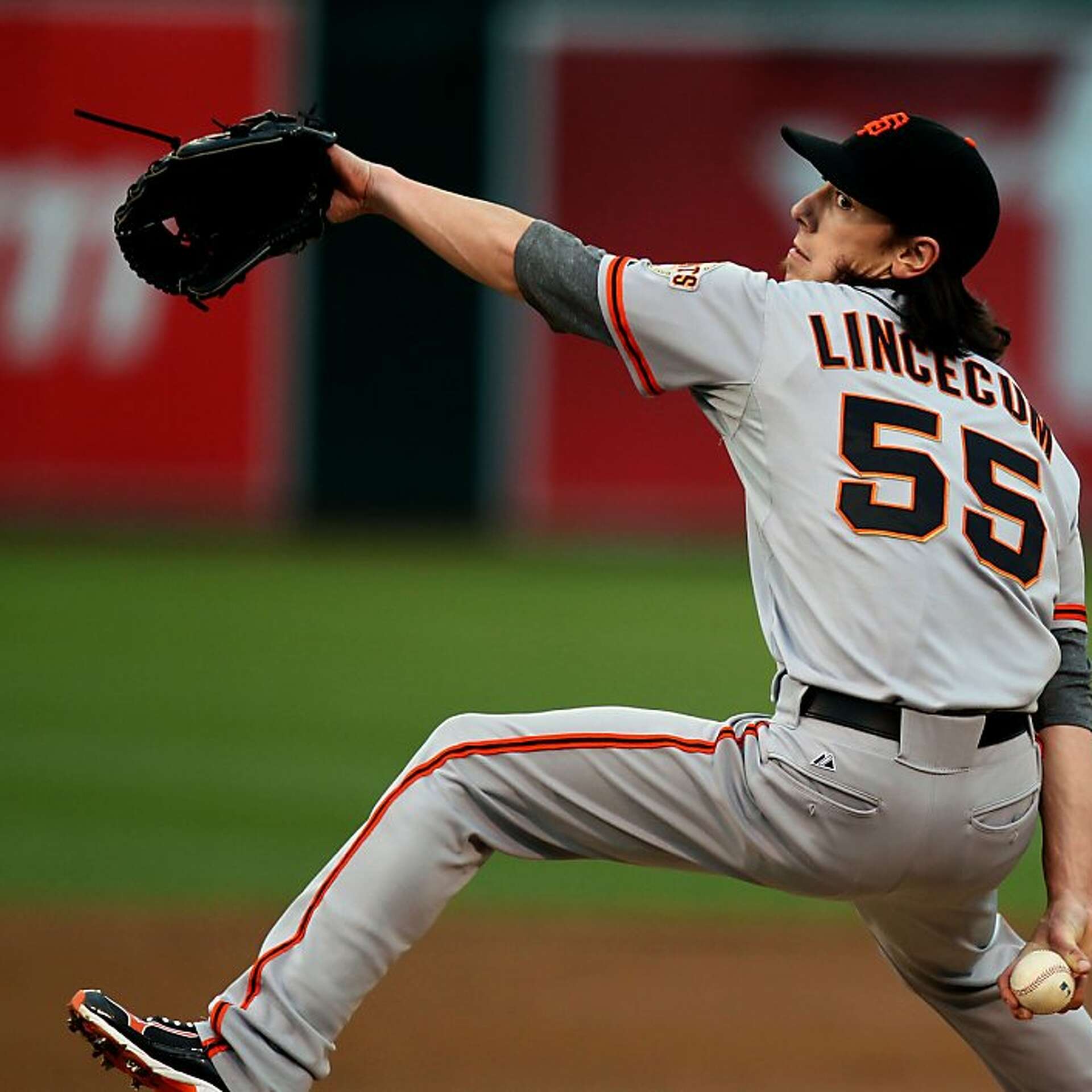
Tim Lincecum Salary: Career Earnings and Financial Legacy of "The Freak"
Tim Lincecum earned approximately $105.7 million in total salary and signing bonuses throughout his Major League Baseball career. The bulk of this wealth was generated during his tenure with the San Francisco Giants, where he secured t...
Tim Lincecum earned approximately $105.7 million in total salary and signing bonuses throughout his Major League Baseball career. The bulk of this wealth was generated during his tenure with the San Francisco Giants, where he secured two major multi-year extensions totaling over $75 million between 2012 and 2015.
Contents
Tim Lincecum, affectionately known as "The Freak" for his unconventional delivery and diminutive stature, remains one of the most iconic figures in modern baseball history. While his on-field performance earned him two National League Cy Young Awards and three World Series rings, his financial trajectory offers a fascinating case study in how MLB teams valued elite-level starting pitching during the early 2010s. As of 2026, Lincecum’s career earnings serve as a benchmark for the "workhorse" era of pitching before the current explosion of $300-million contracts.
The Early Years: Draft Bonus and Pre-Arbitration
Tim Lincecum’s financial journey began in 2006 when he was selected 10th overall by the San Francisco Giants out of the University of Washington. Unlike many prospects who spend years in the minors, Lincecum’s ascent was meteoric, which significantly accelerated his path to high-earning years.
The 2006 Signing Bonus
As a top-ten pick, Lincecum commanded a significant signing bonus of $2.025 million. At the time, this was a substantial investment for the Giants, reflecting their confidence in his "major-league ready" arsenal. This initial capital provided the foundation of his net worth before he ever threw a professional pitch.
Minimum Wage for a Superstar
From 2007 to 2009, Lincecum was arguably the best value in professional sports. Under MLB’s collective bargaining agreement, players with fewer than three years of service time generally earn near the league minimum.
- 2007: Roughly $380,000 (prorated for his May debut).
- 2008: $405,000—The year he won his first Cy Young Award.
- 2009: $650,000—The year he won his second consecutive Cy Young Award.
During this period, the Giants paid Lincecum just over $1 million in base salary while he produced a level of performance typically valued at $20–$30 million per year on the open market. This massive "surplus value" is a hallmark of the MLB salary structure, where teams maximize profit on young, elite talent.
Avoiding Arbitration: The $23 Million Breakthrough
By 2010, Lincecum had reached salary arbitration eligibility. Typically, players and teams negotiate a one-year deal; if they cannot agree, an arbitrator decides the salary. Given Lincecum’s historic start—becoming the first pitcher to win two Cy Youngs in his first two full seasons—he held immense leverage.
To avoid a potentially contentious arbitration hearing, the Giants signed Lincecum to a two-year, $23 million contract covering the 2010 and 2011 seasons.
- 2010 Salary: $8 million
- 2011 Salary: $13 million
This agreement was a record-breaking sum for a player in his first years of arbitration, signaling the Giants' intent to keep Lincecum as the face of the franchise. It was during the first year of this deal that Lincecum led the Giants to their first World Series title in San Francisco.
The Peak Earnings Phase: 2012–2015
As Lincecum approached free agency, his market value peaked. Even as some scouting reports began to note a slight decline in his velocity, the Giants were committed to rewarding their franchise icon. This period saw Lincecum sign two back-to-back lucrative deals that account for nearly 72% of his lifetime career earnings.
The 2012–2013 Extension ($40.5 Million)
Before the 2012 season, Lincecum and the Giants agreed to a two-year, $40.5 million extension. This deal carried an Average Annual Value (AAV) of $20.25 million, placing him among the highest-paid pitchers in the league at the time.
- 2012: $18 million base salary.
- 2013: $22 million base salary.
While his ERA began to rise during these years, his role in the 2012 World Series run—particularly as a dominant long-reliever—cemented his value in the eyes of the Giants' front office and ownership.
The 2014–2015 "Legacy" Contract ($35 Million)
Despite a statistically declining trend, the Giants signed Lincecum to another two-year, $35 million deal in October 2013. This contract was seen by many analysts as a "legacy" payment—a reward for his three championships and the massive revenue he generated through jersey sales and ticket gate receipts.
- 2014: $17 million
- 2015: $18 million
This contract included a full no-trade clause, ensuring Lincecum remained in San Francisco through the end of the Giants' "even-year" dynasty era.
Late Career and Final Contracts
After the 2015 season, Lincecum became a free agent for the first time. However, a significant hip surgery and dwindling physical metrics reduced his market command.
The Los Angeles Angels Stint (2016)
In May 2016, seeking a comeback, Lincecum signed a one-year, $2.5 million prorated contract with the Los Angeles Angels. He earned approximately $2 million during this brief period. Unfortunately, the stint was unsuccessful, resulting in a 9.16 ERA over nine starts.
The Texas Rangers Attempt (2018)
Lincecum’s final professional contract came in 2018 with the Texas Rangers. It was a one-year deal worth $1 million in base salary with significant performance incentives. However, he spent the season in the minor leagues and never reached the Major League roster, meaning he did not collect the full incentive-laden value.
Summary of Tim Lincecum's Career Salary Breakdown
The following table outlines the estimated year-by-year earnings for Tim Lincecum. These figures represent base salary and signing bonuses but do not include postseason shares or external endorsements.
| Year | Team | Salary / Bonus | Notes |
|---|---|---|---|
| 2006 | SF Giants | $2,025,000 | Signing Bonus (10th Overall Pick) |
| 2007 | SF Giants | $380,000 | Rookie Season (Prorated) |
| 2008 | SF Giants | $405,000 | First Cy Young Season |
| 2009 | SF Giants | $650,000 | Second Cy Young Season |
| 2010 | SF Giants | $8,000,000 | First Arbitration Year |
| 2011 | SF Giants | $13,000,000 | Second Arbitration Year |
| 2012 | SF Giants | $18,000,000 | Extension Year 1 |
| 2013 | SF Giants | $22,000,000 | Extension Year 2 |
| 2014 | SF Giants | $17,000,000 | Legacy Extension Year 1 |
| 2015 | SF Giants | $18,000,000 | Legacy Extension Year 2 |
| 2016 | LA Angels | $2,000,000 | Free Agent Contract (Prorated) |
| 2018 | TX Rangers | $1,000,000 | Minor League / Base Salary |
| Total | $102,460,000 | Estimated Career Total |
Note: Figures are rounded and based on publicly available contract data from Baseball-Reference and Spotrac.
Beyond the Salary: Endorsements and Net Worth
While Lincecum’s career salary totaled over $100 million, his actual take-home pay was subject to standard athlete deductions, including federal and state taxes (especially high in California), agent fees (typically 4-5%), and clubhouse dues.
Endorsement Portfolio
Lincecum was a marketing phenomenon during his peak. His unique look and "The Freak" moniker made him a favorite for brands looking to appeal to a younger, edgier demographic. His major endorsements included:
- Red Bull: Lincecum was one of the few baseball players featured in Red Bull’s global marketing campaigns.
- Topps and Upper Deck: Lucrative trading card and memorabilia deals.
- Video Games: He appeared on several covers and was a primary marketing figure for MLB 2K series.
Estimates suggest Lincecum earned an additional $5 million to $10 million in off-field endorsements during his career, though he was known for being relatively selective with his partnerships compared to modern stars.
Comparative Context: Lincecum vs. His Peers
To understand if Lincecum was "underpaid" or "overpaid," we must look at his contemporaries. In 2013, when Lincecum was earning $22 million, other elite pitchers like Justin Verlander and Felix Hernandez were signing deals in the $25–$27 million AAV range.
Lincecum’s earnings were slightly lower than the absolute top of the market because his peak was shorter than that of Verlander or Max Scherzer. However, his earnings-per-win ratio remains high due to the generous extensions the Giants provided even as his productivity waned. By the time he retired, his $100 million+ career earnings placed him in the top 5% of all-time earners in MLB history up to that point.
Frequently Asked Questions
What was Tim Lincecum's highest annual salary?
His highest single-year earnings occurred in 2013, when he earned $22 million. This was the second year of a two-year extension with the San Francisco Giants. At that time, it was one of the highest salaries for a pitcher in the league.
Did Tim Lincecum ever sign a $100 million contract?
No, Lincecum never signed a single contract worth $100 million. Instead, he reached that milestone through a series of smaller, multi-year extensions. His largest single contract was the two-year, $40.5 million deal signed in 2012.
How much did Lincecum make from the Texas Rangers?
Lincecum signed a one-year, $1 million deal with the Texas Rangers in 2018. However, because he did not make the active Major League roster and spent his time in the minors, he did not trigger the performance bonuses that could have increased that value significantly.
What is Tim Lincecum's estimated net worth in 2026?
While exact figures are private, financial analysts estimate his net worth to be between $40 million and $50 million as of 2026. This accounts for career earnings after taxes, agent fees, and lifestyle expenses, balanced against wise investments in real estate and a notoriously low-key lifestyle.
Why did the Giants pay him $35 million in 2014 when he was struggling?
The 2014–2015 extension was largely a reward for past performance. Lincecum was instrumental in the 2010 and 2012 championships. Additionally, he remained a massive ticket draw; the "Let Timmy Smoke" and "The Freak" branding was still highly profitable for the Giants' organization at the time.
Final Perspective: A Career of Financial Efficiency
Tim Lincecum’s salary history reflects a player who maximized his earnings during a concentrated window of dominance. By opting for shorter, high-AAV (Average Annual Value) deals rather than a single 10-year mega-contract, he protected his financial interests against the physical decline that eventually shortened his career. For a pitcher whose primary asset was a violent, high-torque delivery, this strategy proved to be financially brilliant. Today, he remains a symbol of the San Francisco Giants' golden era and a testament to how elite talent can translate into a nine-figure career, even without a decade of longevity.
Image Gallery