Final Destination Bloodlines Piercing Scene: Technical Breakdown and Franchise Analysis
The piercing scene in Final Destination: Bloodlines (2025) serves as a pivotal set-piece that re-establishes the franchise's signature blend of mundane anxiety and catastrophic Rube Goldberg-style fatalities. Set within a sterile yet c...
The piercing scene in Final Destination: Bloodlines (2025) serves as a pivotal set-piece that re-establishes the franchise's signature blend of mundane anxiety and catastrophic Rube Goldberg-style fatalities. Set within a sterile yet claustrophobic body modification studio, the sequence utilizes a high-pressure autoclave failure and a series of electrical malfunctions to turn standard piercing equipment into lethal projectiles. This scene has become a focal point for fans and critics alike due to its reliance on practical effects and its exploitation of common needle-related phobias.
Contents
The Narrative Context of the Piercing Sequence
In the broader narrative of Final Destination: Bloodlines, the sixth installment of the long-running horror series, the "piercing scene" occurs during the second act. By this point in the film, the survivors of the initial disaster—a collapse involving an 18th-century tower—are beginning to realize that "Death" is reclaiming them in a specific, predetermined order. The scene follows Stefanie (played by Brec Bassinger), a character whose internal arc revolves around regaining control of her life, symbolized by her decision to get a series of industrial piercings.
The setting of a high-end, contemporary piercing and tattoo parlor provides the perfect environment for the franchise's trademark "omen" building. Unlike the gritty, underground aesthetic of the tattoo parlor death in Final Destination 3, the studio in Bloodlines is brightly lit, clinical, and filled with reflective surfaces. This choice in cinematography, led by Pierre Gill, enhances the visibility of every potential hazard, from leaking disinfectant to vibrating ultrasonic cleaners. The scene functions as a masterclass in tension, stretching the "near-miss" phase of the sequence to its absolute limit before delivering the final, gruesome payoff.
Step-by-Step Breakdown of the Rube Goldberg Mechanics
The hallmark of a great Final Destination death is the chain reaction of seemingly harmless events that lead to a fatal conclusion. The piercing scene in Bloodlines follows this formula with surgical precision. To understand the technical complexity of the sequence, one must analyze the individual "triggers" that contribute to the final event.
- The Environmental Trigger: A faulty HVAC unit above the sterilization room begins to drip condensation. This moisture accumulates on a digital control panel for the shop’s industrial-grade autoclave (a machine used to sterilize equipment with high-pressure steam).
- The Equipment Malfunction: The moisture causes a short circuit in the autoclave’s pressure-release valve. Instead of venting steam safely, the machine begins to over-pressurize. Simultaneously, the shop’s automated chair, which Stefanie is reclined in, begins to malfunction due to the same electrical surge, locking her into a vulnerable position.
- The Distraction: The piercer, distracted by a flickering neon sign (a classic franchise omen) and the sound of the malfunctioning autoclave, leaves the immediate vicinity to check the equipment. This leaves Stefanie alone with a tray of un-secured 14-gauge surgical steel needles and industrial barbells.
- The Catalyst: A rolling stool, knocked into motion by the vibrating autoclave, strikes a heavy oxygen tank used for the shop's blowtorches. The tank falls, severing a high-tension cable used for the shop's modern, industrial-chic lighting.
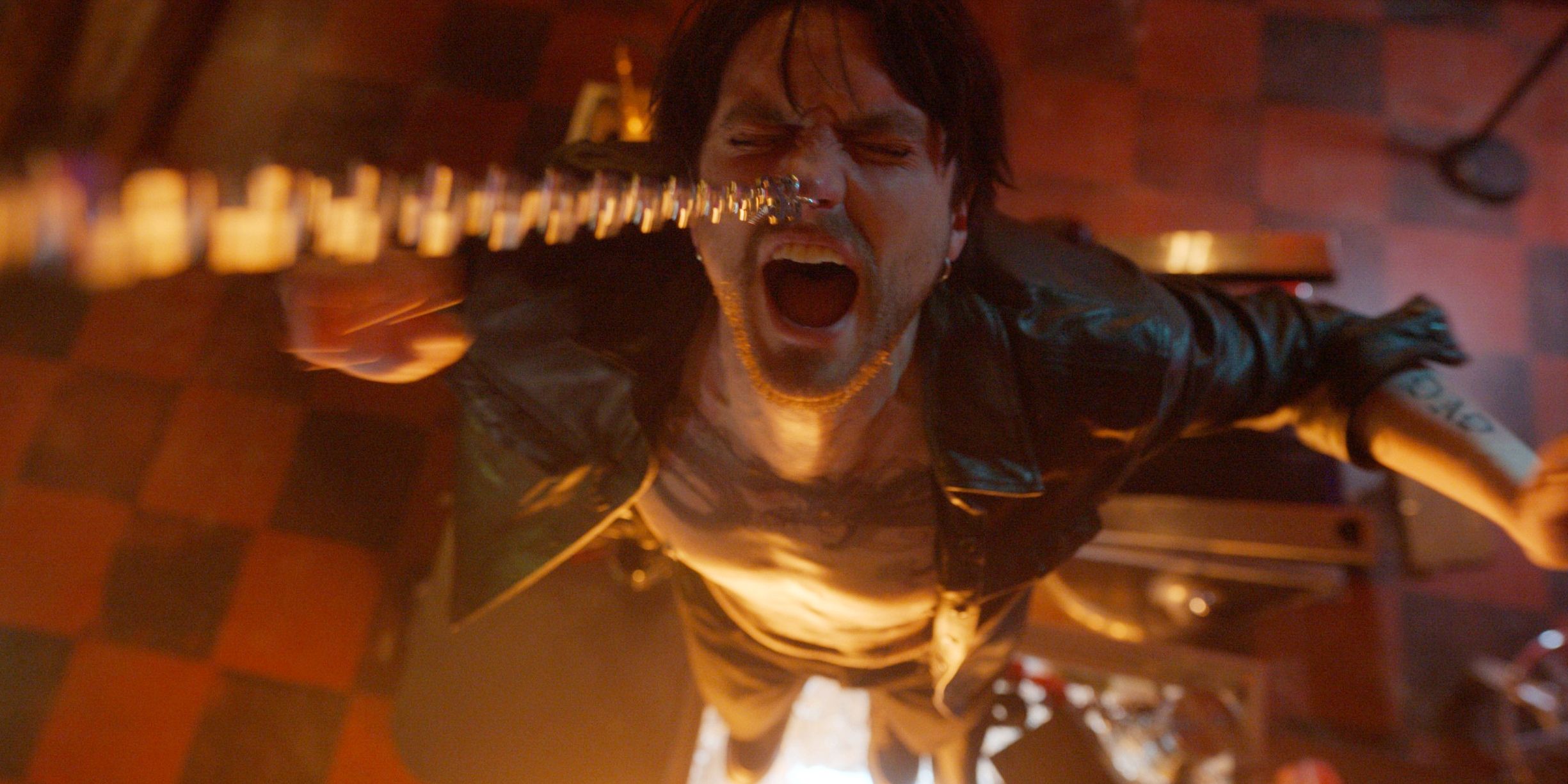
- The Fatal Payoff: The falling cable whips through the air, catching the tray of piercing needles. The over-pressurized autoclave finally explodes, sending a shard of the heavy metal door flying. This projectile hits the cable, which in turn flings a series of industrial needles directly into the character's path at terminal velocity.
Practical Effects vs. Digital Augmentation
One of the reasons the Final Destination: Bloodlines piercing scene resonates so strongly in 2026 is the production's commitment to practical gore. Directors Zach Lipovsky and Adam B. Stein opted for a "practical-first" approach, utilizing sophisticated animatronics and prosthetic molds to achieve the visceral impact of the scene.
The Use of Silicone Mandrels
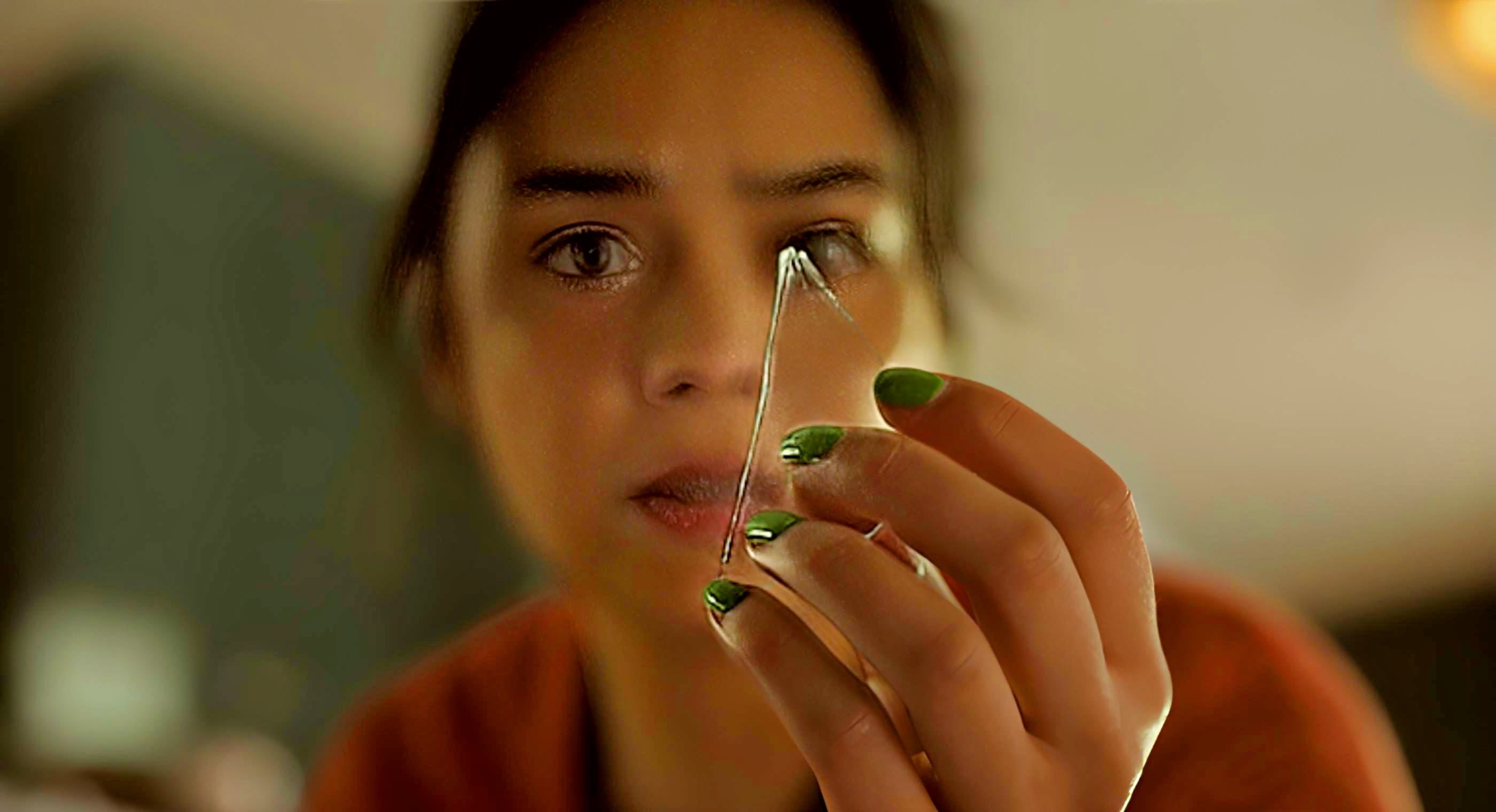
For the close-up shots of the piercing needles entering the skin, the special effects team created anatomically correct silicone replicas of the actress’s ears and neck. These replicas were fitted with internal "blood bags" and pressurized tubes to simulate the realistic spray of arterial blood. By using real surgical steel needles and high-speed Phantom cameras, the production captured the physics of the impact in a way that CGI often fails to replicate.
Mechanical Rigging
The explosion of the autoclave was a controlled pyrotechnic event. To ensure the safety of the cast while maintaining the intensity of the blast, the "shrapnel" was actually made of painted high-density foam, which was later enhanced with metallic textures in post-production. The movement of the high-tension cable was controlled by a motorized winch system, allowing for repeatable, precise movements that synchronized with the camera's path.
Digital Cleanup
While the bulk of the scene used practical elements, digital augmentation was used to remove safety wires and to refine the "near-miss" moments where needles fly inches from the actor's eyes. This hybrid approach ensures that the scene feels grounded in reality while allowing for the hyper-stylized violence the franchise is known for.
Comparative Analysis: Body Modification Deaths in the Franchise
The "piercing scene" does not exist in a vacuum; it is a spiritual successor to several other "beauty and body mod" deaths within the Final Destination universe. Comparing these scenes helps highlight how Bloodlines evolved the concept for a modern audience.
| Movie | Setting | Primary Tool of Death | Mechanism of Failure |
|---|---|---|---|
| Final Destination 3 | Tanning Salon | UV Bulbs / Heat | Blocked exit and overheating glass. |
| Final Destination 3 | Tattoo Parlor | Engine Fan / Piston | Mechanical failure of a vehicle outside. |
| Final Destination 5 | Gymnastics Center | Balance Beam / Screws | Structural instability and a falling screw. |
| Final Destination 5 | LASIK Clinic | Medical Laser | Water damage to the control unit. |
| Bloodlines (2025) | Piercing Studio | Autoclave / Needles | Pressure buildup and electrical short. |
The Bloodlines sequence is notably more complex than the tattoo parlor death in FD3. While the FD3 death was a sudden, external impact (the engine block hitting the back of the head), the Bloodlines death is internal to the environment of the shop. It plays more on the "medical horror" aspect seen in FD5's LASIK scene, where the tools meant to help or beautify the character become the instruments of their demise.
The Psychology of Needle Horror in Cinema
The effectiveness of the piercing scene lies in its appeal to "aichmophobia" (the fear of needles or pointed objects) and "belonephobia" (the fear of pins and needles). Horror cinema has long exploited these fears—most notably in Saw II’s needle pit—but Final Destination adds the element of "inevitability."
In Bloodlines, the tension is derived from the audience's knowledge that the piercing is supposed to be a controlled, sterile, and safe procedure. By introducing elements of chaos—water, fire, and mechanical failure—the film strips away the "safety" of the professional environment. The sound design plays a crucial role here; the high-pitched hiss of the autoclave and the metallic "clink" of the needles on the tray create a sensory experience that primes the audience for the eventual impact. Experts in horror psychology suggest that scenes involving the eyes or ears are particularly effective because these are our primary sensory organs; a threat to them feels like a threat to our ability to perceive and react to danger.
Frequently Asked Questions
Is the piercing scene in Bloodlines real or CGI?
The scene is a hybrid of practical effects and digital augmentation. The initial shots of the needles and the autoclave explosion used mechanical rigs and silicone prosthetics, while the final "impossible" flight paths of the projectiles were refined using CGI.
Which character dies in the piercing scene?
Stefanie, portrayed by Brec Bassinger, is the primary focus of the piercing studio sequence. Her death serves as a major turning point in the film's second act, signaling that Death's design is becoming more aggressive.
How does the piercing scene compare to the LASIK scene in Final Destination 5?
Both scenes utilize medical/professional settings to create tension. However, while the LASIK scene focuses on the fear of blindness and "locked-in" helplessness, the piercing scene in Bloodlines focuses on a chaotic chain reaction involving pressurized equipment and high-velocity projectiles.
Who directed the piercing scene in Final Destination: Bloodlines?
The scene was directed by Zach Lipovsky and Adam B. Stein. They are known for their work on Freaks and were chosen for Bloodlines specifically for their ability to execute high-concept sequences on a focused budget.
Are there any easter eggs in the piercing scene?
Yes, eagle-eyed fans have noted that the name of the piercing studio, "Hitchcock’s," is a nod to the legendary director of suspense. Additionally, the flickering neon sign in the window mimics the pattern of the flight numbers from the original Final Destination (2000).
Final Considerations for Fans and Viewers
For those analyzing the technical merits of Final Destination: Bloodlines, the piercing scene stands as a testament to the franchise's longevity. It successfully updates the "everyday phobia" formula for 2026, utilizing modern technology and superior practical effects to deliver a sequence that is both difficult to watch and impossible to look away from. If you are a fan of the series, pay close attention to the sound design during this sequence; the layering of the autoclave’s hum against the silence of the shop is where the true horror resides. For aspiring filmmakers, the scene provides a blueprint for building tension through environmental storytelling and the careful placement of "red herrings."
Image Gallery