Understanding the Impact and Reception of the Nate Bargatze Emmy Monologue
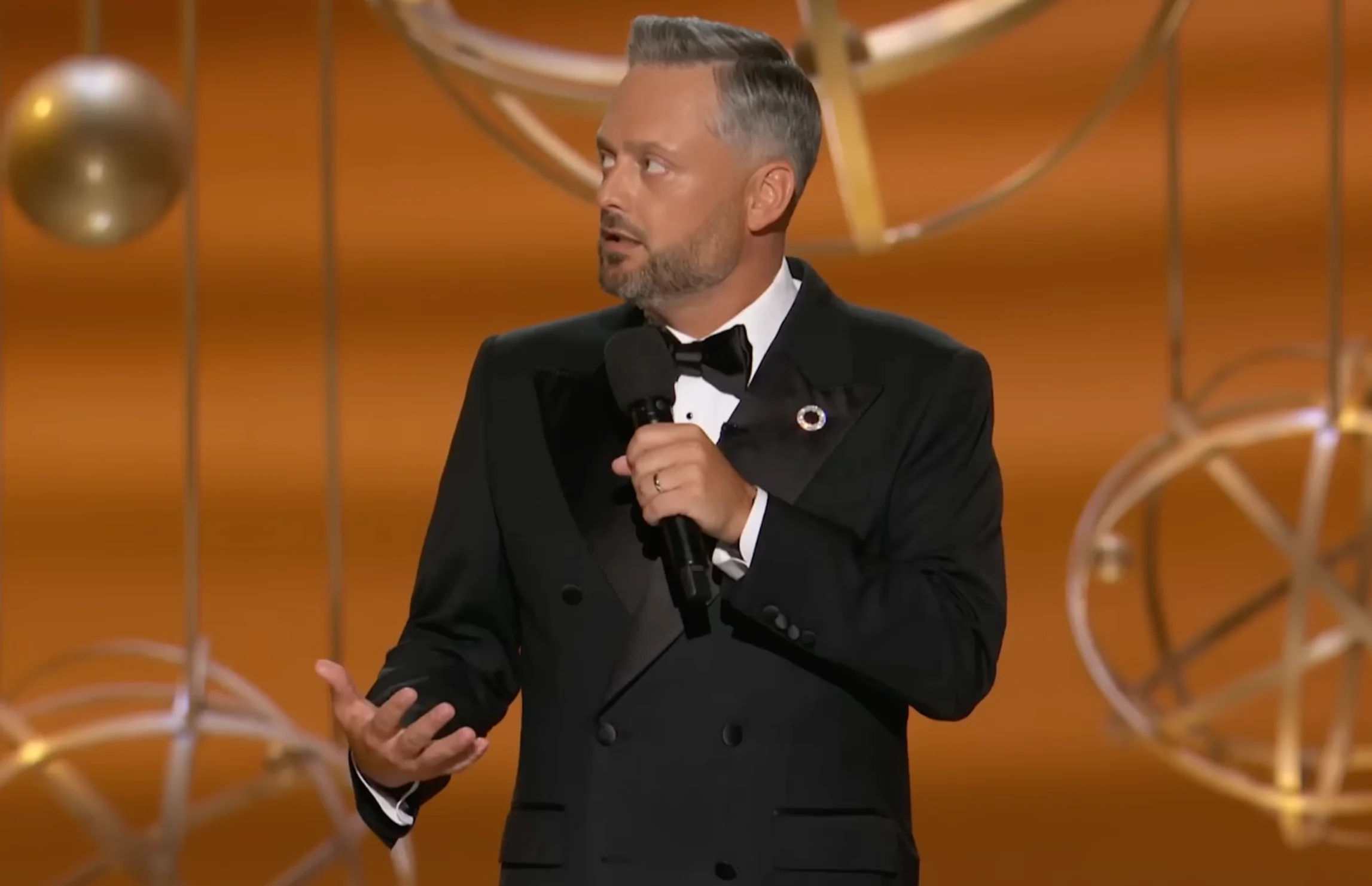
The Nate Bargatze Emmy monologue refers to the comedian’s hosting performance during the 75th Primetime Emmy Awards, which took place on January 15, 2024. As a prominent stand-up comedian known for his clean, observational, and self-de...
The Nate Bargatze Emmy monologue refers to the comedian’s hosting performance during the 75th Primetime Emmy Awards, which took place on January 15, 2024. As a prominent stand-up comedian known for his clean, observational, and self-deprecating style, Bargatze’s involvement as a presenter and his brief comedic interludes were analyzed for their departure from traditional late-night host monologues, highlighting a strategic shift toward shorter, punchier comedic segments within formal award ceremonies.
Contents
The Context of the 75th Primetime Emmy Awards
The 75th Primetime Emmy Awards faced a unique set of production challenges in early 2024. Originally scheduled for September 2023, the ceremony was postponed due to the dual Hollywood strikes involving the Writers Guild of America (WGA) and the Screen Actors Guild-American Federation of Television and Radio Artists (SAG-AFTRA). By the time the event occurred in January 2024, the industry was in a period of reflection and re-evaluation.
The decision to feature Nate Bargatze—a comedian rising rapidly in popularity due to his Netflix specials like Hello World and his record-breaking ticket sales—represented a pivot in how the Academy of Television Arts & Sciences approached the hosting duties. Rather than relying on a traditional late-night monologue that might span 10 to 15 minutes, the production leaned into the existing comedic strength of individual presenters. Bargatze’s participation was characterized by his signature deadpan delivery, which provided a stark contrast to the often high-energy or politically charged monologues of previous years.
Analyzing Bargatze’s Comedic Style
To understand why the "monologue" (or his comedic segment) resonated, it is necessary to examine Bargatze’s approach to comedy. Unlike performers who rely on topical satire or aggressive roasting, Bargatze’s humor is rooted in the mundane aspects of American life. His timing is deliberate, often utilizing long, uncomfortable silences to heighten the comedic tension before delivering a simple, devastating punchline.
During his Emmy appearance, this "slow-burn" technique was applied to a high-stakes environment. In a room filled with the industry's most recognizable faces, Bargatze utilized a style that felt intimate rather than performative. By focusing on the absurdity of his own presence at such a prestigious event—effectively positioning himself as an "outsider" looking in—he mirrored the sentiment of a viewing audience that often finds the disconnect between Hollywood and reality quite vast.
Comparisons in Modern Hosting Formats
In recent years, the industry has experimented with various hosting formats for award shows. The shift away from the traditional, long-form opening monologue toward more fragmented, skit-heavy, or guest-star-led formats reflects changing viewer habits in the age of viral social media clips.
| Host Approach | Typical Content | Impact on Viewer Retention |
|---|---|---|
| Traditional Monologue | Long-form topical satire, celebrity roasts | High initial interest, risk of fatigue |
| Host-as-Curator | Transitions between segments, brief jokes | Lower individual engagement, smoother pacing |
| Fragmented Comedy | Pre-recorded skits, specific guest-star bits | High viral potential, disjointed narrative |
| Deadpan/Observational | Short, self-deprecating commentary | High relatability, unexpected comedic relief |
Bargatze’s contribution fell into the fourth category. By eschewing the "roast" format that had become a standard fixture of award shows, he offered a reprieve from the tension that often permeates these events. This approach is increasingly favored by producers looking to maximize engagement on platforms like YouTube and TikTok, where a single, well-executed two-minute bit performs better than a twelve-minute monologue.
Key Elements of the Performance
The success of Bargatze’s time on stage was largely attributed to his perceived authenticity. In a televised environment often criticized for being overly scripted, his stage persona remains remarkably consistent whether he is in a small comedy club or at a televised gala.
1. Delivery and Timing
Bargatze’s command of timing is his most distinct technical skill. In a live television environment, where "dead air" is often perceived as a technical failure, Bargatze uses silence as a structural element. This requires a high level of confidence from both the performer and the production crew, as it defies the conventional wisdom of constant banter.
2. Relatability and Subject Matter
While many award show hosts lean into the "inside baseball" of the television industry, Bargatze maintained his focus on the common man's experience. His comedy often circles back to the idea that he is surprised to be in any given room, which serves as a grounding force. For the audience at home, this makes him a surrogate for the average viewer who is watching the glitz of the Emmys from their living room.
3. The "Clean" Comedy Factor
The industry often struggles to balance the request for "safe" content with the desire for edgy comedy. Bargatze’s brand of clean, family-friendly humor allowed the Academy to host a segment that was widely palatable across different demographics without resorting to material that might alienate corporate sponsors or family-viewing households.
Challenges of Hosting in the Current Era
Hosting an event like the Emmys has become increasingly difficult. As television becomes more fragmented due to streaming services, there is no longer a single, monolithic "television culture" that every viewer shares. An effective host today must bridge the gap between legacy broadcast television and the niche, high-production streaming content that dominates the current landscape.
Bargatze’s performance highlighted the difficulty of appealing to a fractured audience. By not trying to be everything to everyone—and by acknowledging that he was perhaps not the "typical" choice for an Emmy host—he bypassed the criticism often leveled at hosts who try too hard to be relevant to every specific sub-genre of television.
Frequently Asked Questions
Did Nate Bargatze host the entire Emmy ceremony?
No. Nate Bargatze was one of several presenters and comedic figures involved in the 75th Emmy Awards. Unlike traditional years with a single "host," the 2024 ceremony utilized a series of hosts and presenters to move the show forward, a decision influenced by the scheduling delays of the previous year.
Why is his Emmy appearance referred to as a "monologue"?
The term is frequently used by fans and search engines to describe his comedic set during the show. While technically a presentation segment rather than an opening monologue, the performance fulfilled the same function: providing an initial burst of humor to set the tone for the broadcast.
How does Bargatze’s style differ from typical award show hosts?
Most award show hosts rely on topical monologues, celebrity roasting, and political satire. Bargatze’s style is primarily observational, deadpan, and self-deprecating. He avoids aggressive humor in favor of relatable, mundane stories, which sets his performance apart from the high-octane delivery typically associated with late-night show hosts.
Was his Emmy performance considered successful?
Critical reception was generally positive, with many reviewers praising his refreshing and understated delivery. It was noted for being one of the few moments during the extended, multi-hour ceremony that felt grounded and genuinely funny, helping to alleviate the "fatigue" often associated with long-form award shows.
Can his style be adapted for other award shows?
Yes, and the industry has already begun to see a trend toward "Bargatze-esque" performers. Award show producers are increasingly looking for comedians who can provide short, impactful, and "brand-safe" humor that performs well on social media platforms, rather than relying on a single, long-form monologue that has to carry the weight of the entire show.
Next Steps for Fans of Stand-Up Comedy
For those interested in exploring the style of comedy featured during the 2024 Emmy broadcast, the best course of action is to review the performer’s long-form specials. Nate Bargatze’s work is primarily distributed through major streaming platforms where his full comedy specials are available. To better understand his influence on the industry, viewers should look at his Hello World (2023) and The Tennessee Kid (2019) specials, which establish the observational techniques he later brought to the Emmy stage. Furthermore, following updates from the Academy of Television Arts & Sciences regarding future award show formats will provide insight into whether this shift toward segmented, multi-host ceremonies will become the industry standard for 2027 and beyond.
Image Gallery