Kenn Lean and the Future of Data Center Cooling
Kenn Lean is a prominent executive and thought leader in the data center infrastructure industry, known for his instrumental role in advancing high-efficiency thermal management solutions. In 2026, his vision of integrating liquid cool...
Kenn Lean is a prominent executive and thought leader in the data center infrastructure industry, known for his instrumental role in advancing high-efficiency thermal management solutions. In 2026, his vision of integrating liquid cooling and modular architectures has become the blueprint for managing the extreme heat generated by generative AI and high-performance computing (HPC) clusters.
Contents
The Influence of Kenn Lean on Precision Thermal Management
Throughout his career, notably during his tenure in senior leadership roles at Schneider Electric and later at Nortek Air Solutions, Kenn Lean has been a vocal advocate for transitioning away from "one-size-fits-all" cooling. His approach emphasizes precision—delivering cooling exactly where the heat is generated—which has proven essential as rack densities have climbed from a historical average of 5–10 kW to the 50–100 kW ranges seen in 2026.
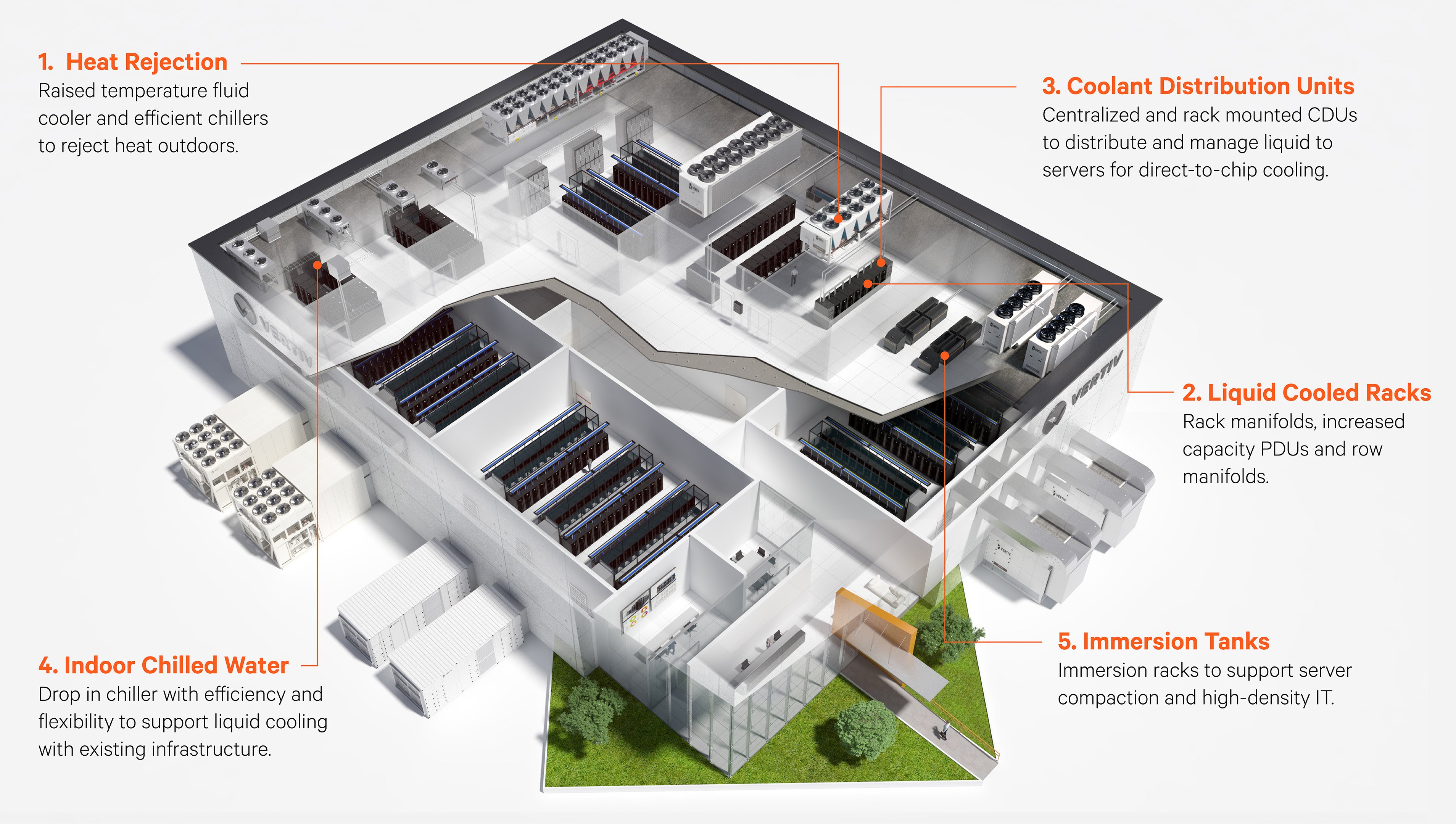
Lean’s philosophy often bridges the gap between traditional mechanical engineering and the rapid agility required by modern cloud providers. By championing modular cooling systems, he helped the industry move toward a "build-as-you-grow" model. This modularity reduces upfront capital expenditure (CAPEX) while ensuring that data centers do not over-provision cooling for empty white space. In the current landscape, Lean’s influence is most visible in the widespread adoption of Coolant Distribution Units (CDUs) and secondary fluid loops that allow air-cooled facilities to integrate liquid-cooled racks without a complete structural overhaul.
His work has consistently highlighted that cooling is not just a utility but a strategic asset. By optimizing thermal paths, Lean argued that operators could significantly improve their Power Usage Effectiveness (PUE), a metric that has become a legal mandate in several jurisdictions by 2026. His leadership helped normalize the conversation around Direct-to-Chip (D2C) cooling long before it became a commercial necessity for GPU-heavy workloads.
The 2026 Thermal Wall: Why Air Cooling is No Longer Enough
The year 2026 marks a definitive turning point in data center physics. For decades, Computer Room Air Conditioning (CRAC) and Computer Room Air Handler (CRAH) units were sufficient to maintain server health. However, the "Thermal Wall"—the point at which air can no longer carry heat away fast enough to prevent processor throttling—has been breached by the latest generation of Blackwell and post-Blackwell GPU architectures.
Air cooling relies on the heat capacity of air, which is significantly lower than that of water or specialized dielectric fluids. To cool a 100 kW rack with air alone, the volume of air required would create "hurricane-force" winds within the data hall, causing acoustic vibration issues and immense energy waste from fan power. Kenn Lean predicted this shift, noting that as chip TDP (Thermal Design Power) exceeded 400W–700W, the industry would have no choice but to bring liquid directly to the silicon.
The transition in 2026 is not merely about replacing fans with pumps. It involves a fundamental redesign of the data center floor. Traditional raised floors are being phased out in favor of slab floors with heavy-duty piping headers. This shift represents the realization of Lean’s advocacy for "dense-compute readiness," where the infrastructure is built to support the weight and fluid requirements of liquid-cooled systems from day one.
Liquid Cooling Architectures: From Direct-to-Chip to Immersion
Under the influence of leaders like Lean, the market has bifurcated into two primary liquid cooling paths. Both are designed to handle the thermal demands of 2026, but they serve different operational needs.
Direct-to-Chip (D2C) Liquid Cooling
Direct-to-Chip, also known as cold plate cooling, is currently the most widely adopted liquid solution. It involves mounting a metal plate with internal fluid channels directly onto the CPU or GPU. A coolant (usually a water-glycol mixture) circulates through the plate, absorbing heat and transporting it to a heat exchanger.
- Why it dominates: D2C allows operators to keep their existing rack formats and server orientations. It targets only the hottest components (processors), while low-power components like RAM and storage are still cooled by residual airflow.
- Kenn Lean’s Role: Lean’s work in the 2010s and early 2020s focused on making these systems leak-proof and serviceable. The introduction of "blind-mate" connectors, which allow technicians to swap servers without manually disconnecting fluid lines, was a major leap forward in making D2C enterprise-ready.
Immersion Cooling (Single and Two-Phase)
Immersion cooling involves submerging the entire server in a non-conductive (dielectric) liquid. This method provides the highest possible thermal transfer efficiency because the fluid touches every component.
- Single-Phase: The fluid remains a liquid and is circulated via a pump to a heat exchanger. It is valued for its simplicity and low maintenance.
- Two-Phase: The fluid boils when it touches hot components, and the resulting vapor rises, condenses on a coil, and falls back as a liquid. While more efficient, it requires sealed tanks and is more complex to manage.
- The Future Outlook: In 2026, immersion is primarily used in specialized AI "farms" and edge locations where space is at a premium and extreme temperatures are the norm.
Sustainability and Heat Recovery in the Modern Data Center
A key tenet of Kenn Lean’s vision is the environmental responsibility of the data center. In 2026, the industry is under intense pressure to reduce Water Usage Effectiveness (WUE) and move toward "Net Zero" operations. Liquid cooling is a primary enabler of these goals.
Liquid-cooled systems can operate with much warmer facility water (often up to 45°C or 113°F) compared to air-cooled systems which require chilled water. This allows for "chiller-less" cooling in many climates, using only dry coolers to reject heat to the atmosphere. This drastically reduces electricity consumption.
Furthermore, the heat captured by liquid is "high-grade" heat, meaning it is concentrated enough to be reused. In 2026, we see a surge in district heating projects where data center waste heat is pumped into local municipal grids to heat homes and greenhouses. Lean’s advocacy for integrated infrastructure helped pave the way for these circular economy models, where the data center acts as a thermal power plant for its community.
Economic Implications and Total Cost of Ownership (TCO)
While the shift to liquid cooling requires a higher initial investment in piping and CDUs, the long-term TCO is increasingly favorable. By 2026, the efficiency gains are undeniable.
| Feature | Traditional Air Cooling | Direct-to-Chip (D2C) | Immersion Cooling |
|---|---|---|---|
| Max Rack Density | 15–20 kW | 60–100 kW | 100 kW+ |
| Typical PUE | 1.3 – 1.6 | 1.1 – 1.2 | 1.03 – 1.07 |
| Water Consumption | High (Evaporative) | Low (Closed Loop) | Minimal |
| Maintenance | Easy / Familiar | Moderate (Fluid Mgmt) | Complex (Tank Access) |
| Retrofit Potential | N/A | High | Low (Requires New Pods) |
The reduction in fan power alone can account for a 10–15% reduction in total facility energy use. When combined with the ability to pack more compute into a smaller footprint, the "cost per watt" of liquid cooling is now lower than air cooling for any facility supporting modern AI workloads.
The Role of AI in Cooling Management
Paradoxically, AI is being used to cool the very hardware that runs it. Kenn Lean has frequently discussed the necessity of "intelligent cooling." In 2026, static cooling setpoints are a thing of the past. Modern facilities utilize "Digital Twins"—virtual replicas of the data center that use real-time sensor data to predict thermal hotspots before they occur.
These AI-driven management systems adjust pump speeds and valve positions in real-time based on the computational load of the servers. If a specific rack begins a heavy training job, the cooling system pre-emptively increases flow to that sector. This level of automation is what allows 2026 data centers to operate at such high densities with minimal human intervention.
FAQ
Who is Kenn Lean in the context of data centers? Kenn Lean is a senior executive and engineer with extensive experience in the thermal management industry. He is recognized for his leadership at Schneider Electric and Nortek Air Solutions, where he pioneered modular, scalable, and liquid-cooled infrastructure designs that have become standard in 2026.
Why is liquid cooling becoming the standard in 2026? Liquid cooling is now mandatory for high-density AI and HPC workloads because air lacks the thermal conductivity to cool chips that exceed 400W–500W. Liquid is approximately 3,000 times more effective at carrying heat than air, allowing for tighter component packaging and better energy efficiency.
What is a Coolant Distribution Unit (CDU)? A CDU is a specialized piece of equipment that manages the exchange of heat between the building's chilled water loop and the server's liquid cooling loop. It ensures that the fluid entering the servers is at the correct temperature, pressure, and purity level to prevent leaks or corrosion.
How does Kenn Lean’s vision impact data center sustainability? Lean’s vision emphasizes high-efficiency cooling that reduces electricity waste (lower PUE) and enables heat recovery. By utilizing warmer water for cooling, data centers can eliminate energy-intensive chillers and repurpose captured heat for district heating, aligning with 2026 ESG mandates.
Can existing air-cooled data centers be retrofitted for liquid cooling? Yes, through a hybrid approach. Many operators use CDUs to bring liquid cooling to specific high-density rows within an otherwise air-cooled hall. This "modular retrofit" strategy was a key concept championed by Kenn Lean to help legacy facilities remain competitive in the AI era.
Practical Recommendation for Data Center Operators
As we navigate the landscape of 2026, it is recommended that operators conduct a Thermal Readiness Audit. This audit should evaluate whether your current floor loading and piping infrastructure can support the transition to liquid-to-the-rack. Following the modular principles advocated by Kenn Lean, start by implementing hybrid rows with Direct-to-Chip cooling. This allows for the immediate deployment of AI hardware while providing a scalable path toward full liquid immersion as your density requirements grow.
Image Gallery