The Complete History of Shawn Johnson’s Olympic Journey
Shawn Johnson’s Olympic journey is defined by her dominant performance at the 2008 Beijing Games, where she captured four medals, including a gold on the balance beam. Her path was characterized by a unique, low-volume training philoso...
Shawn Johnson’s Olympic journey is defined by her dominant performance at the 2008 Beijing Games, where she captured four medals, including a gold on the balance beam. Her path was characterized by a unique, low-volume training philosophy under coach Liang Chow, which propelled her from a small gym in Iowa to the pinnacle of international gymnastics.
Contents
The story of Shawn Johnson is often cited as a masterclass in "power gymnastics," a style that emphasized explosive strength, technical precision, and a famously upbeat demeanor. While many elite gymnasts of her era trained 40 or more hours per week, Johnson’s journey was distinct for its efficiency and her rapid ascent from the junior ranks to becoming the face of the 2008 U.S. Olympic Team. As of 2026, her career remains a cornerstone of American sports history, representing a bridge between the traditional methodologies of the 1990s and the modern era of athlete-centric coaching.
The Foundations: Iowa Roots and Liang Chow’s Methodology
The genesis of Shawn Johnson’s Olympic journey did not occur in a traditional gymnastics powerhouse state like Texas or California. Instead, it began in West Des Moines, Iowa. In 1998, a former Chinese national team member named Liang Chow opened Chow's Gymnastics and Dance Institute. Johnson was one of his first students, and the partnership between the two would eventually redefine the American approach to the sport.
Unlike many of her contemporaries who moved away from home to train at specialized residential academies, Johnson remained in public school while training. Coach Chow implemented a revolutionary philosophy: high-intensity training with lower overall volume. Johnson typically trained 20 to 25 hours per week, significantly less than the industry standard for elite prospects. This approach was designed to preserve her physical health and prevent psychological burnout, ensuring she peaked exactly when the four-year Olympic cycle required.
By 2007, the effectiveness of this training became undeniable. Johnson entered the senior international level and immediately dominated, winning the individual all-around titles at the American Cup, the Pan American Games, and the U.S. National Championships. Her "journey" transitioned from a local success story to a national expectation of Olympic gold.
The 2007 World Championships: A Prelude to Beijing
Before an athlete can reach the Olympic podium, they must prove their mettle on the World stage. The 2007 World Artistic Gymnastics Championships in Stuttgart, Germany, served as the definitive litmus test for Johnson. At just 15 years old, she led the United States team to a gold medal and secured the individual all-around gold, becoming only the fourth American woman to do so at the time.
This victory was significant because it established Johnson as the "beating heart" of the U.S. squad. She also won the floor exercise gold medal, demonstrating a level of difficulty and execution that made her the favorite for the upcoming 2008 Beijing Olympics. The technical depth of her routines—specifically her "full-in" back tuck on the balance beam and her high-flying tumbling passes—set a new standard for the "open-ended" scoring system that had been introduced in 2006.
The 2008 Beijing Olympic Games: The Performance of a Lifetime
The 2008 Beijing Olympics were perhaps the most anticipated in gymnastics history, fueled by a burgeoning rivalry between the United States and the host nation, China. Johnson arrived in Beijing under immense pressure, featuring on magazine covers and being the centerpiece of NBC’s primetime coverage.
Team and All-Around Competitions
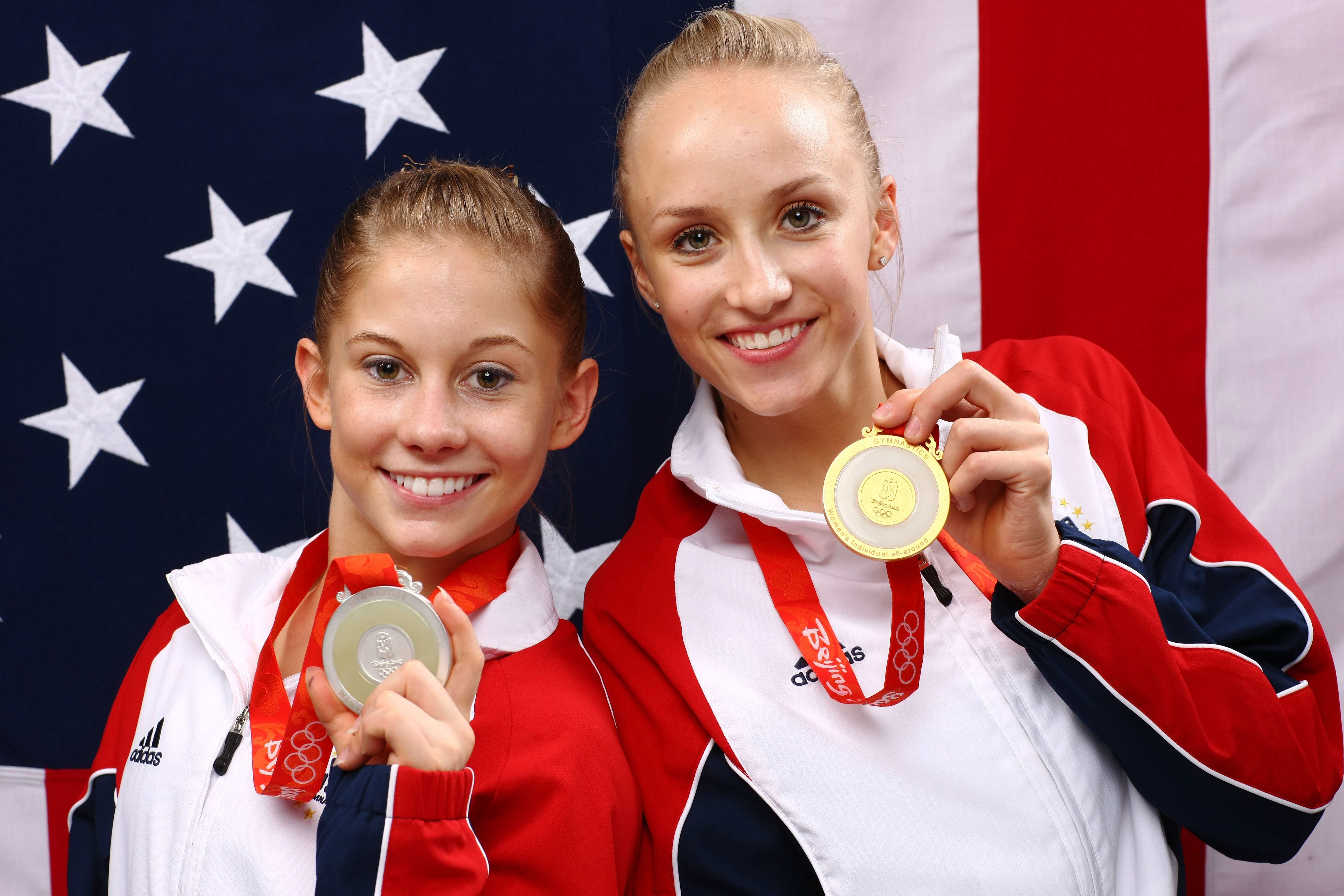
The team competition was a grueling battle of nerves. Despite a strong performance from Johnson, the U.S. team finished with the silver medal, narrowly losing to China. However, the narrative quickly shifted to the individual all-around final, which featured a showdown between Johnson and her teammate, Nastia Liukin.
Johnson performed nearly flawlessly, showcasing her trademark power. However, the scoring system of the era favored the long, lean lines and high-difficulty "E-score" (execution) of Liukin’s uneven bars routine. Johnson finished with the silver medal, a result that sparked significant debate among fans regarding the balance between power and artistry. Despite the disappointment of missing the top spot, Johnson’s grace in defeat and her genuine celebration of Liukin’s win became a defining moment of sportsmanship in Olympic history.
Individual Event Finals
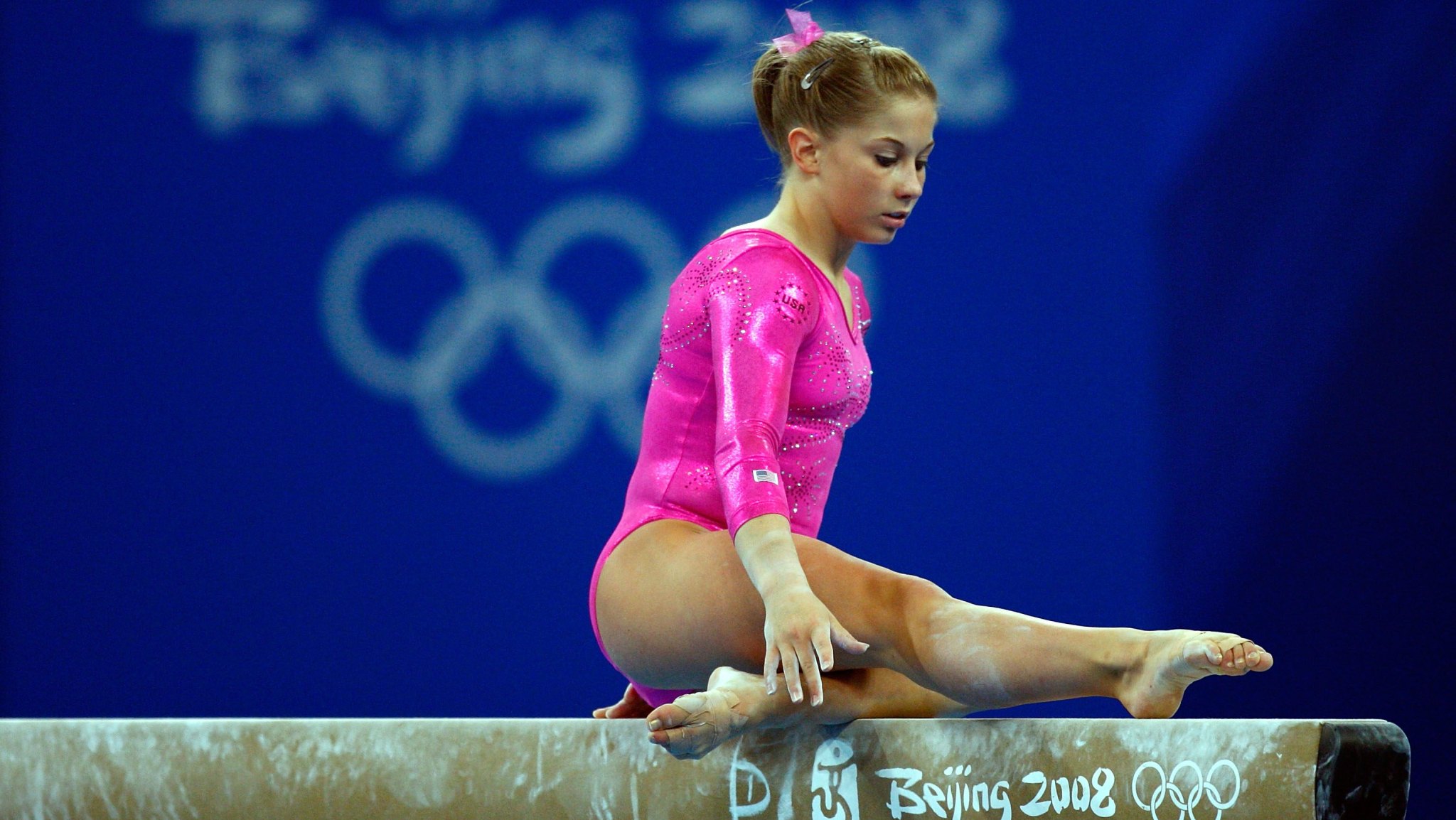
Johnson’s journey reached its emotional and competitive peak during the individual event finals. After winning another silver on the floor exercise, she entered the balance beam final. The beam is notoriously the most volatile event in gymnastics, where a single centimeter of misalignment can end a podium run.
Johnson delivered a routine of extraordinary stability and difficulty. Her landing was emphatic, securing a score of 16.225. This performance earned her the Olympic gold medal, the only gold won by an American female gymnast in an individual event at the 2008 Games. This victory cemented her legacy, ensuring she left Beijing not just as a participant, but as an Olympic Champion.
Summary of Shawn Johnson’s 2008 Olympic Results
The following table outlines the specific scores and outcomes of Johnson’s primary events during the Beijing Games.
| Event | Final Score | Medal Result | Key Technical Note |
|---|---|---|---|
| Team Final | 186.525 (Team) | Silver | Johnson competed on all four apparatuses. |
| Individual All-Around | 62.725 | Silver | Narrowly beaten by Nastia Liukin (63.325). |
| Floor Exercise | 15.500 | Silver | Featured a high-difficulty layout full-in. |
| Balance Beam | 16.225 | Gold | Completed a flawless standing full back tuck. |
| Vault | 15.525 (AA) | N/A | Primarily utilized the Amanar (2.5 twisting Yurchenko). |
The Comeback Attempt and the 2012 Retirement
Following the 2008 Olympics, Johnson took a hiatus from the sport, during which she won the eighth season of Dancing with the Stars. However, the "Olympic itch" remained. In 2010, she announced a comeback with the goal of competing at the 2012 London Olympics.
Her journey back to the elite level was fraught with physical challenges. Shortly before her announcement, she suffered a torn ACL in a snow skiing accident. The recovery was arduous, but by 2011, she had regained enough form to be named to the U.S. team for the Pan American Games, where she won a silver medal on the uneven bars and a gold with the team.
However, the reality of elite gymnastics is unforgiving on the joints. In June 2012, just weeks before the Olympic Trials for the London Games, Johnson announced her retirement. Her left knee, plagued by recurring pain and instability following the ACL tear, could no longer withstand the force required for her high-difficulty tumbling passes. While she did not make a second Olympic team, her attempt was widely respected as a testament to her dedication to the sport.
Impact on the Sport and Legacy in 2026
As of 2026, Shawn Johnson’s impact on gymnastics is viewed through the lens of longevity and athlete wellness. She was one of the first high-profile gymnasts to speak openly about the pressures of body image and the psychological toll of elite competition. By doing so, she helped pave the way for the "athlete-first" movements seen in the 2020s.
Furthermore, the "Iowa Model" established by Coach Chow and Johnson proved that world-class results could be achieved without the "burn and churn" mentality of high-volume training. This has influenced modern coaching techniques that prioritize recovery and technical efficiency over sheer hours in the gym. Johnson remains a prominent figure in the sports world, working as an analyst, entrepreneur, and advocate for youth sports safety.
Frequently Asked Questions
What was the score difference between Shawn Johnson and Nastia Liukin in 2008?
In the 2008 Olympic individual all-around final, Shawn Johnson finished with a total score of 62.725, while Nastia Liukin finished with 63.325. The 0.600 difference was largely attributed to Liukin’s higher Start Value and Execution scores on the uneven bars, which was Johnson’s weakest event relative to her other three apparatuses.
Why did Shawn Johnson retire before the 2012 Olympics?
Johnson retired in June 2012 due to chronic issues with her left knee. After tearing her ACL in a 2010 skiing accident, she struggled with persistent swelling and pain during the high-impact landings required for elite gymnastics. She determined that her knee could no longer support the physical demands necessary to be competitive at the Olympic level.
Who was Shawn Johnson’s coach throughout her Olympic journey?
Her primary coach was Liang Chow. A former member of the Chinese national team, Chow is credited with developing Johnson’s unique style and managing her career with a training schedule that was considered remarkably light (20-25 hours per week) for an Olympic gold medalist.
How many Olympic medals did Shawn Johnson win in total?
Shawn Johnson won a total of four Olympic medals, all at the 2008 Beijing Games. These included one Gold (Balance Beam) and three Silvers (Individual All-Around, Floor Exercise, and Team Competition).
Did Shawn Johnson ever compete in the Olympics after 2008?
No. While she attempted a comeback for the 2012 London Olympics and successfully competed at the 2011 Pan American Games, she retired shortly before the 2012 Olympic Trials due to her knee injury.
Recommended Next Actions
To truly appreciate the technical mastery of Shawn Johnson’s Olympic journey, enthusiasts should study the archived footage of her 2008 balance beam routine. Observers should pay close attention to her "standing full" (a back flip with a full twist) and her dismount, which are still considered benchmarks for stability. For those interested in the evolution of the sport, comparing her 2008 routines to the current 2024-2028 FIG (International Gymnastics Federation) Code of Points offers valuable insight into how much the "power" style she championed has influenced modern scoring.
Image Gallery