The Scariest NBA Players of All Time: A Deep Dive into Basketball's Most Intimidating Legends
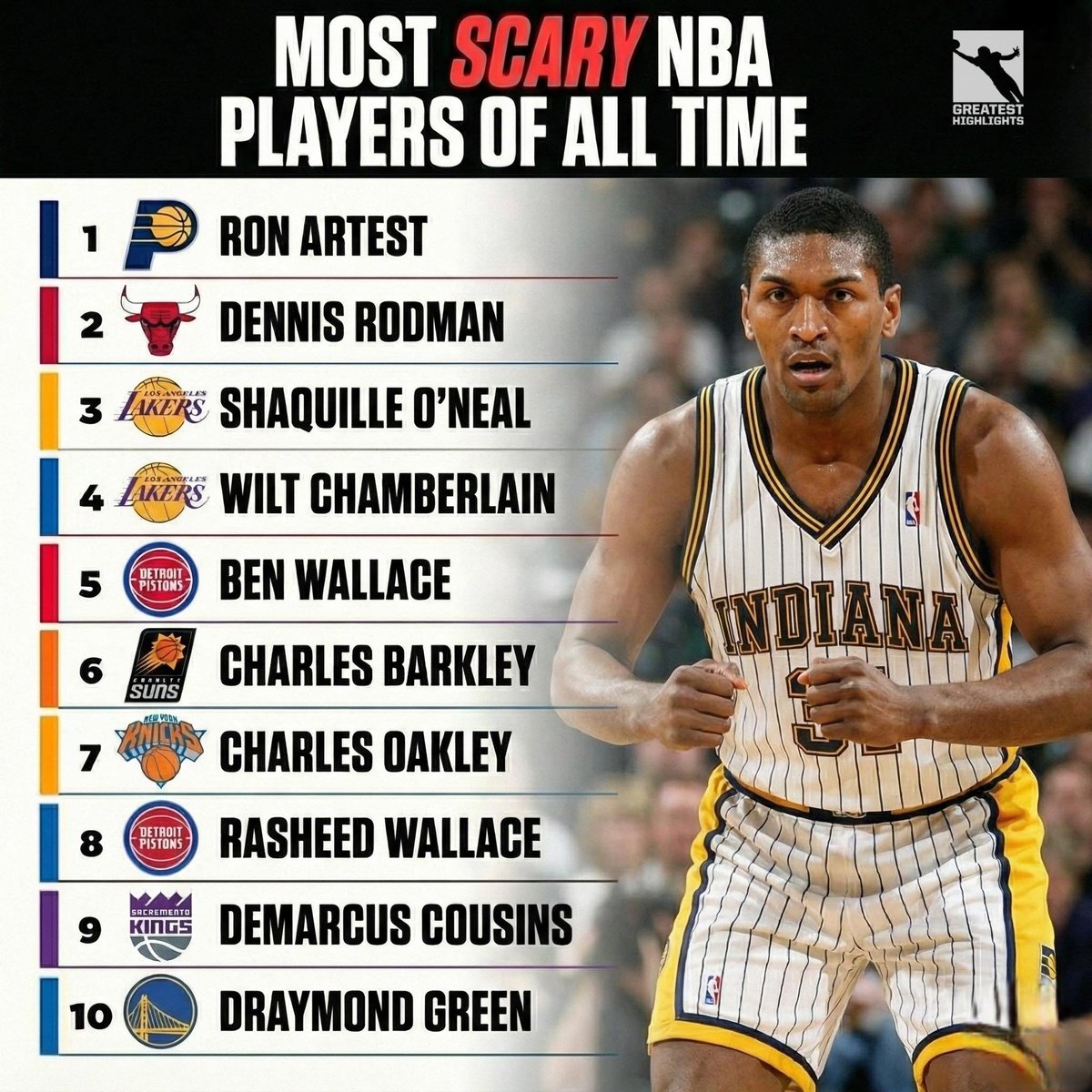
Throughout the history of the National Basketball Association (NBA), victory has often belonged to the most skilled shooters, playmakers, and tacticians. However, a select group of players controlled the court through absolute terror....
Throughout the history of the National Basketball Association (NBA), victory has often belonged to the most skilled shooters, playmakers, and tacticians. However, a select group of players controlled the court through absolute terror. Whether using overpowering physical strength, aggressive defensive tactics, unpredictable tempers, or psychological warfare, these players forced opponents to second-guess every drive into the paint and every interaction on the floor.
Contents
Evaluating the scariest NBA players of all time requires examining more than just traditional box scores or championship rings. Intimidation in professional basketball manifests in distinct forms: the physical enforcer who inflicts punishment on opponents, the dominant force whose raw athletic power breaks equipment, and the relentless psychological competitor who dismantles a rival's confidence before tip-off.
The Anatomy of Intimidation in Basketball
Intimidation on an NBA court is not uniform. Across different eras, rule changes, and strategic evolutions, players have weaponized various attributes to instill fear in their opponents.
Types of NBA Intimidation:
Physical Enforcers (Laimbeer, Oakley)
Pure Power Dominance (Shaq, Wilt)
Psychological Warfare (Jordan, Garnett)
Shot-Blocking Terrors (Wallace, Mutombo)
Physical Enforcers: Players who operate on the edge of legality (and often cross it). They deliver hard fouls, set punishing screens, and use physical force to establish control over the floor.
Pure Power Dominance: Athletes whose physical dimensions, strength, and explosive athleticism make them unguardable, forcing opposing coaches to alter their entire defensive schemes.
Psychological Warfare: Competitors who use non-stop verbal attacks, extreme intensity, and mind games to break an opponent's mental focus.
Shot-Blocking Terrors: Rim protectors whose presence turns the paint into a high-risk zone, causing drivers to alter their shots or hesitate entirely.
The Ultimate Physical Enforcers
Bill Laimbeer
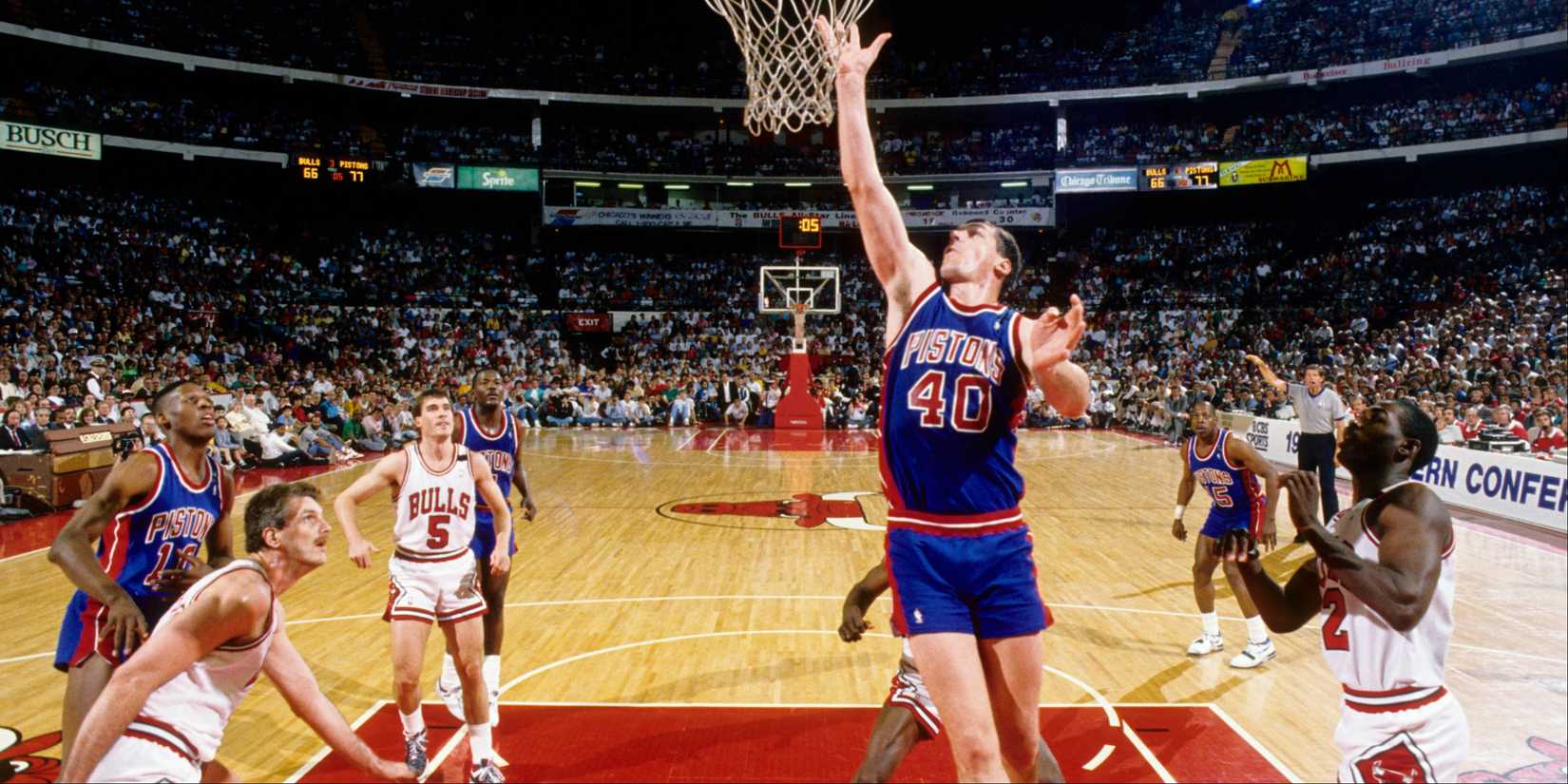
As the anchor of the Detroit Pistons' "Bad Boys" teams in the late 1980s and early 1990s, Bill Laimbeer was widely considered the most hated—and feared—player in the league. Laimbeer did not rely on elite vertical athleticism; instead, he mastered the art of physical confrontation, psychological provocation, and hard fouls.
Laimbeer operated under a philosophy that any opponent entering the paint was subject to physical contact. His foul tactics were designed not just to stop a layup, but to discourage future drives. Superstars like Michael Jordan, Scottie Pippen, and Larry Bird routinely bore the brunt of Laimbeer’s physical play. His ability to provoke opposing stars into technical fouls or ejections made him a defensive weapon who destabilized entire teams.
Charles Oakley
Charles Oakley built a 19-year NBA career on an uncompromising, physical style of basketball. Serving as Michael Jordan’s bodyguard during his early years with the Chicago Bulls, and later as the defensive heart of the 1990s New York Knicks, Oakley made the painted area uncomfortable for any driver.
Oakley was renowned for setting painful, brick-wall screens and delivering fouls that made opponents think twice before attacking the rim. Unlike players who used physical play purely for show, Oakley possessed legitimate strength and toughness that commanded respect across the entire league. Opponents recognized that challenging Oakley meant absorbing real physical consequences.
Ron Artest (Metta Sandiford-Artest)
Ron Artest combined elite physical strength with explosive lateral quickness, making him one of the most formidable perimeter defenders in basketball history. Winning the NBA Defensive Player of the Year award in 2004, Artest possessed a physical style of play that completely disrupted offensive game plans.
What made Artest terrifying to opponents was his unpredictable intensity. He played with a chaotic energy that often left rivals visually uncomfortable on the court. His involvement in the infamous 2004 "Malice at the Palace" brawl reinforced his reputation as a player who would never back down from confrontation, solidifying his spot among the most intimidating figures in sports history.
Rick Mahorn
Partnering with Bill Laimbeer in Detroit, Rick Mahorn was dubbed by announcer Dick Vitale as the "Badest Boy of them all." Mahorn’s game was centered on low-post physical dominance. He used his broad frame to physically wear down opposing forwards and centers over four quarters, creating an atmosphere where driving into the paint carried a guarantee of hard impact.
Pure Physical Dominance and Rim Terrors
Shaquille O'Neal
Shaquille O'Neal presented a physical challenge unmatched in modern basketball. Standing 7-foot-1 and weighing over 300 pounds during his peak years with the Orlando Magic and Los Angeles Lakers, O'Neal combined massive size with quickness and power.
- Opponent Drives into Paint
- Encounters Shaq's Size/Power
- Shot Altered/Blocked or Hard Contact
O’Neal was so physically dominant that he repeatedly shattered backboards during his early career, prompting the NBA to reinforce backboard stanchions. Opposing teams had to restructure their rosters, carrying extra center depth purely to foul O'Neal and slow him down—a tactic that led to the "Hack-a-Shaq" era. Entering the lane against O'Neal during his prime was a punishing experience that intimidated even seasoned veteran big men.
Wilt Chamberlain
Wilt Chamberlain’s physical dominance during the 1960s and 1970s remains legendary. Standing 7-foot-1 with extraordinary track-and-field athleticism, Chamberlain was so physically superior to his contemporaries that the NBA altered multiple rules to balance the game—widening the lane, instituting offensive goaltending rules, and revising free-throw regulations.
Stories of Chamberlain's strength are well-documented throughout basketball history. Opponents regularly reported being afraid to contest his dunks or clear rebounds near him, as his raw power overwhelmed anyone attempting to block his path to the rim.
Ben Wallace
Undrafted out of Virginia Union, Ben Wallace grew into one of the most terrifying defensive centers of the modern era. Despite being undersized for a center at 6-foot-9, Wallace used extraordinary muscle mass, rapid reaction time, and relentless intensity to win four NBA Defensive Player of the Year awards (2002, 2003, 2005, 2006).
As the defensive center for the 2004 champion Detroit Pistons, Wallace transformed the paint into a high-rejection area. His combination of extreme physical conditioning and aggressive shot-blocking forced opponents to alter their offensive attacks entirely.
Psychological Terrors: Intimidation Through Mind Games
Michael Jordan
While Michael Jordan is celebrated as arguably the greatest basketball player in history, his competitive drive had a terrifying psychological impact on opponents and teammates alike. Jordan did not merely beat opponents on the scoreboard; he sought to break their confidence completely.
Michael Jordan's Psychological Triad:
- Unrelenting Trash Talk
- Relentless Defensive Pressure
- Ruthless Competitive Drive
Jordan used relentless trash talk, aggressive physical defense, and overwhelming offensive efficiency to dismantle rivals mentally. Stories of Jordan targeted specific opponents—demoralizing them before, during, and after games—are common throughout NBA lore. Opponents often lost games mentally before stepping onto the court simply because of Jordan's aura of invincibility and ruthless pursuit of victory.
Kevin Garnett
Kevin Garnett brought an intense, unhinged energy to the court for 21 seasons. Known for headbutting basket stanchions during warmups, barking orders on defense, and engaging in psychological trash talk, Garnett constantly sought a mental edge over his matchups.
Garnett’s style of intimidation was continuous. He defended every shot, even after the whistle blew, refusing to let opponents see the ball go through the hoop at any point. His verbal attacks were relentless, designed to test the emotional composure of his opposition every minute he was on the floor.
Kobe Bryant
Embodying his self-styled "Mamba Mentality," Kobe Bryant approached the game with a cold, calculating intensity that intimidated opponents throughout his 20-year career with the Los Angeles Lakers. Bryant's obsession with preparation, skill refinement, and competitive dominance created a psychological barrier for those tasked with guarding him.
Bryant excelled at hitting contested, difficult shots in clutch moments, systematically neutralizing an opponent’s best defensive efforts. His willingness to work harder than anyone else on the floor made opposing players feel outmatched before the ball was even tipped.
Comparative Profile of Basketball’s Scariest Legends
The following table breaks down the distinct characteristics, eras, and primary intimidation methods of the most terrifying players in NBA history:
| Player | Era Active | Primary Fear Factor | Signature Intimidation Trait | Notable Career Accolades |
|---|---|---|---|---|
| Bill Laimbeer | 1979–1993 | Enforcer Physicality | Hard fouls, psychological baiting, floor control | 2× NBA Champion, 4× All-Star |
| Charles Oakley | 1985–2004 | Enforcer Physicality | Bodyguard defense, punishing screens, absolute toughness | 1× All-Star, 2× All-Defensive Team |
| Shaquille O'Neal | 1992–2011 | Pure Power Dominance | Breaking backboards, unmovable post positioning | 4× NBA Champion, 3× Finals MVP, 1999–00 MVP |
| Ron Artest | 1999–2017 | Unpredictable Aggression | Oppressing perimeter defense, volatile physical presence | 1× NBA Champion, 2003–04 DPOY, 1× All-Star |
| Michael Jordan | 1984–2003 | Psychological Warfare | Demoralizing trash talk, relentless clutch execution | 6× NBA Champion, 5× MVP, 6× Finals MVP |
| Ben Wallace | 1996–2012 | Defensive Rim Terror | Elite muscle mass, aggressive shot-blocking | 1× NBA Champion, 4× DPOY, 4× All-Star |
| Kevin Garnett | 1995–2016 | Psychological & Energy | Non-stop verbal assault, post-whistle defense | 1× NBA Champion, 2003–04 MVP, 2007–08 DPOY |
| Wilt Chamberlain | 1959–1973 | Pure Athletic Power | Unmatched raw strength, dominant statistical presence | 2× NBA Champion, 4× MVP, 13× All-Star |
How Rule Changes Changed the Nature of NBA Intimidation
The nature of fear and physical play in the NBA has evolved alongside the league's rulebook. In earlier eras, the physical intimidation practiced by players like Bill Laimbeer or Charles Oakley was permitted—and sometimes encouraged—by officiating standards.
- 1980s–1990s: Hand-Checking & Hard Fouls Permitted
- Rule Modifications Introduced: 2000s–Present: Flagrant Foul Scales, Defensive 3-Seconds, Freedom of Movement
- Modern Era: Intimidation shifts to Length, Lateral Quickness, & Rim Protection (e.g., Giannis, Wembanyama)
Several key policy shifts altered how players intimidate opponents today:
- Flagrant Foul Penalties: Introduced and expanded in the 1990s, the Flagrant 1 and Flagrant 2 system penalizes unnecessary or excessive contact, heavily fining and suspending players who deliver non-basketball hits.
- Elimination of Hand-Checking (2004): Removing hand-checking restricted defenders from physically steering ball-handlers on the perimeter, opening up freedom of movement and shifting defense away from physical grinding toward lateral mobility.
- Defensive Three-Seconds Rule: This rule prevents rim protectors from standing directly beneath the hoop indefinitely, requiring timing and spatial awareness rather than static physical walling.
Because of these rules, modern intimidation has shifted away from hard enforcer fouls toward physical frame coverage, extreme length, and fast recovery speed. Players like Giannis Antetokounmpo and Victor Wembanyama intimidate opponents not through threats of hard contact, but through an unprecedented physical reach that renders normal passing lanes and shot angles obsolete.
Frequently Asked Questions
Who is widely considered the scariest player in NBA history?
While opinions vary based on the definition of "scary," Bill Laimbeer is frequently cited as the most physically feared and disliked player due to his ruthless foul tactics, while Shaquille O'Neal is considered the most physically intimidating force due to his sheer size, power, and ability to break equipment.
How did the "Bad Boys" Pistons use intimidation to win championships?
The Detroit Pistons of the late 1980s used a physical, defensive strategy known as the "Jordan Rules." They hit opponents with hard fouls, bumped cutters through the paint, and used trash talk to frustrate rivals mentally, forcing teams like the Bulls and Celtics out of their preferred offensive rhythms.
Has the NBA eliminated physical enforcers?
Strict officiating rules, flagrant foul reviews, and heavy fines have largely removed traditional "enforcers" whose main role was delivering hard fouls. Modern defenders must rely on legal positioning, verticality, length, and athleticism rather than physical punishment.
Why was Michael Jordan considered psychologically intimidating?
Michael Jordan possessed an intense competitive drive combined with elite skill and defensive tenacity. He targeted opponents' mental weak points through trash talk, punished small mistakes instantly, and relentlessly sought to break an opponent's confidence over the course of a game or series.
Who was the most intimidating shot-blocker in NBA history?
Ben Wallace, Dikembe Mutombo, and Bill Russell are considered among the most intimidating rim protectors. Mutombo’s famous finger-wag, Wallace’s strength and bounce, and Russell’s uncanny ability to keep blocks in play altered how entire generations of players approached driving into the lane.
Strategic Takeaways on Basketball Intimidation
Intimidation in basketball has always been a multiplier for talent. While raw physical force can disrupt a game, the most terrifying players in NBA history paired physical or mental pressure with elite operational skills:
- Combine physical presence with defensive IQ: Physicality without positioning leads to foul trouble. Champions like Ben Wallace and Charles Oakley paired toughness with high basketball intelligence.
- Establish boundaries early: Players like Shaq and Laimbeer established their presence in the paint early in games, forcing opponents to alter their shot selection throughout the contest.
- Master the mental aspect: Elite competitors like Jordan and Bryant demonstrated that relentless consistency and mental toughness often break opponents long before physical fatigue sets in.
Understanding the history of basketball's scariest players offers valuable context on how defense, psychological tactics, and rules have shaped the modern NBA game.
Image Gallery