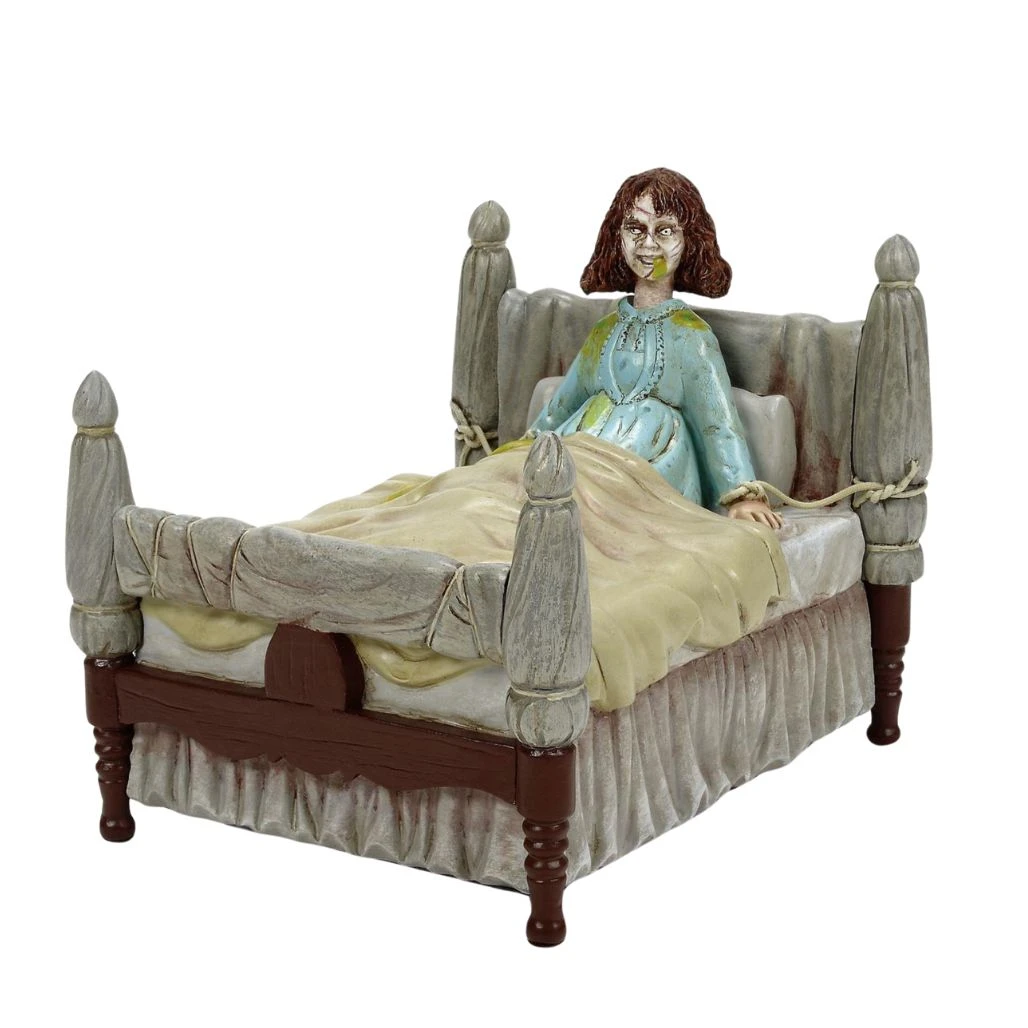
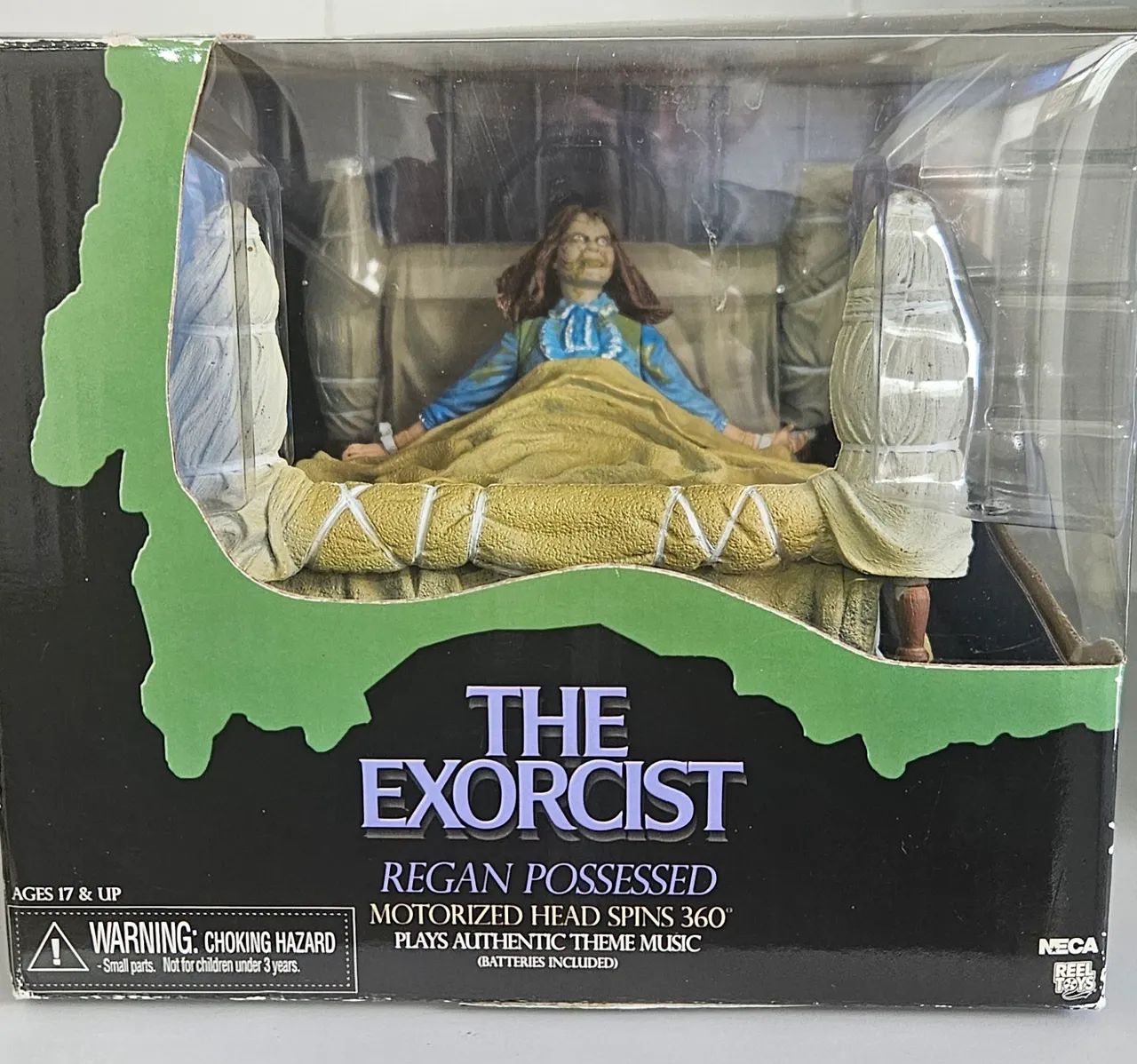
How Does Regan Get Possessed? The Origins of the Exorcist Terror
Regan MacNeil becomes possessed after using a Ouija board she found in her home's basement to communicate with an entity she calls "Captain Howdy." This act of spiritual curiosity, combined with her emotional vulnerability following he...
Regan MacNeil becomes possessed after using a Ouija board she found in her home's basement to communicate with an entity she calls "Captain Howdy." This act of spiritual curiosity, combined with her emotional vulnerability following her parents' divorce, allowed the ancient demon Pazuzu to gain entry and seize control.
Contents
The story of Regan MacNeil, the twelve-year-old protagonist of William Peter Blatty’s 1971 novel and William Friedkin’s 1973 film The Exorcist, remains the definitive blueprint for the possession subgenre in horror. While the physical manifestations of her condition—the levitation, the spinning head, and the guttural voice—are iconic, the actual mechanics of how she became a vessel for a demon are rooted in a combination of occult curiosity, psychological vulnerability, and a lack of spiritual safeguards. As we look back from 2026, the narrative remains a chilling study on the perceived dangers of opening doors to the unknown.
The Catalyst: The Ouija Board and "Captain Howdy"
The primary mechanism for Regan’s possession is her use of a Ouija board. In both the novel and the film, Regan discovers the board in the basement of the house her mother, Chris MacNeil, is renting in Georgetown. To a child of twelve, the board is merely a game, but within the logic of the story’s theology, it serves as a "bridge" or an invitation to the preternatural world.
Regan begins playing with the board alone, which is a significant departure from the traditional "rules" of the device that suggest two people should operate the planchette. During these solitary sessions, she establishes contact with an entity she names Captain Howdy. Initially, the interactions seem benign; Regan describes the entity as a friend. However, the use of the board acts as a form of "infestation," the first stage of demonic possession. By engaging with the board, Regan unwittingly grants permission to an external force to enter her life.
The Mystery of Captain Howdy
"Captain Howdy" is the name Regan’s subconscious or the entity itself chooses to facilitate a sense of trust. In the context of the franchise’s lore, this entity is later revealed to be Pazuzu, an ancient Babylonian demon of the wind. By adopting a playful, paternal pseudonym, the demon bypasses Regan’s natural defenses. The board provides the medium through which the demon can communicate and eventually anchor itself to her physical form.
Psychological and Situational Vulnerability
In demonology—both the fictional version presented by Blatty and the traditional Catholic teachings he researched—a demon often requires a "foothold" or a weakness to exploit. Regan MacNeil is portrayed as a particularly vulnerable target for several reasons:
- The Divorce of Her Parents: Regan is deeply affected by the absence of her father, Howard, and the subsequent strain on her mother, Chris. The emotional vacuum created by this family instability makes her more susceptible to the "friendship" offered by Captain Howdy.
- Transition and Loneliness: Being in a temporary home in a new city (Georgetown) while her mother works long hours on a film set leaves Regan isolated. Her creative but lonely nature makes her the perfect candidate for a supernatural companion.
- Spiritual Void: The MacNeil household is secular. Chris MacNeil is an atheist, and Regan has had no formal religious upbringing. In the world of The Exorcist, this lack of spiritual protection (such as baptism or prayer) leaves the "door" to her soul effectively unlocked.
The Three Stages of Possession in Regan’s Journey
The transition from a healthy child to a possessed entity does not happen overnight. It follows a classic tripartite progression described in various theological texts.
1. Infestation
This is the period where the entity makes its presence known through external phenomena. In the MacNeil house, this began with unexplained noises in the attic (which Chris initially attributed to rats) and the movement of furniture. Regan’s behavior began to shift slightly, but the demon was still "outside" of her, manipulating the environment to create fear and confusion.
2. Oppression
During this stage, the entity begins to target the individual’s psychology. Regan experiences bouts of depression, irritability, and physical ailments that doctors cannot explain. The most famous example of the shift from infestation to oppression is the "pissing on the rug" scene during Chris’s party. This was not just a medical accident; it was a deliberate act of humiliation orchestrated by the entity to isolate Regan from social norms and her mother’s peers.
3. Possession
The final stage is the total takeover of the physical body. At this point, Regan’s personality is submerged, and the demon speaks and acts through her. This is marked by the onset of "extraordinary" symptoms: xenoglossy (speaking in unknown languages), preternatural strength, and knowledge of "secret" things (such as Father Karras’s guilt over his mother).
Medical vs. Supernatural Interpretations
One of the most terrifying aspects of how Regan gets possessed is the failed attempt by modern science to explain her condition. Before the church is ever involved, Regan undergoes a series of invasive and painful medical procedures.
| Procedure | Suspected Medical Condition | Result |
|---|---|---|
| X-ray / CT Scan | Brain tumor or lesion | Negative; no physical abnormalities found. |
| Arteriogram | Vascular anomaly or aneurysm | Negative; caused significant trauma to Regan. |
| Psychiatric Evaluation | Schizophrenia or split personality | Inconclusive; Regan's knowledge of the doctors' secrets defied logic. |
| Hypnosis | Hysteria or repressed trauma | Resulted in the demon manifesting and attacking the psychiatrist. |
The failure of these medical interventions is a crucial narrative step. It isolates Chris MacNeil to the point where she, a staunch atheist, is forced to seek a "witch doctor"—in this case, a Catholic priest. This highlights the theme that Regan’s "illness" is not of the brain, but of the spirit.
The Role of Pazuzu: Why Regan?
A common question regarding Regan’s possession is: "Why her?" The demon Pazuzu did not choose Regan because she was evil, but because she was innocent.
In the prologue of the film and novel, Father Lankester Merrin discovers a small statue of Pazuzu in Northern Iraq. This suggests that the demon had been "awakened" or was waiting for a confrontation with his old rival, Merrin. Regan was essentially a pawn in a larger cosmic battle. By possessing an innocent child, the demon aimed to drive those around her—specifically the priests—to despair. The goal of the possession was not merely to destroy Regan, but to make everyone witness to her degradation lose their faith in a benevolent God.
Comparing the Novel and Film Origins
While the 1973 film is the most famous version, William Peter Blatty’s novel provides deeper context regarding the possession's onset.
- The Solitary Play: The novel emphasizes that Regan played with the Ouija board for weeks before any symptoms appeared. It depicts a slow "grooming" process by Captain Howdy.
- The "Double" Possession: The novel touches on the idea that the demon mimics Regan’s own subconscious frustrations. Some theorists suggest the possession is a metaphor for the onset of puberty, a time of radical bodily and emotional change that can feel "alien" to both the child and the parent.
- The Basement Setting: In both versions, the basement serves as the literal and metaphorical "underworld" where the initial contact occurs. It is the one place in the house where Chris MacNeil is not constantly present, allowing the entity space to manifest.
FAQ: Understanding Regan's Possession
Did Regan do something wrong to get possessed?
No. In the context of the story, Regan is a victim. While she used a Ouija board, she did so with the innocence of a child playing a game. The narrative suggests that the demon exploited her curiosity and the "spiritual vacuum" of her secular household rather than any moral failing on her part.
Is "Captain Howdy" a real demon?
"Captain Howdy" is a fictional name used by the demon Pazuzu in The Exorcist. While Pazuzu is a figure from actual Mesopotamian mythology (the king of the demons of the wind), "Captain Howdy" was a clever narrative invention by William Peter Blatty to show how demons can mask their identity to gain trust.
Why didn't the doctors find anything during the tests?
The film uses the medical scenes to demonstrate the limitations of science. Because the possession was a supernatural event, it did not manifest as a physical tumor or a chemical imbalance that could be detected by 1970s (or even modern) technology. The "blackouts" and "seizures" Regan experienced were the result of the demon's influence on her nervous system, not a biological disease.
Does the Ouija board always lead to possession in movies?
The Ouija board is a common trope in horror, but The Exorcist established it as the ultimate "forbidden door." While many modern films use it as a plot device, The Exorcist treated it with a level of somber reality that contributed to the real-world stigma surrounding the board in the years following the film's release.
How did the demon leave Regan's body?
In the climax of the story, Father Karras realizes that the exorcism rites are not working quickly enough to save Regan’s life. He challenges the demon to leave the girl and enter him instead. The demon accepts, and in a final act of self-sacrifice, Karras throws himself out of the bedroom window, dying but taking the entity with him, thereby freeing Regan.
Summary of Next Actions for Researchers
If you are analyzing the themes of The Exorcist or the mechanics of Regan’s possession for academic or creative purposes, consider the following steps:
- Read the Original Text: Consult William Peter Blatty’s 1971 novel to understand the internal monologue of the characters, which provides more "technical" detail on the possession than the film.
- Study the Source Material: Research the "1949 St. Louis Exorcism," which served as the real-life inspiration for the story. This provides context on how "infestation" was reported in actual accounts.
- Analyze the Sequels: While controversial, Exorcist II: The Heretic and the 2023 film The Exorcist: Believer attempt to expand on the "why" and "how" of Pazuzu’s attachment to the MacNeil bloodline.
Image Gallery