Understanding Generation Z: Characteristics, Culture, and Impact of the Zoomer Generation
Generation Z, colloquially known as "Zoomers," includes individuals born between 1997 and 2012. As the first true digital natives, this cohort is defined by mobile-first connectivity, financial pragmatism shaped by economic shifts, and...
Generation Z, colloquially known as "Zoomers," includes individuals born between 1997 and 2012. As the first true digital natives, this cohort is defined by mobile-first connectivity, financial pragmatism shaped by economic shifts, and a demand for transparency across workplaces and consumer markets. By 2026, the oldest Gen Z members are turning 29 and advancing into mid-level professional and managerial roles, while the youngest are entering high school, firmly establishing the demographic as a primary driver of global culture and enterprise strategy.
Contents
Who Are Zoomers? Defining Birth Years, Demographics, and Identity
Demographic consensus established by the Pew Research Center places Generation Z between the birth years 1997 and 2012. This boundaries-setting distinguishes them from Millennials (born 1981–1996) and Generation Alpha (born 2013 onward). In 2026, Gen Z spans ages 14 to 29, placing them squarely in the transition from adolescence to key career and domestic milestones.
The name "Zoomer" originated as a linguistic blend of "Boomer" (referring to the Baby Boom generation) and the "Z" generation tag. While initially used casually on social media, the term gained formal recognition as a standard descriptor for the hyper-connected, fast-paced nature of Gen Z culture.
Generation Timeline Context:
- Baby Boomers: 1946 – 1964
- Generation X: 1965 – 1980
- Millennials: 1981 – 1996
- Generation Z: 1997 – 2012
- Generation Alpha: 2013 – mid-2020s
Demographically, Generation Z represents the most racially and ethnically diverse generation in Western history prior to Generation Alpha. In the United States, nearly half of Gen Z identifies as a racial or ethnic minority, driven by long-term demographic shifts. This diversity directly shapes their worldviews, fostering a baseline expectation for pluralism, equity, and global interconnectedness.
Unlike Millennials, who witnessed the arrival of the consumer internet, widespread desktop computing, and smartphones during their formative years, Gen Z grew up with ubiquitous high-speed internet, mobile app ecosystems, and social media platforms already integrated into daily life. They did not adapt to digital technology; they were born into an environment where constant digital access was standard operating infrastructure.
Core Characteristics and Cultural Values of Generation Z
Digital Nativity and Information Literacy
Because Generation Z mature alongside algorithmic content feeds, their approach to media consumption differs fundamentally from older cohorts. Information discovery for Gen Z relies heavily on visual-first platforms, social search engines, and short-form video. However, this hyper-saturation has fostered both high digital fluency and acute awareness of online misinformation. Zoomers often cross-reference claims across multiple digital sources, relying on peer reviews and community validation rather than top-down institutional authority.
Financial Realism and Pragmatism
While Millennials were often characterized by optimistic consumer spending on experiences during their twenties, Gen Z demonstrates a more pragmatic financial mindset. Formative experiences during the 2008 Great Recession (which impacted their parents' stability), followed by the economic dislocations of the COVID-19 pandemic and subsequent inflationary cycles, cultivated a strong focus on financial security.
Gen Z prioritizes job stability, early retirement saving, diversification of income streams (the "side hustle" economy), and low personal debt burdens. They frequently turn to digital financial literacy resources, fintech management tools, and fractional investment platforms early in life.
Mental Health Prioritization and Social Values
Generation Z has dismantled historical stigmas surrounding mental health. They discuss psychological wellness openly, treat therapy and self-care as standard healthcare needs, and hold educational institutions and employers responsible for maintaining healthy psychological environments.
Socially, Gen Z exhibits strong commitments to:
- Authenticity: Rejecting overly curated or artificial personas in favor of raw, unedited personal expression.
- Environmental Sustainability: Expecting measurable corporate accountability and sustainable supply chains rather than performative greenwashing.
- Inclusivity: Standardizing respectful engagement regarding gender identity, sexual orientation, disability access, and neurodiversity.
Generation Z in the Workforce: Transforming the Labor Market
As millions of Zoomers enter and advance through the labor market, corporate structures are adjusting to meet their expectations. According to global workforce data from the U.S. Bureau of Labor Statistics, Generation Z makes up more than one-quarter of the active civilian workforce.
Gen Z Workforce Priorities:
- Financial Stability & Fair Pay
- Work-Life Balance & Flexibility
- Clear Career Progression Paths
- Authentic Organizational Ethics
Redefining Work-Life Boundaries
Gen Z employees reject traditional burnout culture. Rather than viewing long working hours as a prerequisite for dedication, they emphasize outcome-based productivity, strict boundary enforcement between professional and personal hours, and flexible work locations. The term "quiet quitting"—refusing to perform unpaid labor beyond explicit job specifications—gained traction precisely because Gen Z established strict limits around employment contracts.
Employers offering remote, hybrid, or flexible scheduling hold a decisive recruitment advantage with Zoomer talent. When physical office attendance is required, Gen Z expects collaborative workspace design rather than static cubicle arrangements.
AI Integration and Early Career Progression
By 2026, the rise of advanced generative artificial intelligence has altered entry-level career trajectories. Gen Z professionals have adopted AI tools faster than any preceding generation, utilizing automated systems for drafting code, analyzing datasets, managing correspondence, and organizing workflows.
However, this technological shift presents a distinct challenge: traditional junior-level administrative tasks are increasingly automated, requiring Gen Z professionals to acquire specialized analytical, strategic, and interpersonal skills much earlier in their careers.
Ethical Alignment and Organizational Expectations
For Zoomers, employment is not purely transactional; it must align with personal ethics. Gen Z workers routinely audit employer practices regarding corporate social responsibility, carbon footprints, pay equity, and executive compensation transparency. Organizations that fail to demonstrate consistent commitment to these values face higher turnover rates and difficulty recruiting top-tier Gen Z applicants.
Consumer Behavior, Marketing, and Spending Habits
Generation Z has reshaped retail, e-commerce, and brand communication strategies. Traditional broadcast advertising and celebrity endorsements hold minimal influence over this group compared to community-based influence and user-generated content.
Key Influencers on Gen Z Purchasing Decisions:
- Peer Reviews: High Trust
- Micro-Creators: High Trust
- Brand Sustainability: Moderate-High Trust
- Traditional Commercials: Low Trust
Social Commerce and the Creator Economy
Zoomers spend significantly more time on creator-driven platforms than on traditional broadcast media. Purchasing decisions are heavily influenced by micro-influencers—content creators with niche, highly engaged followings who provide candid, unscripted product assessments. Social commerce integrations, live-stream shopping, and direct-checkout capabilities within social apps allow Gen Z consumers to move seamlessly from product discovery to purchase in seconds.
Rejection of Brand Loyalty in Favor of Value
Gen Z exhibits lower traditional brand loyalty than prior generations. They evaluate purchases based on immediate product utility, competitive pricing, ethical sourcing, and peer validation. A brand’s historical legacy carries little weight if its product fails on price-to-performance ratio or if the company encounters ethical controversies. Furthermore, Gen Z actively leverages peer-to-peer resale marketplaces, thrifting, and circular economy models to minimize costs and environmental impact.
Comparative Analysis: Generation Z vs. Millennials
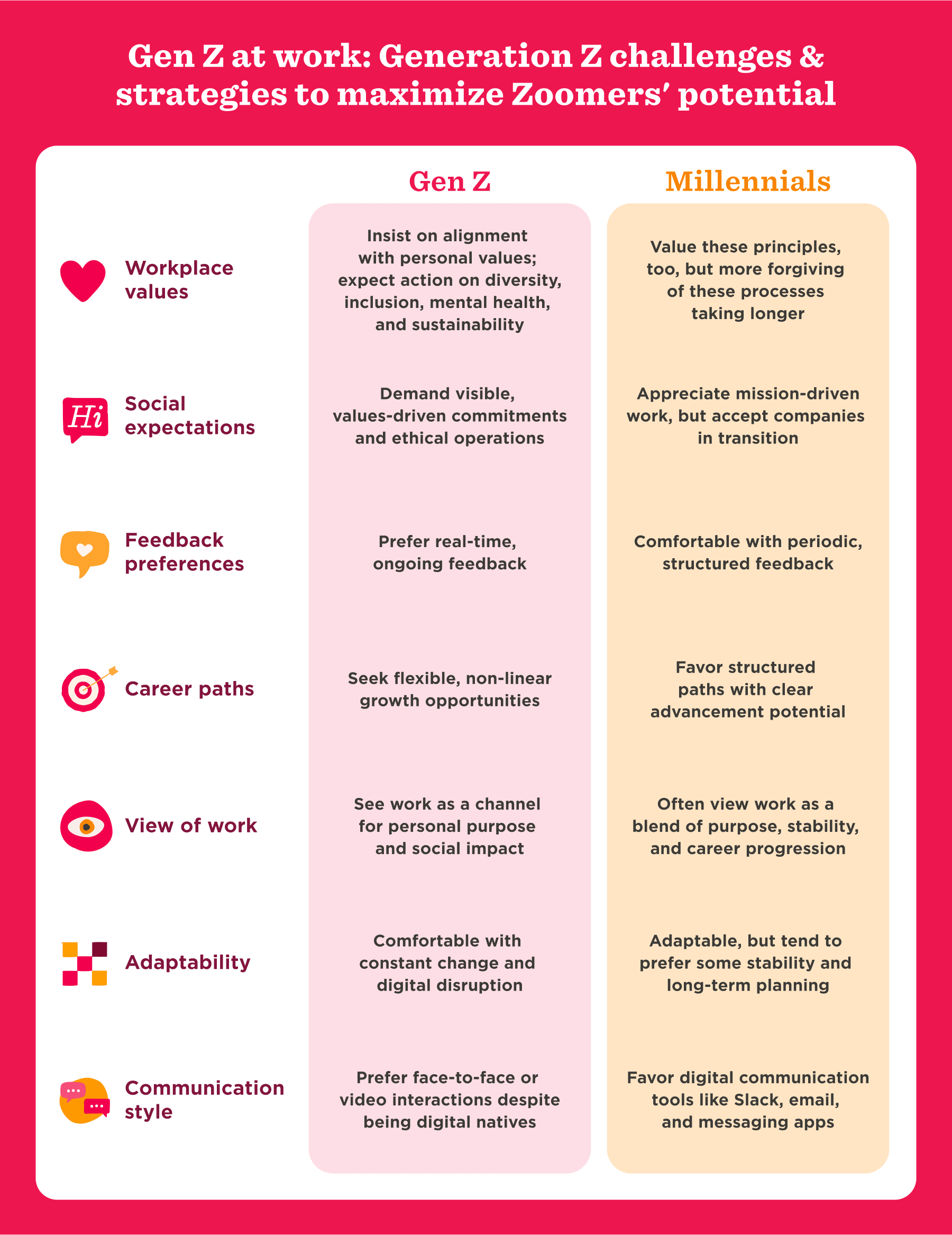
Understanding Gen Z requires identifying where their perspectives align with—and diverge from—their Millennial predecessors. While both generations are digitally inclined and socially progressive, their core worldviews reflect distinct macroeconomic environments.
| Metric / Dimension | Generation Z (Zoomers) | Millennials (Gen Y) |
|---|---|---|
| Birth Years | 1997 – 2012 | 1981 – 1996 |
| Formative Technology | Smartphones, native mobile apps, AI feeds | Desktop PCs, dial-up/broadband, early social media |
| Financial Outlook | Pragmatic, risk-averse, security-focused | Idealistic initially, delayed wealth accumulation |
| Workplace Mindset | Strict work-life boundaries, salary/security focus | Purpose-driven work, experiential fulfillment |
| Media Format Preference | Short-form video, visual apps, audio streaming | Long-form articles, blogs, curated photo feeds |
| Brand Engagement | Values authenticity, peer validation, circular economy | Values brand experience, status symbols, convenience |
| Communication Style | Direct, visual, informal, asynchronous | Detailed, structured, email-centric |
Key Challenges and Future Outlook for Generation Z
Despite their digital fluency and adaptability, Generation Z faces distinct economic, social, and psychological pressures as they establish their adult lives.
| Primary Gen Z Challenges | Details |
|---|---|
| Mental Health & Digital Isolation | High rates of reported anxiety and sleep disruption |
| Housing & Economic Affordability | Escalating home price-to-income ratios and rent costs |
| Rapidly Evolving Skill Demands | Need for continuous reskilling amid automated workflows |
Mental Wellness and Digital Isolation
Generation Z reports higher rates of diagnosis for anxiety, depression, and loneliness than older demographics. Scholars link this trend to constant digital connectivity, reduced face-to-face social interaction during formative years, online harassment, and continuous exposure to global news crises. Addressing digital burnout and fostering meaningful in-person communities remain critical social priorities for this cohort.
Economic Headwinds and Housing Accessibility
The transition into independent adulthood presents financial obstacles for Zoomers. Inflationary pressures, elevated interest rates, and high home-price-to-income ratios have made homeownership more challenging for Gen Z than it was for mid-century generations at the same age. Consequently, many Zoomers delay major life events—such as purchasing residential real estate or starting families—or choose non-traditional housing models, including long-term co-living and generational households.
Leadership Transition
As older Zoomers approach their late twenties, they are moving from entry-level roles into team leads, managers, startup founders, and policy advisors. Their ascension into management is altering enterprise operations, accelerating digital workflows, enforcing mental health support policies, and shifting corporate governance toward long-term sustainability models.
Strategic Guidance: Engaging Generation Z Effectively
For business leaders, educators, and hiring managers aiming to partner with or serve Generation Z, practical adjustments yield measurable improvements in recruitment and retention:
- Offer Clear, Transparent Pathways: Detail job responsibilities, salary bands, and performance metrics explicitly during recruitment. Avoid ambiguous compensation descriptions or undefined promotion schedules.
- Prioritize Asynchronous and Efficient Communication: Minimize unnecessary real-time meetings in favor of organized collaborative project management tools. Keep written communications concise and actionable.
- Embed Flexibility as a Baseline: Frame workplace flexibility around completed outcomes rather than rigid physical office hours.
- Demonstrate Authentic Social Responsibility: Support claims about sustainability, diversity, or corporate ethics with verifiable data, independent certifications, and clear policy enforcement.
Frequently Asked Questions
What age range is Generation Z in 2026?
In 2026, individuals in Generation Z are between 14 and 29 years old, based on the standard birth-year range of 1997 through 2012 defined by demographic research organizations like the Pew Research Center.
Why are members of Generation Z called "Zoomers"?
The term "Zoomer" is a portmanteau of "Boomer" (Baby Boomer) and "Gen Z." It originated in internet culture to describe the fast-paced, hyper-connected lifestyle of a generation raised alongside high-speed internet, smartphones, and rapidly shifting digital trends.
How does Gen Z's approach to financial planning differ from older generations?
Gen Z approaches personal finance with greater pragmatism and risk aversion, influenced by observing financial crises and inflationary cycles during their youth. They tend to prioritize emergency savings, seek multiple income streams early, avoid unnecessary personal debt, and use digital investment tools at younger ages than previous cohorts.
What are Generation Z's primary expectations from an employer?
Gen Z workers prioritize fair competitive compensation, clear work-life boundaries, mental health support, remote or hybrid flexibility, transparent career advancement paths, and organizational ethics that align with their personal values.
How does Gen Z consume news and discover information?
Rather than relying primarily on traditional print, cable television, or static search engine results, Gen Z frequently utilizes social search, short-form video platforms, community forums, and podcasts. They heavily weigh peer opinions and user-generated commentary when verifying information.
Image Gallery