The Fastest Jet in the World: Records, Speeds, and Engineering Feats
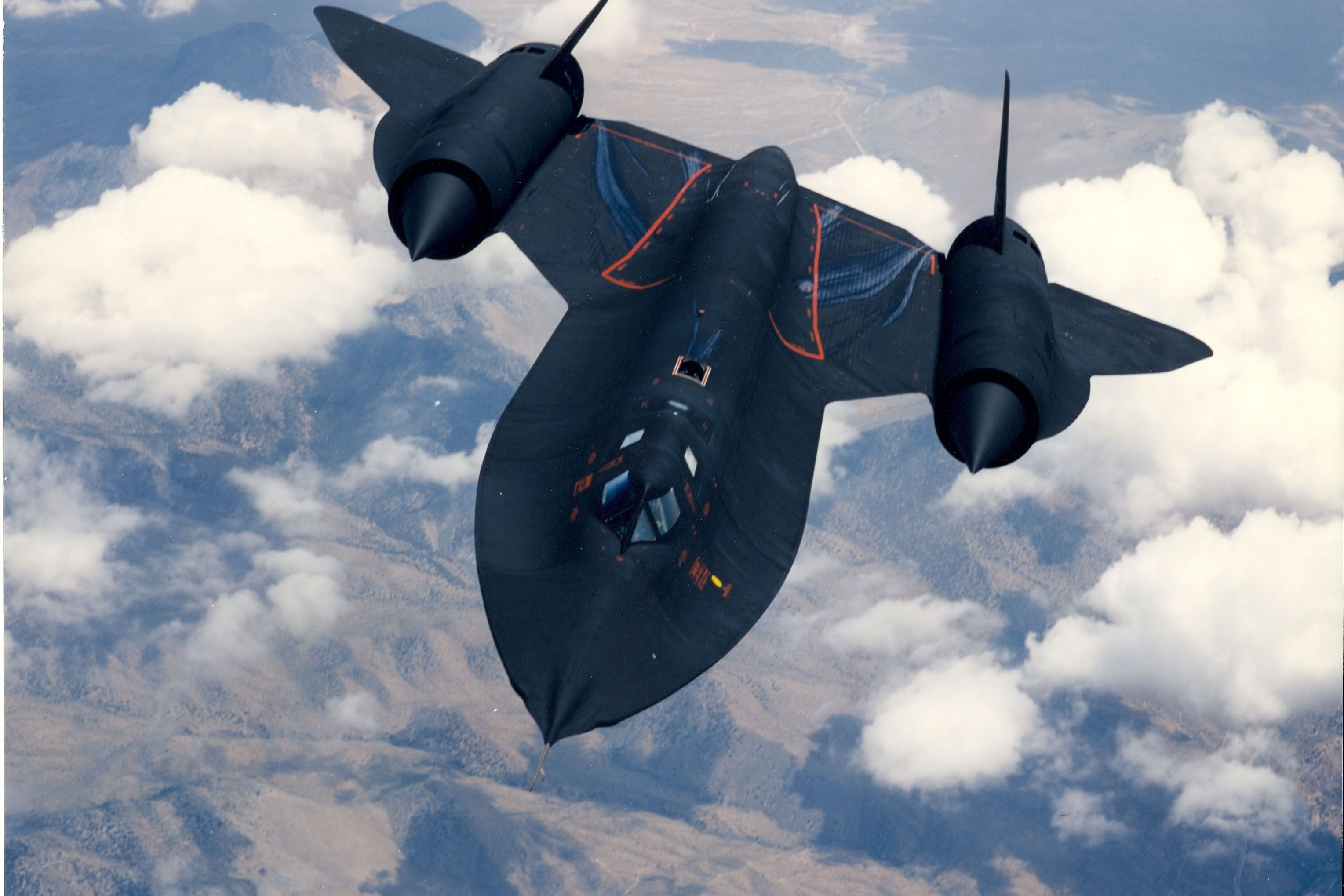
The fastest manned air-breathing jet ever flown is the Lockheed SR-71 Blackbird, which reached a record speed of 2,193 mph (Mach 3.3) in 1976. While experimental rocket planes like the North American X-15 have exceeded 4,520 mph, and u...
The fastest manned air-breathing jet ever flown is the Lockheed SR-71 Blackbird, which reached a record speed of 2,193 mph (Mach 3.3) in 1976. While experimental rocket planes like the North American X-15 have exceeded 4,520 mph, and unmanned scramjets have topped Mach 9, the SR-71 remains the benchmark for sustained, piloted jet flight.
Contents
For decades, the quest for speed has dominated aerospace engineering. Whether for reconnaissance, combat, or scientific exploration, breaking the sound barrier was only the beginning. As of 2026, the records set during the Cold War still hold the mantle for manned aviation, though new hypersonic technologies are rapidly shifting the landscape of what is possible in the upper atmosphere.
Defining "Fastest": Jet Engines vs. Rocket Power
When discussing the "fastest jet," it is essential to distinguish between propulsion types. The term "jet" typically refers to air-breathing engines, such as turbojets, turbofans, and ramjets. These engines intake oxygen from the surrounding atmosphere to combust fuel.
Rocket engines, conversely, carry their own oxidizer. This allows them to operate in the vacuum of space but technically disqualifies them from being "jets" in the strictest aerodynamic sense. However, because aircraft like the North American X-15 are winged and piloted, they are frequently included in speed comparisons.
The Manned Air-Breathing Record: Lockheed SR-71 Blackbird
The Lockheed SR-71 Blackbird is perhaps the most iconic high-speed aircraft in history. Developed by the legendary Kelly Johnson at Lockheed’s "Skunk Works" division, the SR-71 was designed to fly at speeds exceeding Mach 3 at altitudes above 80,000 feet.
At its top speed of 2,193 mph, the friction between the air and the aircraft's skin created temperatures so high that conventional aluminum would have melted. To solve this, 93% of the SR-71's airframe was constructed from a titanium alloy. Interestingly, because the airframe expanded significantly due to kinetic heating during flight, the panels were designed to fit loosely on the ground, causing the fuel tanks to leak until the aircraft reached its cruising speed and the "skin" expanded to seal the gaps.
The Absolute Manned Speed Record: North American X-15
If we move beyond air-breathing engines to rocket-powered aircraft, the North American X-15 holds the ultimate crown. On October 3, 1967, pilot William "Pete" Knight flew the X-15 to a staggering 4,520 mph (Mach 6.7).
The X-15 was not a traditional jet; it was dropped from a B-52 mother ship and ignited its rocket engine to reach the edge of space. Its primary purpose was to gather data on hypersonic flow and aerodynamic heating, which eventually informed the design of the Space Shuttle. Despite its age, no manned aircraft has officially surpassed this speed as of 2026.
The Hypersonic Frontier: Unmanned Speed Records
In the 21st century, the focus of high-speed flight transitioned from manned platforms to unmanned experimental vehicles using scramjet (supersonic combustion ramjet) technology. Unlike a standard jet engine, a scramjet has no moving parts; it relies on the vehicle's high forward speed to compress incoming air.
- NASA X-43A: In 2004, this unmanned vehicle reached approximately 7,310 mph (Mach 9.6). This remains one of the fastest flights of an air-breathing craft in history.
- Boeing X-51 Waverider: Between 2010 and 2013, the X-51 demonstrated sustained hypersonic flight, reaching Mach 5.1. These tests were crucial for the development of hypersonic cruise missiles currently in testing phases in 2026.
Modern Military Jets and Operational Speeds
While experimental craft grab the headlines, operational military jets must balance speed with maneuverability, fuel efficiency, and stealth. Most modern fighters, such as the F-35 Lightning II or the F-22 Raptor, are limited to speeds between Mach 1.6 and Mach 2.2.
The fastest operational interceptor currently in use (in limited capacities) is the Mikoyan-Gurevich MiG-25 "Foxbat". Designed by the Soviet Union to intercept American bombers and the SR-71, the MiG-25 could reach a "safe" speed of Mach 2.8. It was capable of hitting Mach 3.2, but doing so often resulted in the total destruction of its engines.
The following table compares the top speeds of historical and modern high-speed aircraft:
| Aircraft Name | Engine Type | Top Speed (MPH) | Mach Number | Role/Status |
|---|---|---|---|---|
| NASA X-43A | Scramjet (Unmanned) | 7,310 | 9.6 | Experimental |
| North American X-15 | Rocket (Manned) | 4,520 | 6.7 | Research (Retired) |
| Lockheed SR-71 | Turbo-Ramjet | 2,193 | 3.3 | Reconnaissance (Retired) |
| MiG-25 Foxbat | Turbojet | 1,920 | 3.2 | Interceptor (Limited) |
| MiG-31 Foxhound | Turbofan | 1,860 | 2.83 | Interceptor |
| F-15 Eagle | Turbofan | 1,875 | 2.5 | Air Superiority |
| F-22 Raptor | Turbofan | 1,500 | 2.25 | Stealth Fighter |
Engineering Challenges of High-Speed Flight
Achieving speeds in excess of 2,000 mph is not merely a matter of adding more thrust. Engineers face the "Thermal Barrier," where the air itself becomes a major obstacle.
1. Kinetic Heating
At Mach 3, the leading edges of an aircraft can reach temperatures over 600°F (315°C). At Mach 6, these temperatures can exceed 2,000°F. Conventional aerospace materials fail at these levels. Engineers must use specialized alloys like Inconel-X or Titanium, and in some cases, active cooling systems where fuel is circulated through the skin of the aircraft to absorb heat before being injected into the engines.
2. The Propulsion Transition
Standard turbojets use a compressor to squeeze air before combustion. However, at speeds above Mach 2.5, the air entering the engine is already compressed by the vehicle's speed. In the SR-71’s Pratt & Whitney J58 engines, a series of bypass tubes redirected air around the compressor directly into the afterburner at high speeds, essentially turning the engine into a ramjet.
3. Structural Integrity
Flying at multiple times the speed of sound subjects the airframe to immense pressure. Shockwaves can cause "buffeting," which can shake an aircraft apart if not properly managed through aerodynamic shaping, such as the "delta wing" or "waverider" designs.
The Future of High-Speed Flight: The SR-72
As of 2026, the most anticipated development in high-speed aviation is the Lockheed Martin SR-72, often referred to as the "Son of Blackbird." Designed to be an unmanned hypersonic reconnaissance and strike platform, the SR-72 is targeted to reach speeds of Mach 6 (over 4,000 mph).
The key to the SR-72 is a "turbine-based combined cycle" (TBCC) propulsion system. This system would use a conventional turbine engine to accelerate to Mach 3, then transition to a dual-mode ramjet to reach hypersonic speeds. This would bridge the gap between the retired SR-71 and the experimental scramjet testbeds of the early 2000s.
Frequently Asked Questions
Is the F-22 the fastest jet in the world?
No. While the F-22 Raptor is the premier air-superiority fighter, its top speed is approximately Mach 2.25 (1,500 mph). It is designed for "supercruise"—the ability to fly at supersonic speeds without using afterburners—and maneuverability rather than absolute top speed. The SR-71 and MiG-25 are significantly faster in a straight line.
What is the fastest commercial jet?
Historically, the fastest commercial jet was the Tupolev Tu-144, which reached Mach 2.29, followed by the Concorde, which cruised at Mach 2.04 (approx. 1,350 mph). Since the Concorde's retirement in 2003, there are no supersonic commercial aircraft in service as of 2026, though companies like Boom Supersonic are currently in the flight-testing phase for next-generation supersonic travel.
Why don't we fly at Mach 3 today?
The primary reasons are cost and maintenance. The SR-71 required a massive logistics tail, specialized fuel (JP-7), and hours of maintenance for every hour of flight. Furthermore, the sonic booms created by supersonic flight are legally restricted over populated landmasses, making high-speed flight economically inefficient for most applications.
What is the fastest speed a human has ever traveled in an aircraft?
The record for a winged, manned aircraft is held by William "Pete" Knight, who reached 4,520 mph (Mach 6.7) in the North American X-15 on October 3, 1967. If you consider spacecraft, the crew of Apollo 10 holds the record for the fastest humans, reaching 24,791 mph relative to Earth during their return from the Moon.
Conclusion and Next Actions
The Lockheed SR-71 remains the reigning champion of manned jet speed at 2,193 mph, a testament to 1960s engineering that has yet to be surpassed by another operational air-breathing aircraft. However, the move toward hypersonic unmanned systems and the development of the SR-72 suggest that the Mach 3 ceiling may soon be shattered in a more sustainable way.
For those interested in the technical history of these machines, visiting the Smithsonian National Air and Space Museum provides an up-close look at the SR-71. Additionally, researchers can study the flight logs and technical papers of the NASA X-15 program to understand the foundational data that still drives hypersonic research in 2026.
Image Gallery