6qt Slow Cooker Options for Modern Kitchens: Features, Aesthetics, and Performance
Modern 6-quart slow cookers provide the optimal balance between cooking capacity and countertop footprint, making them ideal for families of four to six, dinner parties, and batch meal preparation. Contemporary models update traditiona...
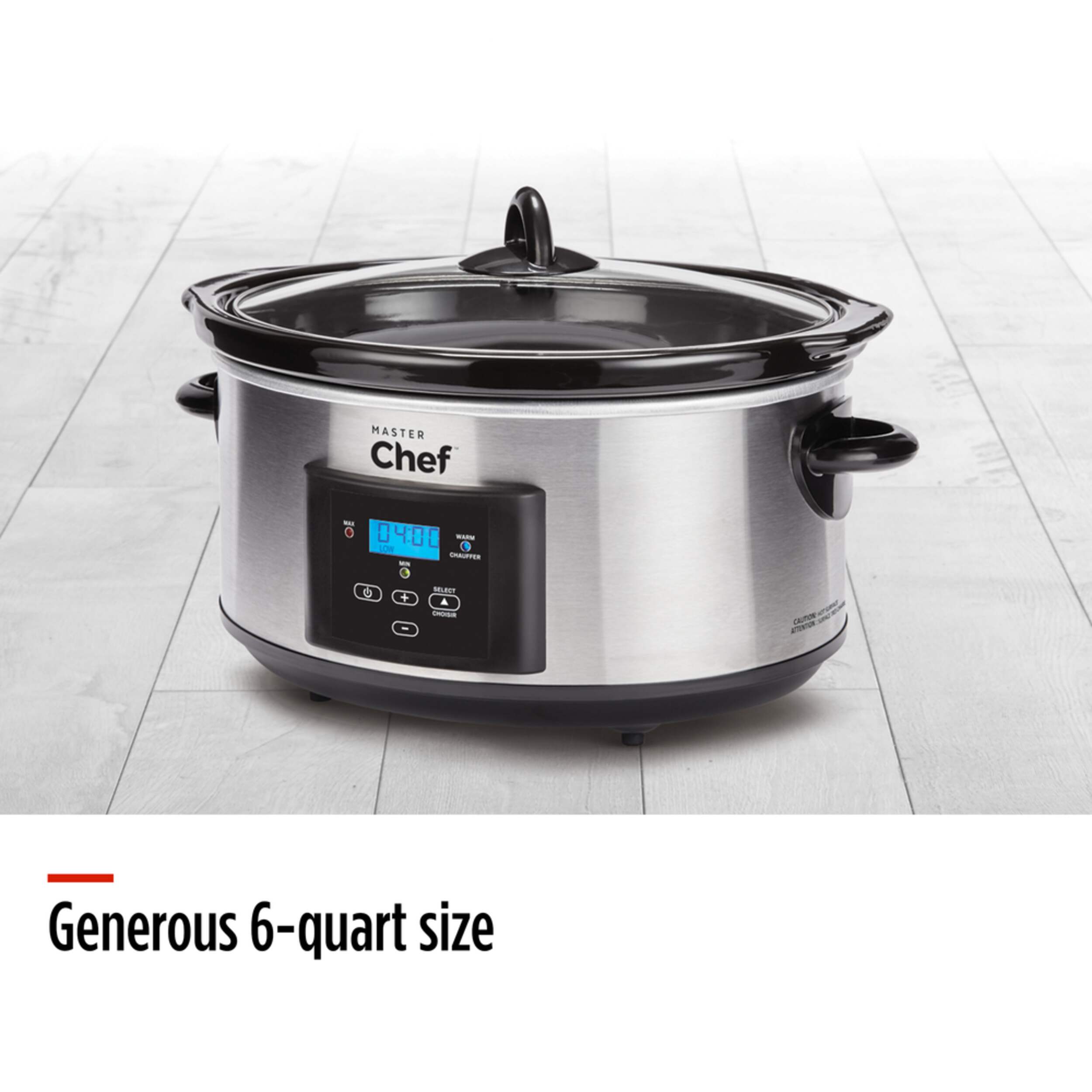
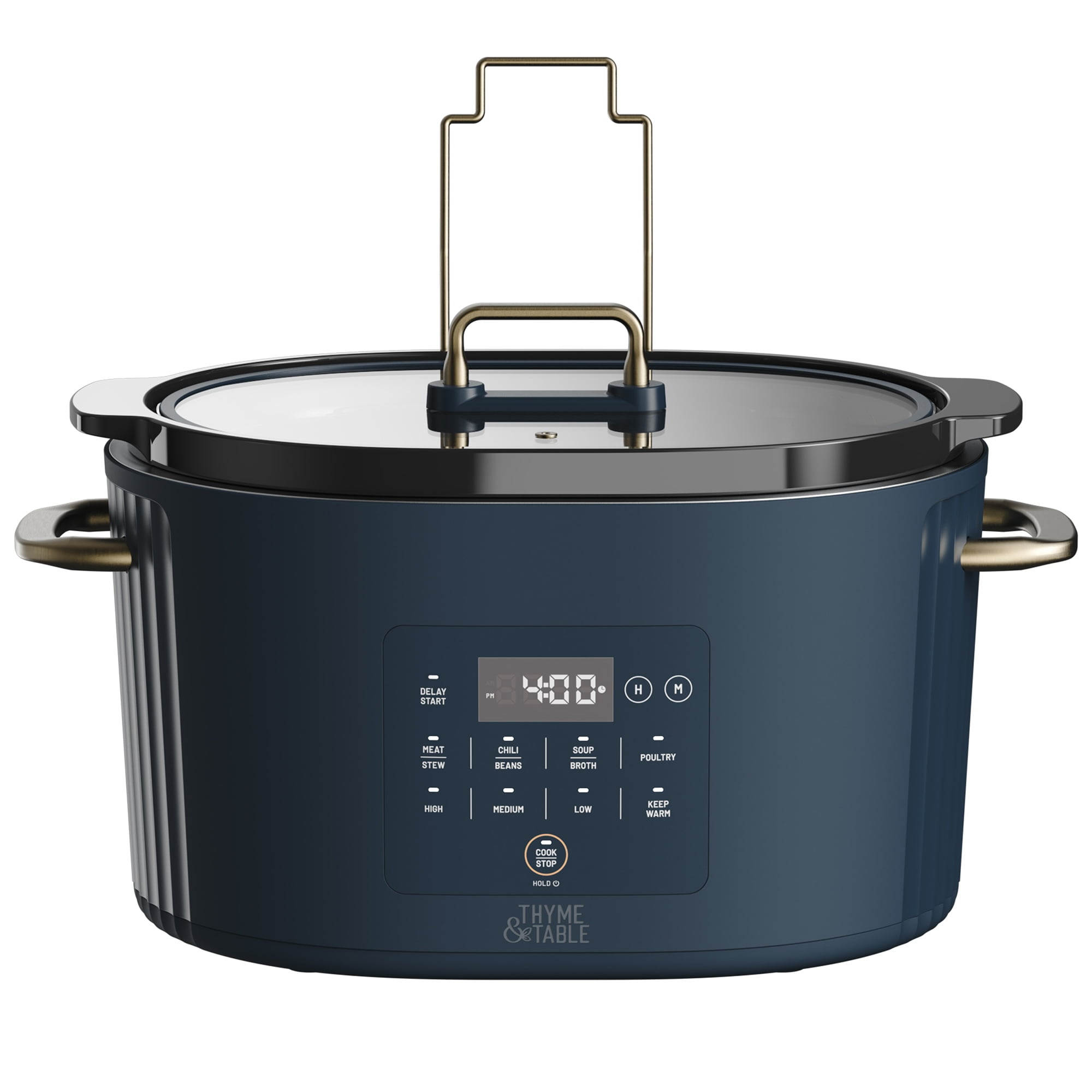
Modern 6-quart slow cookers provide the optimal balance between cooking capacity and countertop footprint, making them ideal for families of four to six, dinner parties, and batch meal preparation. Contemporary models update traditional slow cooking with programmable digital timers, stovetop-safe browning inserts, precise thermal controls, and sleek finishes like matte black, dark stainless steel, and enameled cast iron designed to complement modern kitchen aesthetics.
Contents
Why the 6-Quart Capacity Dominates Modern Kitchen Layouts
The 6-quart volumetric capacity has become the standard size for residential countertop slow cookers. It offers enough internal volume to accommodate large cuts of meat—such as a 5-pound pork shoulder or a whole 4-pound chicken—without requiring an excessively wide appliance base that consumes valuable workspace.
| Parameter | Specification |
|---|---|
| Counter Footprint | Approx. 12" x 15" |
| Height Clearance | 10" - 14" (fits standard 18" cabinet gap) |
| Serving Yield | 6 to 8 main-course portions |
| Protein Fit | Up to 5 lb roast or whole 4 lb chicken |
From an architectural and ergonomic perspective, modern kitchens emphasize clutter-free quartz or granite countertops, under-cabinet lighting, and streamlined cabinetry. A typical 6-quart appliance measures roughly 12 to 15 inches wide and 10 to 14 inches high with the lid in place. This footprint fits comfortably beneath standard 18-inch upper cabinet clearances while remaining easy to store in deep kitchen drawers or pull-out pantry shelves.
Thermal dynamics also support this size. A 6-quart vessel maintains sufficient mass when filled to two-thirds capacity—the recommended fill level for even heat distribution—to prevent thermal spikes while efficiently transferring radiant heat from the base heating elements throughout the cooking process.
Key Features Defining Contemporary 6-Quart Slow Cookers
Traditional slow cookers relied on simple analog dials with basic Low, High, and Off settings. Modern 6-quart slow cookers incorporate technical features that improve culinary precision, user safety, and visual integration into updated homes.
| Category | Advancement |
|---|---|
| Digital Controls | Programmable timers with auto-warm logic |
| Sealing & Travel | Gasketed lids with tension latching |
| Versatile Vessels | Stovetop- and induction-safe inner pots |
| Thermal Precision | Integrated temperature probes for proteins |
Digital Programmability and Auto-Warm Logic
Contemporary digital interfaces allow users to set precise cooking durations in 30-minute increments, typically ranging from 30 minutes up to 20 hours. Once the countdown finishes, internal control boards automatically switch the unit from High or Low to a Keep Warm state (typically held between 165°F and 175°F / 74°C to 79°C). This safety feature prevents food from entering the bacterial growth "danger zone" (40°F to 140°F / 4°C to 60°C) without continuing to simmer and overcook tender ingredients.
Stovetop-Safe and Sear-Capable Cooking Vessels
One historic downside of slow cooking was the inability to brown meat directly inside stoneware inserts. Modern options solve this with versatile cooking vessels:
- Aluminum Cast Inserts: Coated in nonstick ceramic or PTFE, these inserts can be placed directly on gas or electric stovetops to sear meats and deglaze pans before returning to the slow cooker base.
- Enameled Cast Iron: Found in multi-function slow cookers and precision Dutch ovens, enameled cast iron delivers exceptional thermal mass, transitions seamlessly from stovetop to slow cooker base to oven, and provides an attractive serving dish for the dining table.
- Triple-Ply Stainless Steel: Used in high-end appliances, stainless steel inserts offer durability, zero reactivity with acidic sauces (like tomatoes or wine), and dishwasher safety.
Integrated Temperature Probes
Higher-end 6-quart models incorporate probe ports that plug directly into the appliance base. The user inserts the probe stem into the thickest section of a roast or bird, sets the desired target internal temperature (e.g., 145°F for pork loin or 165°F for poultry), and the machine automatically cooks until that internal target is met before switching to Keep Warm mode. This eliminates guessing based on time alone.
Gasketed Lids and Travel-Locking Systems
For households that bring dishes to social gatherings, modern 6-quart models frequently feature food-grade silicone lid gaskets and heavy-duty side tension latches. These form an airtight seal to prevent hot liquids from sloshing over the rim during transport.
Safety Note: Tension latches should only be engaged during transport when the heating element is turned off; locking the lid down tightly during active cooking can build excessive steam pressure unless the lid features a dedicated vent hole.
Technical Comparison: 6-Quart Slow Cooker Categories
The table below compares the primary categories of 6-quart slow cookers available for modern kitchens, highlighting construction materials, thermal heating methods, and ideal aesthetic pairings.
| Category / Style | Core Vessel Material | Heating Element Mechanism | Stovetop Searing Support | Temperature Probe Compatible | Best Modern Kitchen Aesthetic |
|---|---|---|---|---|---|
| Classic Digital Programmable | Heavy Glazed Stoneware | Side-wrapping band resistor element (200W–300W) | No (Stoneware will crack on direct flame) | Select premium models only | Traditional, Transitional, Modern Farmhouse |
| Searing Insert Slow Cooker | Cast Aluminum with Ceramic/PTFE Coating | Side-wrap or wrap-around base band | Yes (Gas, Electric, and Glass cooktops) | Rare | Minimalist Modern, Industrial, Contemporary |
| Precision Dutch Oven / Smart Base | Enameled Cast Iron | Direct-contact bottom induction or calibrated heater plate | Yes (All cooktops, including Induction) | Yes (Select smart models) | High-End Custom, European Modern, Open-Plan |
| Multi-Cooker / Hybrid Slow Cooker | Thin Stainless Steel or Nonstick Aluminum | Bottom-mounted disk heating element (800W–1200W) | Yes (Internal sauté function via bottom element) | Rare (Uses built-in thermal sensors) | Streamlined Tech-Focused, Ultra-Modern |
Material & Thermal Heating Performance Breakdown
Understanding how different liner materials interact with heat helps in selecting the right slow cooker for your cooking style and recipes.
STONETDynamic Heat Profile:
- Base & Side Heating Bands
- Thick Glazed Stoneware
- Gentle, Even Absorption
- Result: Excellent thermal inertia; prevents rapid hot spots, but slow to change temp.
CAST ALUMINUM Dynamic Heat Profile:
- Stovetop Pre-Sear
- Transfer to Base
- Fast Conduction
- Result: Rapid heat transfer; lighter weight, but less thermal retention when powered off.
Glazed Ceramic Stoneware
Stoneware remains popular because of its stable thermal inertia. Once stoneware absorbs heat from the surrounding band element, it radiates gentle, uniform heat inward from both the bottom and side walls. This minimizes the risk of scorching thick soups or bean dishes.
However, stoneware is susceptible to thermal shock. Placing a cold stoneware vessel directly into a hot base—or rinsing a boiling-hot crock under cold sink water—can cause catastrophic micro-fracturing. Modern stoneware options are typically lead- and cadmium-free, meeting strict US FDA and California Proposition 65 food-contact standards.
Nonstick Cast Aluminum
Aluminum exhibits significantly higher thermal conductivity than ceramic stoneware. In a slow cooker, a cast aluminum insert warms up faster and responds more quickly when adjusting from High to Low settings. The primary operational advantage is stovetop browning: users can sear meats on the cooktop to create a rich fond before placing the pot into the heating base, locking in flavor while saving extra cleanup.
When evaluating aluminum inserts, check that coatings are specified as PFOA-free ceramic nonstick or reinforced multi-layer PTFE to ensure long-term durability under high-heat searing.
Enameled Cast Iron
Enameled cast iron offers the performance benefits of traditional stoneware combined with the durability of metal. It delivers high heat retention, tolerates direct stove heating (including induction), and resists thermal shock better than unreinforced ceramics.
Because cast iron inserts are substantially heavier—a 6-quart enameled vessel alone can weigh 12 to 14 pounds empty—users should consider ergonomic handling and shelf weight limits when making their choice.
Operating Temperature Profiles & Food Safety Science
Maintaining proper operating temperatures is critical for both culinary results and food safety. Slow cookers operate across standardized heat profiles:
| Setting | Temperature Target / Range |
|---|---|
| HIGH SETTING | Stabilizes at ~200°F - 212°F (93°C - 100°C) |
| LOW SETTING | Stabilizes at ~190°F - 200°F (88°C - 93°C) |
| KEEP WARM MODE | Holds food at ~165°F - 175°F (74°C - 79°C) |
- High Setting: The appliance energizes its heating elements continuously or at high duty cycles until the contents reach a gentle simmer at approximately 200°F to 212°F (93°C to 100°C). This setting typically takes 3 to 4 hours to cook braises fully.
- Low Setting: The heating elements cycle at lower duty power. The vessel warms up more gradually, eventually reaching a similar stabilizing temperature near 190°F to 200°F (88°C to 93°C). Cooking time on Low generally ranges from 7 to 9 hours.
- Keep Warm Mode: Designed strictly for serving post-cook, this mode maintains food temperatures between 165°F and 175°F (74°C to 79°C). This temperature is safely above the 140°F (60°C) food safety threshold established by the USDA Food Safety and Inspection Service, preventing bacterial proliferation without further breaking down meat fibers or over-softening vegetables.
Preventing Cold-Zone Bacterial Risks
When preparing large braises, raw ingredients spend a brief period passing through the room-temperature to 140°F zone. To ensure safety:
- Always thaw frozen meats completely in the refrigerator before placing them in the slow cooker; inserting frozen proteins drops internal vessel temperatures for too long, delaying the ramp-up time to safe thresholds.
- Preheat the slow cooker insert with warm liquids if specified by the manufacturer.
- Keep the lid sealed tight throughout the cooking duration.
Cleaning, Maintenance, and Countertop Ergonomics
To maintain the finish and functionality of a 6-quart slow cooker in modern kitchens:
| Component | Maintenance Protocol |
|---|---|
| STAINLESS BASE | Clean with microfiber & stainless polish |
| NONSTICK LINER | Hand wash with non-abrasive sponges only |
| STONEWARE LINER | Cool completely before washing; dishwasher safe |
| SILICONE GASKETS | Remove regularly to wash out trapped moisture |
Surface Care and Aesthetics
Brushed stainless steel, matte black powder coating, and dark charcoal finishes match contemporary kitchen appliances (such as built-in wall ovens and French-door refrigerators).
- Matte Finishes: Clean using a damp microfiber cloth with mild dish detergent. Avoid abrasive scouring pads, which can scratch matte coatings.
- Stainless Steel Bases: Wipe along the grain using specialized stainless steel sprays or clean water mixed with a small amount of neutral soap to eliminate fingerprints and water marks.
Inner Vessel Washability
While many stoneware inserts and tempered glass lids are labeled as dishwasher-safe, hand washing with non-abrasive sponges extends their lifespan.
- Never scrub ceramic nonstick coatings with steel wool or harsh abrasive cleansers.
- For baked-on residue inside stoneware, fill the vessel with warm water and 2 tablespoons of baking soda, allow it to soak for 30 minutes, then wipe clean with a soft sponge.
- Removable lid gaskets should be detached periodically to clean out trapped moisture and food particles, preventing mildew build-up.
Troubleshooting Common Slow Cooking Challenges
Even high-end slow cookers require simple adjustments to achieve optimal cooking results.
1. Excess Wateriness in Finished Dishes
Cause: Unlike conventional oven cooking or open stovetop simmering, a slow cooker’s lid traps steam. Evaporation is minimal, so liquid does not reduce naturally.Solution: Reduce the liquid added to recipes (such as stews or braises) by roughly 30% to 50% compared to standard oven recipes. If a sauce is too thin at the end of cooking, remove the lid, switch to High for 30 minutes, or stir in a cornstarch slurry (1 tablespoon cornstarch mixed with 1 tablespoon cold water) to thicken.
2. Unevenly Cooked Root Vegetables
Cause: Dense root vegetables (carrots, potatoes, parsnips) require higher temperatures to break down pectin than tough cuts of meat do. Placing vegetables on top of meat keeps them away from the primary heating zone at the base and sides.Solution: Cut dense root vegetables into uniform pieces and place them along the bottom and lower sides of the insert, placing meats on top.
3. Meat Dries Out Despite Braising in Liquid
Cause: Cooking lean cuts of meat (such as chicken breast or pork tenderloin) on High for extended periods squeezes out internal moisture, leaving fibers tough and dry.Solution: Use cuts rich in connective tissue and collagen—such as chuck roast, pork shoulder, or chicken thighs—for long cooking cycles. Reserve lean cuts for shorter cooking durations (typically 2 to 4 hours on Low).
4. Excessive Heat Loss from Lid Removal
Cause: Opening the lid allows accumulated steam and radiant heat to escape instantly.Solution: Avoid lifting the lid during cooking unless the recipe explicitly requires adding ingredients late in the process. Each time the lid is opened, add roughly 15 to 20 minutes to the total cooking time to allow the vessel to regain operating temperature.
Frequently Asked Questions
Is a 6-quart slow cooker large enough for a family of six?
Yes. A 6-quart capacity easily accommodates 6 to 8 generous main-course servings. It holds up to a 5-pound roast or a whole 4-to-5-pound chicken alongside vegetables, making it the most versatile size for families of four to six as well as meal-preppers.
Can I put a 6-quart slow cooker insert directly on my induction cooktop?
Only if the vessel is made from magnetic materials designed for induction, such as enameled cast iron or induction-compatible stainless steel. Ceramic stoneware and standard aluminum inserts will not work on induction burners. Always check the manufacturer guidelines before placing an insert on any direct heat source.
What is the difference between a multi-cooker and a dedicated 6-quart slow cooker?
A dedicated slow cooker uses lower-wattage heating elements (typically 200W–300W) wrapped around the sides and base of a heavy crock to deliver slow, even heating. A multi-cooker (such as an Instant Pot) relies on a high-wattage bottom heating element (800W–1200W) designed primarily for pressure cooking and quick heating. While multi-cookers offer slow cook modes, traditional slow cookers often provide more consistent side-wall heat distribution for delicate, low-temperature braises.
How much electricity does a 6-quart slow cooker consume?
Slow cookers are energy-efficient appliances. A standard 6-quart unit uses between 200 and 300 watts per hour on High, and even less on Low or Warm. Operating a slow cooker for 8 hours typically consumes under 2 kWh of electricity, making it more energy-efficient for long braises than heating a large electric oven.
Can I leave a modern digital 6-quart slow cooker unattended while at work?
Yes, provided the appliance is placed on a clear, flat, heat-resistant surface (such as quartz, granite, or tile) away from walls and flammable items. Modern units feature built-in digital timers that automatically switch to a safe Keep Warm setting when cooking completes, keeping food at safe temperatures until you return.
Decision Framework: Selecting Your Ideal 6-Quart Slow Cooker
To select the best 6-quart slow cooker for your home, align your purchase with your daily cooking habits and kitchen design:
- For One-Pot Cooking & Flavor Building: Select a model with a stovetop-safe cast aluminum or enameled cast iron insert. Being able to sear meats on the cooktop before transferring the pot straight to the base improves flavor while minimizing dirty dishes.
- For Built-In Aesthetic Integration: Choose a unit featuring matte black or dark stainless steel housings with flush digital displays to seamlessly match contemporary kitchen cabinetry and hardware.
- For Busy Schedules and Potlucks: Prioritize programmable digital countdown timers with auto-warm switching, paired with a gasketed lid and locking side handles for safe transportation.
Image Gallery