Finding the Best Auto Insurance Coverage in Georgia for 2026
The best auto insurance coverage in Georgia for 2026 balances the state's mandatory 25/50/25 liability limits with robust Uninsured Motorist (UM) protection and Physical Damage coverage. While State Farm and Georgia Farm Bureau lead fo...
The best auto insurance coverage in Georgia for 2026 balances the state's mandatory 25/50/25 liability limits with robust Uninsured Motorist (UM) protection and Physical Damage coverage. While State Farm and Georgia Farm Bureau lead for customer service, GEICO and Progressive remain the most cost-competitive for high-limit policies in urban centers like Atlanta.
Contents
In 2026, Georgia’s automotive landscape is defined by a mix of heavy metropolitan congestion and sprawling rural corridors, necessitating a nuanced approach to insurance. Because Georgia remains an at-fault state, your financial liability in an accident is theoretically unlimited if you carry only the bare minimums. To secure the "best" coverage, drivers must look beyond the lowest price and focus on asset protection, recovery for vehicle depreciation, and protection against the state's historically high rate of uninsured drivers.
Georgia’s Mandatory Minimum Liability Requirements
To legally operate a vehicle in Georgia in 2026, the Georgia Department of Driver Services (DDS) and the Office of Commissioner of Insurance (OCI) require all drivers to maintain a minimum level of liability insurance. This coverage pays for the other party's expenses if you are found at fault in an accident.
The current mandatory limits are:
- $25,000 for Bodily Injury: Per person, per accident.
- $50,000 for Bodily Injury: Total per accident (regardless of the number of people injured).
- $25,000 for Property Damage: Per accident.
While these limits satisfy the law, they are widely considered insufficient by insurance experts. In 2026, the average cost of a new vehicle in Georgia has risen significantly, and medical inflation has outpaced general inflation. If you cause a multi-vehicle accident or hit a modern electric vehicle (EV), $25,000 in property damage coverage will likely be exhausted instantly, leaving your personal assets—such as your home or savings—vulnerable to litigation.
For most Georgia residents, a 100/300/100 policy (signifying $100,000 per person, $300,000 per accident, and $100,000 for property damage) is considered the professional standard for "best" coverage to ensure adequate protection.
Evaluating "Best" Coverage: The Essential Add-Ons
The "best" insurance policy in Georgia is a comprehensive package that includes optional coverages tailored to the state’s specific risks.
Uninsured/Underinsured Motorist Coverage (UM/UIM)
Georgia consistently ranks in the top tier of states for the number of uninsured drivers. Because of this, UM/UIM coverage is not just an "extra"; it is a critical component of a high-quality policy.
In Georgia, you have two choices for UM coverage:
- Reduced-by-at-fault (Traditional): This pays the difference between your UM limits and the at-fault driver’s liability limits.
- Added-on (New): This adds your UM limits on top of whatever the at-fault driver has.
The Added-on UM option is superior. For example, if an at-fault driver has $25,000 in coverage and you have $50,000 in Added-on UM, you have access to a total of $75,000. If you chose "Reduced-by," you would only have access to $50,000 total.
Comprehensive and Collision Coverage
If you are financing or leasing a vehicle in 2026, these are typically required by your lender.
- Collision: Covers damage to your car resulting from a crash with another vehicle or object, regardless of fault.
- Comprehensive: Covers non-collision events such as theft, vandalism, fire, or the frequent Georgia "act of God"—hail damage and fallen pine trees.
Medical Payments (MedPay)
Unlike "No-Fault" states like Florida, Georgia does not require Personal Injury Protection (PIP). Instead, Georgia offers Medical Payments (MedPay). This coverage pays for your medical bills (and those of your passengers) immediately following an accident, regardless of who caused it. It is particularly valuable for those with high-deductible health insurance plans.
Top-Rated Insurance Providers in Georgia for 2026
When selecting a provider, the "best" company is often determined by a combination of claims satisfaction ratings and premium stability.
| Insurance Carrier | Best For... | Average Monthly Premium (2026 Est.) | Key Georgia Benefit |
|---|---|---|---|
| State Farm | Overall Service | $145 - $175 | Largest network of local agents in GA |
| Georgia Farm Bureau | Local Claims Handling | $130 - $160 | Community-based; excellent for rural drivers |
| GEICO | Budget-Conscious High Limits | $120 - $150 | User-friendly mobile app for urban commuters |
| Auto-Owners | High-Value Assets | $155 - $185 | Excellent "diminished value" claim processing |
| USAA | Military Families | $110 - $140 | Consistently highest customer satisfaction scores |
Note: Premiums are estimates based on a 35-year-old driver with a clean record and 100/300/100 coverage limits.
The Unique "Diminished Value" Factor in Georgia
Georgia is one of the few states in the country where you can legally file a first-party diminished value claim. This is a significant factor in determining the "best" coverage.
When your vehicle is involved in an accident, it loses resale value even after it has been perfectly repaired, because it now has an accident history on reports like CARFAX. In Georgia, following the landmark case Mabry v. State Farm, insurance companies are generally required to compensate you for this loss in value as part of your comprehensive or collision claim.
When choosing a provider, look for companies that have a transparent process for calculating diminished value. Avoid carriers that notoriously low-ball these settlements, as this can cost you thousands of dollars when you eventually try to trade in your vehicle.
How to Save on Georgia Auto Insurance in 2026
While looking for the best coverage, there are several Georgia-specific strategies to manage the cost of high-limit policies.
- Telematics and Usage-Based Insurance (UBI): By 2026, programs like State Farm’s "Drive Safe & Save" or Progressive’s "Snapshot" have become the industry standard. Georgia drivers who avoid late-night driving and hard braking in Atlanta traffic can see discounts of up to 30%.
- The Defensive Driving Discount: Under Georgia law (O.C.G.A. § 33-9-42), drivers who complete an approved 6-hour defensive driving course are eligible for a mandatory premium reduction of at least 10% for three years, provided they have a clean record.
- Multi-Policy Bundling: The most effective way to lower rates remains bundling your auto insurance with a Georgia homeowners or renters policy. In 2026, the "bundle discount" in Georgia averages between 15% and 22%.
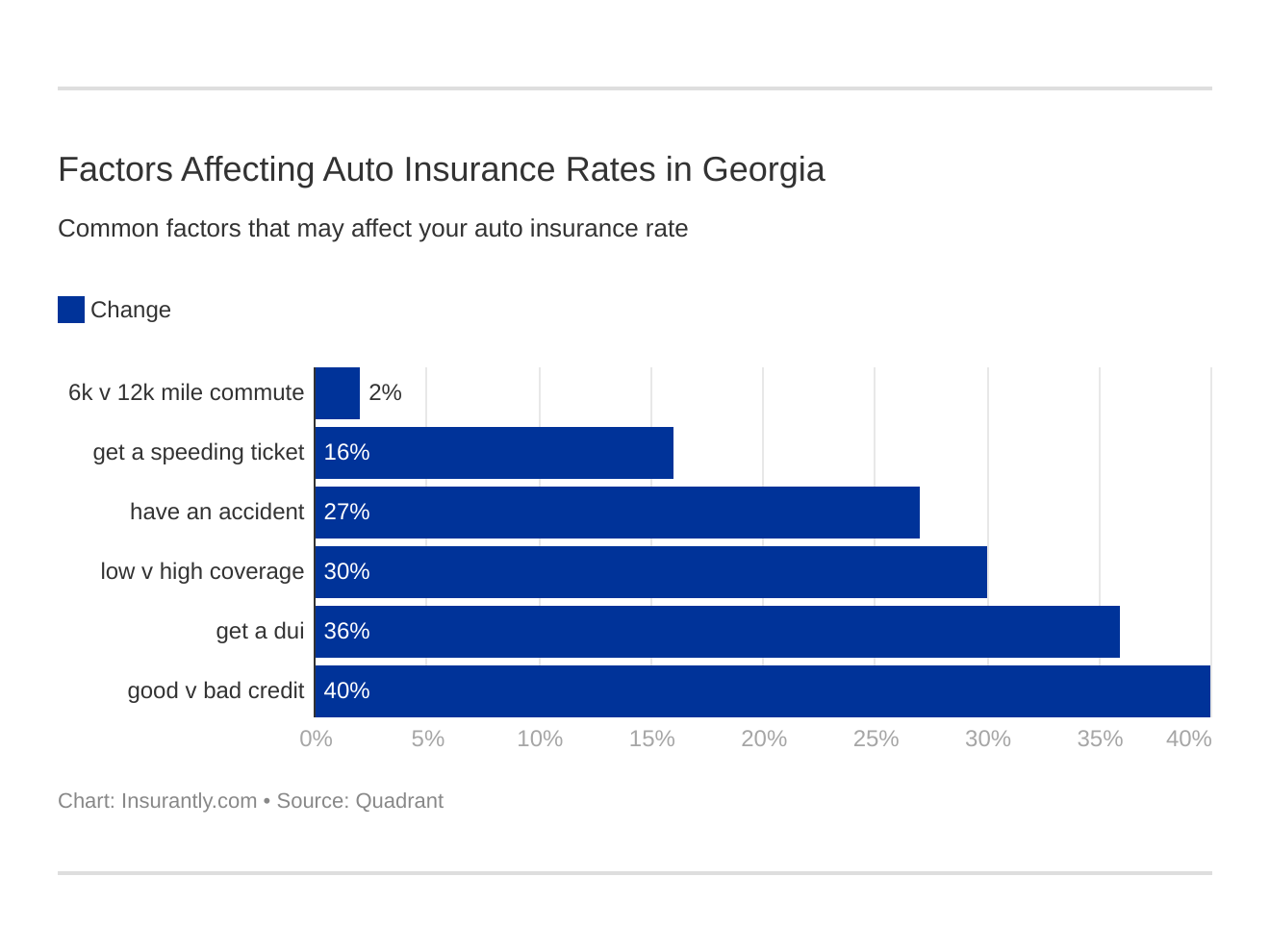
- Credit-Based Insurance Scores: Georgia allows insurers to use credit information to help determine premiums. Improving your credit score can have a more significant impact on your premium than almost any other factor besides your driving record.
Common Mistakes to Avoid in the Georgia Market
- Choosing "Reduced-by" UM Coverage: Many drivers choose this to save a few dollars a month, not realizing it significantly limits their protection when they are hit by an underinsured driver.
- Neglecting the $25,000 Property Damage Cap: In an era where the average repair cost for a high-tech vehicle or a luxury SUV can easily exceed $30,000, the state minimum is a financial trap.
- Ignoring Local Companies: While national brands have massive advertising budgets, local entities like Georgia Farm Bureau often offer more personalized claims service and competitive rates for those living outside of the immediate Metro Atlanta area.
Frequently Asked Questions
Is Georgia a "No-Fault" state for auto insurance?
No, Georgia is an at-fault state. This means the person who caused the accident is responsible for the damages. Consequently, the "best" coverage includes high liability limits because you can be sued personally if the damages exceed your policy limits.
What is the average cost of auto insurance in Georgia in 2026?
As of 2026, the average annual premium for full coverage in Georgia is approximately $1,900 to $2,300, depending on your location. Residents in Atlanta, Decatur, and Sandy Springs generally pay 20-30% more than those in Savannah or Athens due to higher traffic density and theft rates.
Does my Georgia policy cover me if I drive to Florida or South Carolina?
Yes. Standard Georgia auto insurance policies provide coverage across all 50 U.S. states and Canada. However, your policy limits will remain the same as those stated on your Georgia declarations page, regardless of the minimums in the state where the accident occurs.
How do I file a Diminished Value claim in Georgia?
After your car is repaired following a covered accident, you should request a diminished value assessment from your insurer. If their offer is too low, you may need to hire an independent appraiser to provide a "Mabry" calculation to negotiate a fair settlement.
Are there specific discounts for students in Georgia?
Yes, most Georgia insurers offer a "Good Student Discount" for drivers under 25 who maintain a "B" average (3.0 GPA) or higher. Additionally, many companies offer a "Student Away at School" discount if the student attends a university more than 100 miles from home without a car.
Final Recommendation
To secure the best auto insurance coverage in Georgia for 2026, bypass the state minimums and opt for a 100/300/100 liability limit. Crucially, select "Added-on" Uninsured Motorist coverage to protect yourself against the high volume of uninsured drivers on Georgia roads. If you own a vehicle manufactured within the last five years, ensure your policy includes a clear provision for Diminished Value claims.
Before signing a new policy, use the Georgia Office of Commissioner of Insurance (OCI) website to verify the complaint index of your chosen carrier. For the best balance of price and local expertise, request quotes from at least one national carrier (like GEICO) and one regional carrier (like Georgia Farm Bureau) to compare their specific "Added-on" UM rates.
Image Gallery