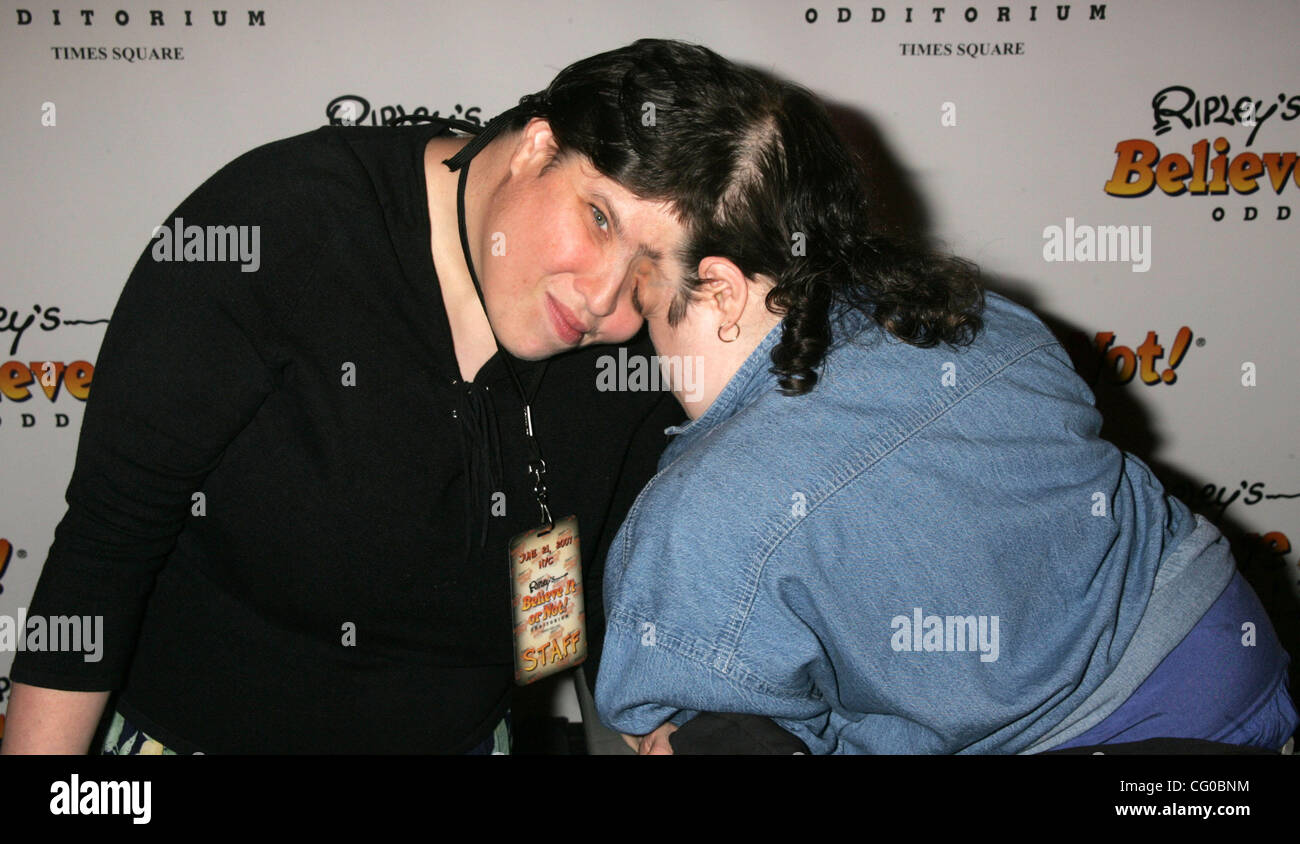
Lori and George Schappell Death: The Lives, Passing, and Legacy of the World’s Oldest Conjoined Twins
Lori and George Schappell, the world’s oldest living conjoined twins, passed away on April 7, 2024, at the Hospital of the University of Pennsylvania in Philadelphia at the age of 62. Born fused at the skull, the siblings defied medica...
Lori and George Schappell, the world’s oldest living conjoined twins, passed away on April 7, 2024, at the Hospital of the University of Pennsylvania in Philadelphia at the age of 62. Born fused at the skull, the siblings defied medical expectations by living long, distinct, and highly independent lives, setting Guinness World Records while maintaining separate careers, identities, and personal routines.
Contents
Details of Lori and George Schappell’s Passing
The news of Lori and George Schappell's death was publicly confirmed through an obituary published by Leibensperger Funeral Homes in Hamburg, Pennsylvania. According to official records, the twins died on Sunday, April 7, 2024, at the Hospital of the University of Pennsylvania. At the time of their passing, they were 62 years and 202 days old, an unprecedented lifespan for individuals born with their rare anatomical condition.
While the exact cause of death was not disclosed to the public in accordance with the family's privacy preferences, their passing marked the end of an extraordinary era in medical history. Medical experts had long noted that craniopagus twins—those joined at the head—face significant circulatory and neurological complexities that often reduce life expectancy. Surpassing six decades of life, Lori and George survived far beyond initial clinical predictions made at their birth in 1961.
The passing of the twins drew international tribute from disability rights advocates, medical professionals, and organizations such as Guinness World Records, which officially recognized them as the oldest living conjoined twins prior to their death.
Early Life and Medical History
Lori and George (born Dori) Schappell were born on September 18, 1961, in Reading, Pennsylvania. Anatomically, they were classified as craniopagus conjoined twins, a condition that occurs in approximately 1 in every 2.5 million live births and accounts for only 2 to 6 percent of all conjoined twin cases.
- Craniopagus Anatomy
- Fused Cranial Bones
- Shared Superior Sagittal Sinus (Blood)
- Shared ~30% Brain Tissue (Frontal/Parietal)
- Fused Cranial Bones
The twins shared vital blood vessels and approximately 30 percent of their brain tissue, primarily in the frontal and parietal lobes. Because they faced each other in opposite directions, they could not make direct eye contact without looking through a mirror or turning their necks to extreme angles. Furthermore, George had spina bifida and was significantly shorter in stature, requiring a specialized wheeled stool that Lori pushed so both could move together efficiently.
Despite having completely normal cognitive capabilities, the twins spent the first 24 years of their lives residing in an institution for individuals with intellectual disabilities. Their parents, overwhelmed by the complex care required, placed them in state care shortly after birth. It was not until the mid-1980s, through the intervention of advocates—including Ginny Thornburgh, wife of former Pennsylvania Governor Dick Thornburgh—that Lori and George successfully demonstrated their independence and fought for their legal right to live on their own.
Upon leaving institutional care, Lori enrolled in a vocational program and secured employment in a hospital laundry facility, while George pursued creative endeavors in country music and assistive technology design.
Independence, Identity, and Living Arrangements
One of the most remarkable aspects of Lori and George Schappell's lives was their uncompromising commitment to individuality. Rather than allowing their shared physical body to dictate a singular existence, they constructed a lifestyle built on mutual respect, compromise, and personal autonomy.
Daily Autonomy Structure
| Lori's Turn | George's Turn |
|---|---|
| Laundry & Hospital Work | Country Music Performances |
| Professional Bowling Matches | Design & Mobility Innovation |
| Private Phone Calls / Errands | Rehearsals & Travel |
Gender Transition and Personal Identity
In 2007, George, who had originally been named Dori and had spent years performing under the stage name Reba Schappell, publicly came out as a transgender man. This milestone made Lori and George the first same-sex conjoined twins in recorded history to identify as different genders.
George’s transition required deep coordination and understanding from Lori, who fully supported her brother's identity. From that point forward, they addressed each other as brother and sister, navigating public scrutiny with dignity and consistency.
Domestic Life in Pennsylvania
The siblings maintained a private two-bedroom apartment in Reading, Pennsylvania. Rather than sharing a single sleeping area, they arranged the home so that each room reflected their distinct tastes:
- Alternating Living Spaces: They spent alternate nights sleeping in each other's bedrooms, treating the designated host's room as private space.
- Privacy Practices: When one twin needed private time for phone conversations, reading, or personal reflection, the other would turn away or use passive distraction techniques to grant physical and mental space.
- Showering Routines: They modified their bathroom with customized curtains to allow individual privacy while bathing.
Lori pursued hobbies such as competitive bowling—winning several medals in regional competitions—and maintained long-term romantic relationships. George developed a country music career, performing across the United States, Germany, and Japan, and engineered a custom wheelchair apparatus to accommodate his spina bifida while staying physically linked to Lori.
Medical Perspectives on Craniopagus Separation
Throughout their lives, medical teams frequently evaluated whether Lori and George could be surgically separated. Advances in neuroimaging and pediatric neurosurgery during the late 20th century made complex separation attempts possible in select cases, but for Lori and George, surgery was consistently deemed unfeasible and unnecessary.
Risks of Surgical Separation
Craniopagus separation surgeries carry extremely high risk profiles when vital venous structures are shared. In Lori and George's case, surgical intervention faced several clinical barriers:
- Shared Cerebral Circulation: The twins shared a major portion of the superior sagittal sinus, the critical venous channel that drains blood from the brain back to the heart. Severing this structure would inevitably leave one or both twins with fatal ischemic strokes or massive intracranial hemorrhages.
- Shared Brain Tissue: Brain tissue in the frontal and parietal regions was intermingled. Surgical division would result in severe neurological deficits, including paralysis, loss of speech, or profound cognitive impairment.
- Ethical Autonomy: Both Lori and George were fully capable of making informed medical decisions. From adulthood onward, both twins vehemently rejected any suggestion of separation, adhering to the principle that God created them as they were meant to be.
As George stated in a 2002 documentary interview reported by the Associated Press, "Why fix what isn't broken?" Lori similarly expressed that separation would destroy two thriving lives rather than improve them.
Historical Context: Notable Conjoined Twins
To appreciate the extraordinary lifespan of Lori and George Schappell, it helps to examine how their longevity compares to other historic conjoined twin cases. Craniopagus twins represent one of the rarest forms of the condition, making Lori and George's survival past age 62 unprecedented in medical literature.
| Twin Names | Anatomical Type | Lifespan / Age Reached | Historical Context & Milestones |
|---|---|---|---|
| Eng and Chang Bunker | Omphalopagus (Joined at abdomen) | 1811–1874 (63 years) | Popularized the term "Siamese Twins"; managed successful farms and raised 21 children. |
| Millie and Christine McKoy | Pygopagus (Joined at lower spine) | 1851–1912 (61 years) | Born into slavery; became celebrated international vocalists known as the "Two-Headed Nightingale." |
| Daisy and Violet Hilton | Pygopagus (Joined at hips/sacrum) | 1908–1969 (60 years) | Vaudeville stars and film actresses featured in the classic 1932 movie Freaks. |
| Ronnie and Donnie Galyon | Omphalopagus (Joined at abdomen) | 1951–2020 (68 years) | Previously held the title for oldest living conjoined twins overall before passing in 2020. |
| Lori and George Schappell | Craniopagus (Joined at head) | 1961–2024 (62 years) | Oldest living female-born conjoined twins; first conjoined twins to identify as different genders. |
| Abby and Brittany Hensel | Dicephalic Parapagus (Two heads, one body) | Born 1990 (Active) | High-profile educators who achieved viral prominence through documentary appearances and public advocacy. |
Media Appearances and Public Advocacy
Lori and George Schappell spent decades reshaping public perceptions surrounding physical differences and disability autonomy. Rather than shying away from media attention, they used television, film, and news features to educate audiences.
Major Media Contributions
- Documentaries: They were featured in numerous medical specials produced by the BBC, Discovery Channel, and National Geographic, which explored the physiological and psychological aspects of their shared life.
- Television Cameos: The twins appeared in scripted television shows, including an episode of the medical drama Nip/Tuck, where they portrayed fictionalized versions of themselves contemplating separation surgery.
- Public Speaking: They traveled internationally to participate in discussions on disability rights, independent living, and bioethics, demonstrating that physical limitations do not preclude a rich, self-directed life.
By maintaining high visibility in mainstream culture, they challenged long-standing stigmas regarding conjoined twins and inspired modified care models for individuals living with complex anatomical variations.
Frequently Asked Questions
What was the cause of death for Lori and George Schappell?
The official cause of death for Lori and George Schappell was not released publicly by their family or the Leibensperger Funeral Home. They passed away at the Hospital of the University of Pennsylvania on April 7, 2024, at age 62.
How old were Lori and George Schappell when they died?
They were 62 years and 202 days old when they passed away on April 7, 2024. Their age established them as the oldest living female-born conjoined twins in recorded history.
Were Lori and George Schappell ever considered for separation surgery?
While modern surgical techniques were reviewed by specialists over the decades, separation was ruled out due to extreme risks. They shared vital brain tissue and critical cranial blood supply, meaning separation would likely have resulted in death or severe brain damage for one or both. Additionally, both twins explicitly rejected separation throughout their adult lives.
How did George Schappell transition while joined to Lori?
In 2007, George publicly declared his identity as a transgender man. While Lori and George shared skull tissue and blood vessels, they possessed distinct physical nervous systems and individual identities. Lori fully supported George's transition, and the two adjusted their public and private lives to honor George’s gender identity.
Did Lori and George Schappell live independently?
Yes. After leaving a state institution at age 24, they lived in their own apartment in Reading, Pennsylvania. They maintained distinct careers, established individual schedules, took turns engaging in personal hobbies, and managed their household without constant direct assistance.
Summary of Legacy
The story of Lori and George Schappell is a compelling example of human resilience, personal autonomy, and sibling devotion. Born facing massive medical challenges and institutional segregation, they took control of their lives, forged independent careers, and made medical history over their 62 years together.
For medical researchers, disability advocates, and the public alike, their passing on April 7, 2024, represented the conclusion of an unprecedented life story. They proved that physical connection does not diminish personal identity, showing the world that determination, mutual compromise, and mutual respect can overcome even the most complex physiological barriers.
Image Gallery