Mold Remediation in McHenry: Professional Standards and Restoration Strategies
Professional mold remediation in McHenry, Illinois, involves a systematic process of identifying moisture sources, containing fungal growth, and removing contaminated materials to restore indoor air quality. Adhering to IICRC S520 stan...
Professional mold remediation in McHenry, Illinois, involves a systematic process of identifying moisture sources, containing fungal growth, and removing contaminated materials to restore indoor air quality. Adhering to IICRC S520 standards, localized experts utilize advanced HEPA filtration and structural drying to ensure residential and commercial properties remain safe, habitable, and structurally sound.
Contents
Understanding the McHenry Climate and Mold Risk Factors
McHenry’s geographical location in Northern Illinois presents unique environmental challenges that contribute to mold proliferation. As of 2026, property owners in the Fox River Valley continue to face high relative humidity during summer months and significant snowmelt cycles in the spring. These conditions, combined with the region’s relatively high water table, make basements and crawlspaces particularly vulnerable to moisture intrusion.
Mold is an opportunistic organism. It requires three primary elements to thrive: a food source (organic material like drywall, wood, or dust), a viable temperature range, and, most importantly, moisture. In McHenry, common triggers for mold growth include:
- Fox River Flooding: Properties near the river or in low-lying floodplains often experience hydrostatic pressure, forcing groundwater through foundation cracks.
- High Seasonal Humidity: During peak Illinois summers, indoor humidity levels can easily exceed 60% if HVAC systems are undersized or poorly maintained, creating a "greenhouse effect" in attics and wall cavities.
- Ice Dams: In winter, poor attic insulation leads to uneven roof temperatures. Melting snow refreezes at the eaves, forcing water under shingles and into the soffits, often resulting in hidden attic mold.
Addressing mold in this region is not merely a matter of aesthetic cleaning; it is a technical restoration process designed to handle the specific building science of Midwestern architecture.
Identifying the Need for Professional Mold Remediation
Determining when a mold issue requires professional intervention—rather than a simple household cleaning—is critical for health and safety. According to the Environmental Protection Agency (EPA), mold patches exceeding 10 square feet generally require professional remediation protocols to prevent the accidental dispersal of spores.
Visual and Olfactory Indicators
While "black mold" (often associated with Stachybotrys chartarum) receives the most media attention, many types of mold, including Aspergillus and Penicillium, can be equally problematic. Homeowners should look for:
- Discoloration: Fuzzy, slimy, or powdery spots in shades of black, green, white, or orange.
- Water Stains: Yellowish or brownish rings on ceilings and walls, indicating a historical or active leak.
- Musty Odors: The presence of Microbial Volatile Organic Compounds (MVOCs) often produces a "wet basement" smell even when mold is not visible.
Health Symptomatology
For many McHenry residents, the first sign of a mold problem is physical. Fungal spores are potent allergens. Sensitive individuals may experience persistent sneezing, red eyes, skin rashes, or exacerbated asthma symptoms. In 2026, indoor air quality (IAQ) remains a top priority for public health, as prolonged exposure to certain mycotoxins can lead to more severe respiratory complications.
The Professional Mold Remediation Process in 2026
The industry standard for mold remediation is governed by the IICRC S520 Standard for Professional Mold Remediation. This document outlines a science-based approach that prioritizes the removal of the mold source rather than just "killing" it with chemicals.
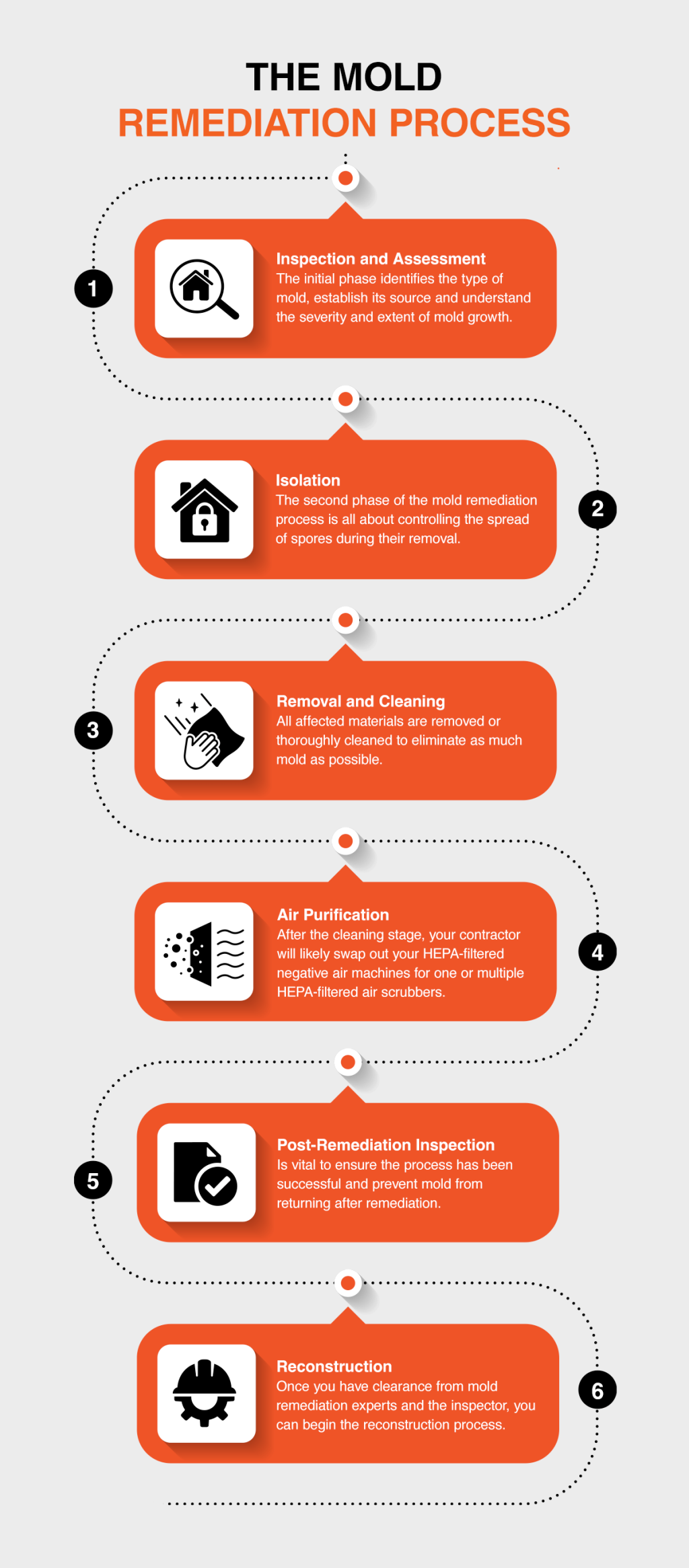
1. Inspection and Moisture Mapping
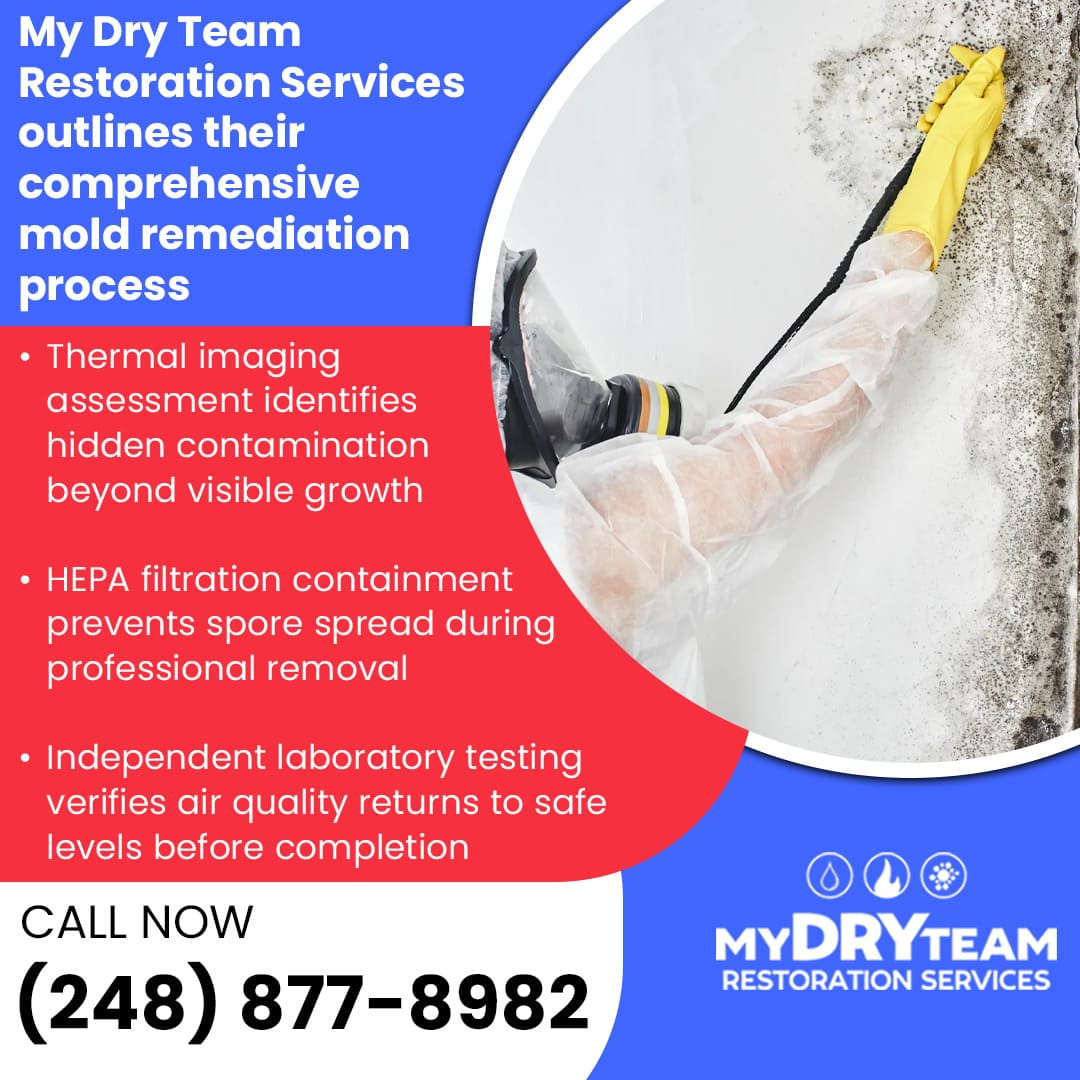
The first step is a comprehensive assessment. Professionals use infrared (thermal imaging) cameras to detect temperature anomalies behind walls, which often indicate hidden moisture. Moisture meters are then used to confirm the moisture content of building materials like studs and subflooring.
2. Containment and Pressure Management
To prevent cross-contamination, the affected area must be isolated. This involves:
- Critical Barriers: Using 6-mil polyethylene sheeting to seal doorways, vents, and any openings.
- Negative Air Pressure: Utilizing High-Efficiency Particulate Air (HEPA) air scrubbers to create a vacuum effect. This ensures that when a technician enters or exits the containment zone, air flows into the contaminated area, not out into the rest of the home.
3. Air Filtration and Purification
Throughout the process, air scrubbers continuously cycle the air within the containment zone. These machines are capable of capturing 99.97% of particles as small as 0.3 microns, effectively removing airborne spores and dust generated during the cleanup.
4. Controlled Removal of Impacted Materials
Materials are categorized by their porosity:
- Porous (Drywall, insulation, carpeting): These usually cannot be fully cleaned and must be removed and disposed of in sealed bags.
- Semi-Porous (Wood framing, concrete): These can often be saved through abrasive cleaning methods like HEPA vacuuming and wire brushing.
- Non-Porous (Metal, glass, plastic): These are easily cleaned and sanitized.
5. Cleaning and HEPA Vacuuming
Once the bulk of the mold is removed, all surfaces within the containment zone are cleaned using a "HEPA Sandwich" technique: HEPA vacuuming, followed by damp wiping with an EPA-registered antimicrobial solution, followed by a final HEPA vacuuming.
6. Post-Remediation Verification (PRV)
The final step involves a third-party inspection to verify the area is clean. This often includes air sampling or "tape lifts" to ensure the fungal ecology has returned to normal indoor levels.
Comparing Remediation Methods
Technological advancements in 2026 have provided remediation experts in McHenry with several tools for surface cleaning. The choice of method depends on the location and severity of the growth.
| Method | Best Used For | Pros | Cons |
|---|---|---|---|
| HEPA Sandwashing | General surface mold | Highly effective; removes spores; standard of care. | Labor intensive. |
| Media Blasting (Dry Ice/Soda) | Large attic or crawlspace areas | Extremely fast; cleans deep into wood pores. | Expensive; requires specialized equipment. |
| Antimicrobial Fogging | Hard-to-reach cavities | Reaches areas hands cannot; suppresses odors. | Does not replace physical removal. |
| Encapsulation | Structural wood after cleaning | Prevents future growth by sealing the surface. | Can hide future leaks if not applied correctly. |
Cost Factors for McHenry Homeowners
The cost of mold remediation in McHenry varies significantly based on the scale of the infestation and the accessibility of the site. In 2026, the average residential remediation project ranges from $1,500 to $6,000, though major structural issues can exceed this.
Key price drivers include:
- Location: Attics and crawlspaces are more expensive due to restricted movement and the need for specialized protective gear (PPE).
- Moisture Source Repair: Remediation is futile if the leak isn't fixed. Costs for roof repairs or plumbing work are separate from the mold removal itself.
- Reconstruction: Professional remediation ends with the "clearance" of the mold. Replacing the drywall, paint, and trim removed during the process adds to the total investment.
Navigating Insurance Claims in Illinois
A common question for McHenry residents is whether insurance covers mold. In Illinois, coverage typically depends on the cause of loss.
- Covered: If the mold is a direct result of a "sudden and accidental" peril, such as a pipe bursting or a water heater failing.
- Not Covered: If the mold resulted from long-term neglect, lack of maintenance, or gradual seepage (e.g., a window that has been leaking for three years).
It is essential to review your homeowner’s policy for a "Mold Endorsement" or "Fungi, Wet or Dry Rot, or Bacteria" rider, which often limits the payout for mold-related claims to a specific cap, such as $5,000 or $10,000.
How to Choose a Qualified Remediation Contractor
Since the state of Illinois does not currently require a specific state license for mold remediation (unlike asbestos), the burden of vetting falls on the consumer. To ensure a high-quality outcome in McHenry, look for the following credentials:
- IICRC Certification: The Institute of Inspection, Cleaning and Restoration Certification is the industry's premier credentialing body. Look for a "Certified Mold Remediation Technician" (AMRT).
- ACAC Accreditation: The American Council for Accredited Certification offers prestigious designations like the Council-certified Indoor Environmentalist (CIE).
- Liability Insurance: Ensure the contractor carries specific pollution liability insurance, as standard general liability often excludes mold-related work.
- No Conflict of Interest: Ideally, the company performing the remediation should not be the same one performing the initial air quality testing, as this ensures an unbiased assessment.
Prevention Strategies for the McHenry Region
The goal after remediation is to prevent a recurrence. Given McHenry’s climate, proactive moisture management is the only permanent solution.
- Sump Pump Maintenance: Ensure your sump pump has a battery backup, especially during the heavy spring rains common in McHenry County.
- Dehumidification: In basements, maintain a relative humidity (RH) level below 50%. In 2026, smart dehumidifiers can be integrated into home automation systems to alert owners if levels spike.
- Gutter and Downspout Management: Ensure water is discharged at least 6 to 10 feet away from the foundation.
- Attic Ventilation: Ensure soffit vents are not blocked by insulation, allowing for proper airflow that prevents heat buildup and condensation.
Frequently Asked Questions
Can I just use bleach to kill the mold? No. Bleach is generally ineffective for mold remediation on porous surfaces like wood or drywall. While it may remove the color of the mold on the surface, the ionic structure of bleach prevents it from penetrating the material, meaning the "roots" (hyphae) remain alive. Furthermore, bleach is 90% water, which can actually provide more moisture to the mold once the chlorine evaporates.
Is air testing always necessary? While not always legally required, air testing is highly recommended if there is a musty smell but no visible growth, or if occupants are experiencing unexplained health issues. It provides a baseline to compare indoor spore counts against outdoor levels.
How long does the remediation process take? Most residential projects in McHenry take between three to five days. This includes the setup of containment, the physical cleaning, and the 24-48 hours required for air scrubbers to stabilize the environment before post-remediation testing.
What is the difference between mold removal and mold remediation? "Removal" is the physical act of taking mold out of a building. "Remediation" is the comprehensive process that includes identifying the moisture source, containing the area, removing the mold, and ensuring the environment is returned to a safe state.
Does mold return after professional cleaning? Mold will only return if the underlying moisture problem is not resolved. Professional remediation removes the existing colony and spores, but if a basement continues to leak or a roof remains damaged, new spores from the outdoor environment will eventually settle and grow again.
Final Recommendation for McHenry Residents
If you suspect mold in your McHenry home or business, the first step should always be to identify and stop the water source. Once the environment is dry, consult with a certified professional who follows IICRC S520 guidelines. Avoid contractors who promise "quick fixes" with sprays alone; true remediation requires a rigorous, multi-step containment and removal process to protect both the building's value and the occupants' health.
Image Gallery