The First Rockefeller Christmas Tree in History: The Origins of NYC's Iconic Holiday Tradition
The first Rockefeller Christmas tree was erected in December 1931 by construction workers clearing the site for the construction of Rockefeller Center during the peak of the Great Depression. Pooling their earnings, the workers purchas...
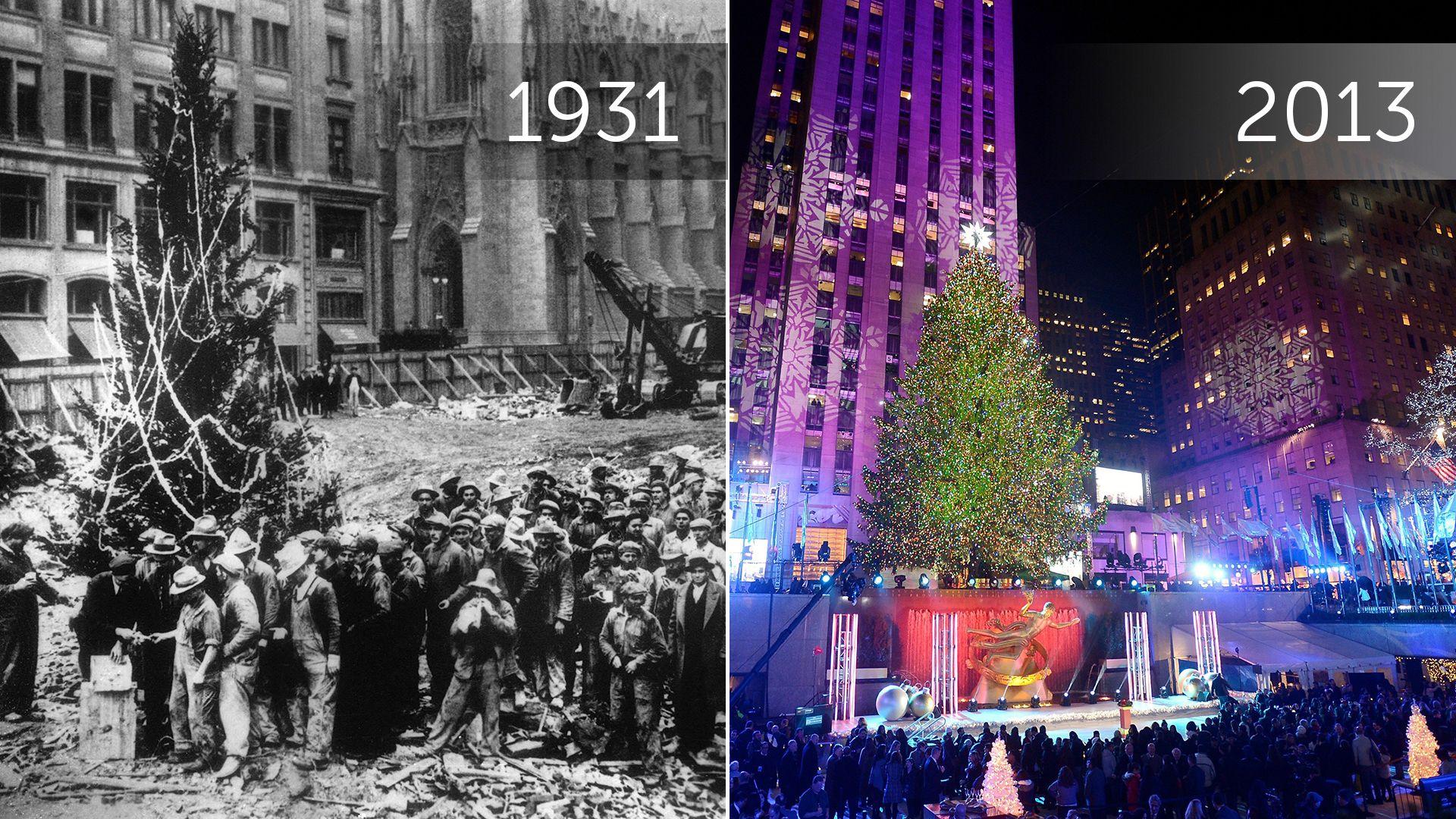
The first Rockefeller Christmas tree was erected in December 1931 by construction workers clearing the site for the construction of Rockefeller Center during the peak of the Great Depression. Pooling their earnings, the workers purchased a modest 20-foot balsam fir and decorated it with handmade garlands, establishing a spontaneous tradition that Rockefeller Center officially adopted two years later in 1933.
Contents
Historical Context: The Great Depression and the 1931 Site Construction
To understand the origin of the first Rockefeller Christmas tree, one must examine the economic climate of New York City in December 1931. Two years after the Wall Street stock market crash of 1929, the United States was deeply entangled in the Great Depression. Unemployment in New York City had soared past 25 percent, financial institutions were collapsing, and real estate development across Manhattan had ground to a near-total halt.
Against this backdrop of widespread hardship, industrialist John D. Rockefeller Jr. committed to an extraordinary urban development project. Originally envisioned as a new complex for the Metropolitan Opera, the project shifted into a commercial venture after the opera company withdrew due to financial constraints. Rockefeller opted to proceed alone, securing a long-term lease on a three-block parcel of land bounded by 48th and 51st Streets and Fifth and Sixth Avenues.
By late 1931, the site was not the polished plaza seen today; it was a vast, muddy excavation pit. Thousands of construction laborers, ironworkers, excavators, and stone masons were employed at a time when steady work was exceptionally rare. Having a job on the Rockefeller Center site provided economic stability for families struggling to survive the economic downturn.
| Aspect | 1931 Site Environment |
|---|---|
| Location | Excavation pit between 48th & 51st Streets, Manhattan |
| Backdrop | Great Depression (high NYC unemployment rates) |
| Labor force | Thousands of construction workers on site |
| Site state | Muddy foundation pit prior to tower erection |
The Origins of the 1931 Tree: How Construction Workers Started the Legacy
On Christmas Eve in 1931, the atmosphere at the excavation site differed markedly from the surrounding economic gloom. Construction workers decided to mark the holiday and express gratitude for their continued employment by placing a Christmas tree in the center of the muddy lot.
The Tree's Origin and Physical Characteristics
Unlike modern trees, which are typically Norway spruces standing between 75 and 100 feet tall, the first tree was a simple 20-foot balsam fir. The workers pooled their money—often contributing small change from their earnings—to purchase the tree from a local street vendor.
The tree was erected directly in the earth and gravel of the excavation site near 30 Rockefeller Plaza (where the Comcast Building stands today).
Handmade Decorations and the Paycheck Line
Because commercial holiday ornaments were an unaffordable luxury during the Great Depression, the workers and their families crafted ornaments by hand. The decorations included:
- Garlands made from tin cans, paper streamers, and foil wrappers.
- Strings of cranberries and popcorn brought from home.
- Brightly painted cardboard shapes and makeshift tin stars.
On December 24, 1931, the workers lined up at the base of this small balsam fir to collect their weekly paychecks. The tree became an immediate focal point of warmth, camaraderie, and relief, symbolizing hope in an era of deep national uncertainty.
From Informal Worker Gesture to Official Tradition (1931 vs. 1933)
While the 1931 tree was a spontaneous, informal effort driven entirely by site laborers, it captured the imagination of management and the public. The gesture was so impactful that Rockefeller Center executives decided to make the tree an official annual event.
The transition from a makeshift worker tradition to an organized civic spectacle occurred in 1933, when Rockefeller Center held its first official tree lighting ceremony.
Key Differences Between the 1931 and 1933 Trees
| Feature | The First Tree (1931) | The First Official Tree (1933) |
|---|---|---|
| Organizer | Site construction workers | Rockefeller Center management |
| Tree Species | Balsam Fir | White Spruce |
| Height | Approximately 20 feet | 50 feet |
| Lighting & Ornaments | Handmade paper, tin, and cranberry garlands; unlit | 700 colored electric lights, formal ornaments |
| Ceremony Details | Informal paycheck gathering on Christmas Eve | Formal public lighting ceremony |
| Public Audience | Site workers and local neighborhood residents | Thousands of NYC residents and tourists |
| Site Condition | Active mud pit and excavation foundation | Partially completed plaza and surrounding buildings |
Key Milestones in the Evolution of the Rockefeller Christmas Tree
Following the 1933 official debut, the Rockefeller Center Christmas Tree quickly evolved into a national and international symbol of the holiday season. Over the decades, specific historical events shaped how the tree was selected, displayed, and illuminated.
1936: The Rink and Twin Trees
In 1936, Rockefeller Center opened the outdoor Ice Skating Rink (now The Rink at Rockefeller Center). That year, two 70-foot trees were erected to flank the plaza, and an ice-skating pageant was held to celebrate the installation, establishing the rink-and-tree pair that remains iconic today.
1942–1944: World War II Blackout Rules
During World War II, strict energy conservation and wartime blackout regulations altered the presentation of the tree. In 1942, three smaller trees (painted red, white, and blue) were placed on the plaza. None of the trees were illuminated with electric lights due to blackout guidelines intended to keep coastal cities dark against potential naval bombardments.
1951: The Broadcast Era Begins
In 1951, the Rockefeller Center Christmas Tree lighting was broadcast on national television for the first time on NBC's The Kate Smith Show. This televised coverage transformed a New York regional tradition into a nationwide television event.
2004–Present: Modern Innovations and Sustainability
In 2004, the tree featured a custom-designed Swarovski crystal star, designed by German artist Daniel Libeskind, elevating the tree's design profile. Furthermore, since 2007, the tree has used energy-efficient LED light strings, and upon being taken down each January, the timber is donated to Habitat for Humanity to build homes for families in need.
- 1931: Informal 20-ft Balsam Fir set up by construction crew
- 1933: 1st Official Tree (50-ft White Spruce, 700 electric lights)
- 1936: Opening of The Rink; twin 70-ft trees erected
- 1942-44: WWII Unlit Patriotic Trees (Blackout Rules)
- 1951: First National NBC Television Broadcast
- 2007: Shift to LED lighting & Habitat for Humanity donation
Architectural and Site Context: John D. Rockefeller Jr. and 30 Rockefeller Plaza
The physical placement of the original tree was directly tied to the grand architectural plan of Rockefeller Center. Designed by a team of architects led by Raymond Hood, the complex was conceived as a "city within a city," integrating Art Deco aesthetics with functional urban spaces.
Urban Planning Significance
John D. Rockefeller Jr. took a substantial financial risk by continuing construction during the Depression. The 1931 construction site occupied nearly 22 acres in Midtown Manhattan. The decision of the workers to place their tree at the central axis of the project—the footprint of what would become 30 Rockefeller Plaza—prefigured the central plaza's eventual role as a gathering place for the public.
When 30 Rockefeller Plaza opened in May 1933, the central sunken plaza was designed to draw pedestrian traffic from Fifth Avenue down into the retail concourses. The placement of the official tree in 1933 capitalized on this urban layout, drawing crowds off the main avenue into the heart of the complex.
How Selection and Transportation Logistics Evolved
The process of acquiring the Rockefeller Christmas tree has changed dramatically since 1931.
The 1931 Acquisition Process
In 1931, the process was completely informal. Construction workers gathered spare cash, walked to a nearby Manhattan tree vendor selling trees brought in from regional farms, and hand-carried the 20-foot balsam fir back to the site. No heavy cranes, specialized transport vehicles, or scouting teams were involved.
Modern Selection Standards
Today, the selection process is led by Erik Pauze, the Head Gardener for Rockefeller Center, who scouts potential trees year-round across the Northeastern United States and eastern Canada.
Modern tree criteria require:
- Species: Predominantly Norway Spruce (Picea abies), chosen for its structural density, classic triangular shape, and ability to support heavy ornaments and lights.
- Dimensions: Height typically ranges from 75 to 100 feet tall, with a minimum diameter of 40 to 50 feet across the lower branches.
- Structural Integrity: The tree must withstand extreme winter weather, including heavy winds and freezing temperatures in Midtown Manhattan.
Once chosen, the tree is cut, wrapped meticulously to protect its branches, loaded onto a custom extendable flatbed trailer, and transported under police escort to Rockefeller Center, where it is lifted into place by a heavy-duty hydraulic crane.
Comparative Overview: Historical vs. Contemporary Tree Installations
The table below highlights how the Rockefeller Christmas tree installation has grown across major categories over nearly a century of tradition:
| Metric / Requirement | 1931 First Tree | 1950s Mid-Century Tree | Contemporary Installation |
|---|---|---|---|
| Typical Height | ~20 feet | 60–85 feet | 75–100 feet |
| Weight | Under 1 ton | 5–8 tons | 10–15 tons |
| Lighting Count | 0 (Unlit) | ~6,000 incandescent bulbs | 50,000+ multi-colored LEDs |
| Top Star/Ornament | Tin star / Paper craft | Illuminated plastic/metal star | Swarovski Crystal Star (9-foot-diameter) |
| Power Source | None | Standard electric grid | Solar panels on nearby Rockefeller buildings |
| Post-Display Use | Site disposal | Recycled mulch | Lumber milled for Habitat for Humanity |
Environmental Legacy and Charitable Timber Donations
A major transformation in the tree's life cycle occurred in 2007 when Rockefeller Center introduced an environmental and charitable post-display plan.
Once the holiday season concludes in early January, the tree is taken down and transported to a specialized lumber mill in New Jersey or Connecticut. There, the tree is milled into solid wood beams and timber framing.
Partnership with Habitat for Humanity
The resulting lumber is donated directly to Habitat for Humanity, an international non-profit organization that builds affordable housing. Timber from the Rockefeller Christmas tree has been used to build framing, flooring, and structural blocking for homes across the United States, including projects in New York, Louisiana, New Jersey, and Connecticut.
This initiative mirrors the spirit of the original 1931 tree: using a seasonal symbol to provide real, practical support to working families facing economic hardship.
Frequently Asked Questions
When was the first Rockefeller Christmas tree put up?
The first Rockefeller Christmas tree was put up in December 1931. Construction workers building Rockefeller Center gathered their money to purchase a 20-foot balsam fir on Christmas Eve during the Great Depression.
Who put up the first Rockefeller tree?
The first tree was put up by construction workers laboring on the site excavation for Rockefeller Center. It was an informal effort by the workers to express gratitude for having employment during the economic hardship of the 1930s.
What was the first Rockefeller Christmas tree decorated with?
Because commercial decorations were costly, the workers and their families decorated the 1931 tree with handmade ornaments. These included tin cans, paper streamers, foil wrappers, cranberry garlands, and tin stars.
Is the 1931 tree considered the first official Rockefeller Christmas tree?
No. The 1931 tree was an informal, worker-led gesture. Rockefeller Center management adopted the idea officially in 1933, holding the first formal tree lighting ceremony with a 50-foot white spruce decorated with 700 lights.
How big was the first Rockefeller Christmas tree compared to today's trees?
The 1931 tree was approximately 20 feet tall. Modern Rockefeller Center Christmas trees are significantly larger, usually measuring between 75 and 100 feet in height and weighing up to 15 tons.
Summary and Planning Your Visit
The first Rockefeller Christmas tree of 1931 transformed a muddy excavation pit into a place of community, gratitude, and resilience during one of the most challenging economic periods in American history. What began as a 20-foot balsam fir purchased by construction workers evolved into an enduring global cultural event.
For visitors planning to see the Rockefeller Center Christmas Tree in Midtown Manhattan:
- Location: Rockefeller Plaza, between 49th and 50th Streets, New York, NY 10020.
- Timing: The tree is typically installed in early November, lit during a televised ceremony in late November or early December, and remains on public view through early January.
- Accessibility: The plaza is open to the public daily, with the lightest crowd density occurring in the early morning hours before 9:00 AM.
Image Gallery