The Rise of Michael Newman in Lifeguarding: From Rescue Specialist to Global Icon
Michael Newman rose to prominence in lifeguarding by bridging the gap between professional ocean rescue and international media. A real-life Los Angeles County lifeguard long before his television career, he leveraged his technical exp...
Michael Newman rose to prominence in lifeguarding by bridging the gap between professional ocean rescue and international media. A real-life Los Angeles County lifeguard long before his television career, he leveraged his technical expertise to transform how the world perceived the profession, eventually becoming a symbol of ocean safety and a dedicated advocate for Parkinson’s research.
Contents
The Foundations of a Professional Lifeguard
The rise of Michael Newman—often known by his nickname "Newmie"—is a narrative defined by physical excellence and a commitment to public safety. Long before the cameras of Hollywood arrived on the shores of Santa Monica and Malibu, Newman was already a seasoned veteran of the Los Angeles County Lifeguard system. To understand his ascent, one must first understand the environment that forged his skills.
The Los Angeles County Fire Department (LACoFD) Lifeguard Division is widely considered one of the most elite ocean rescue organizations in the world. Joining this organization is not a matter of simply being a strong swimmer; it requires a grueling certification process, including a 1,000-meter ocean swim that must be completed under strict time limits, followed by an intensive academy. Newman’s entry into this world in the 1970s placed him in a cohort of first responders who were reinventing the science of the "surf rescue."
Throughout the 1980s, Newman established himself as a highly capable rescue specialist. His rise within the ranks was characterized by his dual-threat capability as both a lifeguard and a professional firefighter. This "dual-service" background is a hallmark of the L.A. County system, where the highest-tier responders are trained to handle everything from medical emergencies on the sand to complex aquatic extractions in heavy surf.
Transitioning from the Sand to the Screen
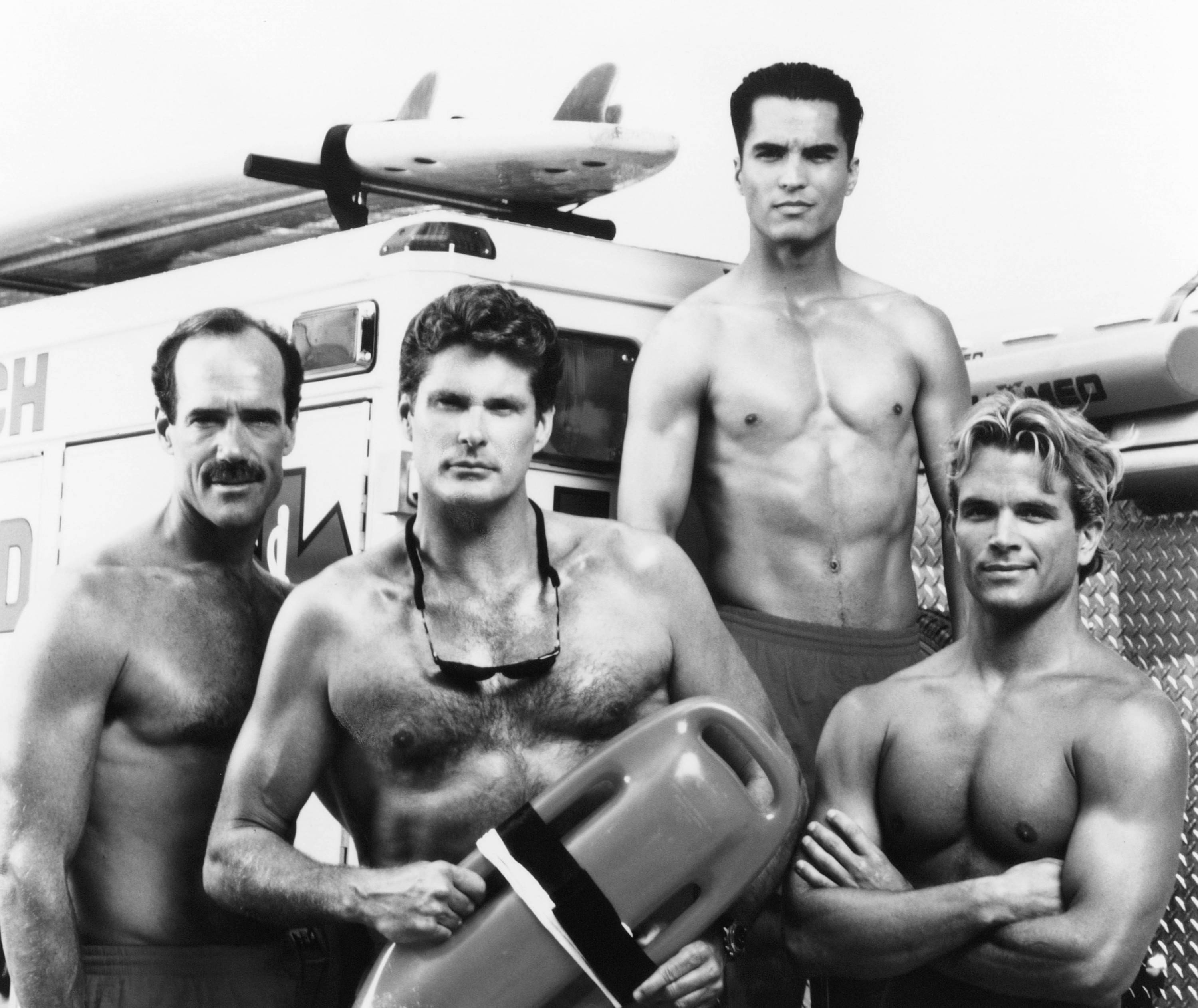
The trajectory of Michael Newman’s career took a historic turn in 1989 with the debut of the television series Baywatch. Unlike the other actors on the show, Newman was not originally hired to be a lead performer. He was brought on as a technical advisor. His primary responsibility was to ensure that the rescues depicted on screen possessed a semblance of reality.
As the production team realized that Newman’s real-world expertise translated into an effortless on-camera presence, his role expanded. He evolved from a consultant who corrected the "actors' grip" on a rescue buoy to a series regular. This transition was pivotal for the lifeguarding profession because it provided a level of authenticity that was previously absent from mainstream media. Newman was the only cast member who was actually a lifeguard in real life, a fact that gave the show credibility among actual first responders.
The "Newmie" Effect on Public Perception
Newman’s rise on television did more than just boost his personal profile; it elevated the status of the lifeguard from a seasonal "summer job" worker to a serious public safety professional. Through his character, the audience saw the implementation of actual rescue equipment, such as:
- The Rescue Buoy (The "Can"): Newman helped standardize the appearance and use of the hard plastic rescue buoy, which remains a staple of ocean rescue in 2026.
- Patrol Vehicles: He demonstrated the logistical importance of the yellow trucks used to monitor miles of coastline.
- Communication Protocols: His technical advice led to more accurate depictions of radio codes and emergency coordination between lifeguards and medical helicopters.
Technical Contributions to Lifeguarding Standards
Beyond the glamour of television, Newman’s rise was marked by his contributions to the technical side of the craft. Lifeguarding in the late 20th century was undergoing a period of rapid professionalization. Newman was an early adopter and proponent of many techniques that are now considered standard operating procedures.
One of the most significant aspects of his career was his involvement in the development of personal watercraft (PWC) rescue techniques. In the 1990s, the use of Jet Skis for surf rescue was a burgeoning field. Newman’s real-world experience allowed him to contribute to the training manuals that dictated how a lifeguard should approach a victim in high-surf conditions using a PWC and a rescue sled. This innovation significantly reduced the time it took to reach victims beyond the "impact zone" of the waves.
Professional Benchmarks in Newman’s Career
| Milestone | Description | Impact on Profession |
|---|---|---|
| LACoFD Induction | Joined the L.A. County Lifeguards in the mid-1970s. | Established baseline professional credentials in an elite agency. |
| Technical Advising | Started as the lead consultant for Baywatch in 1989. | Ensured global audiences saw correct rescue buoy and swimming techniques. |
| Dual-Service Status | Served concurrently as a firefighter-paramedic. | Promoted the integration of fire and ocean rescue services. |
| PWC Implementation | Early advocate for the use of Jet Skis in surf rescue. | Revolutionized response times for offshore rescues. |
| Global Advocacy | Used platform for Parkinson's awareness (post-2006). | Humanized the lifeguard figure as a resilient community leader. |
The Challenge of Parkinson’s Disease and Continued Legacy
In 2006, the trajectory of Newman’s life shifted when he was diagnosed with Parkinson’s Disease. While this might have signaled the end of a career for many, for Newman, it marked a new phase of his rise as a leader. He became a high-profile advocate for research, working closely with organizations like the Michael J. Fox Foundation.
In 2026, Newman’s legacy is viewed through the lens of resilience. He has spent two decades demonstrating that the discipline required to be an elite ocean lifeguard—the mental toughness, the physical preparation, and the "never-give-up" attitude—is the same discipline required to face a chronic health challenge. His rise in lifeguarding did not end when he hung up his fins; it continued through his work as an ambassador for the profession, mentoring younger guards and advocating for the health and safety of first responders.
How to Pursue a Career in Professional Lifeguarding
For those inspired by the rise of Michael Newman, entering the field of professional ocean rescue requires a specific roadmap. In 2026, the standards remain as high as ever, focusing on a combination of athletic prowess and medical certification.
- Elite Swimming Proficiency: Most professional agencies require the ability to swim 1,000 meters in open water in under 18 minutes. Training must focus on "surf entries" and "porpoising" through waves, not just pool laps.
- Emergency Medical Technician (EMT) Certification: Modern lifeguards are often the first medical professionals on the scene. Obtaining an EMT-B or higher is a prerequisite for permanent positions in agencies like the LACoFD.
- The Academy System: Successful applicants must pass a rigorous multi-week academy that covers oceanography, victim recognition, boat rescues, and legal liability.
- Specialization: Like Newman, many guards now specialize in PWC operation, underwater search and recovery, or paramedic-level advanced life support.
Common Mistakes and Misconceptions
When analyzing Newman’s rise, many conflate his celebrity with his professional standing. It is a mistake to view him as an actor who learned to swim; he was a lifeguard who happened to act.
Another common misconception is that the "Baywatch" style of lifeguarding was purely for show. While the slow-motion running was a production choice, the actual rescue sequences Newman choreographed were rooted in the real-world physics of the ocean. Professionals today still emphasize the "Newman-style" entry—keeping eyes on the victim at all times while navigating the surf—as the gold standard for rescue efficiency.
Essential Skills for Modern Ocean Rescue
- Victim Recognition: Identifying the "instinctive drowning response" before the victim goes submerged.
- Hydrology Knowledge: Understanding rip currents, lateral drifts, and swell intervals to minimize the energy expended during a rescue.
- Public Education: Preventative lifeguarding—interacting with the public before they enter dangerous water—is now considered more important than the rescue itself.
FAQs: Understanding the Newman Legacy
Was Michael Newman a real lifeguard before Baywatch?
Yes. Michael Newman was a veteran Los Angeles County Lifeguard for over a decade before the show premiered. He continued to work as a lifeguard and firefighter during his time on television, often working real shifts between filming days.
What is the "Rescue Can" that Michael Newman popularized?
The "rescue can" or rescue buoy is a buoyant, hard-plastic device with handles on the sides. Newman was instrumental in showing the world how to use it as a flotation device for multiple victims and as a defensive tool in heavy surf.
How did Michael Newman influence lifeguard training?
His role as a technical advisor helped standardize the visual representation of rescues, which in turn influenced public expectations and the professionalization of lifeguard training programs globally. He emphasized that lifeguards are "first responders," not just pool monitors.
Is Michael Newman still involved in lifeguarding in 2026?
While he has retired from active tower duty, Newman remains an emeritus figure in the L.A. County Lifeguard community. He is frequently consulted for historical perspectives on the evolution of ocean safety and remains a prominent voice in advocacy.
What was Newman’s rank in the fire department?
Newman served as a firefighter-paramedic. This dual role is a high-level position within the Los Angeles County Fire Department, requiring extensive training in both fire suppression and advanced emergency medical care.
Final Recommendations for Aspiring Guards
The rise of Michael Newman serves as a blueprint for professional longevity and integrity. For those looking to make a mark in the world of lifeguarding, the lesson of Newman’s career is clear: technical mastery is the foundation of all success. Whether you are working a quiet lake or the heavy surf of the North Shore, your value lies in your ability to perform under pressure and your commitment to the safety of others.
If you are beginning your journey, prioritize your EMT certification and your open-water swimming endurance. Remember that, like Newman, your most important work happens when the cameras aren't watching—in the early morning training sessions and the preventative actions that keep swimmers out of harm's way.
Image Gallery