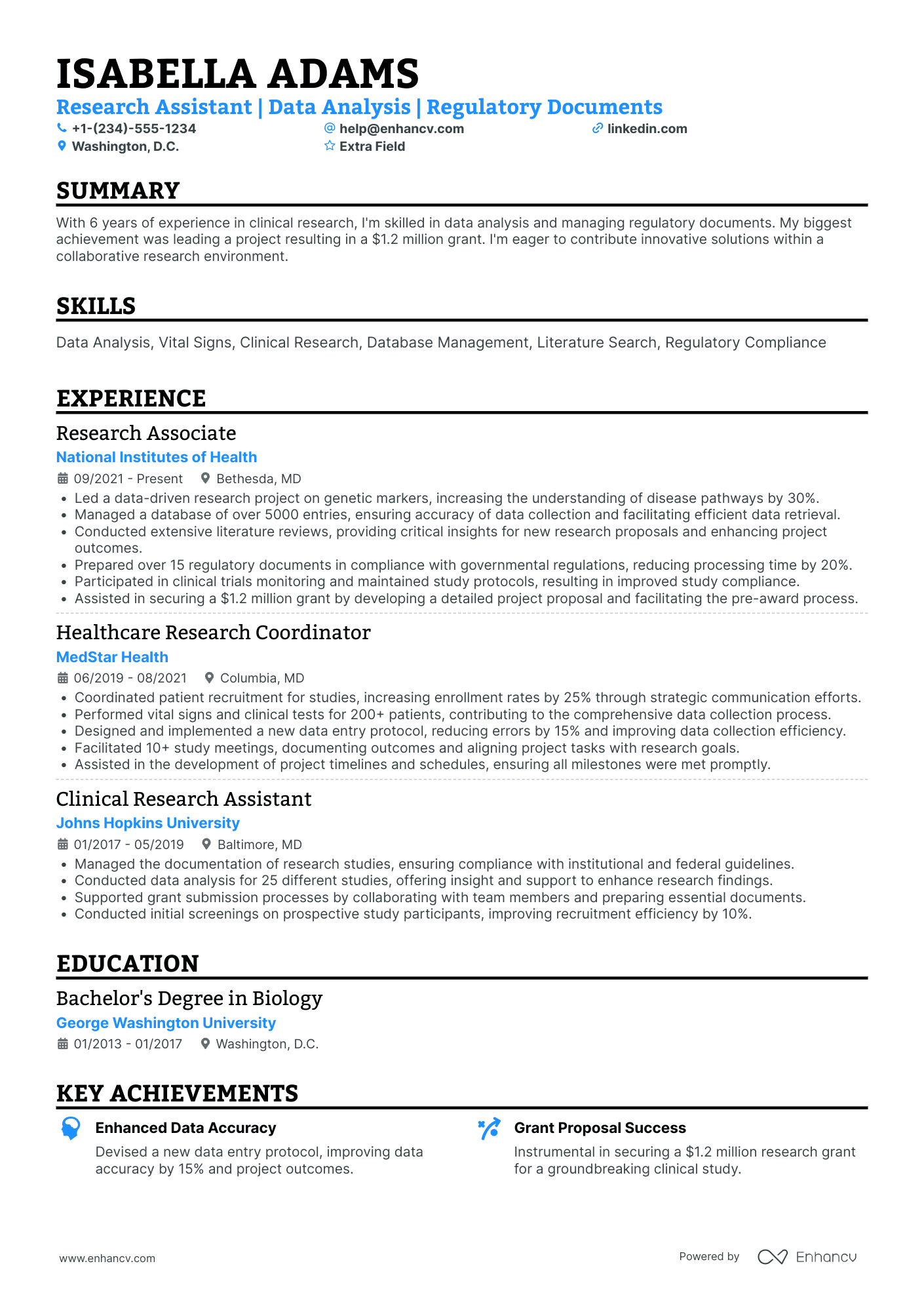
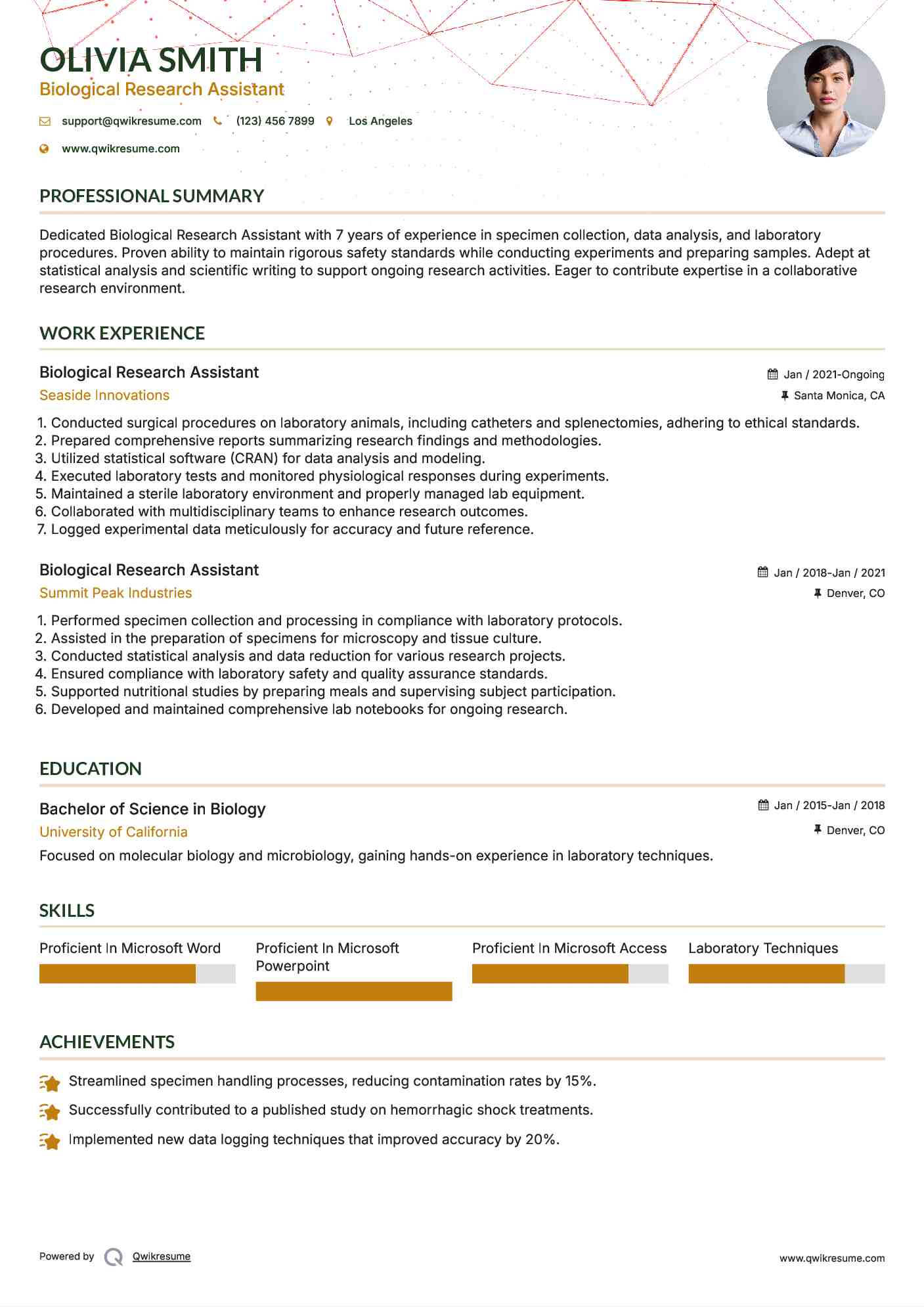
The Research Assistant Description for Modern Teams
A modern research assistant serves as an insight orchestrator, blending traditional data collection with advanced AI literacy and strategic synthesis. Beyond administrative support, they identify patterns across vast datasets, validate...
A modern research assistant serves as an insight orchestrator, blending traditional data collection with advanced AI literacy and strategic synthesis. Beyond administrative support, they identify patterns across vast datasets, validate information integrity in an era of automated content, and translate complex findings into actionable intelligence that drives high-stakes organizational decision-making for agile teams.
Contents
The Evolution of the Research Assistant Role in 2026
The definition of a research assistant (RA) has undergone a significant transformation. Historically, the role was often confined to academic environments or narrow administrative silos, focused primarily on literature reviews and manual data entry. In 2026, the modern research assistant is a cross-functional powerhouse integrated into startups, think tanks, and global enterprise units. This shift is driven by the sheer volume of information available and the speed at which modern teams must operate.
Modern teams no longer struggle with a lack of information; they struggle with an overabundance of it. Consequently, the RA's primary value has shifted from "finding" to "filtering and synthesizing." They are the gatekeepers of truth, responsible for distinguishing between AI-generated noise and high-quality evidence. This role now requires a sophisticated understanding of both qualitative and quantitative methodologies, alongside the ability to leverage a suite of computational tools that were once the exclusive domain of data scientists.
In this environment, the research assistant description must reflect a professional who can operate autonomously. They must understand the broader business context—knowing not just what data to gather, but why it matters to the product roadmap or the quarterly strategic objectives.
Core Responsibilities of a Modern Research Assistant
When drafting a description for a modern team, the responsibilities must bridge the gap between technical execution and high-level analysis. These duties are typically divided into four main pillars: information synthesis, technical orchestration, stakeholder communication, and ethical oversight.
Information Synthesis and Verification
The core of the RA role remains the gathering of information, but the methodology has changed. Modern RAs must perform deep-dive analyses using secondary research databases, proprietary internal archives, and real-time market signals. They are expected to produce literature reviews that do more than summarize; they must highlight contradictions, identify gaps in current knowledge, and propose potential hypotheses for the team to test.
Verification is perhaps the most critical component in 2026. With the proliferation of synthetic media and automated reporting, the RA acts as a fact-checker. They must be proficient in verifying sources, cross-referencing claims across multiple independent platforms, and ensuring that the data used for decision-making is both current and accurate.
Technical Orchestration and AI Management
A modern research assistant is a "power user" of research technology. This includes managing Retrieval-Augmented Generation (RAG) pipelines, where the RA curates the knowledge base that an organization’s internal AI uses. They are responsible for prompt engineering to extract high-fidelity data from large language models and for using automated scraping tools to monitor competitor movements or regulatory changes.
Technical skills now extend to basic data manipulation. While an RA may not be a full-stack developer, they are often expected to use Python or SQL to clean datasets, or use specialized software like NVivo for qualitative analysis and Tableau for visual storytelling.
Stakeholder Communication and Reporting
Modern teams move fast, and long, static reports are often ignored. The RA is responsible for creating dynamic, modular reports that cater to different stakeholders. They might produce a high-level executive summary for the C-suite, a detailed technical appendix for the engineering team, and a visual presentation for the marketing department. This requires a high degree of empathy and the ability to translate technical jargon into business value.
Essential Skills and Prerequisites
To fulfill these responsibilities, a candidate must possess a blend of traditional academic rigor and contemporary technical fluency. Most modern research assistant roles require a minimum of a bachelor's degree in a relevant field (such as Social Sciences, Data Science, or Business), but the emphasis is increasingly placed on demonstrated competencies rather than just credentials.
Analytical and Critical Thinking
The ability to think critically is the most difficult skill to automate and therefore the most valuable for an RA. Candidates must be able to evaluate the bias of a source, understand the limitations of a dataset, and avoid logical fallacies when drawing conclusions. They need a "detective mindset"—the curiosity to dig deeper when a finding seems anomalous.
Project Management and Agility
Research is rarely a linear process. A modern RA must manage multiple workstreams simultaneously, often within an Agile or Scrum framework. This requires proficiency with project management tools like Jira, Notion, or Asana. They must be able to pivot their research focus quickly as team priorities shift, ensuring that their work remains relevant to the current "sprint" or project phase.
Technical Proficiency Requirements
- AI Literacy: Advanced prompt engineering and experience with LLM-based research assistants.
- Data Tools: Proficiency in Excel/Google Sheets (advanced formulas, Pivot tables) and introductory-level SQL or Python.
- Research Software: Experience with citation managers (Zotero, Mendeley) and qualitative analysis software.
- Communication Suites: Expert use of collaborative platforms (Slack, Microsoft Teams) and presentation software.
Structuring the Job Description: A 2026 Template
Organizations looking to hire should use a structure that emphasizes both the support nature of the role and the high-level impact expected. Below is a framework for a modern Research Assistant job description.
| Component | Modern Requirements | Key Focus |
|---|---|---|
| Job Title | Research Assistant (or Insights Associate) | Clarity of function |
| Summary | Strategic partner for data synthesis and AI-driven insights. | Impact on decision-making |
| Primary Duties | AI-assisted data mining, trend analysis, and source verification. | Efficiency and accuracy |
| Technical Stack | Python, RAG-based search, SQL, and Agile PM tools. | Technical versatility |
| Soft Skills | Critical thinking, narrative storytelling, and rapid learning. | Human-centric analysis |
| Experience | 1-3 years in research-heavy roles or high-growth tech. | Practical application |
Challenges and Troubleshooting in Modern Research
Implementing a research assistant into a modern team is not without its hurdles. One common mistake is treating the RA as a "generalist assistant" who handles coffee runs or basic scheduling. This devalues their analytical training and leads to high turnover. To avoid this, teams should clearly define the "Research Roadmap" and ensure the RA is included in strategic meetings where their insights will be applied.
Another challenge is the "Hallucination Risk" associated with modern research tools. If an RA relies too heavily on unverified AI outputs, the entire team’s strategy could be built on a foundation of errors. Modern teams solve this by instituting a "Human-in-the-loop" (HITL) protocol, where the RA is required to provide primary source links for every major claim made in a report.
Finally, data privacy and ethics remain significant concerns. A modern research assistant must be well-versed in GDPR, CCPA, and emerging AI ethics guidelines. They must ensure that the data they collect—especially if it involves user research or scraping—complies with legal standards and ethical norms.
Compensation and Career Trajectory
In 2026, the compensation for a research assistant reflects the increased technical requirements of the role. While entry-level academic positions may still offer lower stipends, corporate research assistants in sectors like FinTech, HealthTech, and AI development command competitive salaries.
The career path for a modern RA is robust. Many transition into roles such as:
- Senior Research Strategist: Overseeing the entire research department.
- Product Manager: Using their deep understanding of market needs to shape products.
- Data Scientist: Specializing further into the technical aspects of data analysis.
- UX Researcher: Focusing specifically on user behavior and interface design.
By starting as an RA, professionals gain a "horizontal" view of the company, seeing how data flows from initial inquiry to final product, making them exceptionally well-rounded candidates for leadership positions.
Frequently Asked Questions
Does a modern research assistant need a PhD?
No. While a PhD is valuable for specialized scientific or academic research, most modern teams in corporate or tech environments value a Master’s or a Bachelor’s degree combined with strong technical skills and a proven track record of synthesizing information quickly.
How much of the role involves AI in 2026?
AI is integral to the workflow but does not replace the RA. Approximately 40-50% of the role involves managing and auditing AI tools to accelerate data collection, while the remaining time is spent on critical synthesis, verification, and human-to-human communication.
Is this role remote-friendly?
Yes. Most modern research tasks are digitally native. As long as the RA has access to secure databases and collaboration tools, the role is highly conducive to remote or hybrid work environments, provided there is strong asynchronous communication.
What is the difference between a Research Assistant and a Data Analyst?
A Data Analyst focuses primarily on quantitative "what" (numbers, trends, statistics), whereas a Research Assistant focuses on the "why" and "how." The RA integrates qualitative context—like market sentiment or historical precedent—with the quantitative data provided by analysts.
How do I measure the success of a Research Assistant?
Success is measured by the quality and impact of the insights provided. Key Performance Indicators (KPIs) include the accuracy of reports, the speed of information delivery for critical decisions, and the ability to proactively identify risks or opportunities before they become obvious to the rest of the team.
Recommendation for Modern Teams
To maximize the value of a Research Assistant in 2026, teams should treat the position as a specialized analytical role rather than an administrative one. Start by providing the RA with a "Research Stack"—access to premium databases, AI-orchestration tools, and direct lines of communication to decision-makers. Define clear objectives for each research cycle and encourage the RA to challenge internal assumptions with data-backed evidence. This empowerment transforms the RA from a passive support staff member into a proactive driver of organizational intelligence.
Image Gallery