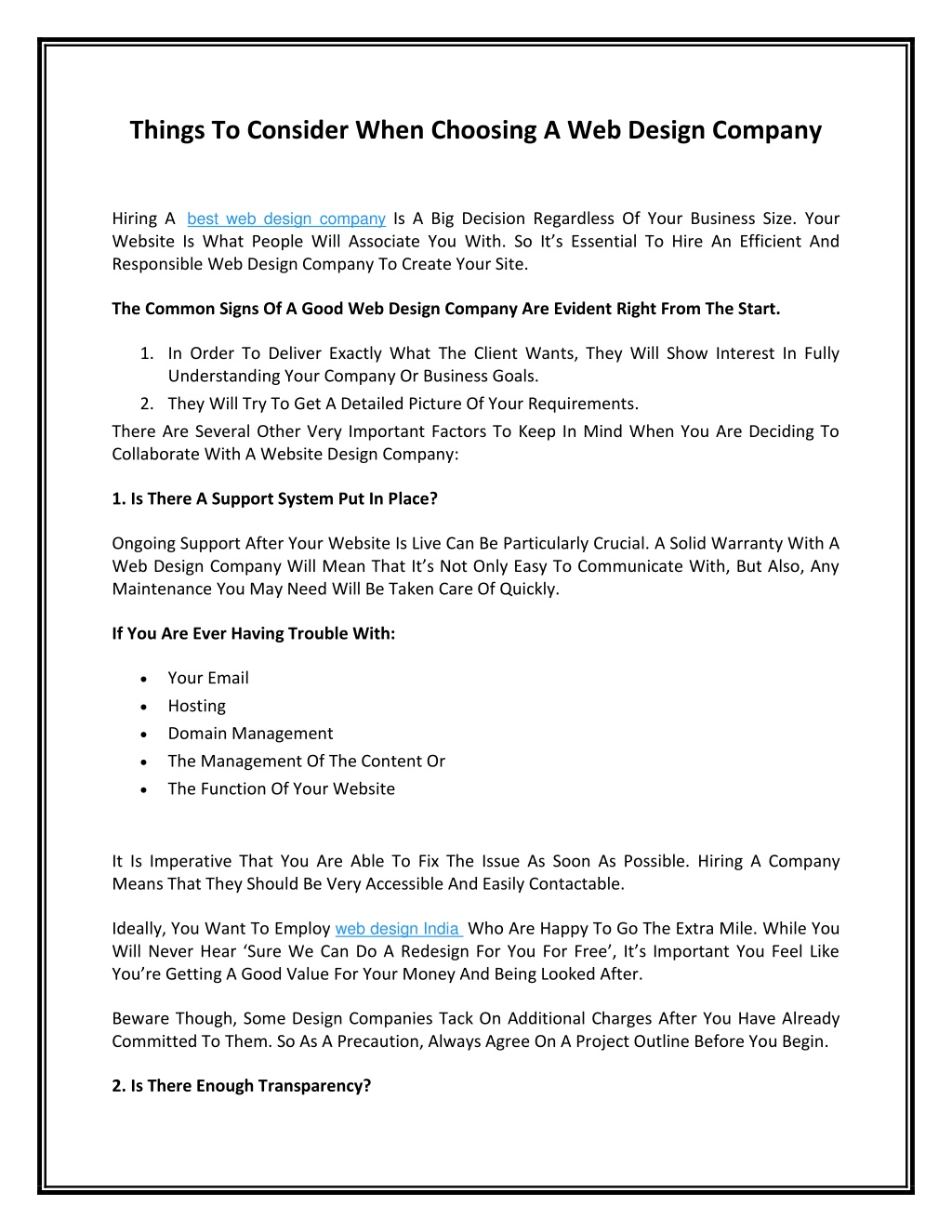
Choosing a Website Developer Company: A Strategic Guide for Businesses
Choosing a website developer company requires evaluating technical capabilities, verifying portfolio authenticity, assessing communication models, and aligning project costs with long-term business goals. By establishing clear requirem...
Choosing a website developer company requires evaluating technical capabilities, verifying portfolio authenticity, assessing communication models, and aligning project costs with long-term business goals. By establishing clear requirements and vetting prospective partners through structured interviews, organizations can secure a development team capable of building a secure, scalable, and high-performing digital presence.
Contents
Defining Your Project Scope and Requirements
Before initiating conversations with any website development agency, you must define the scope and technical requirements of your project. Rushing into the market without a clear specification document often leads to scope creep, inflated budgets, and missed deadlines. Your internal team should outline whether you need a simple content management system (CMS) deployment, a complex enterprise web application, or a customized e-commerce platform integrated with third-party logistics and customer relationship management (CRM) software.
To build an accurate project scope, answer foundational questions about functionality, user load, and administrative needs. Determine if you require multilingual support, custom API development, advanced data security protocols, or compliance frameworks like GDPR or HIPAA. Documenting these parameters allows development companies to provide accurate, competitive proposals rather than vague estimates that change dramatically once contract negotiations begin.
Types of Website Developer Companies
The web development landscape features several business models, each catering to different project sizes, budgets, and technical complexities. Understanding these categories helps you narrow your search and target companies whose operational scale matches your organization.
Freelancers and Boutique Agencies
Freelancers and small boutique agencies typically consist of one to five core members. They excel at smaller marketing websites, simple e-commerce storefronts, and rapid prototyping.
- Advantages: Lower overhead costs, highly personalized communication, and direct access to the developer executing your code.
- Limitations: Limited bandwidth for large-scale enterprise builds, potential single-point-of-failure risks if key individuals fall ill, and narrower multi-disciplinary skill sets.
Mid-Sized Development Firms
Mid-sized agencies generally employ between 10 and 50 professionals, encompassing dedicated UI/UX designers, front-end and back-end engineers, quality assurance testers, and project managers.
- Advantages: Balanced expertise across multiple technology stacks, structured project management methodologies, and the capacity to handle mid-tier applications and enterprise re-platforms.
- Limitations: Higher hourly rates than individual freelancers; communication may be mediated through a dedicated account manager rather than the direct developer.
Enterprise System Integrators
Large consultancy firms and enterprise system integrators handle massive digital transformations for multinational corporations and high-volume e-commerce brands.
- Advantages: Deep enterprise architectural expertise, robust security auditing, compliance readiness, and long-term service level agreements (SLAs).
- Limitations: Prohibitive costs for small-to-medium businesses, rigid organizational structures, and prolonged onboarding timelines.
| Company Type | Typical Team Size | Best Suited For | Cost Structure |
|---|---|---|---|
| Freelancer | 1–5 | Basic brochures, simple blogs | Hourly rates or low flat fees |
| Boutique Agency | 5–15 | Custom SME sites, local e-commerce | Moderate project-based fees |
| Mid-Sized Firm | 15–50 | Web applications, integrations | Higher project-based or retainer fees |
| Enterprise Integrator | 50+ | Global platforms, complex legacy migration | Premium enterprise contracts |
Evaluating Portfolios and Technical Competency
A company’s portfolio serves as tangible proof of its engineering capability and design aesthetic. However, viewing finished websites is only the first step. You must interrogate the technical foundations underpinning those live properties.
When reviewing case studies, look beyond visual appeal. Test the performance of their past projects using auditing tools like Google PageSpeed Insights or GTmetrix. Evaluate how well their past builds load on mobile devices, check accessibility standards compliance, and inspect the cleanliness of the markup if possible. Ask specific questions about the technology stack utilized: Are they building on established frameworks like React, Vue, or Next.js, or relying on vulnerable, outdated plugins within a monolithic CMS? Furthermore, verify whether the agency possesses experience in your specific industry. A developer who understands financial regulatory requirements or PCI-DSS compliance for e-commerce will save your organization countless hours of revision and potential legal exposure.
Understanding Pricing Models and Cost Structures
Development costs vary wildly based on geography, agency scale, and project complexity. Establishing budget transparency early prevents wasted time for both your internal stakeholders and prospective vendors. Most development companies operate under one of three primary pricing models:
- Fixed-Price Contracts: Best for projects with rigidly defined scopes, wireframes, and feature lists. While it provides budget certainty, any changes requested after contract signing typically trigger expensive change orders.
- Time and Materials (T&M): Ideal for complex, evolving software applications where requirements may shift during the development lifecycle. You pay for the actual hours worked by engineers and designers.
- Retainer Models: Suited for ongoing maintenance, continuous optimization, security patching, and iterative feature rollouts following the initial launch.
Be wary of abnormally low bids. Development companies that underbid often rely on offshore outsourcing without proper quality control, write unmaintainable code, or conceal hidden fees for basic setup tasks such as SSL installation, domain configuration, and basic search engine optimization (SEO) architecture.
The Vetting and Interview Process
Once you have shortlisted three to five potential website developer companies, conduct structured interviews to evaluate cultural fit, problem-solving methodologies, and project management transparency.
Ask prospective partners how they handle scope changes, code version control (such as GitHub or GitLab repositories), and staging environments. Inquire about their quality assurance (QA) testing process: Do they conduct automated unit testing, cross-browser compatibility checks, and user acceptance testing (UAT) before deployment? Additionally, clarify post-launch support terms. A reputable development company will offer a warranty period to fix bugs discovered immediately after deployment, alongside clear documentation or training sessions for your internal staff.
Common Mistakes to Avoid
Navigating the web development market involves several pitfalls that can jeopardize your digital investment. Avoid these frequent errors to protect your project:
- Focusing Solely on Aesthetics: Prioritizing visual flair over site speed, mobile responsiveness, and conversion rate optimization results in an attractive digital asset that fails to generate business value.
- Neglecting Source Code Ownership: Ensure your contract explicitly states that your organization retains 100% ownership of the source code, design assets, and domain credentials upon final payment.
- Failing to Plan for Post-Launch Maintenance: Websites require continuous security updates, plugin patches, and server monitoring. Neglecting long-term support leads to catastrophic security vulnerabilities.
- Ignoring Scalability: Choosing a cheap, rigid platform that cannot handle increased traffic or accommodate future product expansions forces an expensive re-platforming project prematurely.
Frequently Asked Questions
How long does it take a website developer company to build a custom website?
Timelines vary significantly depending on complexity. A standard corporate brochure website typically takes 6 to 12 weeks from wireframing to launch. Complex e-commerce platforms or custom web applications with third-party API integrations often require 3 to 6 months or longer, factoring in discovery, design iterations, development sprints, and rigorous QA testing.
What is the difference between template-based design and custom development?
Template-based builds utilize pre-existing themes with minor styling adjustments, offering faster deployment and lower costs at the expense of flexibility and unique branding. Custom development builds every component from scratch based on bespoke user experience (UX) research and brand requirements, providing superior scalability, optimization, and unique functionality.
Will our internal team be able to update the website after launch?
Yes, provided you communicate this requirement during the scoping phase. Most reputable development companies integrate user-friendly Content Management Systems (such as WordPress, Drupal, Webflow, or headless CMS alternatives) and provide comprehensive admin training or documentation so your team can easily update text, images, and blog posts without touching code.
Who owns the intellectual property and code of the completed website?
Under standard commercial agreements, your organization should retain full ownership of the intellectual property, design files, database, and source code upon completion and final payment. Always review the Master Services Agreement (MSA) or Statement of Work (SOW) to verify that code escrow or licensing restrictions do not tie you indefinitely to the agency.
What kind of ongoing maintenance does a website require after deployment?
Websites require continuous maintenance to remain secure and functional. This includes regular CMS and plugin updates, database backups, SSL certificate renewals, uptime monitoring, security vulnerability scanning, and performance optimizations. Many agencies offer monthly retainer packages to handle these technical necessities proactively.
Conclusion and Next Actions
Selecting the right website developer company requires a methodical approach that balances technical validation, budget alignment, and long-term partnership potential. Begin by documenting your functional requirements and internal technical constraints. From there, audit agency portfolios for real-world performance, clarify IP ownership terms, and establish transparent communication protocols. By executing a rigorous vetting process, you can secure a reliable development partner that builds a resilient, high-performing digital platform tailored to your organizational objectives.
Image Gallery