Modern Client-Side Security Strategies for 2026
Client-side security refers to the technologies and practices used to protect web applications within the end-user’s browser. It focuses on mitigating risks such as cross-site scripting (XSS), data skimming, and unauthorized third-part...
Client-side security refers to the technologies and practices used to protect web applications within the end-user’s browser. It focuses on mitigating risks such as cross-site scripting (XSS), data skimming, and unauthorized third-party script execution. By securing the browser environment, organizations prevent attackers from intercepting sensitive user data before it ever reaches the server.
Contents
The Critical Shift to Browser-Based Protection
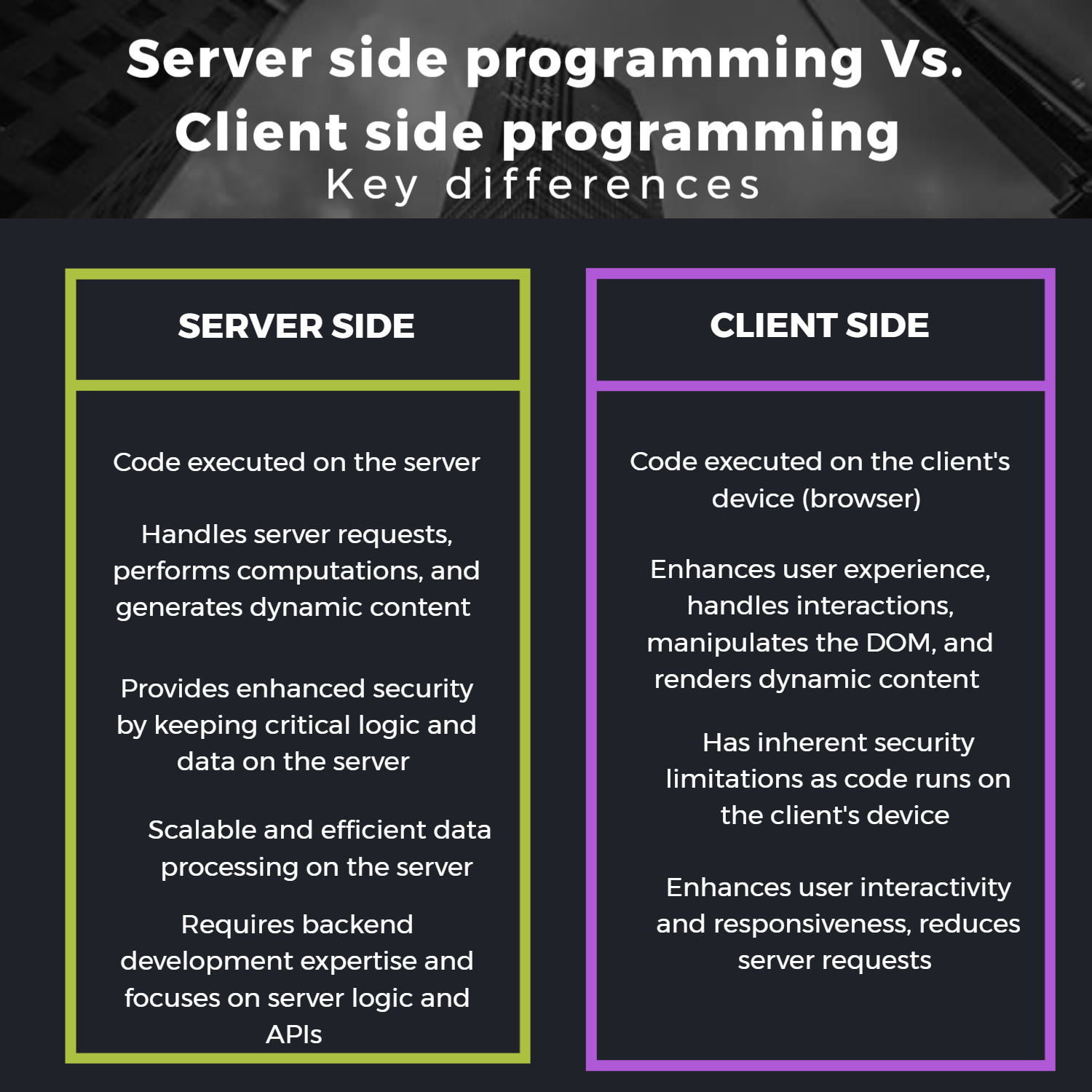
In the technical landscape of 2026, the traditional perimeter has effectively vanished. Most modern web applications are no longer monolithic structures served from a single data center; instead, they are complex orchestrations of microservices and third-party integrations executed directly in the user’s browser. While server-side security remains foundational, it often leaves a "blind spot" regarding what happens after the code is delivered to the client.
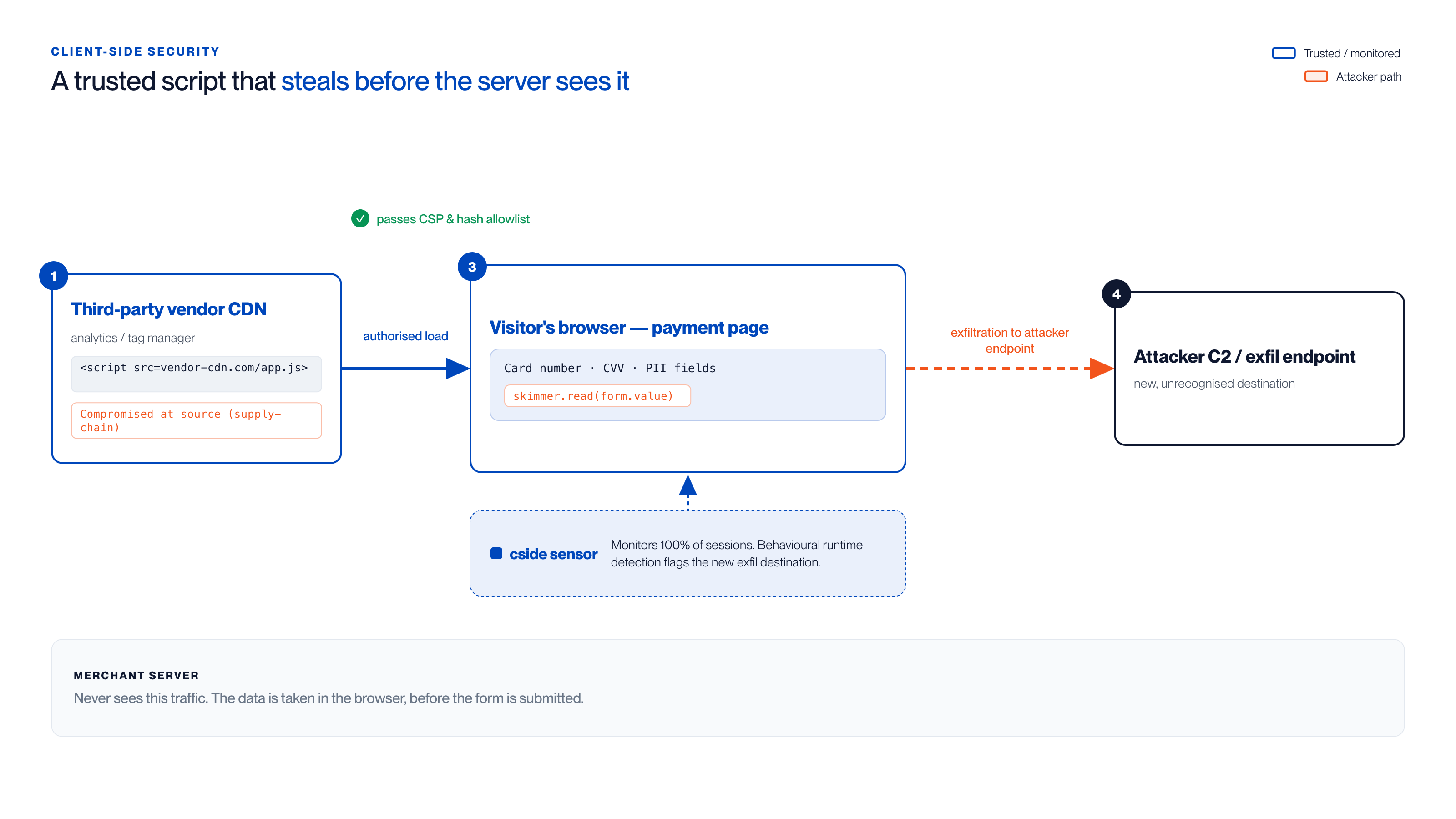
Client-side security addresses this gap. As organizations increasingly rely on external libraries for analytics, payment processing, and customer support chatbots, the "attack surface" shifts to the client. Attackers have pivoted from trying to breach hardened back-end databases to exploiting the relatively unmonitored browser environment. This shift is driven by the realization that if an attacker can control the JavaScript running in a user’s browser, they can bypass encryption, steal credentials, and exfiltrate credit card data in real-time.
The Rise of Shadow Code and Supply Chain Risks
One of the primary drivers for robust client-side security is the prevalence of "shadow code"—scripts running on a website that the internal security team may not fully track or manage. In 2026, the average enterprise website utilizes dozens of third-party scripts. Each of these scripts represents a potential entry point for a supply chain attack.
When a third-party vendor is compromised, the malicious code they serve is executed with the same privileges as the first-party code on your site. This phenomenon led to the rise of Magecart style attacks and digital skimming. Traditional Web Application Firewalls (WAFs) are often ineffective here because the malicious activity occurs between the user’s browser and the attacker’s command-and-control server, completely bypassing the corporate network perimeter.
Foundational Technologies for Client-Side Defense
To combat these threats, a multi-layered approach using standard web security headers and modern monitoring tools is essential.
Content Security Policy (CSP)
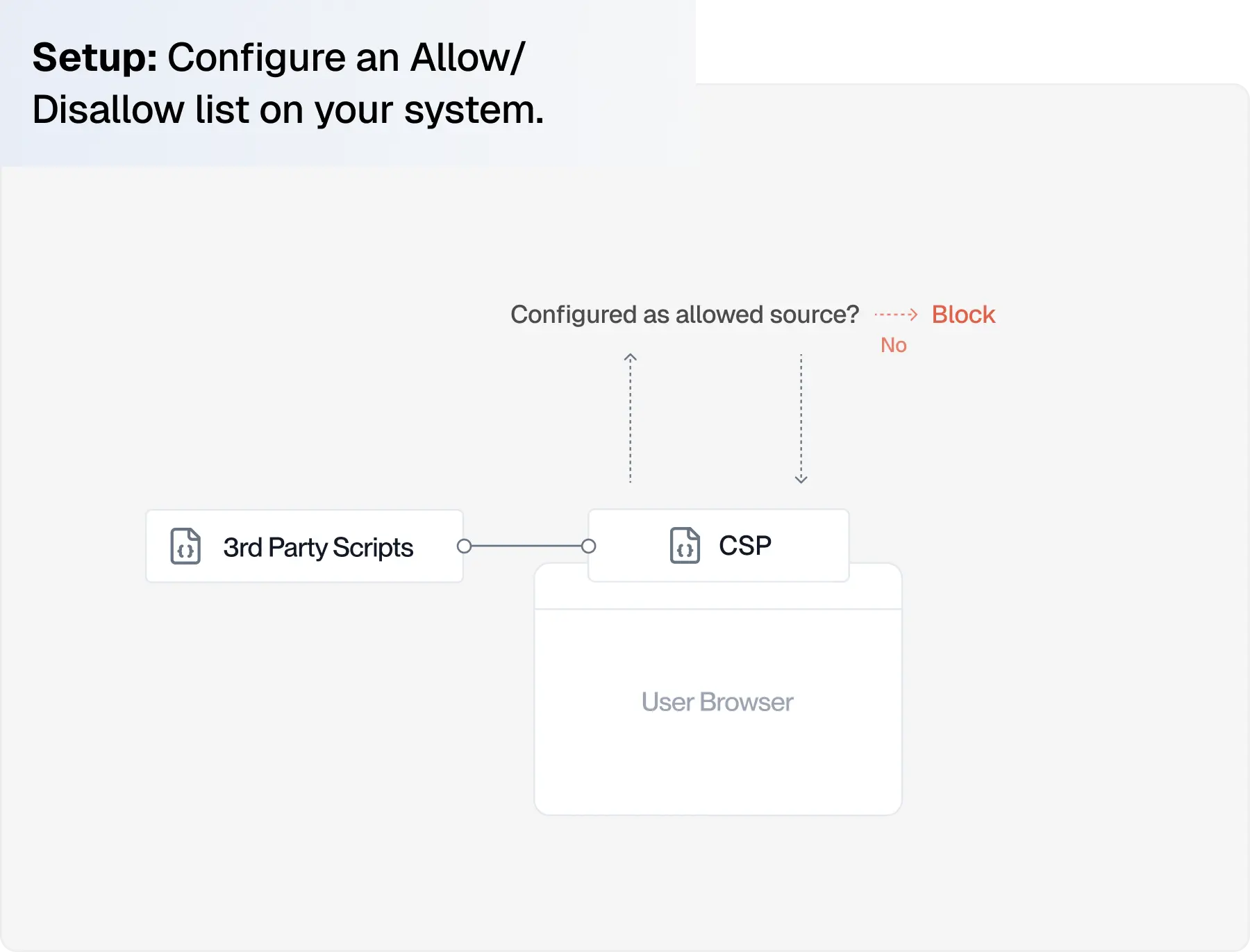
A Content Security Policy (CSP) is perhaps the most powerful tool in the client-side security arsenal. It is an HTTP response header that tells the browser which sources of content (scripts, styles, images) are trusted. By 2026, the use of "Strict CSP" has become the industry standard for preventing XSS and data injection attacks.
A well-configured CSP can prevent the execution of inline scripts and restrict script loading to specific, pre-approved domains. The report-uri or report-to directives allow developers to receive real-time notifications when a policy is violated, providing immediate visibility into potential ongoing attacks.
Subresource Integrity (SRI)
Subresource Integrity (SRI) ensures that files fetched from third-party networks (like CDNs) have not been tampered with. By providing a cryptographic hash of the expected file, the browser can verify the integrity of the script before executing it. If a single character in the script is changed by an attacker, the hashes will not match, and the browser will block the script from running. This is a critical defense against CDN compromises.
Permissions Policy
Formerly known as Feature Policy, the Permissions Policy allows site owners to explicitly enable or disable specific browser features and APIs. For example, a developer can ensure that no script on the page—whether first-party or third-party—can access the user’s camera, microphone, or geolocation unless explicitly permitted. This minimizes the potential impact of a script compromise by limiting the "blast radius" of the attacker’s access.
The Impact of PCI DSS 4.0 and Global Regulations
As of 2026, the regulatory landscape has caught up with the technical reality of client-side threats. The PCI Security Standards Council introduced specific requirements in PCI DSS 4.0 (Requirements 6.4.3 and 11.6.1) that mandate the management and monitoring of all JavaScript running on payment pages.
These requirements have moved client-side security from a "best practice" to a mandatory compliance item for any business handling payment card data. Organizations must now maintain a full inventory of scripts, provide a business justification for each, and implement a mechanism to detect unauthorized changes to the payment page's integrity. Failure to do so can result in significant fines and the loss of the ability to process payments.
Common Client-Side Vulnerabilities
Understanding the specific threats is necessary for building an effective defense.
- DOM-based XSS: Unlike traditional XSS, where the payload is delivered via the server, DOM-based XSS occurs entirely within the client-side code. It happens when an application contains client-side JavaScript that processes data from an untrusted source in an unsafe way, usually by writing the data back to the Document Object Model (DOM).
- Formjacking: This involves injecting malicious JavaScript into a website to harvest information from web forms. It is most commonly used to steal credit card information during the checkout process.
- Client-Side Request Forgery (CSRF): While often considered a server-side issue, modern CSRF attacks frequently leverage the client-side state to perform unauthorized actions on behalf of the user.
- Clickjacking: Attackers use transparent layers or iframes to trick a user into clicking a button or link on another page when they were intending to click on the top-level page.
Comparison of Client-Side Security Mechanisms
The following table compares the primary methods used to secure the client-side environment in 2026.
| Mechanism | Primary Function | Difficulty to Implement | Impact on Performance |
|---|---|---|---|
| CSP | Restricts sources of executable content | High (Requires tuning) | Minimal |
| SRI | Verifies file integrity via hashing | Low | Negligible |
| Permissions Policy | Restricts access to browser APIs | Medium | None |
| Script Monitoring | Real-time detection of script behavior | Medium | Low to Moderate |
| Sandboxing (iframes) | Isolates third-party content | Medium | Moderate |
Strategic Implementation Framework
Implementing client-side security is an iterative process that requires collaboration between security, development, and marketing teams.
1. Inventory and Audit
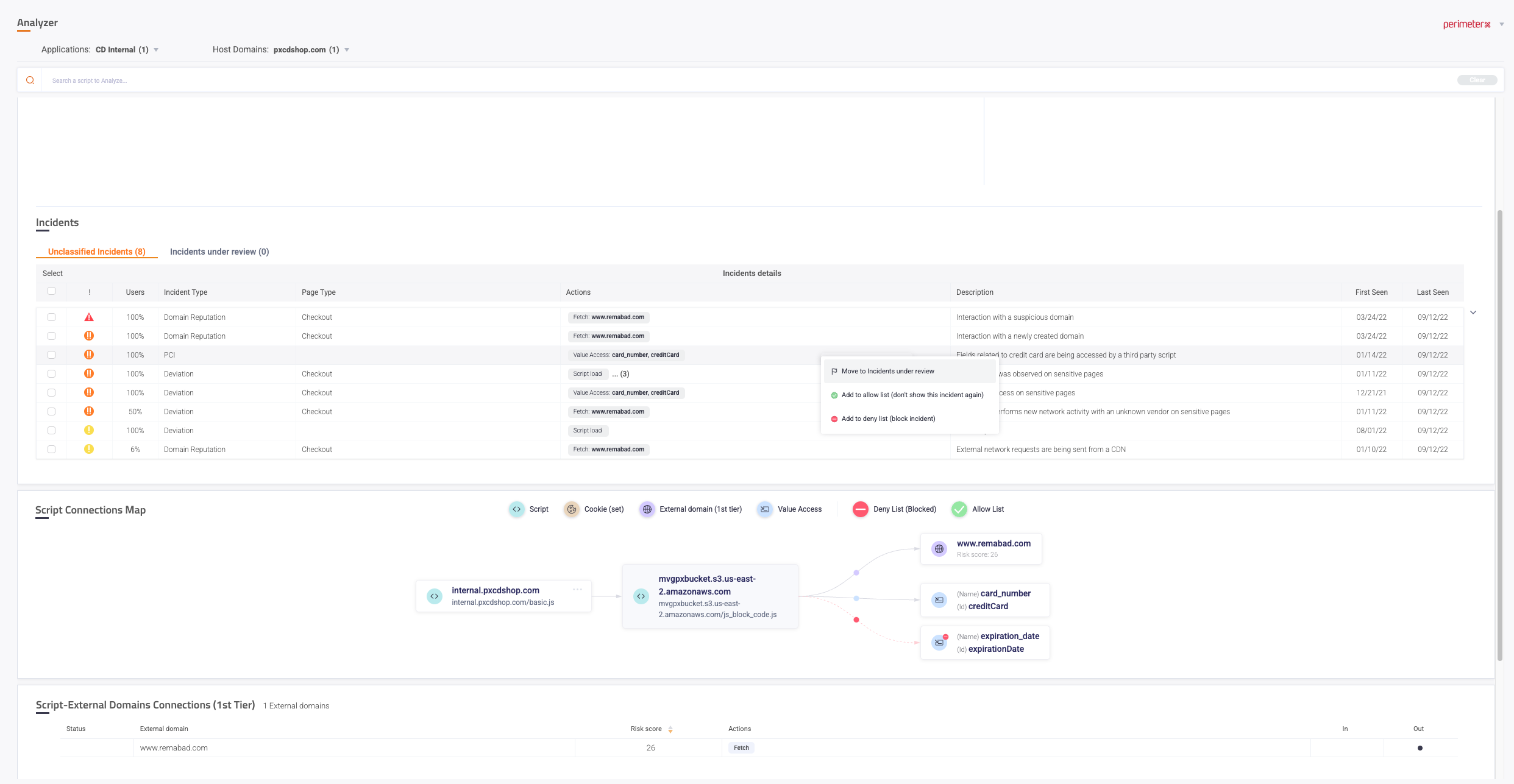
Start by identifying every script running on your website. Use browser developer tools or automated scanning services to map out third-party and fourth-party dependencies. Ask: "Is this script necessary? Who owns it? What data does it access?"
2. Implement a Reporting-Only CSP
Do not deploy a restrictive CSP immediately, as it can easily break site functionality. Instead, use the Content-Security-Policy-Report-Only header. This allows you to see what would have been blocked without actually interrupting the user experience. Analyze the reports to identify legitimate scripts that need to be added to the allowlist.
3. Enforce Integrity and Policies
Add SRI hashes to all static assets. This is often automated within the build pipeline (e.g., via Webpack or Vite plugins). Simultaneously, deploy a Permissions Policy to restrict unnecessary access to sensitive hardware or APIs.
4. Continuous Monitoring
Client-side security is not a "set and forget" task. Third-party scripts update frequently. Use automated tools to monitor for changes in script behavior or the introduction of new, unauthorized scripts. This is especially vital for maintaining compliance with standards like PCI DSS.
Practical Expert Guidance
When designing your client-side security strategy, prioritize the "Principle of Least Privilege." If a script only needs to track page views, it should not have access to input fields. Use the OWASP Top 10 Client-Side Security Project as a benchmark for your efforts.
Furthermore, avoid relying solely on "domain allowlisting" in your CSP. Attackers can often bypass this by hosting malicious scripts on reputable domains (like GitHub or Google Cloud) that are already on your allowlist. Instead, use nonce-based CSPs, which require a unique, one-time cryptographic token for every script execution, regardless of the source domain.
Frequently Asked Questions
Does a WAF protect against client-side attacks?
A traditional Web Application Firewall (WAF) primarily monitors traffic between the user and the server. It can stop some injection attempts, but it cannot see or block malicious activity that happens entirely within the browser, such as a script sending data directly to an attacker's server. Client-side security tools are needed to fill this gap.
How does CSP affect website performance?
The performance impact of CSP is generally negligible. Browsers are highly optimized to process security headers. In some cases, a very complex CSP can slightly increase the size of HTTP headers, but this rarely results in a perceptible delay for the end-user.
What is a fourth-party script?
A fourth-party script is a script loaded by one of your third-party providers. For example, if you embed a marketing tag, that tag might call another script for analytics. You may not have a direct relationship with the fourth-party provider, making these scripts particularly difficult to track and secure without automated monitoring.
Is SRI necessary if I use HTTPS?
Yes. While HTTPS protects data in transit between the CDN and the user, it does not protect the file itself if the CDN’s server is compromised. SRI ensures that the file content remains exactly what you expected, regardless of how it was delivered.
Can client-side security prevent all data breaches?
No single security measure is a silver bullet. Client-side security is one layer of a "defense in depth" strategy. It is highly effective at stopping front-end skimming and XSS, but it must be combined with robust server-side security, encryption, and identity management to provide comprehensive protection.
Recommendation for Next Actions
To immediately improve your security posture, perform a Script Audit using your browser's "Network" tab to identify all external domains currently loading code on your sensitive pages (like login or checkout). Following the audit, implement a Report-Only CSP to gain visibility into script behaviors without risking site downtime. For organizations handling payments, prioritize meeting the script integrity requirements of PCI DSS 4.0.x to ensure regulatory compliance and protect customer financial data.
Image Gallery