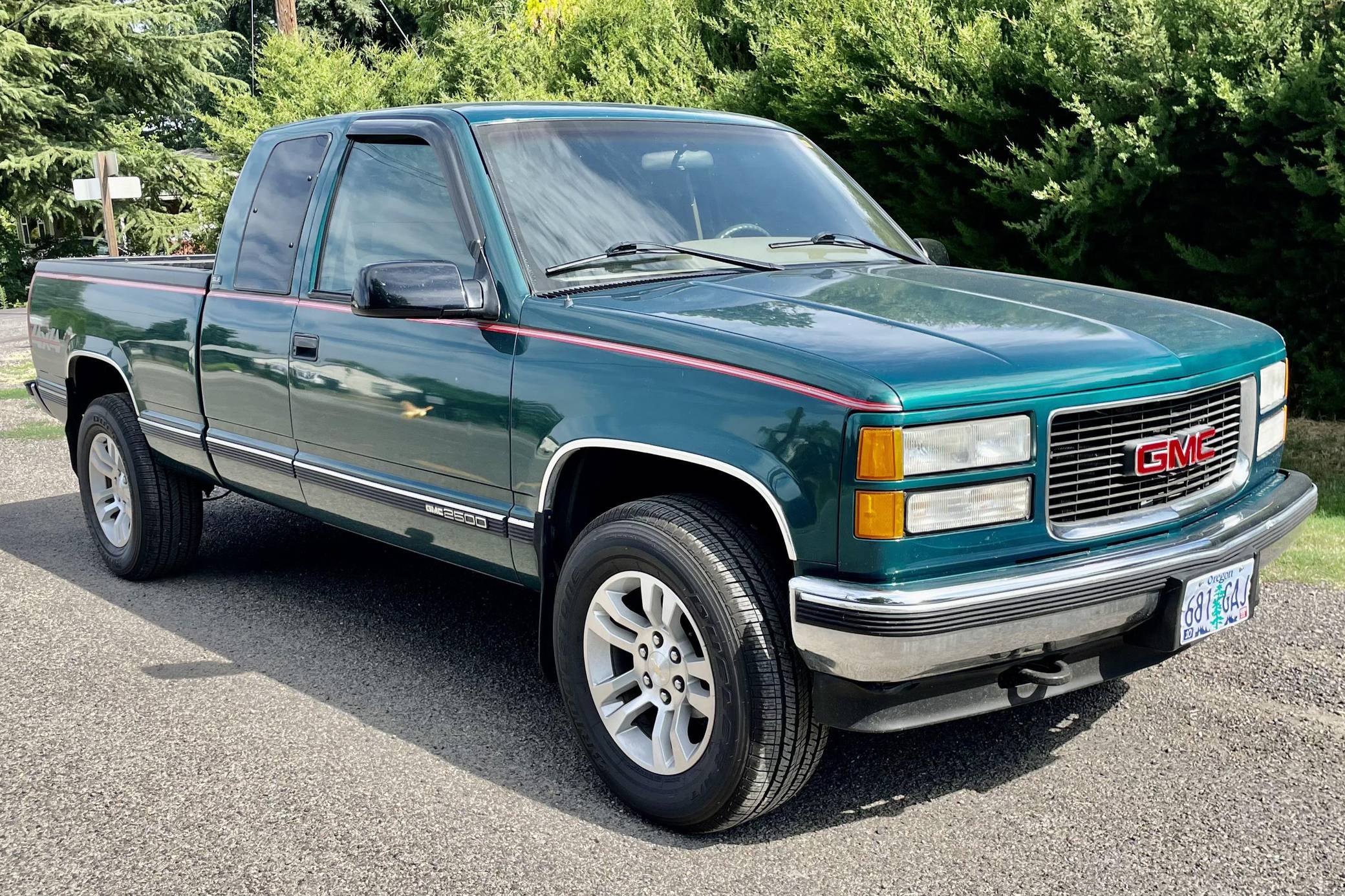
The 1995 K2500 for Road Explorers: A Guide to the GMT400 Heavy-Duty Platform
The 1995 Chevrolet K2500 remains a cornerstone for road explorers who prioritize mechanical simplicity, robust towing capacity, and heavy-duty reliability. As a core member of the GMT400 platform, this three-quarter-ton truck offers a...
The 1995 Chevrolet K2500 remains a cornerstone for road explorers who prioritize mechanical simplicity, robust towing capacity, and heavy-duty reliability. As a core member of the GMT400 platform, this three-quarter-ton truck offers a balance of manageable maintenance costs and significant load-hauling capability, making it a preferred foundation for custom overlanding builds and long-distance expedition rigs in 2026.
Contents
Understanding the GMT400 Legacy for Modern Exploration
The 1995 model year is widely considered a "sweet spot" in the evolution of the GMT400 series. By 1995, General Motors had refined the platform’s ergonomics and electrical systems while maintaining the mechanical durability that defined the early 1990s. For the road explorer, this means a vehicle that is sufficiently modern to be comfortable for long highway stretches but remains free of the highly complex, proprietary sensor networks that characterize light-duty trucks produced in the 2020s.
The K2500 designation denotes a 4WD (K) three-quarter-ton (2500) chassis. This implies a higher Gross Vehicle Weight Rating (GVWR) than the K1500, incorporating stiffer leaf springs, a more robust frame, and a heavier-duty front independent suspension setup. For travelers carrying heavy rooftop tents, auxiliary fuel tanks, or water systems, the K2500 provides the necessary payload capacity that lighter trucks often lack.
Key Technical Specifications for Expedition Readiness
When evaluating a 1995 K2500 for travel, performance and mechanical access are the primary considerations. The 1995 model year featured a transition toward more advanced engine management without sacrificing the accessibility of the engine bay.
Powertrain Selection
The primary engine options for the 1995 K2500 include the legendary 5.7L (350ci) Small Block V8, the 7.4L (454ci) Big Block, and the 6.5L Turbo Diesel.
- 5.7L V8: Often considered the most versatile for general road exploration. Parts are universally available at any local auto parts store in North America.
- 7.4L V8: Ideal for explorers towing heavy trailers or operating at high altitudes, though it comes at a significant penalty in fuel economy.
- 6.5L Turbo Diesel: A complex but high-torque option. Prospective owners should verify the status of the PMD (Pump Mounted Driver) cooling system, as this is a known failure point for these units during long-duration heat exposure.
Transmission and Drivetrain
Most K2500 models were equipped with the 4L80E four-speed automatic transmission. This is a heavy-duty unit designed for towing and sustained heavy loads. Unlike its smaller sibling, the 4L60E, the 4L80E is celebrated for its longevity under stress, which is vital when traversing remote regions where transmission failure would be catastrophic.
The Front Suspension
The 1995 K2500 utilizes a torsion bar independent front suspension (IFS). While this provides a significantly better ride quality than the solid-axle designs found in competitors from the same era, it requires periodic inspection of the idler arm, pitman arm, and CV (constant velocity) boots. For explorers planning to traverse rough washboard roads, replacing these factory-spec steering components with high-quality aftermarket equivalents is a standard best practice.
Comparative Overview of K2500 Configurations
The following table summarizes the primary mechanical trade-offs for prospective expedition builds.
| Component | 5.7L Small Block | 7.4L Big Block | 6.5L Turbo Diesel |
|---|---|---|---|
| Primary Advantage | Ubiquitous parts | High torque/towing | Fuel range |
| Fuel Efficiency | Moderate | Low | Moderate/High |
| Maintenance Ease | Excellent | Good | Moderate (sensors) |
| Best Use Case | Versatile touring | Heavy load hauling | Long-range hauling |
Practical Prerequisites for Long-Distance Travel
Before taking a 1995 K2500 on an extended journey, a thorough baseline maintenance procedure is essential. The vehicle's age means that even low-mileage examples may suffer from "dry rot" on rubber components regardless of the odometer reading.
Cooling System Overhaul
The cooling system is the lifeblood of a heavy-duty truck. In 2026, most original plastic radiators will be nearing the end of their service life. Replacing the radiator, thermostat, water pump, and all coolant hoses with high-quality silicone or reinforced rubber parts is a mandatory prerequisite. Ensure the fan clutch is functioning correctly; a failure here in desert conditions can lead to immediate engine damage.
Fuel System Verification
For the 5.7L and 7.4L engines, the fuel pump is located inside the fuel tank. This is a significant repair task if it fails in the field. If the truck has unknown mileage, replacing the fuel pump assembly with a high-quality OEM or reputable aftermarket unit before a trip is a recommended safety measure.
Electrical Grounding
The GMT400 platform is notoriously sensitive to poor electrical grounds, which can cause erratic gauge behavior, lighting issues, and transmission shifting problems. Explorers should spend an afternoon cleaning all chassis-to-engine and battery-to-chassis ground points with a wire brush and applying dielectric grease. This simple, zero-cost step prevents the majority of electrical "gremlins" that owners often mistakenly attribute to complex component failure.
Troubleshooting Common Issues in the Field
Even the most well-maintained 1995 K2500 will encounter issues. Being prepared for common failures is part of the expedition experience.
- The "No-Start" Condition: Often caused by the Ignition Control Module (ICM). Carrying a spare ICM and a tube of thermal paste is a standard practice for many GMT400 enthusiasts.
- Transmission Overheating: If towing through mountains, install an auxiliary transmission fluid cooler. This prevents the transmission fluid from breaking down, significantly extending the life of the 4L80E.
- Brake Performance: The stock brake system on the 1995 K2500 is adequate, but upgraded ceramic pads and high-performance rotors can drastically improve stopping distances, especially when the vehicle is fully loaded with camping gear and water.
Considerations for Modern Compliance and Safety
While the 1995 K2500 is exempt from many modern emissions hardware requirements, owners must ensure that their vehicle complies with local state or regional regulations if they are relocating or registering the vehicle in areas with strict inspection requirements.
Safety-wise, the 1995 model year features a driver-side airbag and anti-lock braking systems (ABS). However, these systems lack the sophistication of modern collision-avoidance technology. Explorers should drive with the understanding that the vehicle’s stopping distance is longer than that of a modern passenger car and that the chassis dynamics are tuned for load-bearing rather than high-speed cornering.
Expert Recommendations for the Road Explorer
When selecting a 1995 K2500 for your project, focus on the condition of the frame. Because these trucks were often used as work vehicles, inspect the frame rails for signs of stress, rust, or previous welding repairs. A clean, rust-free frame is the most valuable asset of an expedition build.
For the interior, the "Obsidian" or charcoal interiors of the 1995 model tend to hold up better than lighter shades, but the dashboards are prone to cracking due to sun exposure. Using a high-quality dash cover is a simple way to preserve the interior.
Finally, consider the tire choice. An All-Terrain (A/T) tire with a Load Range E rating is essential. The K2500 is a heavy vehicle, and using a lower-rated tire will result in "squirming" at highway speeds and a higher risk of sidewall failure on jagged backcountry trails.
The 1995 K2500 remains one of the most cost-effective and capable platforms for those who enjoy the process of vehicle maintenance as much as the journey itself. By focusing on fundamental mechanical health—cooling, fuel, and electrical grounds—you ensure that this classic truck will remain a reliable partner for years of exploration.
Image Gallery