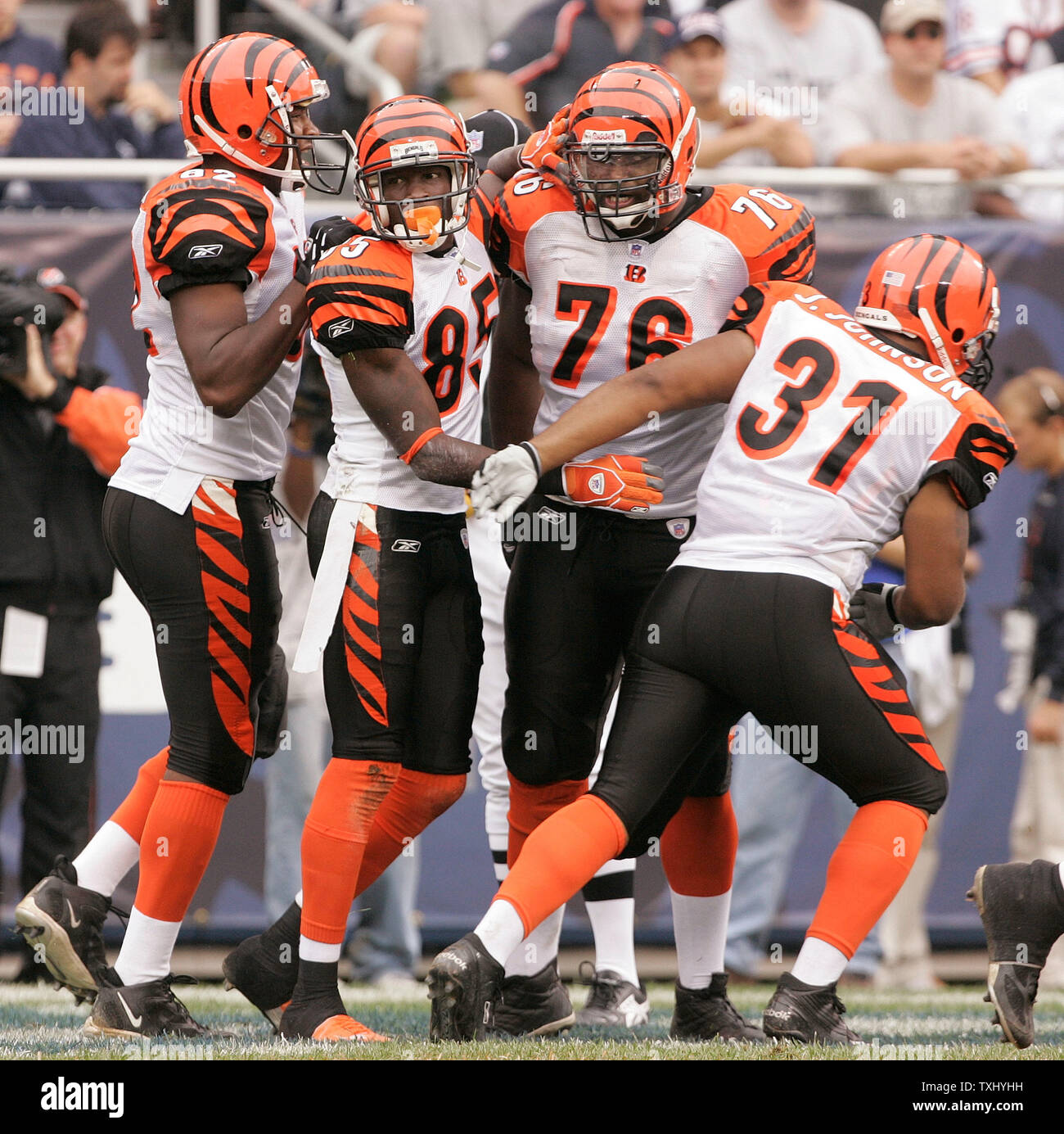
The Levi Jones Bengals Legacy and the Lingering Debate of an NFL Career Interrupted
Levi Jones remains one of the most talented yet polarizing offensive linemen in Cincinnati Bengals history. As the 10th overall pick in 2002, he was the foundational blindside protector who fueled the team’s mid-2000s offensive explosi...
Levi Jones remains one of the most talented yet polarizing offensive linemen in Cincinnati Bengals history. As the 10th overall pick in 2002, he was the foundational blindside protector who fueled the team’s mid-2000s offensive explosion. Today, the debate centers on whether he belongs among the franchise's all-time greats or represents a tragic "what-if" due to chronic injuries.
Contents
The Rise of a Cornerstone: From Arizona State to the 10th Overall Pick
To understand the weight of the Levi Jones legacy, one must look back at the state of the Cincinnati Bengals in the early 2000s. The franchise was emerging from a decade of futility, often referred to as the "Bungles" era. When the team selected Jones with the 10th overall pick in the 2002 NFL Draft, it was a clear signal of intent. They weren't just looking for a body; they were looking for a cornerstone.
Jones arrived from Arizona State as a physical marvel. Standing 6’5” and weighing over 300 pounds, he possessed the rare combination of massive size and basketball-like footwork. In an era where pass-rushing defensive ends were becoming faster and more explosive, Jones was the prototype for the modern left tackle. His transition to the professional level was remarkably swift. Unlike many rookie tackles who struggle with the speed of the NFL, Jones solidified the left side of the line almost immediately, providing a sense of security that the Bengals had lacked for years.
The early 2000s draft strategy for Cincinnati focused heavily on the offensive line, and Jones was the centerpiece of that philosophy. By the time Carson Palmer took over as the starting quarterback in 2004, Jones had developed into an elite pass protector. His ability to neutralize premier pass rushers without constant help from tight ends or running backs allowed the Bengals to run a complex, high-flying vertical offense that would eventually lead them to the AFC North title in 2005.
The Peak Years: Protecting the Blindside of a Golden Era
The period between 2003 and 2005 represents the absolute peak of Levi Jones’ performance. During these years, he was widely considered one of the top five left tackles in the NFL, frequently mentioned in the same breath as legends like Orlando Pace and Walter Jones. His technical proficiency was matched by a mean streak that resonated with the Cincinnati fan base.
In 2005, the Bengals finished with an 11-5 record, boasting one of the most prolific offenses in league history. While names like Chad Johnson, T.J. Houshmandzadeh, and Rudi Johnson dominated the headlines, the offensive line—anchored by Jones on the left and Willie Anderson on the right—was the engine room. Jones was a Pro Bowl alternate during this stretch, a designation that many local analysts felt was a slight, arguing he deserved a starting spot in Hawaii.
The technical brilliance of Jones during this era cannot be overstated. He utilized a "mirror" technique that made it nearly impossible for speed rushers to get around his outside shoulder. His punch was powerful enough to stall bull-rushers in their tracks, and his recovery speed was elite. For a three-year window, the Bengals' coaching staff could essentially "set and forget" the left tackle position, a luxury few teams ever truly enjoy. This reliability was rewarded in August 2006 when the Bengals signed Jones to a massive six-year, $40 million contract extension, which at the time made him one of the highest-paid offensive linemen in the world.
The Turning Point: The 2006 Injury and the "What If" Factor
The trajectory of Levi Jones’ career changed forever on October 29, 2006, during a game against the Atlanta Falcons. Jones suffered a severe knee injury that involved significant cartilage damage. In the medical landscape of 2026, we look back at the treatments of that era as somewhat primitive. Jones underwent microfracture surgery, a procedure notorious for its long recovery times and inconsistent success rates for heavy athletes.
The injury was a catastrophic blow to both the player and the organization. Before the injury, Jones was an iron man; after it, he was never quite the same. The "lingering debate" regarding his legacy often hinges on this specific moment. If Jones had stayed healthy, many believe he would have been a perennial All-Pro and a lock for the Bengals Ring of Honor. Instead, he spent the remainder of his career battling his own body.
When he returned to the field in 2007, the explosive lateral movement that defined his early years was noticeably diminished. He played through immense pain, showing a level of toughness that often goes unrecognized by casual observers. However, in the high-stakes world of the NFL, "toughness" cannot always compensate for a loss of physical tools. The drop-off in his performance led to increased pressure on Carson Palmer and contributed to the offensive inconsistencies that plagued the Bengals in the late 2000s.
The Lingering Debate: Legacy vs. Longevity
When fans and historians discuss Levi Jones in 2026, the conversation usually splits into two camps. One side views him as a franchise legend who gave his best years to a team that finally became competitive because of him. The other side views his career as a disappointment, marked by a massive contract that the team couldn't fully realize and a public persona that was sometimes viewed as combustible.
The Joey Porter Incident and the Persona Factor
A significant part of the "debate" involves off-field incidents, most notably the 2007 altercation with then-Steelers linebacker Joey Porter. Porter and several others attacked Jones at a blackjack table in Las Vegas. While Jones was the victim of the assault, the incident added to a narrative that Jones was a "lightning rod" for drama. Supporters argue that the incident showed the fierce rivalry between the Bengals and Steelers, while critics used it as evidence that Jones was losing focus on his football career during his injury rehab.
Jones vs. Andrew Whitworth: The Transitional Era
Perhaps the most complex layer of the debate is the comparison to his successor, Andrew Whitworth. Whitworth was drafted in 2006, originally intended to play guard alongside Jones. However, Jones’ injuries forced Whitworth to move to left tackle. Whitworth’s subsequent Hall of Fame-caliber longevity and late-career success with the Rams often cast a shadow over Jones. The debate persists: Was Whitworth simply a better player, or did he merely have the luck of health that Jones was denied?
| Feature/Metric | Levi Jones (Peak 2002-2005) | Impact on Bengals History |
|---|---|---|
| Draft Pedigree | 10th Overall (2002) | First elite LT of the modern Bengals era. |
| Games Started | 89 (with Cincinnati) | Anchored the 2005 AFC North Champions. |
| Primary Skill | Elite Lateral Quickness | Allowed deep passing game to flourish. |
| The "Wall" | Formed duo with Willie Anderson | Considered the best tackle duo in the NFL (2004-2006). |
| Turning Point | 2006 Knee Injury | Microfracture surgery led to early decline. |
| Replacement | Andrew Whitworth | Transitioned the team to a new era of line play. |
Comparative Analysis: Jones’ Impact on the Bengals Franchise
To accurately assess the legacy of Levi Jones, one must compare him to the bookends of Bengals tackle history: Anthony Muñoz and Willie Anderson. While Jones does not reach the immortal status of Muñoz, he was arguably more vital to his specific quarterback (Palmer) than many other tackles were to theirs.
Jones’ legacy is inextricably linked to the "Big Three" of the Bengals' 2005 offense. Without Jones' ability to stonewall pass rushers, the timing-based offense of Carson Palmer and Chad Johnson would have collapsed. He provided the split-second of extra time required for Johnson to complete his double-moves. In this sense, Jones' contribution was tactical as much as it was physical.
Furthermore, the "lingering debate" must acknowledge the financial shift Jones represented. His 2006 contract was a milestone for the Bengals organization, which had previously been criticized for being "cheap" or unwilling to pay market value for top-tier talent. Retaining Jones was a statement of organizational growth. The fact that the contract didn't pan out due to injury shouldn't necessarily detract from the player's merit, though in the court of public opinion, it often does.
Frequently Asked Questions
Was Levi Jones ever a Pro Bowler?
While Levi Jones was frequently named as a Pro Bowl alternate and earned various "All-Pro" votes from secondary publications, he was never voted as a primary starter for the Pro Bowl. This remains a point of contention for many Bengals fans who believe he was snubbed during his peak years in 2004 and 2005, primarily because he played in an era with legends like Jonathan Ogden and Orlando Pace.
Why did the Bengals release Levi Jones in 2009?
The Bengals released Jones in May 2009 primarily due to a combination of his high salary cap hit and the emergence of Andrew Whitworth as a reliable left tackle. By 2009, Jones' knee issues had severely limited his mobility, and the team felt that Whitworth provided a more stable, long-term solution at a lower cost.
What happened to Levi Jones after he left the Bengals?
After his release from Cincinnati, Jones signed with the Washington Redskins (now Commanders) in 2009. He started several games for them but continued to struggle with injuries. He eventually retired from professional football shortly thereafter. Since his retirement, he has maintained a relatively low profile, though he occasionally appears in discussions regarding the Bengals' historical offensive line rankings.
How does Levi Jones compare to Willie Anderson?
Willie Anderson is widely regarded as the greatest right tackle in franchise history and a potential Hall of Famer. While Jones was arguably as talented as Anderson during their shared peak, Anderson’s longevity (12 seasons with the Bengals) and consistent health give him the edge in legacy discussions. Jones and Anderson together are still cited as the gold standard for tackle duos in Cincinnati history.
Is Levi Jones in the Bengals Ring of Honor?
As of 2026, Levi Jones has not been inducted into the Bengals Ring of Honor. The criteria for induction are rigorous, and the debate persists as to whether his peak performance outweighs his lack of longevity. Many fans believe he is a "tier two" legend—essential to the team's history but just shy of the "immortal" status required for the Ring of Honor.
Final Recommendation: Re-evaluating a Career
When looking back at the Levi Jones Bengals legacy from the vantage point of 2026, it is important to separate the results of the injury from the quality of the player. If you are a fan or a student of the game, do not let the "what if" narrative diminish what actually happened: for four seasons, Levi Jones was a dominant force who helped save a dying franchise.
The most practical way to honor his legacy is to recognize him as the bridge between the struggles of the 90s and the championship aspirations of the 21st century. While his career may have been cut short by the limitations of 2000s-era medicine, his impact on the Cincinnati Bengals' culture and offensive identity remains a foundational element of the team's history.
Image Gallery