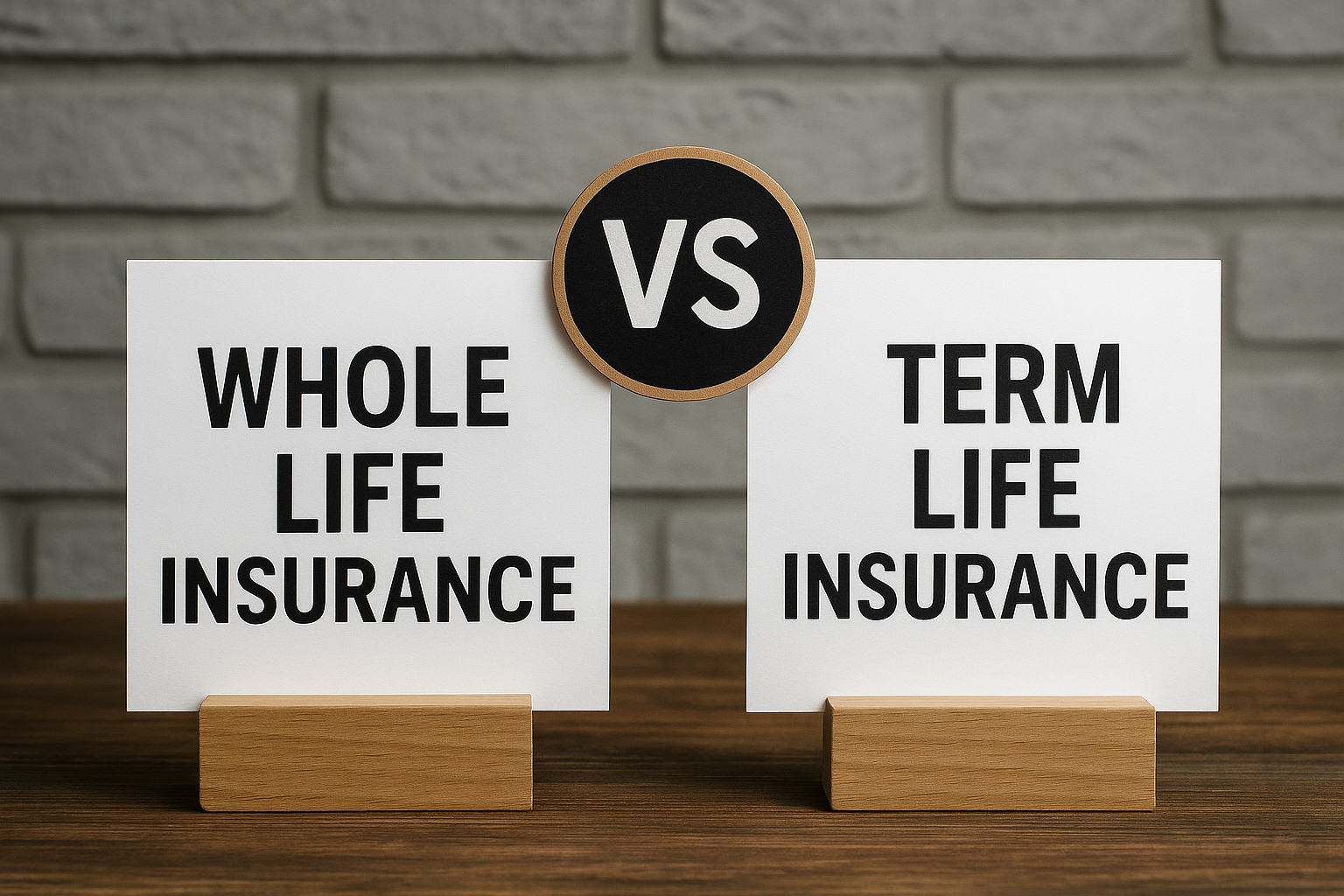
Choosing Between Term vs. Universal vs. Whole Life Insurance: A 2026 Guide
Choosing the right life insurance policy requires balancing your current budget against your long-term financial goals. Term life insurance provides affordable, temporary protection for a set period. Whole life insurance offers permane...
Choosing the right life insurance policy requires balancing your current budget against your long-term financial goals. Term life insurance provides affordable, temporary protection for a set period. Whole life insurance offers permanent coverage with guaranteed cash value growth. Universal life insurance provides permanent protection with flexible premiums and adjustable death benefits to suit changing needs.
Contents
Selecting a life insurance policy is one of the most consequential financial decisions an individual can make. As we move through 2026, the insurance landscape continues to evolve, influenced by shifting interest rates and modern financial planning strategies. Whether you are looking to protect a young family, fund a business buy-sell agreement, or manage a complex estate, the structure of your policy determines how much you pay and how much your beneficiaries receive.
Understanding the mechanics of these three primary policy types—Term, Whole Life, and Universal Life—is essential for ensuring that your coverage aligns with your "Human Life Value" and your broader wealth management objectives.
Term Life Insurance: High-Leverage Temporary Protection
Term life insurance is the most straightforward form of life insurance. It is designed to provide a death benefit if the insured passes away during a specified "term," typically ranging from 10 to 30 years. In 2026, term insurance remains the primary choice for individuals in their peak earning years who need to cover specific financial liabilities.
The Mechanics of Level Premiums
Most modern term policies are "Level Term," meaning the premium stays exactly the same for the duration of the policy. This is achieved through a process called "front-loading," where the policyholder pays more than the actual cost of insurance in the early years to offset the much higher costs of insuring an older individual in the later years of the term. Once the term ends, the coverage typically expires, or the premium increases significantly to an "annually renewable" rate that is often prohibitively expensive.
Why Choose Term Insurance?
The primary advantage of term insurance is its affordability. Because the policy does not build cash value and only pays out if death occurs within the window, the premiums are significantly lower than permanent alternatives. This allows families to purchase a large enough death benefit to replace 10 to 15 times their annual income—a benchmark recommended by the National Association of Insurance Commissioners (NAIC)—without straining their monthly budget.
Furthermore, term policies often include a "conversion rider." As of 2026, this feature is highly valued. It allows the policyholder to convert their term coverage into a permanent policy (Whole or Universal Life) without undergoing a new medical exam. This is a critical safety net if the insured develops a health condition that would otherwise make them uninsurable or "rated" at a higher cost.
Whole Life Insurance: Guaranteed Permanence and Cash Value
Whole life insurance is a type of permanent life insurance that provides coverage for the insured’s entire lifetime, provided premiums are paid. It is often viewed as a hybrid between a protection product and a conservative savings vehicle.
Guaranteed Growth and the Cash Value Component
Unlike term insurance, a portion of every premium payment in a whole life policy is directed into a cash value account. This account grows at a guaranteed minimum interest rate set by the insurance company. Under Internal Revenue Code (IRC) Section 7702, the growth of this cash value is tax-deferred. Policyholders can often access this money through policy loans or withdrawals to fund retirement, education, or emergencies.
However, it is important to understand that if you take a loan against the cash value, the outstanding balance is deducted from the death benefit if not repaid before the insured's death. In 2026, whole life remains a staple for "Infinite Banking" or "Bank on Yourself" strategies, where individuals use the policy’s liquidity as a private financing source.
Dividends and Participating Policies
Many whole life policies are "participating," meaning they are issued by mutual insurance companies that may pay dividends to policyholders. While dividends are never guaranteed, they can be used to purchase "paid-up additions" (increasing the death benefit and cash value), reduce the premium, or be taken as cash. For high-net-worth individuals, the combination of guaranteed growth and potential dividends makes whole life an attractive asset class for diversifying a portfolio away from market volatility.
Universal Life Insurance: The Flexible Alternative
Universal Life (UL) insurance was developed to provide the permanence of whole life with the flexibility that modern consumers demand. It separates the three main components of the policy: the death benefit, the premium, and the cash value.
Flexible Premiums and Adjustable Benefits
The hallmark of Universal Life is that it allows the policyholder to adjust their premium payments. If the policy has accumulated enough cash value, the owner can even skip payments or pay a minimum amount to keep the policy in force. This is particularly useful for business owners with fluctuating income or individuals whose financial responsibilities decrease over time.
Additionally, UL policies allow you to increase or decrease the death benefit (within certain limits and sometimes requiring new underwriting) as your needs change. This adaptability is why UL is frequently used for estate planning and executive compensation packages in 2026.
The Three Variants of Universal Life
Universal life is not a single product; it exists in three primary forms, each with a different risk profile:
- Guaranteed Universal Life (GUL): Focuses on a low-cost, guaranteed death benefit to a specific age (e.g., 90 or 121) with little to no cash value accumulation.
- Indexed Universal Life (IUL): The cash value growth is tied to the performance of a market index, such as the S&P 500. It typically features a "floor" (e.g., 0%) to prevent losses and a "cap" (e.g., 8-10%) on gains.
- Variable Universal Life (VUL): The cash value is invested directly into sub-accounts (similar to mutual funds). This offers the highest growth potential but carries the risk of market loss, which could require the policyholder to inject more cash to keep the policy from lapsing.
Side-by-Side Comparison of Life Insurance Types
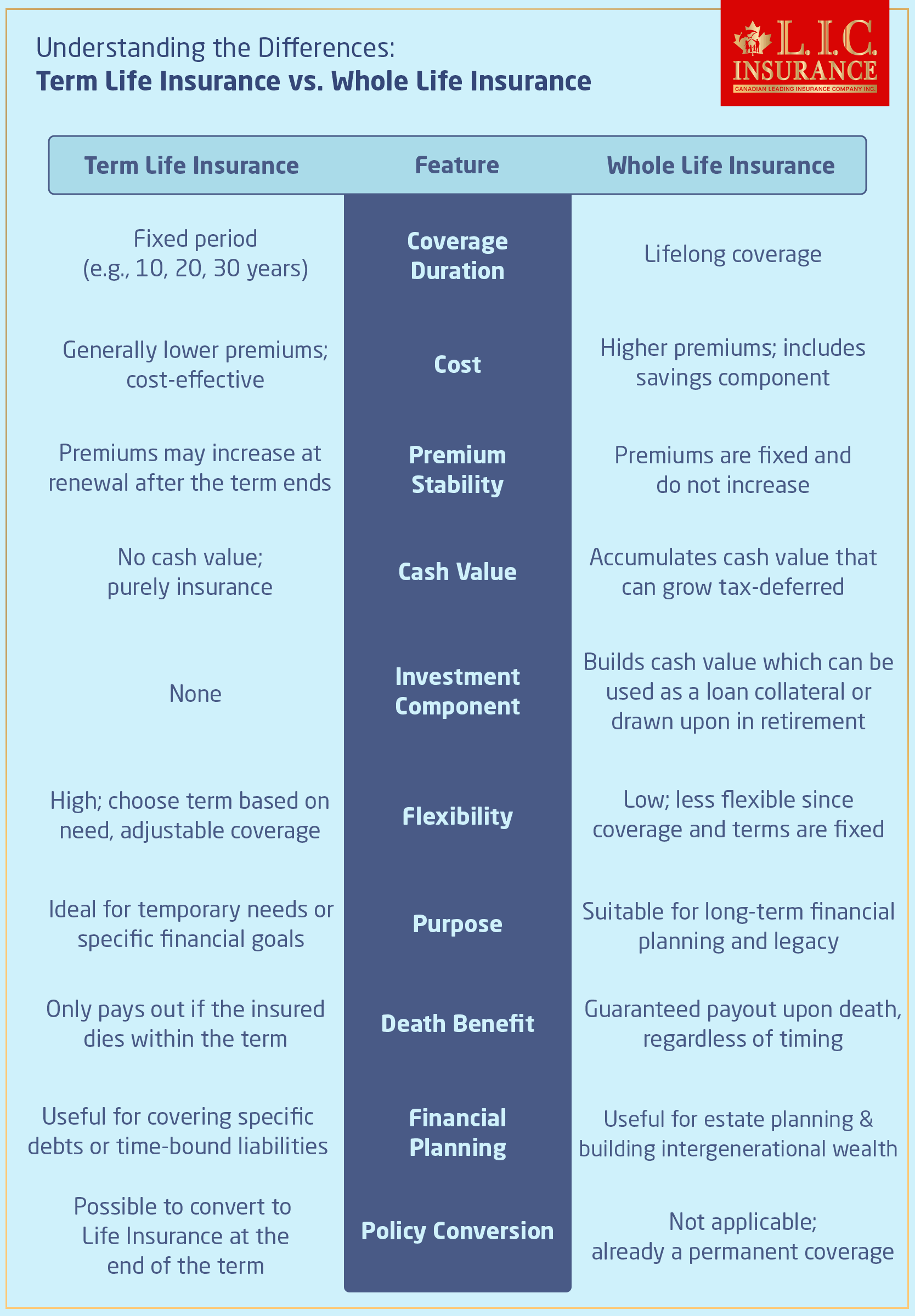
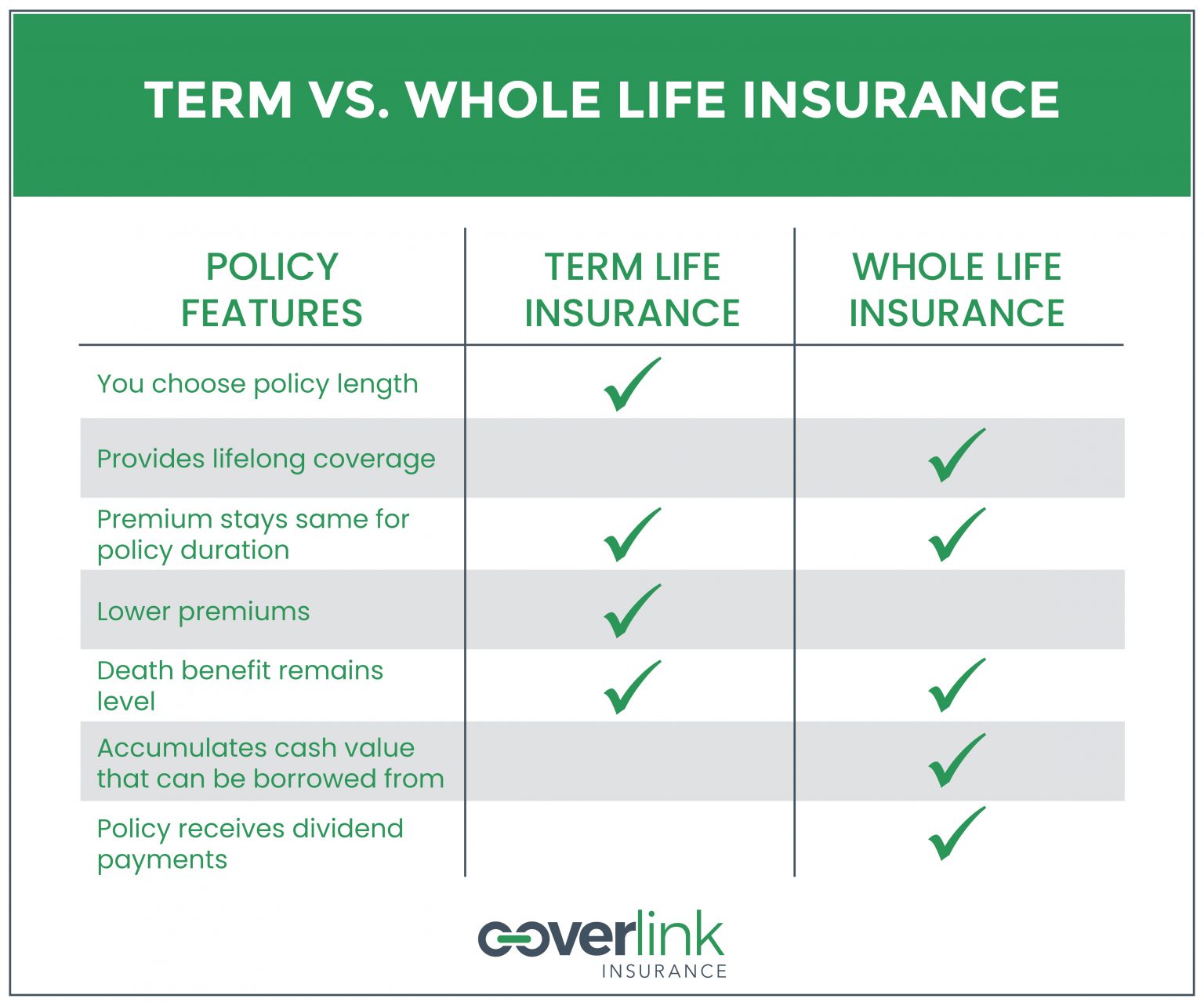
The following table summarizes the core differences between these three insurance structures to assist in your decision-making process.
| Feature | Term Life | Whole Life | Universal Life |
|---|---|---|---|
| Duration | Fixed Period (10-30 years) | Lifetime (Permanent) | Lifetime (Permanent) |
| Premium Cost | Lowest / Entry-level | Highest / Fixed | Moderate / Flexible |
| Cash Value | None | Guaranteed Growth | Market-linked or Interest-sensitive |
| Death Benefit | Fixed | Fixed (Can grow with dividends) | Adjustable |
| Best Used For | Income replacement, debt | Estate tax, final expenses, | Long-term flexibility, wealth |
| (mortgage), child rearing | cash value accumulation | transfer, supplemental income | |
| Risk Level | Low (Expires at end) | Low (Guaranteed) | Moderate to High (VUL/IUL) |
Critical Factors in Choosing Your Coverage
When deciding between these options in 2026, you must evaluate your "Insurable Interest" and your long-term liquidity needs. There is no "one-size-fits-all" policy; the best choice depends on your specific financial stage.
Cost vs. Value
If your primary goal is to provide $1 million in protection for your family while your children are young, a 20-year term policy is likely the most efficient use of your capital. However, if you are looking for a way to leave a guaranteed legacy or pay for estate taxes that won't disappear when you reach 80, the higher cost of Whole or Universal Life is a necessary investment.
The Role of Interest Rates
In 2026, the prevailing interest rate environment significantly impacts permanent policies. Whole life dividends and Universal Life "current interest rates" are sensitive to the bond market. If rates are rising, permanent policies may offer better-than-expected growth. If rates are suppressed, some Universal Life policies (especially IULs) may struggle to meet their original projections, requiring higher premiums to stay active.
Tax Advantages and IRC Section 101(a)
All three policy types benefit from the fact that life insurance death benefits are generally received by beneficiaries income-tax-free under IRC Section 101(a). This makes life insurance a powerful tool for transferring wealth without the "tax drag" associated with traditional brokerage accounts or 401(k)s.
Common Pitfalls to Avoid
Many consumers make the mistake of "set it and forget it" when it comes to life insurance. This can be a costly error, especially with Universal Life policies.
- Underfunding Universal Life: If you only pay the "target premium" on a UL policy and market performance is poor, the cost of insurance (COI) inside the policy will eventually eat away the cash value, causing the policy to lapse in your later years when you need it most.
- Misunderstanding Term Conversion: Many people wait until their term is about to expire before looking at conversion. By then, the permanent policy premiums may be much higher due to their attained age.
- Ignoring Inflation: A $500,000 death benefit purchased in 2010 has significantly less purchasing power in 2026. It is vital to review your coverage every 3 to 5 years or after major life events (marriage, birth, home purchase).
Frequently Asked Questions
Can I have more than one type of life insurance at the same time?
Yes, this is known as "laddering." Many people use a base of permanent Whole Life insurance for final expenses and estate planning, while layering on a 20-year Term policy to provide extra protection during their high-debt years (like when they have a mortgage). This strategy provides a balance of lifetime security and high-leverage temporary coverage.
What happens if I can no longer afford my Whole Life premiums?
Whole life policies have "non-forfeiture" options. You can use the accumulated cash value to pay the premiums (Automatic Premium Loan), convert the policy to a "Reduced Paid-Up" policy (a smaller death benefit with no future premiums), or take the cash surrender value and cancel the coverage.
Is Indexed Universal Life (IUL) better than Whole Life?
Neither is inherently better; they serve different purposes. IUL offers the potential for higher growth because it is linked to market indices, but it also carries more risk if the market underperforms. Whole Life is more predictable with its guarantees. In 2026, many advisors recommend IUL for those with a longer time horizon and Whole Life for those seeking maximum stability.
Does term insurance have any value if I don't die during the term?
Standard term insurance has no "residual" value; it is pure protection, much like car or home insurance. However, some companies offer "Return of Premium" (ROP) riders that refund your premiums if you outlive the term, though these riders significantly increase the monthly cost.
How do I know how much coverage I actually need?
A common method is the DIME formula: Debt (total debt to be paid off), Income (income to be replaced multiplied by years), Mortgage (remaining balance), and Education (future college costs for children). Subtract any existing savings or assets from this total to find your ideal death benefit.
Final Recommendation
Before committing to a policy, request a "Policy Illustration" from your agent. This document shows how the policy is projected to perform over 30 to 50 years based on both guaranteed and non-guaranteed assumptions. For Term life, focus on the length of the guarantee and the reputability of the carrier. For Whole and Universal Life, pay close attention to the "surrender charges" and the "cost of insurance" (COI) charges, which typically increase as you age.
For most people, Term Life remains the foundational starting point for protection. However, if you have maximized your retirement accounts and are looking for tax-advantaged growth or a guaranteed legacy, Whole Life or Universal Life can serve as powerful additions to a comprehensive financial plan.
Disclaimer: This article is for informational purposes only and does not constitute financial, legal, or tax advice. Life insurance regulations vary by jurisdiction. Consult with a licensed insurance professional or financial advisor to discuss your specific situation.
Image Gallery