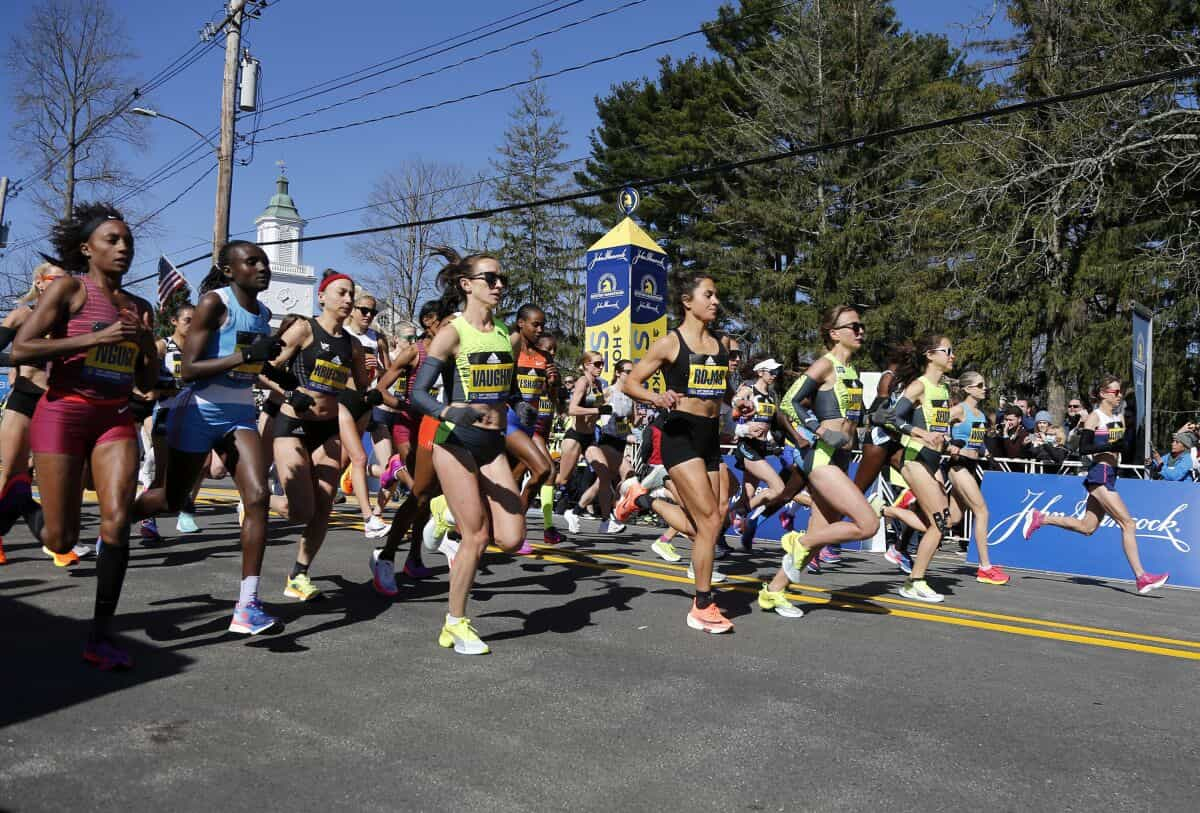
How the 140 Elite Runners Shaped the 2021 Boston Marathon
The 2021 Boston Marathon was defined by a condensed field of approximately 140 elite athletes who navigated the race’s first-ever autumnal running. This elite cohort, featuring world record holders and Olympians, transformed the 125th...
The 2021 Boston Marathon was defined by a condensed field of approximately 140 elite athletes who navigated the race’s first-ever autumnal running. This elite cohort, featuring world record holders and Olympians, transformed the 125th edition into a tactical showcase of endurance, notable for Benson Kipruto’s decisive surge and a historic post-race realignment in the women’s standings.
Contents
The Unique Landscape of the 125th Boston Marathon
The 2021 Boston Marathon was a historical anomaly. Traditionally held on Patriots' Day in April, the race was rescheduled to October 11, 2021, due to the global COVID-19 pandemic. This shift created a unique physiological challenge for the 140 elite runners invited to the professional field. Instead of the unpredictable New England spring, athletes faced crisp autumn air and a different solar trajectory, which altered the perceived effort during the climb through the Newton Hills.
Furthermore, 2021 marked the return of the race after a 910-day hiatus. The pressure on the elite field was immense, as the event served as a cornerstone of the "Super Season," where all six Abbott World Marathon Majors took place within a span of just seven weeks. This required the elite athletes to be incredibly selective with their recovery and training cycles, as many had competed in the Tokyo Olympics only two months prior.
The Composition of the Elite Field
The Boston Athletic Association (BAA) curated a field of roughly 140 professional athletes across three primary divisions: the Men's and Women's Open, and the Men's and Women's Wheelchair. Unlike the massive fields of earlier years, the 2021 elite roster was leaner and more focused on high-performance depth.
The Professional Open Division
The Open Division featured a heavy concentration of East African talent, particularly from Kenya and Ethiopia. The BAA’s recruitment strategy for 2021 prioritized "marathon racers" over "time trialists." Because Boston is not a paced race—meaning no "rabbits" are employed to set a specific tempo—the field consisted of runners known for their tactical versatility. Key figures included Benson Kipruto, Edna Kiplagat, and Lemi Berhanu.
The Wheelchair Division
The wheelchair field, though smaller in headcount, featured the highest concentration of world-class talent. It included icons like Marcel Hug and Manuela Schär. These athletes faced the specific technical challenge of the Hopkinton-to-Boston course’s steep descents, which required high-speed stability and precision braking, especially on a course that had not been raced professionally in over two years.
Men’s Elite Race: A Tactical Masterclass
The men’s race in 2021 was a testament to the "waiting game" strategy often seen in Boston. For the first 20 miles, a large pack of nearly 20 runners remained cohesive, refusing to break despite the rolling hills. This density of talent kept the pace honest but conservative, as no single runner wanted to burn their anaerobic reserves before the infamous Heartbreak Hill.
Benson Kipruto of Kenya executed a textbook performance. Around the 35-kilometer mark (mile 22), Kipruto launched a devastating surge. His ability to drop a 4:29 mile after the punishing climbs through Newton effectively shattered the lead group. Kipruto finished in 2:09:51, a time that reflected the tactical nature of the first half of the race followed by an aggressive negative split.
The depth of the "140" was evident in the chase pack. Lemi Berhanu and Cemtay Rono battled for the remaining podium spots, demonstrating how the elite field's density forces athletes into high-stakes psychological duels in the final five kilometers on Boylston Street.
Women’s Elite Race: From Initial Victory to Historic Realignment
The 2021 women's race is now studied as much for its legal and regulatory outcomes as for its athletic performance. Initially, the race was characterized by a bold breakaway by a lead group that included several Kenyan powerhouses.
Edna Kiplagat, a two-time world champion and then 41 years old, showed the tactical maturity that comes with decades of elite racing. She maintained a steady rhythm, allowing younger runners to contest the early leads. While Diana Kipyokei originally crossed the finish line first, she was later disqualified for the use of a prohibited substance (triamcinolone acetonide) and for providing false documentation during the investigation.
In accordance with World Athletics and BAA protocols, Edna Kiplagat was officially recognized as the 2021 champion. This realignment underscores the importance of the rigorous anti-doping measures applied to the elite field. Kiplagat’s victory at 41 remains one of the most significant achievements in the history of the marathon, proving that longevity and tactical intelligence can overcome the raw speed of younger competitors.
The Wheelchair Division: Records and Resilience
The wheelchair races in 2021 were marked by incredible speed and one of the most famous navigational errors in marathon history. Marcel Hug, known as the "Silver Bullet," was on pace to shatter the course record and claim a $50,000 bonus. However, in the final stages of the race, he mistakenly followed a lead vehicle that turned off the course, costing him several seconds.
Despite this error, Hug won the race in 1:18:11. His performance highlighted the technical complexity of the Boston course; even for the world's most elite athletes, the margins for error are razor-thin. In the women’s division, Manuela Schär dominated the field, winning by nearly five minutes and cementing her status as the era’s premier wheelchair marathoner.
2021 Boston Marathon Elite Results (Top Finishers)
The following table summarizes the primary results of the elite field across the major divisions. Note that the women’s results reflect the official BAA standings following the disqualification of the original first-place finisher.
| Division | Athlete | Country | Official Time |
|---|---|---|---|
| Men's Open | Benson Kipruto | Kenya | 2:09:51 |
| Men's Open | Lemi Berhanu | Ethiopia | 2:10:37 |
| Men's Open | Cemtay Rono | Kenya | 2:11:47 |
| Women's Open | Edna Kiplagat | Kenya | 2:25:09 |
| Women's Open | Mary Ngugi | Kenya | 2:25:20 |
| Women's Open | Monicah Ngige | Kenya | 2:25:32 |
| Men's Wheelchair | Marcel Hug | Switzerland | 1:18:11 |
| Women's Wheelchair | Manuela Schär | Switzerland | 1:35:21 |
Impact of the 2021 Field on Marathon History
The "140 elite runners" of 2021 did more than just compete; they revitalized the sport during a period of global uncertainty. Their participation ensured that the Boston Marathon maintained its status as a premier global sporting event despite the shift in season and the reduced field size for amateur runners.
- Tactical Evolution: The 2021 race reinforced the importance of the "Newton Surge." Coaches now use Kipruto’s 35k move as a primary case study for late-race acceleration.
- Anti-Doping Integrity: The subsequent disqualification and elevation of Edna Kiplagat served as a landmark case for the Athletics Integrity Unit (AIU), demonstrating that the results of the Boston Marathon elite field are subject to the highest levels of scrutiny.
- The "Super Season" Legacy: The ability of these athletes to perform at a high level just weeks after other major marathons changed the industry's understanding of elite recovery and "double-peaking" in a single season.
Practical Takeaways for Marathon Training
Looking back from 2026, the 2021 elite performances offer several lessons for competitive distance runners at all levels.
- Master the Downhills: The first half of the Boston course is net-downhill. The 2021 elites who succeeded were those who had conditioned their quadriceps for the eccentric loading of the early miles, preventing the "blown legs" that often occur before reaching the hills.
- Patience in the Pack: For amateur runners targeting a Boston Qualifying (BQ) time or a personal best, the 2021 men's race proves that remaining within a pack to block wind and maintain rhythm can save critical energy for the final 10 kilometers.
- Fueling for October: The change in season meant different humidity levels. Elites in 2021 had to adjust their electrolyte intake compared to the traditionally cooler or wetter April conditions.
Frequently Asked Questions
Who officially won the 2021 Boston Marathon women's race? While Diana Kipyokei crossed the line first, she was later disqualified for doping violations. Edna Kiplagat was officially named the winner in late 2022. This made her a two-time Boston Marathon champion (2017 and 2021).
What was the weather like for the elite runners in 2021? The conditions were nearly ideal for marathon running. Temperatures were in the mid-50s (Fahrenheit) with low humidity and light winds. This allowed the elite field to maintain a high pace without the risk of heat exhaustion that can sometimes plague the race in April.
Why were there only 140 elite runners? The BAA typically limits the professional "Elite" field to around this number to ensure quality over quantity and to manage the logistical requirements of the professional start, including COVID-19 safety protocols that were still in place in late 2021.
How did the "Super Shoes" affect the 2021 race? By 2021, carbon-plated racing shoes were standard for all 140 elite runners. These shoes likely contributed to the fast closing times, particularly on the flat sections of the course after the hills, by reducing muscular fatigue and improving running economy.
Final Recommendation for Enthusiasts
To truly appreciate the tactical nuance of the 2021 race, runners should review the split times of the top ten finishers. Pay close attention to the 5km segments between the 30k and 40k marks. This data reveals the exact moment the race was won and serves as a blueprint for anyone looking to conquer the historic route from Hopkinton to Boylston Street. For more detailed statistics on individual performances, the Boston Athletic Association's official archive remains the definitive source for historical race data.
Image Gallery