A Clear Description of Life Insurance for You: How It Works, Types, and Choosing Coverage
Life insurance is a legally binding contract between a policyholder and an insurance carrier where the insurer promises to pay a designated beneficiary a sum of money upon the death of the insured person. In exchange, the policyholder...
Life insurance is a legally binding contract between a policyholder and an insurance carrier where the insurer promises to pay a designated beneficiary a sum of money upon the death of the insured person. In exchange, the policyholder pays regular financial payments known as premiums. This policy serves as a financial protection tool to replace lost income, cover outstanding debts, funding future liabilities, or preserving family financial stability.
Contents
Disclaimer: This guide is provided for informational purposes and does not constitute formal legal, tax, or financial advice. Insurance regulations and tax implications vary by jurisdiction and individual circumstance; consult a licensed financial advisor or insurance professional for tailored guidance.
What Is Life Insurance and How Does It Function?
At its core, life insurance is a risk-management vehicle designed to transfer the financial risk of premature death from an individual household to an insurance carrier. When an individual earns an income, provides unpaid labor (such as primary caregiving), or holds significant financial debts, their sudden loss creates an immediate financial void for surviving dependents. A life insurance contract mitigates this risk by guaranteeing a pre-determined financial payout, known as the death benefit.
To understand how life insurance operates, it is helpful to break the agreement down into its four primary components:
- The Insurer: The financial enterprise that issues the contract, assesses risk through a process called underwriting, collects premiums, and guarantees the death benefit payout.
- The Policyholder (Owner): The person or entity that applies for the policy, holds legal ownership rights, pays the premium, and maintains the authority to name or modify beneficiaries.
- The Insured: The individual whose life determines whether and when the policy pays out. While the policyholder and the insured are frequently the same person, they can be distinct (for example, a business owner insuring a key executive).
- The Beneficiary: The designated person, trust, or organization entitled to receive the policy proceeds upon the death of the insured. Beneficiaries can be primary (first in line) or contingent (backup recipients).
The operational life cycle of a policy begins with an application and underwriting process. During underwriting, the insurance company evaluates the applicant's age, biological sex, personal medical history, family medical history, lifestyle factors, occupation, and tobacco usage. This evaluation determines the actuarial risk of insuring the individual, establishing both policy eligibility and the periodic premium rate required to maintain coverage.
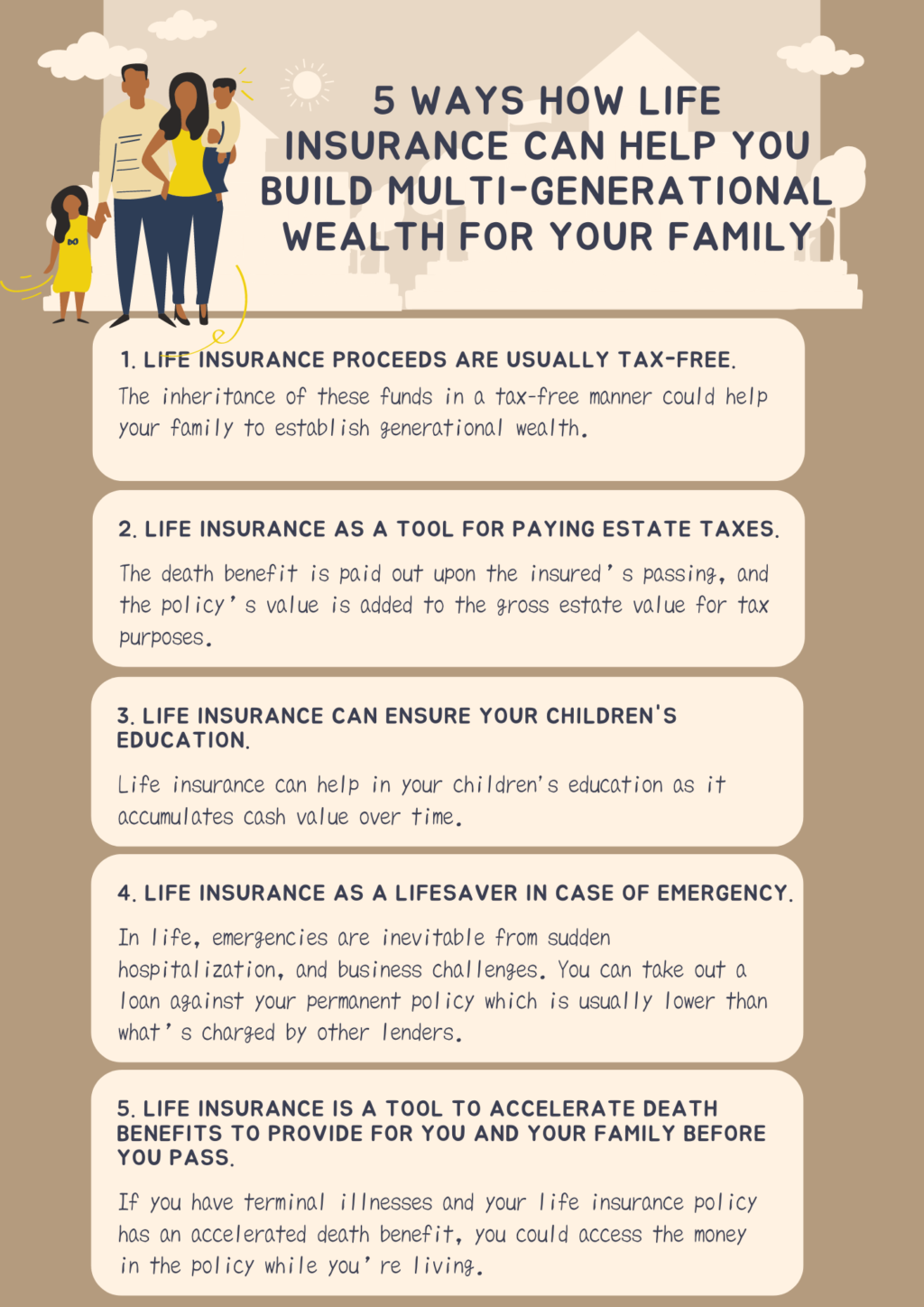
Once approved, as long as the policyholder pays the agreed-upon premiums on schedule, the policy remains active. If the insured passes away while the contract is active, the beneficiary files a claim with the insurer, providing proof of death (typically a certified death certificate). After administrative verification, the carrier issues the death benefit payout to the beneficiary, usually free from federal income taxes under statutory rules such as Internal Revenue Code Section 101(a).
The Two Primary Categories of Life Insurance
While dozens of specialized policy variants exist in the commercial insurance market, virtually all personal coverage falls into two primary categories: Term Life Insurance and Permanent Life Insurance.
- Life Insurance Types
- Term Life Insurance (Temporary Protection)
- Level Term
- Decreasing Term
- Permanent Life Insurance (Lifetime + Cash Value)
- Whole Life
- Universal Life
- Variable Universal
- Term Life Insurance (Temporary Protection)
1. Term Life Insurance
Term life insurance provides temporary coverage for a specific, predetermined period—typically ranging from 10 to 30 years. It is designed purely as an insurance buffer: if the insured dies during the specified term, the carrier pays the death benefit. If the policy term expires while the insured is still living, coverage ceases, and no return of money occurs unless a specific optional rider was added to the contract.
- Level Term Policies: The most common form of term coverage. The premium cost and the death benefit amount remain identical throughout the entire policy duration (e.g., a 20-year level term policy maintaining a $500,000 benefit at $30 per month).
- Decreasing Term Policies: The premium remains level, but the death benefit decreases over time according to a set schedule. These policies are historically paired with declining liabilities, such as a traditional amortization schedule on a residential mortgage.
- Renewable and Convertible Term: Many term policies feature guaranteed renewability (allowing the owner to extend coverage annually after term expiration without proving health eligibility, albeit at significantly higher age-adjusted rates) or conversion privileges (allowing the owner to convert the term policy into a permanent policy without submitting to a new medical exam).
Because term life insurance includes no savings component or long-term cash retention, it offers the lowest immediate cost per dollar of coverage, making it highly suitable for young families, mortgage holders, and individuals replacing income during working years.
2. Permanent Life Insurance
Permanent life insurance provides lifetime coverage, provided premiums are paid according to contract terms. Unlike term insurance, permanent policies include a internal accumulation component known as cash value. A portion of each premium payment covers the actual cost of insurance and administrative fees, while the remainder is credited toward an internal account that grows tax-deferred over time.
Policyholders can access this accumulated cash value during their lifetime through policy loans or tax-advantaged withdrawals, or use it to cover future premium costs. Permanent life insurance encompasses three main structures:
- Whole Life Insurance: The traditional form of permanent coverage. It features fixed, guaranteed premium payments, a guaranteed minimum interest growth rate on the cash value, and a guaranteed death benefit payout. Participating whole life policies issued by mutual insurers may also pay annual non-guaranteed dividends to policyholders.
- Universal Life Insurance (UL): A flexible permanent policy structure that allows owners to adjust premium payments and death benefit amounts within contractually defined parameters. Cash value grows based on current market interest rates established by the insurer, subject to contractually guaranteed minimum floors.
- Variable Universal Life Insurance (VUL): A flexible permanent policy where cash value is allocated across market-linked investment sub-accounts (similar to mutual funds). VUL policies offer higher growth potential, but the cash value and effective death benefit can fluctuate based on financial market performance, transferring market risk directly to the policyholder.
Comparing Life Insurance Types: Features, Costs, and Use Cases
Selecting the appropriate coverage requires matching policy structures against individual financial timelines, cash flow stability, and specific financial goals.
| Feature / Attribute | Level Term Life | Whole Life | Universal Life (UL) | Variable Universal Life (VUL) |
|---|---|---|---|---|
| Duration of Coverage | Fixed period (10–30 yrs) | Entire lifetime | Entire lifetime | Entire lifetime |
| Premium Structure | Fixed for term length | Fixed permanently | Flexible within limits | Flexible within limits |
| Death Benefit | Fixed level amount | Guaranteed minimum | Adjustable | Adjustable based on market |
| Cash Value Component | None | Yes (Guaranteed growth) | Yes (Interest-rate tied) | Yes (Market-investment tied) |
| Relative Initial Cost | Lowest | Highest | Moderate to High | Moderate to High |
| Investment Risk | None | Carried by insurer | Carried by insurer | Carried by policyholder |
| Primary Use Case | Debt & income protection | Estate planning & legacy | Flexible lifelong coverage | Wealth accumulation & tax strategies |
How Life Insurance Death Benefits and Premiums Are Calculated
Insurance pricing relies on actuarial science—the mathematical evaluation of statistical risk across demographics. The price paid per month or year reflects the probability that the insurer will have to pay out a claim within any given period.
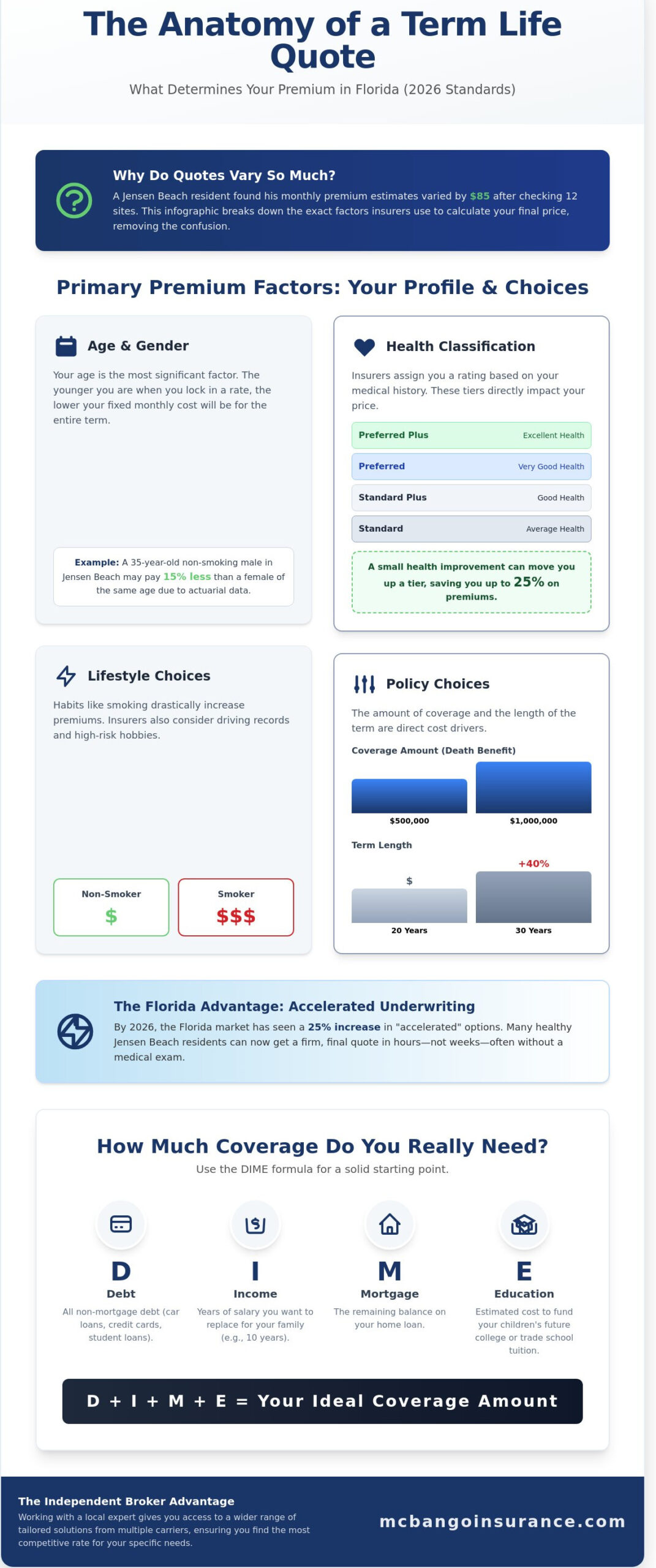
Key Factors Impacting Premium Rates
- Age: Age is the single largest determinant of life insurance pricing. Statistically, mortality risk increases as an individual ages, leading to higher annual costs for new policies acquired later in life.
- Biological Sex: Actuarial tables compiled by regulatory institutions like the National Association of Insurance Commissioners (NAIC) demonstrate that women have a longer average life expectancy than men, resulting in lower base premium rates for female applicants across equivalent age brackets.
- Health Profile and Medical History: Personal health records, Body Mass Index (BMI), blood pressure, cholesterol metrics, chronic conditions (e.g., diabetes, heart disease), and underlying personal medical history directly influence underwriting risk classifications (e.g., Preferred Plus, Preferred, Standard, or Substandard rating classes).
- Nicotine and Substance Usage: Smoking, vaping, or using tobacco products significantly increases mortality risk. Tobacco users regularly pay two to three times more in annual premiums than non-tobacco users of identical age profiles.
- Lifestyle and Occupation: High-risk hobbies (e.g., private aviation, skydiving, scuba diving) or dangerous occupations (e.g., commercial fishing, structural steel fabrication) frequently trigger premium surcharges known as flat extras.
- Coverage Amount and Term Length: Securing a $1,000,000 death benefit carries a higher base cost than securing $250,000, and a 30-year term carries higher annual risk for the carrier than a 10-year term.
Death Benefit Payout Mechanisms and Tax Rules
When an insured individual dies, the primary beneficiary files a claim submitting official proof of death. In the United States, beneficiaries generally select from several settlement options:
- Lump-Sum Payout: The default payout method. The insurer issues a single payment of the complete death benefit amount.
- Specific Installments / Fixed Period: Proceeds are paid out in structured increments over a set number of years.
- Interest Option: The insurer retains the principal sum and periodically distributes earned interest payments to the beneficiary, preserving the core capital for a later date or contingent beneficiary.
From a federal tax perspective, death benefits paid from a life insurance policy are generally excluded from gross income for beneficiaries under internal revenue statutes. However, if the death benefit accrues post-death interest prior to distribution, the accrued interest portion is subject to ordinary income taxes. Additionally, if the insured maintained legal incidents of ownership in the policy at death, the proceeds may be included in the deceased’s gross estate for federal estate tax calculation purposes, as noted in guidelines maintained by the Consumer Financial Protection Bureau.
Policy Riders and Customization Options
Life insurance contracts can be customized using supplementary policy clauses known as riders. Riders allow policyholders to add specific protections, access capital early under specialized circumstances, or protect their coverage integrity.
Common Policy Riders
- Waiver of Premium
- Accelerated Death Benefit
- Terminal / Chronic Illness
- Guaranteed Insurability Rider
Waiver of Premium Rider: Protects the policyholder if they become totally disabled due to injury or illness. If activated, the insurance company waives future premium payments while keeping the underlying policy fully active.
Accelerated Death Benefit Rider: Allows a policyholder diagnosed with a qualifying terminal illness (typically a medical prognosis of 12 to 24 months or less to live) to receive a portion of their death benefit while still living to offset end-of-life care expenses.
Chronic or Critical Illness Rider: Enables early access to a portion of the death benefit if the policyholder loses the ability to perform standard Activities of Daily Living (ADLs)—such as bathing, dressing, or eating—or suffers a major critical health event (e.g., stroke, kidney failure).
Guaranteed Insurability Rider: Grants the owner the contractual right to purchase additional life insurance coverage at specified future ages or life events (such as marriage or the birth of a child) without undergoing new medical exams or providing evidence of insurability.
Child Term Rider: Provides a modest death benefit amount covering the policyholder's children, often with the option to convert the term coverage into an individual permanent policy when the child reaches adulthood.
How to Determine Your Coverage Needs and Select a Policy
Determining how much life insurance coverage you require involves analyzing current obligations against future income requirements. Two common methodologies simplify this calculation:
The DIME Method
The DIME acronym stands for Debt, Income, Mortgage, and Education. Adding these four elements establishes a clear coverage baseline:
$$\text{Total Coverage Need} = \text{Debt} + \text{Income} + \text{Mortgage} + \text{Education}$$
- Debt: Sum all consumer liabilities, including credit card balances, personal loans, car loans, and private student debt, excluding your primary home mortgage.
- Income: Multiply your annual gross earnings by the number of years your dependents will rely on your income (typically 5 to 15 years, or until children reach financial independence).
- Mortgage: Take the remaining principal balance required to pay off your home mortgage completely.
- Education: Estimate the total projected costs for post-secondary education or vocational training for all dependent children.
Step-by-Step Purchase Process
- Step 1: Calculate Need (DIME Method)
- Step 2: Determine Policy Type (Term vs. Permanent)
- Step 3: Compare Quotes across Multiple Insurers
- Step 4: Complete Underwriting & Medical Exam (if required)
- Step 5: Review Policy Contract & Formally Designate Beneficiaries
- Step 1: Establish Coverage Amount and Timeline. Use the DIME formula or work with a professional planner to establish a target coverage amount and term length (e.g., $750,000 for a 20-year term).
- Step 2: Select the Appropriate Policy Type. Match financial obligations to contract structures. For pure income replacement during working years, term life insurance is usually the most cost-effective choice. For lifelong estate planning needs, permanent insurance may be appropriate.
- Step 3: Compare Carrier Quotes and Financial Ratings. Evaluate quotes across multiple carriers rated highly for financial strength by independent credit agencies such as A.M. Best, S&P Global, or Moody's. Financial rating tiers reflect an insurer's capacity to pay long-term claims.
- Step 4: Complete the Application and Underwriting. Submit personal details and complete medical requirements. Fully underwritten policies may require an in-person paramedical exam (blood draw, urine sample, blood pressure check). Alternatively, accelerated underwriting uses prescription databases, motor vehicle records, and credit attributes to approve qualified applicants without physical exams.
- Step 5: Designate Beneficiaries and Execute Policy. Carefully designate primary and contingent beneficiaries by full legal name, date of birth, and Social Security Number (or Tax ID). Avoid designating minor children directly as primary beneficiaries without establishing an appropriate legal guardianship structure or trust to hold funds.
Common Pitfalls to Avoid When Buying Life Insurance
- Relying Solely on Group Life Insurance Through Employers: Employer-provided group life policies are convenient, but coverage amounts are typically capped at relatively low limits (e.g., 1x or 2x annual salary). More importantly, group policies are usually tied to your employment status; if you change jobs, lose employment, or retire, coverage may terminate or become cost-prohibitive to convert.
- Waiting Too Long to Buy Coverage: Because life insurance rates escalate with age and health changes, delaying purchase often leads to higher lifetime costs or uninsurability due to pre-existing conditions.
- Underestimating Total Coverage Needs: Purchasing a nominal policy (such as $50,000) may cover immediate burial costs, but fails to account for ongoing mortgage payments, lost multi-year wages, or future family obligations.
- Failing to Update Beneficiary Designations: Life events—such as marriage, divorce, births, or deaths—require regular updates to policy beneficiary designations. Beneficiary designations on life insurance contracts supersede provisions written in a personal last will and testament.
Frequently Asked Questions
What happens if I outlive my term life insurance policy?
If you live beyond the final year of a term life insurance policy, the contract simply ends, and the insurance company is under no obligation to pay a death benefit or return the premiums paid. Some policies offer options to convert the policy to permanent coverage without a medical exam before the term expires, or to extend coverage annually under a policy extension clause, though annual costs will rise significantly.
Are life insurance proceeds taxable to the beneficiary?
Under United States tax law (specifically IRS Code Section 101(a)), death benefit payouts are generally free from federal income tax when paid directly to a named beneficiary. However, if the payout is delayed and accumulates interest, the interest portion earned post-death is taxable. Large payouts may also factor into federal estate tax calculations if the policy is owned directly by an estate valued above federal thresholds.
Can I cancel a life insurance policy early?
Yes, policyholders can cancel a life insurance policy at any time. For term policies, simply stopping premium payments will cause the policy to lapse, ending coverage without financial penalty. For permanent policies with accrued cash value, surrendering the policy yields the cash balance minus any applicable contract surrender fees and outstanding policy loans; any cash value retrieved above the cumulative premium basis is subject to ordinary income tax.
Can smokers get life insurance coverage?
Yes, individuals who smoke, vape, or use tobacco products can secure life insurance coverage. However, because tobacco use carries statistically higher health risks, insurance carriers assign applicants to tobacco underwriting tiers, resulting in premium rates that are typically two to three times higher than non-tobacco rates. Quitting tobacco for a minimum period (usually 12 to 24 consecutive months) typically qualifies an individual for lower non-tobacco re-underwriting rates.
What is the difference between primary and contingent beneficiaries?
A primary beneficiary is the first entity or individual designated to receive the policy proceeds upon the insured's death. A contingent beneficiary acts as a backup recipient; they receive the death benefit payout only if all primary beneficiaries have passed away or are legally disqualified from accepting the proceeds at the time the claim is filed.
Practical Recommendation for Next Actions
If you are considering life insurance coverage, follow these actionable steps:
- Calculate Your Exact Requirement: Perform a comprehensive debt and income calculation using the DIME framework to determine the precise death benefit amount and term length required for your household.
- Review Existing Group Benefits: Audit your employer-provided benefit package to determine what coverage exists, whether it is portable upon separation, and what gap remains between employer coverage and your calculated financial need.
- Gather Information and Seek Direct Quotes: Collect personal health records, family medical histories, and income documentation. Use an independent insurance agent or reputable online portal to obtain multi-carrier quotes for comparison.
- Formally Confirm Beneficiary Structure: Consult an estate planning attorney or financial counselor to ensure beneficiary designations align with your broader estate plan and will not trigger unexpected legal or probate complications for surviving dependents.
EDITORIAL CATEGORY METADATA:
Image Gallery