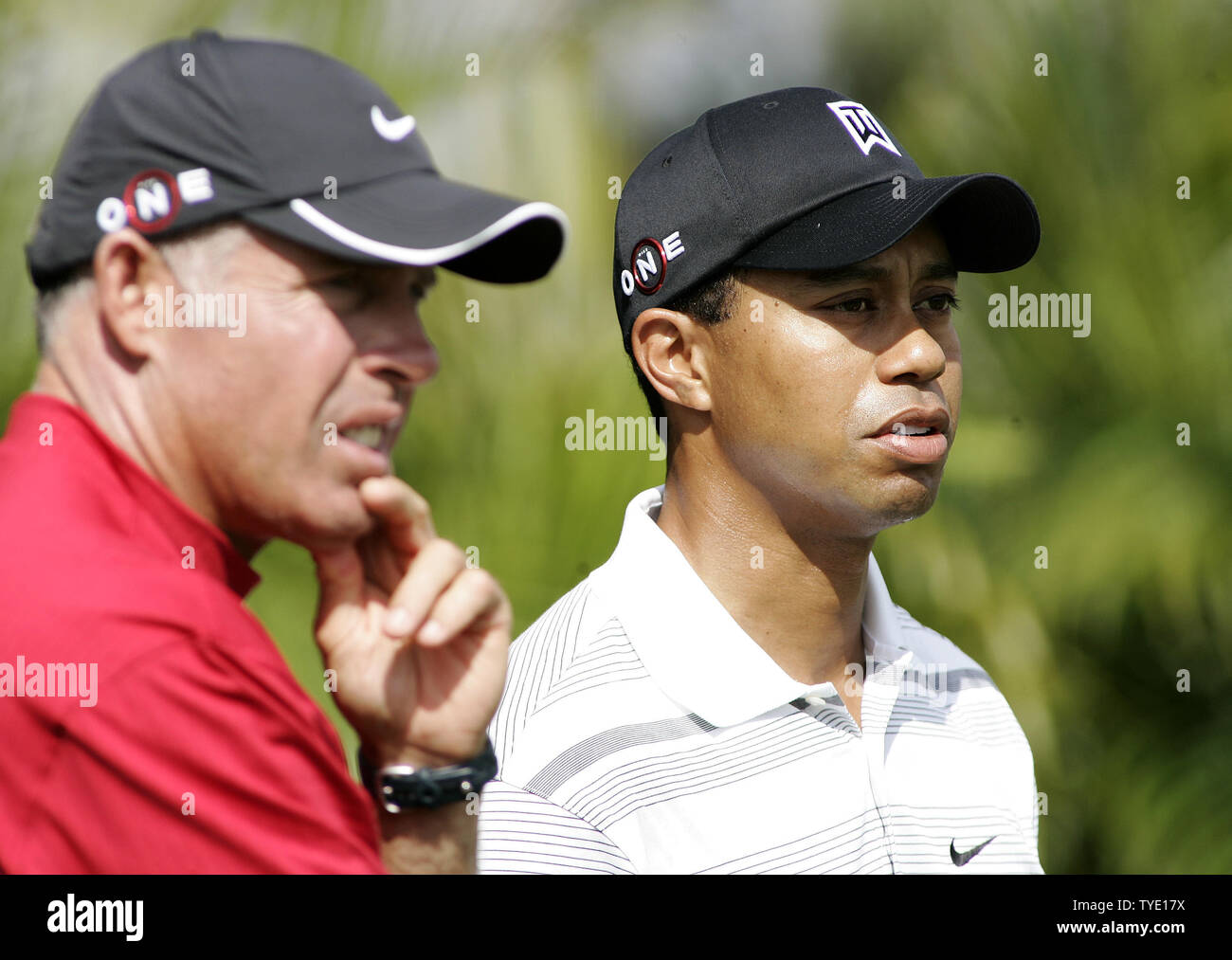
Steve Williams Caddy Net Worth in Context: Career Earnings, Tiger Woods Era, and Golf's Financial Blueprint
With an estimated net worth of approximately $20 million, New Zealander Steve Williams stands as the most financially successful professional golf caddie in the history of the sport. The vast majority of his wealth was accumulated duri...
With an estimated net worth of approximately $20 million, New Zealander Steve Williams stands as the most financially successful professional golf caddie in the history of the sport. The vast majority of his wealth was accumulated during his 12-year partnership with Tiger Woods, during which he earned percentages of historic prize purses, supplemented by personal endorsement deals and secondary loop partnerships.
Contents
Evaluating Steve Williams’ net worth requires looking beyond a single net figure. It involves understanding the financial mechanics of professional caddying, the transformation of PGA Tour prize funds during the late 1990s and 2000s, and how a high-profile "loop"—the golf term for a caddie's round or assignment—can evolve into a multi-million-dollar career.
Understanding Steve Williams' Net Worth: Financial Overview
While public net worth figures for non-playing sports figures are based on financial estimates and media reporting, sports economists and golf analysts generally place Steve Williams' accumulated net worth between $15 million and $20 million.
Unlike the athletes they carry bags for, caddies do not sign guaranteed multi-year contracts with sports franchises. Their income is directly tied to performance, tournament schedules, and variable compensation models. Williams’ financial standing reflects a rare convergence of long-term stability with top-tier players, extraordinary tournament win rates, and pioneering off-course commercial deals.
Steve Williams Revenue Streams:
- Tournament Prize Money Percentages (10% Wins / 7% Top-10 / 5% Cuts)
- Tiger Woods Era (1999–2011) — Primary Revenue Driver
- Adam Scott Era (2011–2017) — Includes 2013 Masters Victory
- Early Career: Raymond Floyd & Greg Norman
- Base Retaining Salaries (Weekly Stipends: $1,500 - $3,000+)
- Independent Endorsements & Corporate Sponsorships (e.g., Valvoline)
- Off-Course Business Ventures, Media & Book Royalties ("Out of the Rough")
Williams earned his fortune through four primary revenue channels:
- Tournament Prize Percentages: The standard 10%/7%/5% cut of player winnings.
- Weekly Retaining Salaries: Base pay provided by players to cover travel, lodging, and living expenses during tournament weeks.
- Personal Commercial Endorsements: Sponsorship deals signed directly with brands, a rarity for caddies during his era.
- Media and Publishing: Book royalties from his autobiography, Out of the Rough, along with paid public speaking engagements.
How Professional Golf Caddies Get Paid: The Percentage Model
To contextualize Williams' earnings, one must understand how compensation operates on the PGA Tour. Caddies typically operate as independent contractors rather than salaried employees of golf associations or tours.
The Standard PGA Tour Compensation Structure
- Base Salary / Weekly Stipend: Caddies receive a flat fee per tournament, historically ranging between $1,500 and $3,000 per week. This stipend covers travel logistics, hotel accommodations, meals, and yardage preparation.
- Making the Cut (5%): If the golfer makes the 36-hole cut and finishes in the payout structure outside the top 10, the caddie typically receives 5% of the player's prize check.
- Top-10 Finish (7%): A finish inside the top 10 yields a bumped performance bonus, standardly set at 7%.
- Tournament Victory (10%): Winning an event triggers the industry-standard 10% bonus. For major championships or high-purse events, this single-week payout can exceed several hundred thousand dollars.
Because Williams spent more than two decades caddying exclusively for world-class players who consistently made cuts, finished in the top 10, and won major championships, his percentage-based earnings eclipsed those of most professional tour players of his generation.
The Tiger Woods Era (1999–2011): The Peak Financial Years
The defining foundation of Steve Williams’ financial portfolio was his 12-year tenure on the bag for Tiger Woods. Hired in March 1999 following a recommendation from Greg Norman, Williams stepped into the caddie position just as Woods was embarking on the most dominant stretch in modern golf history.
| Metric | Details |
|---|---|
| PGA Tour Victories | 63 |
| Major Championships | 13 |
| Total On-Course Earnings | ~$88 Million |
| Estimated Caddie Cut | $8.8M - $10M+ (Prize Money Only) |
Quantifying the Winnings
During their partnership, Woods won 63 PGA Tour events, including 13 Major Championships.
- On-Course Prize Money: Between 1999 and mid-2011, Tiger Woods earned roughly $88 million in official PGA Tour prize purses alone.
- Williams' Prize Cut: Applying the standard performance metrics (10% for victories, 7% for top-10s, 5% for made cuts), Williams earned an estimated $8.5 million to $10 million strictly from tournament earnings on Woods' bag.
- FedEx Cup Bonuses: When Woods won the inaugural FedEx Cup playoff system in 2007 (and again in 2009), which featured a $10 million top bonus, Williams received significant custom bonuses from Woods, further elevating his single-season revenues.
At the peak of Woods' career in the early 2000s, Williams was earning well over $1 million per year, making him one of New Zealand's highest-paid sports figures, competing with top international rugby players and racing drivers.
Life Before and After Tiger: Raymond Floyd, Adam Scott, and Other Loops
While his time with Tiger Woods dominated headlines, Williams had built an elite reputation decades prior and continued to generate substantial income afterward.
- 1979-1988: Early Career / Greg Norman / Peter Thomson
- 1989-1999: Raymond Floyd Era (Senior PGA Tour dominance, 1990 US Open)
- 1999-2011: Tiger Woods Era (63 PGA Tour wins, 13 Majors)
- 2011-2017: Adam Scott Era (2013 Masters Victory, World No. 1 ranking)
- 2017+: Part-Time Loops / Retirement / Speedway Racing
The Early Decades: Peter Thomson, Greg Norman, and Raymond Floyd
Williams began caddying internationally as a teenager. By the late 1970s and 1980s, he had worked for five-time Open Champion Peter Thomson and Australian legend Greg Norman.
In 1989, Williams began a long and lucrative stint with Raymond Floyd. Under Floyd’s tutelage, Williams learned advanced green-reading and wind-calculation techniques. He caddied for Floyd during notable victories, including the 1990 U.S. Open finish and Floyd’s dominant stretch on the Senior PGA Tour (now PGA Tour Champions). During this period, Floyd's high win rate on both the regular and senior tours provided Williams with a top-tier income long before meeting Woods.
The Post-Tiger Years: Adam Scott (2011–2017)
Following his high-profile split from Tiger Woods in July 2011, Williams was immediately picked up by Australian star Adam Scott. The partnership proved almost instantly successful.
- 2011 WGC-Bridgestone Invitational: Williams caddied for Scott’s victory at Firestone, an event that carried a $1.4 million first-place prize (yielding a $140,000 pay check for Williams).
- 2013 Masters Tournament: Williams was on the bag when Adam Scott became the first Australian to win the Green Jacket at Augusta National. Scott's $1.44 million payout generated a $144,000 single-week check for Williams.
- World No. 1 Ranking: With Williams caddying, Scott rose to the World No. 1 ranking in 2014, securing consistent high-place finishes that added hundreds of thousands of dollars annually to Williams' total earnings.
Personal Endorsements, Motorsports, and Philanthropy
Steve Williams broke traditional boundaries by commercializing his personal brand as a caddie, a space historically reserved strictly for players.
Commercial Sponsorships
During the height of his fame, Williams secured independent sponsorship agreements:
- Valvoline: Williams signed an endorsement deal with oil giant Valvoline, wearing branded logos on his caddie shirt and hat during tour events.
- Subaru New Zealand: Aligning with his passion for automotive sports, Williams maintained long-term promotional relationships with motor vehicle distributors in Australasia.
These endorsement deals added an estimated $200,000 to $500,000 annually during peak years, independent of golf prize payouts.
Speedway Racing and Motorsports
A significant portion of Williams' capital has been funneled into his lifelong passion: competitive saloon car and speedway racing in New Zealand. He founded and financed his own motor racing team (Steve Williams Motorsport), competing in high-level dirt track events across New Zealand and North America.
The Steve Williams Foundation
Williams established the Steve Williams Foundation, a charitable organization dedicated to supporting youth sports development and pediatric healthcare initiatives in New Zealand. Over the years, Williams has donated millions of dollars of his personal wealth to build medical facilities, supply hospital equipment, and fund junior golf programs across his home country.
Comparing Caddie Net Worths: Steve Williams vs. PGA Tour Peers
To understand Williams' financial standing, it is useful to compare his estimated earnings with other high-profile caddies across professional golf history.
| Caddie Name | Primary Golfer(s) | Estimated Net Worth | Career Major Titles | Key Financial Drivers |
|---|---|---|---|---|
| Steve Williams | Tiger Woods, Adam Scott, Raymond Floyd | ~$20 Million | 14 Majors | 63 wins with Woods, Valvoline endorsements, book royalties |
| Jim "Bones" Mackay | Phil Mickelson, Justin Thomas | ~$12 Million | 6 Majors | 25-year run with Mickelson, NBC/Golf Channel broadcasting contract |
| Ted Scott | Scottie Scheffler, Bubba Watson | ~$5 Million – $8 Million | 4 Majors | 2x Masters with Watson, unprecedented 2022–2024 earnings run with Scheffler |
| Joe LaCava | Tiger Woods, Patrick Cantlay, Fred Couples | ~$3 Million – $5 Million | 2 Majors | Long-term retainers, 2019 Masters win with Woods |
| Michael Greller | Jordan Spieth | ~$5 Million | 3 Majors | Massive 2015–2017 Spieth run (FedEx Cup champion, Masters, U.S. Open) |
Key Differences in Earnings Profiles
- Volume of Wins: Williams' tally of 14 Major Championships (13 with Woods, 1 with Scott) remains unmatched among modern caddies.
- Explosion of Purses: Williams coincided perfectly with the "Tiger Effect"—a period where PGA Tour purses grew by over 300% due to television rights deals driven by Woods' popularity.
- Off-Course Monetization: Unlike peers who relied strictly on player payouts, Williams actively monetized his brand through corporate sponsorships, books, and media rights.
Financial Realities and Lessons from Golf's Most Successful Loop
The financial story of Steve Williams highlights broader economic realities of elite professional sports:
- High Risk, Variable Pay: For every caddie earning high-seven-figure incomes like Williams or Ted Scott, hundreds of tour caddies struggle to clear net profits after covering heavy weekly travel, hotel, and caddie-master fees.
- The Value of Strategic Alignment: A caddie's financial trajectory is tied to player performance and course management skills. Williams was renowned for his yardage accuracy, laser focus, and physical protection of his players on the course, making him an invaluable asset to top-ranked golfers.
- Asset Allocation: Williams successfully deployed his income into long-term wealth preservation, funding personal passions (speedway racing) while ensuring long-term independence through conservative capital management and philanthropy.
Frequently Asked Questions
What is Steve Williams' current net worth?
Steve Williams' net worth is estimated to be approximately $20 million. This wealth was accumulated through tournament prize percentages earned alongside players like Tiger Woods, Adam Scott, and Raymond Floyd, as well as personal endorsement deals, media publications, and business investments.
How much did Steve Williams earn while working for Tiger Woods?
During his 12-year stint with Tiger Woods (1999–2011), Williams earned an estimated $8.5 million to $10 million from tournament prize money alone. Bonus payouts, including cuts from FedEx Cup champion titles, brought his total earnings from the partnership even higher.
Do caddies get a percentage of a golfer's endorsement money?
No. Caddies do not receive a cut of a golfer's personal off-course endorsement contracts (such as deals with Nike, Rolex, or TaylorMade). Caddie earnings are strictly limited to tournament prize purses, weekly stipends paid by the player, and any independent endorsements the caddie secures on their own.
Did Steve Williams sign his own endorsement deals?
Yes. Steve Williams was a pioneer in securing independent commercial sponsorships as a caddie. His most notable partnership was with Valvoline, whose logo he wore on his official tournament attire. He also maintained vehicle sponsorships in New Zealand.
Is Steve Williams the wealthiest caddie in golf history?
Yes. Based on documented tournament purses, major championship victories, and commercial endorsements, Steve Williams is widely considered the highest-earning professional golf caddie in the history of the sport.
Summary and Key Takeaway
Steve Williams’ estimated $20 million net worth represents an extraordinary intersection of athletic timing, caddying excellence, and commercial awareness. By working alongside Tiger Woods during golf’s most lucrative expansion era—and backing it up with success alongside Raymond Floyd and Adam Scott—Williams proved that a caddie's career can yield fortune and long-term financial security through performance-based achievement.
Image Gallery