The American Airlines Dreamliner Journey: Evolution of the Fleet and Passenger Experience
The American Airlines Dreamliner journey represents the carrier’s transition into modern long-haul aviation, centering on the Boeing 787-8 and 787-9 aircraft. Since its 2015 debut, this journey has evolved from replacing aging 767s to...
The American Airlines Dreamliner journey represents the carrier’s transition into modern long-haul aviation, centering on the Boeing 787-8 and 787-9 aircraft. Since its 2015 debut, this journey has evolved from replacing aging 767s to introducing the "Flagship Suite," offering enhanced fuel efficiency, higher cabin humidity, and a tiered premium experience for international travelers.
Contents
As of 2026, American Airlines (AA) operates one of the most significant Boeing 787 fleets in the world. The "Dreamliner journey" is not just a reference to the physical flight but a strategic roadmap that American Airlines followed to modernize its long-haul capabilities. By moving away from older, less efficient wide-body jets, the airline has utilized the 787’s composite airframe and advanced engine technology to open new routes that were previously economically unviable. For passengers, this journey signifies a shift toward wellness-oriented travel, characterized by lower effective cabin altitudes and larger, electronically dimmable windows.
The Strategic Shift: Why American Airlines Chose the Dreamliner
The inception of the American Airlines Dreamliner journey began with a massive order intended to simplify a fragmented wide-body fleet. Before the 787, AA relied heavily on the Boeing 767-300ER and the 777-200ER. While the 777 remained a powerhouse, the 767 was aging and lacked the fuel efficiency required for the volatile energy markets of the 2010s.
The Boeing 787 Dreamliner offered a solution through its 80% composite construction. By using carbon-fiber-reinforced polymers instead of traditional aluminum, the aircraft is lighter and less susceptible to corrosion. This allows for a higher cabin pressure (lower cabin altitude) and significantly higher humidity levels. For American Airlines, the choice was driven by a 20% reduction in fuel consumption compared to the aircraft it replaced, allowing the carrier to weather fluctuating oil prices while expanding its reach into secondary European and Asian markets.
Decoding the Fleet: 787-8 vs. 787-9 Specifications
The AA Dreamliner journey is split between two primary variants: the 787-8 and the larger 787-9. While they share the same pilot type rating and many internal components, they serve distinct roles within the American Airlines network.
The 787-8: The Versatile Workhorse
The 787-8 was the first variant to join the AA fleet in May 2015. It was initially deployed on domestic "proving" runs between Dallas/Fort Worth (DFW) and Chicago (ORD) before moving to international routes like DFW to Beijing. In the AA configuration, the 787-8 is designed for "long and thin" routes—destinations that require high range but don't have the passenger volume to fill a 777-300ER. It has been instrumental in serving markets like Philadelphia to Zurich or DFW to Seoul.
The 787-9: The Long-Haul Powerhouse
Entering service with American in 2016, the 787-9 is a stretched version of the -8 with significantly more capacity and range. Crucially, the 787-9 was the launchpad for American’s Premium Economy product, making AA the first U.S. secondary carrier to offer a dedicated international Premium Economy cabin. The 787-9 is the aircraft of choice for ultra-long-haul journeys, such as Los Angeles (LAX) to Sydney or DFW to Tokyo Haneda, where its increased fuel capacity and payload capabilities are essential.
| Feature | Boeing 787-8 (AA Configuration) | Boeing 787-9 (AA Configuration) |
|---|---|---|
| Typical Seating | ~234 Seats | ~285 Seats |
| Business Class Type | Flagship Business / Adient Ascent | Flagship Suite (New) / Super Diamond |
| Premium Economy | Yes (Since Retrofits) | Yes (Original Launch) |
| Range | 7,305 nautical miles | 7,635 nautical miles |
| Engine | GEnx-1B | GEnx-1B |
| Length | 186 feet | 206 feet |
The Flagship Experience: Cabin Interior Evolution
The interior journey of the AA Dreamliner has seen several iterations. Early 787-8 models featured the "Concept D" business class seat, which faced some criticism due to a design that coupled seats together, leading to vibrations when a neighbor moved. Recognizing this, American pivoted to more robust seating options for subsequent deliveries and retrofits.
Flagship Business and the New Flagship Suite
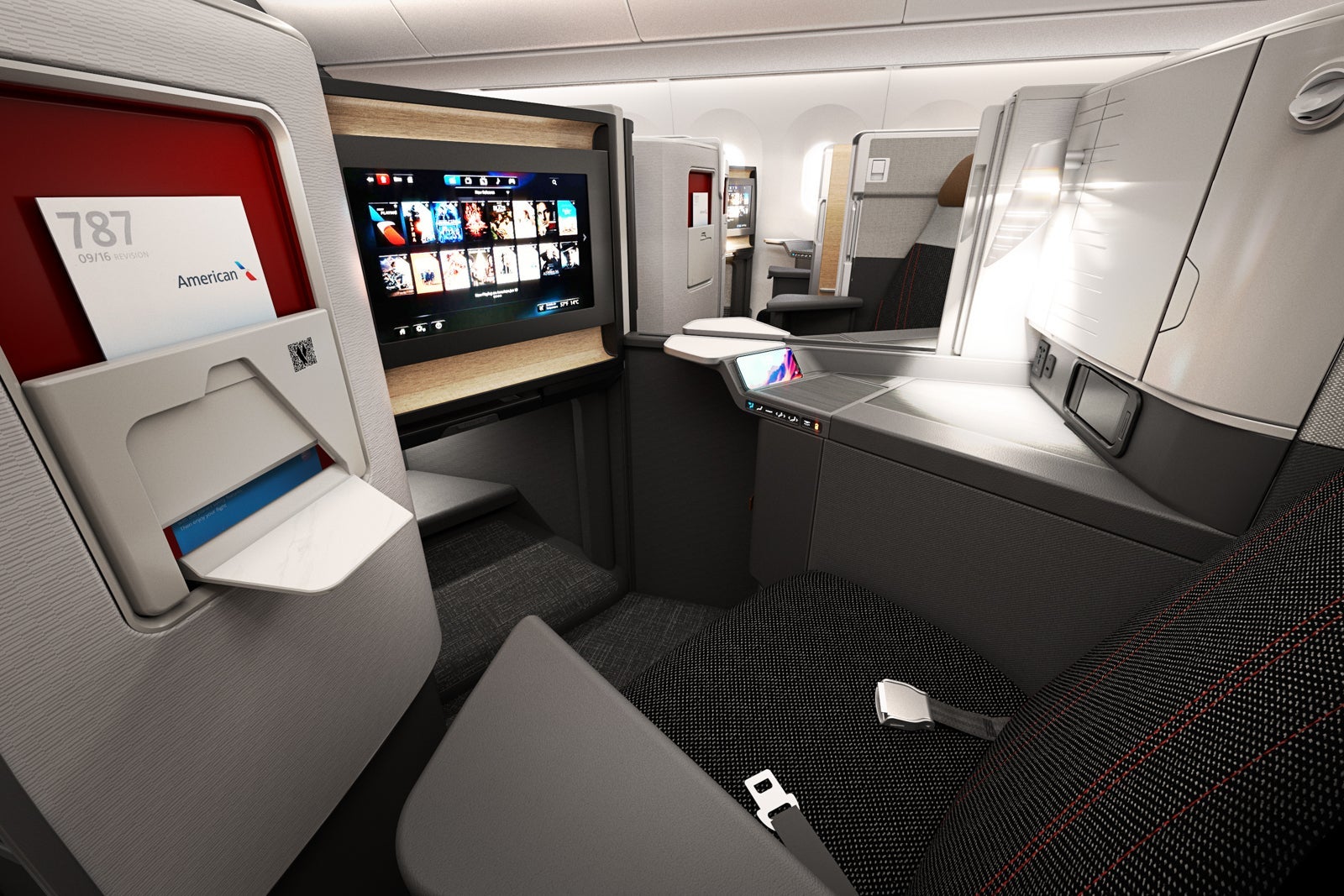
By 2026, the highlight of the AA Dreamliner journey is the Flagship Suite. Introduced on new 787-9 deliveries starting in 2024, these suites feature privacy doors, a chaise lounge seating option, and extensive storage. This move was a direct response to global competition, ensuring that American could compete with "Qsuite" or "Club Suite" products from Oneworld partners.
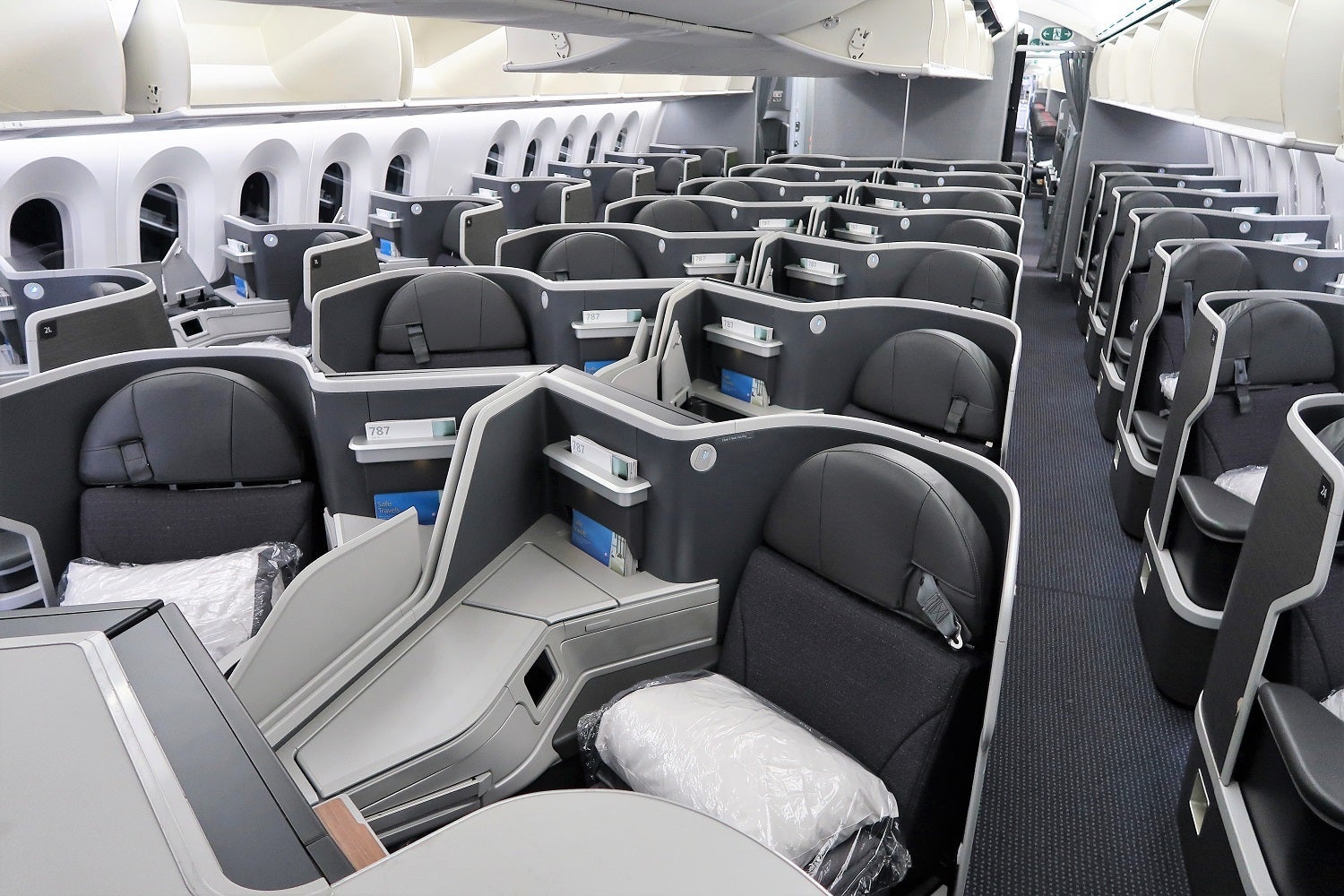
For aircraft not yet fitted with the Flagship Suite, the Collins Aerospace Super Diamond seat remains a gold standard. Arranged in a 1-2-1 reverse herringbone configuration, every passenger in Flagship Business enjoys direct aisle access, a fully lie-flat bed, and a large touchscreen entertainment system.
Premium Economy: A Middle-Ground Pioneer
American Airlines utilized the 787-9 to debut its Premium Economy product in late 2016. This cabin provides a significant upgrade from the Main Cabin, offering wider seats, more legroom (usually 38 inches of pitch), and enhanced dining. The journey for the passenger in this cabin includes amenities like noise-reducing headphones and an upgraded travel kit, bridging the gap between the luxury of Business Class and the utility of the Main Cabin.
Main Cabin and Connectivity
Even in the Main Cabin, the Dreamliner journey is defined by technology. AA equipped its 787s with high-speed Wi-Fi and seatback entertainment at every chair. The Main Cabin Extra section provides an additional 3–4 inches of legroom, which is a popular choice for travelers on the 10-plus hour flights these aircraft typically frequent.
Technical Marvels: How the Dreamliner Improves the Journey
The "journey" is also a biological one. Traditional aircraft use "bleed air" from the engines to pressurize the cabin, which results in very dry air. The Boeing 787 uses an all-electric environmental control system. This allows for:
- Higher Humidity: Because the air is not drawn from the engines, it can be kept more humid, reducing the "dried out" feeling in the eyes and throat.
- Lower Cabin Altitude: While most aircraft are pressurized to 8,000 feet, the Dreamliner is pressurized to 6,000 feet. This allows the blood to absorb more oxygen, significantly reducing the symptoms of jet lag and fatigue.
- Advanced Filtration: The HEPA filters are supplemented by a gaseous filtration system that removes odors and irritants from the air.
- Dimmable Windows: Instead of plastic shades, the 787 uses electrochromic windows. Passengers can tint the glass to various levels of blue, allowing them to look outside without blinding others with sunlight.
Global Network: Key Routes Served by the AA 787
The AA Dreamliner journey spans the globe, primarily operating out of American’s largest hubs. The 787 fleet has allowed American to optimize its network based on seasonal demand.
- DFW Hub: The primary gateway for the 787, serving destinations like Seoul (ICN), Tokyo (NRT/HND), Paris (CDG), and Buenos Aires (EZE).
- Chicago (ORD): Frequently uses the 787 for routes to London (LHR) and Athens (ATH) during peak summer months.
- Philadelphia (PHL): A major transatlantic jump-off point for the 787-8 to secondary European cities.
- Los Angeles (LAX): The 787-9 handles the heavy lifting for transpacific routes to Australia and New Zealand.
The efficiency of these aircraft means that American can keep these routes profitable even when load factors aren't at 100%, a feat that was difficult with the older 777-200ER or the retired 767s.
Sustainability and the Future of the 787 at American
As we look at the status of the fleet in 2026, sustainability is a core component of the AA Dreamliner journey. American Airlines has committed to net-zero greenhouse gas emissions by 2050, and the 787 is the most important tool in reaching that goal today. The GEnx engines provide a smaller noise footprint and lower CO2 emissions per passenger mile than any previous generation of AA wide-bodies.
Furthermore, American continues to take delivery of new 787-9s to replace the remaining older 777s on certain routes. This transition ensures that the airline maintains one of the youngest wide-body fleets among the "Big Three" U.S. carriers.
Frequently Asked Questions
Which American Airlines planes have the new Flagship Suite?
The new Flagship Suite is primarily found on Boeing 787-9 aircraft delivered from late 2024 through 2026. American also began retrofitting older 787-9s and 777-300ERs with this product to standardize the long-haul experience. You can verify the seat map during booking; the Suite configuration is 1-2-1 with doors.
Is there a difference between the 787-8 and 787-9 in Economy?
In terms of seat width and pitch, the Main Cabin experience is very similar on both. However, the 787-9 was built with a larger Premium Economy cabin from the start, whereas some early 787-8s had to be retrofitted. The 787-9 generally feels more spacious due to the longer fuselage, though the 3-3-3 seating layout is standard across both.
How do the dimmable windows work on the AA Dreamliner?
The windows use a gel that reacts to electric current. When the flight attendants or the passenger presses the button, the opacity of the gel changes. Note that during takeoff, landing, and certain "crew-rest" periods, the flight crew can centrally control all windows to ensure safety or to maintain a dark cabin for sleeping.
Does American Airlines offer Wi-Fi on all Dreamliner flights?
Yes, all American Airlines Boeing 787 aircraft are equipped with satellite-based Wi-Fi. While it is a paid service, it is generally fast enough for browsing and email. Some newer installations support streaming-level speeds, which is helpful for the long transpacific "journeys" the 787 frequently undertakes.
Why is the 787 considered better for jet lag?
The combination of a 6,000-foot cabin altitude (which increases oxygen saturation in the blood) and higher humidity levels (which keeps the respiratory system hydrated) significantly reduces the physical toll of long-haul flying. Passengers often report feeling more refreshed upon arrival compared to flying on older aluminum-fuselage aircraft.
Final Recommendation for Travelers
When booking your next international trip, prioritize the 787-9 if you are looking for the latest cabin products, specifically the Flagship Suite or a more robust Premium Economy section. If you are sensitive to jet lag or dry air, the AA Dreamliner journey is objectively superior to the older 777-200ER. Always check the seat map via the American Airlines app prior to departure to ensure your specific tail number features the upgraded interiors, as retrofits continue through 2026.
Image Gallery