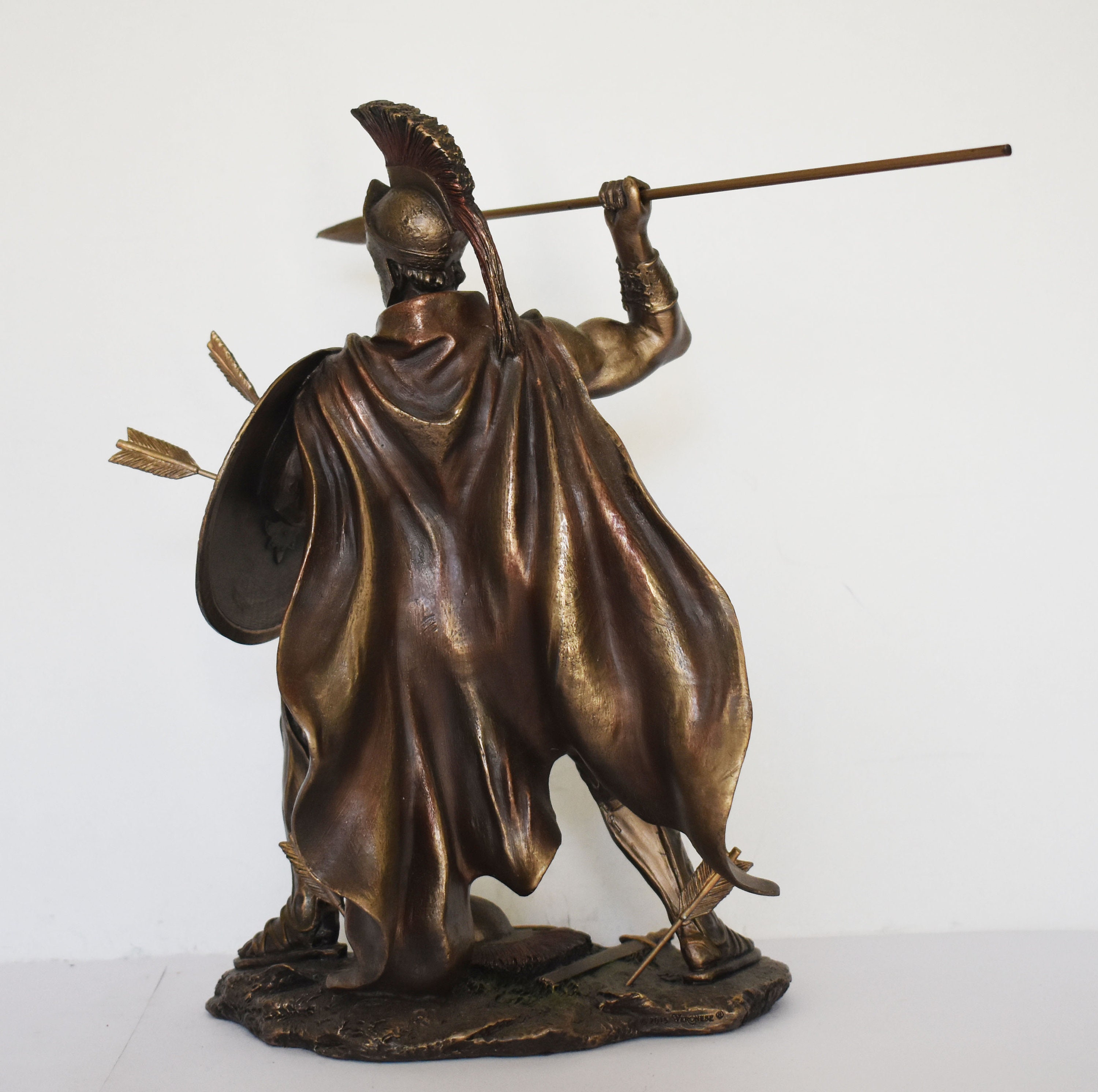
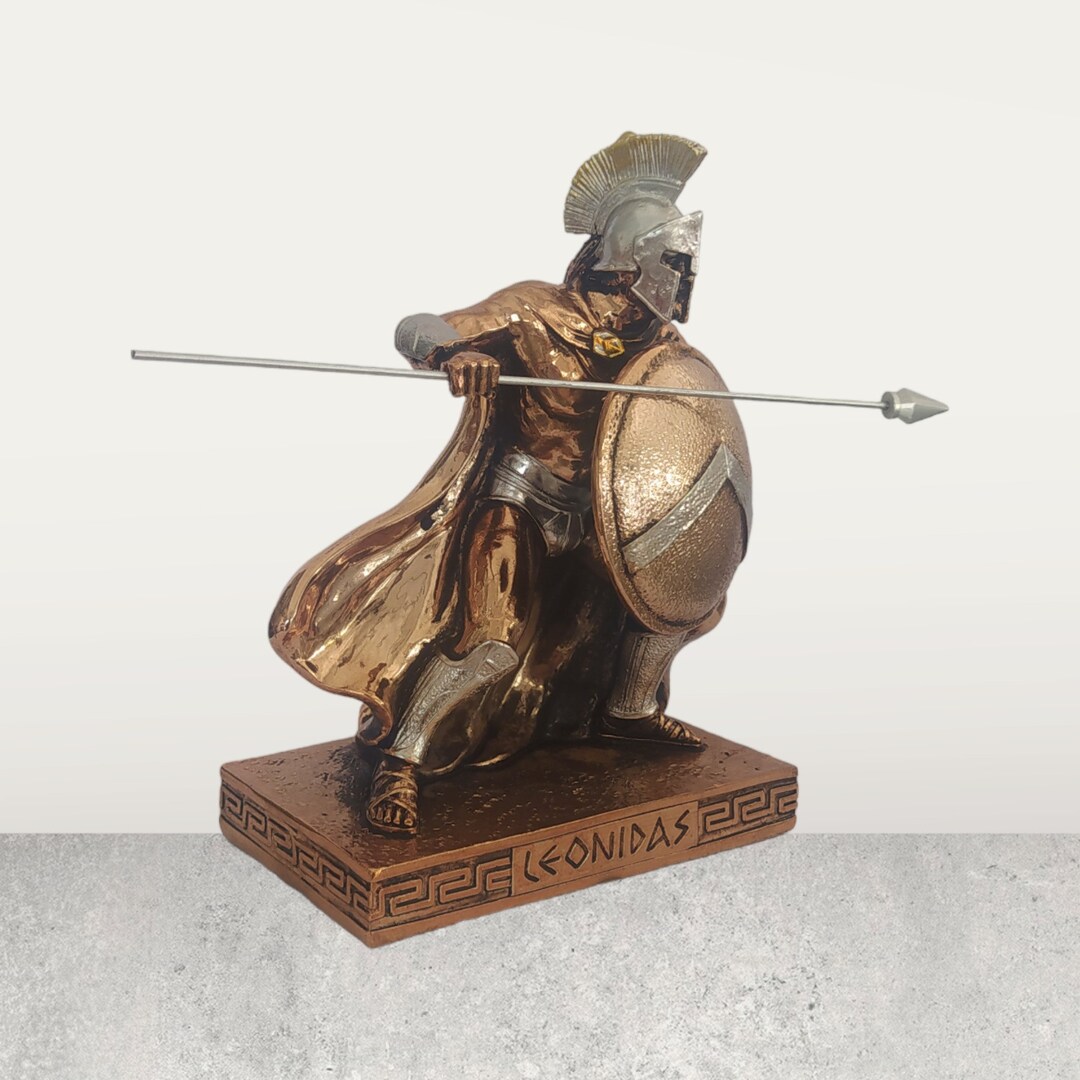
King Leonidas I: The History, Leadership, and Legacy of Sparta’s Legendary Commander
King Leonidas I was an Agiad king of the ancient Greek city-state of Sparta who reigned from approximately 489 BCE until his death in 480 BCE. He achieved enduring historical fame by commanding a combined Greek military force—including...
King Leonidas I was an Agiad king of the ancient Greek city-state of Sparta who reigned from approximately 489 BCE until his death in 480 BCE. He achieved enduring historical fame by commanding a combined Greek military force—including an elite bodyguard of 300 Spartan hoplites—in a sacrificial rear-guard action against Xerxes I's invading Persian army at the Battle of Thermopylae.
Contents
Early Life, Royal Lineage, and the Spartan Agoge
Leonidas was born into the Agiad dynasty, one of the two royal houses that jointly ruled ancient Sparta alongside the Eurypontid line. He was the son of King Anaxandridas II. Because Leonidas was the third son—behind his older half-brother Cleomenes I and his older full brother Dorieus—he was not initially expected to inherit the throne.
This unexpected line of succession had a profound impact on his upbringing. In Spartan society, firstborn heirs to the royal thrones were generally exempt from the agoge, the state-sponsored military education and training regimen required of all male Spartan citizens (Spartiates). Because Leonidas was not the immediate heir, he underwent the full rigor of the agoge.
The agoge focused on:
- Physical Conditioning: Endurance training, combat instruction, stealth, and survival skills under extreme weather conditions.
- Psychological Fortitude: Cultivation of absolute obedience to the state, emotional restraint, and indifference to physical pain.
- Tactical Coordination: Mastery of the dense phalanx formation, heavy shield manipulation (aspis), and thrusting spear techniques (dory).
Completing the agoge earned Leonidas the deep respect of the Spartan citizenry. When he eventually rose to power, he possessed firsthand experience as a baseline hoplite soldier, a characteristic that set his leadership style apart from contemporary monarchical commanders.
Ascension to the Throne and Spartan Governance
Leonidas ascended to the Agiad throne around 489 BCE following the death of Cleomenes I, who died under mysterious circumstances without leaving male issue. Dorieus had previously died while on a military expedition in Sicily, leaving Leonidas as the rightful successor. To consolidate his royal standing and preserve dynastic continuity, Leonidas married Gorgo, the daughter of Cleomenes I. Queen Gorgo was recognized for her political intelligence and outspoken influence, characteristics noted by ancient historians such as Herodotus and Plutarch.
Spartan governance operated under a complex mixed constitution involving dual monarchy, an oligarchy, and democratic elements:
Dual Kingship (Agiad & Eurypontid)
- The Five Ephors (Exec. oversight & court)
- The Gerousia (Council of 28 Elders + 2 Kings)
- The Apella (Assembly) (All adult male citizens)
The Dual Kingship: Two kings from different lines held equal hereditary authority, primarily serving as supreme commanders of the military abroad and high priests at home.
The Ephors: Five elected magistrates held executive power, overseeing state security, legal enforcement, and monitoring the kings to prevent tyranny.
The Gerousia: A council of 28 elders aged over 60, plus the two kings, responsible for drafting legislation and trying capital cases.
The Apella: The general assembly of Spartan male citizens who voted on policy and law proposed by the Gerousia.
This system meant that Leonidas could not unilaterally declare war or mobilize the full Spartan army without the consent of the Ephors and the endorsement of religious authorities.
The Geopolitical Crisis of 480 BCE and the Thermopylae Strategy
In 480 BCE, King Xerxes I of Persia launched the Second Persian Invasion of Greece, aiming to subjugate the mainland city-states following his father Darius I's defeat at Marathon a decade earlier. Persian land forces numbering well over 100,000 troops, supported by a vast navy, advanced through Thrace and Macedon toward Central Greece.
Facing an existential threat, the Greek city-states formed a defensive coalition known as the League of Corinth. The coalition devised a dual land-and-sea strategy:
- Naval Blockade: Position the allied Greek fleet at the Straits of Artemisium to prevent the Persian navy from landing forces behind mainland defenders.
- Land Bottleneck: Position a small, disciplined land force at the Pass of Thermopylae ("The Hot Gates") to block the Persian advance into Boeotia and Attica.
- Defense of Southern Greece:
- Persian Land Forces: Pass of Thermopylae (Spartan Land Block)
- Persian Fleet: Straits of Artemisium (Allied Naval Block)
The Strategic Value of Thermopylae
Thermopylae offered an ideal defensive position. At its narrowest points, the pass was only wide enough for a single wagon. The terrain negated the numerical superiority of the Persian army, neutralized their light cavalry, and forced Xerxes' troops into frontal infantry engagements against heavily armored Greek hoplites.
The Composition of the Greek Defense
Mobilizing the entire Spartan army was obstructed by the sacred festival of the Carneia, during which military activity was strictly forbidden by Spartan law. Recognizing the immediate danger, Leonidas secured permission from the Ephors to lead a vanguard.
He assembled a specialized force of 300 elite Spartiates. Crucially, Leonidas selected only men who had living sons, ensuring that their family lineages would not become extinct if they fell in battle.
As the vanguard marched south, thousands of troops from other allied Greek poleis joined Leonidas:
- Peloponnesian contingents: Mantineans, Tegeans, Arcadians, Corinthians, Phliasians, and Mycenaeans (~3,100 men)
- Central Greek contingents: Thespians (~700 men), Thebans (~400 men), Phocians (~1,000 men), and Opuntian Locrians (~1,000 men)
Totaling roughly 7,000 soldiers, this coalition held the narrow pass under Leonidas's supreme command.
The Battle of Thermopylae: Operations and the Final Stand
The Battle of Thermopylae took place over seven days in August or September 480 BCE, including three days of active combat.
Days 1 and 2: The Frontal Assaults
Xerxes delayed his attack for four days, assuming the small Greek force would retreat when faced with the size of his army. When Leonidas refused to withdraw, Xerxes ordered continuous waves of infantry to assault the pass.
Leonidas employed rotation tactics within the narrow pass. The allied contingents took turns at the front line, maintaining physical stamina while preventing bottleneck fatigue. The Spartan hoplites utilized specialized tactics:
- Phalanx Warfare: Overlapping large bronze-faced wooden shields (aspides) created an impenetrable wall, projecting heavy iron-tipped spears (dory).
- Feigned Retreats: Spartan units executed controlled false withdrawals, drawing eager Persian troops out of formation before wheeling around to counter-attack with fatal precision.
Xerxes deployed his elite imperial guard, the "Immortals," but their lighter wicker shields, shorter spears, and cloth armor proved ineffective against the disciplined heavy infantry of the Greeks.
Day 3: The Betrayal and the Encirclement
The tactical situation collapsed when a local Malian resident named Ephialtes of Trachis betrayed the allied force. Seeking wealth from the Persian king, Ephialtes revealed the existence of the Anopaea path, a hidden mountain trail that bypassed the main pass of Thermopylae.
During the night, Xerxes dispatched Hydarnes and the Immortals along this mountain trail. The Phocian guard positioned to secure the path retreated to a nearby hill to make a defensive stand, allowing the Persian force to march past uninterrupted and encircle the main coalition at the pass.
- Pass of Thermopylae (Held by Leonidas)
- Allied Coalition
- Main Persian Army
- Hydarnes & Immortals (Guided by Ephialtes via Anopaea Path Encirclement)
The Rear Guard Action and Leonidas’s Death
Upon learning at dawn that the mountain pass had been breached, Leonidas convened a council of war. Understanding that holding the position meant absolute destruction, he dismissed the majority of the allied Greek troops to preserve their strength for future battles.
Leonidas, his 300 Spartans, 700 Thespians under Demophilus, and 400 Thebans remained behind. While historical debate surrounds the motivations of each group, Leonidas's decision was governed by Spartan law, which forbade retreat, and a tactical imperative: without a sacrificial rear-guard action, the retreating allied armies would have been overtaken and cut down by Persian cavalry on the open plains.
Moving out of the narrowest part of the pass to maximize the casualties they could inflict, the remaining defenders engaged the Persians with reckless ferocity. When their spears shattered, they fought with short swords (xiphe), and eventually with their bare hands and teeth.
Leonidas was killed early in the final struggle. A desperate battle ensued over his body, with the Greeks repelling four Persian attacks before successfully retrieving his corpse. The remaining defenders were eventually overwhelmed by a barrage of Persian archery.
Separating History from Myth: Primary Sources vs. Popular Culture
Much of modern perception regarding Leonidas stems from 19th-century romantic nationalism and 21st-century media adaptations. Evaluating ancient primary sources helps separate historical reality from pop-culture mythology.
| Aspect | Popular Perception / Pop Culture | Historical Reality (Primary Sources) | Classical Sources |
|---|---|---|---|
| Size of the Defense Force | 300 Spartans fought completely alone against Persia. | ~7,000 allied Greeks fought for 2 days; ~1,400 remained for the final rear-guard stand. | Herodotus (Histories, Book VII); Diodorus Siculus |
| Armour and Equipment | Defenders fought bare-chested with minimal leather straps. | Fully armored hoplites with bronze cuirasses, greaves, bronze helmets, and heavy shields. | Archeological finds; Pausanias |
| Motivation for Staying | Pure suicide pact or mindless martial fervor. | Tactical delay action allowing the retreat of allied forces and naval defense at Artemisium. | Thucydides; Herodotus |
| Origin of "Molon Labe" | Spoken dramatically during a face-to-face negotiation at the battlefield. | Recorded as a written or verbal defiance to Xerxes' written demand to surrender arms. | Plutarch (Apophthegmata Laconica) |
| Spartan Political Power | Absolute monarchs ruling by personal decree. | Dual kings subject to strict legal oversight by the five Ephors and the Gerousia. | Aristotle (Politics); Xenophon |
Strategic Legacy and Leadership Lessons
While the Battle of Thermopylae was a tactical defeat that resulted in the occupation of Athens by Persian forces, it achieved significant strategic outcomes for the Greek defense:
1. Strategic Time and Morale
Leonidas's resistance delayed the Persian land advance by a critical week, allowing the Allied fleet to disengage safely at Artemisium and regroup off the island of Salamis. The stand at Thermopylae demonstrated that the vast Persian military machine was not invincible, boosting morale across the Greek poleis.
2. The Lead-from-the-Front Leadership Model
Leonidas rejected the traditional command distance common among Near Eastern commanders of the era. By sharing the exact rations, discomfort, and physical risks of his men, he maintained absolute authority and high morale under extreme stress.
3. Tactical Adaptation to Terrain
The operational plan executed by Leonidas remains a classic military case study in force multiplication. By anchoring his flanks against mountainous terrain and the sea, he rendered superior numerical strength useless and forced the enemy to fight under localized conditions that favored heavy infantry.
- Mountain Terrain (Steep Cliffs)
- Defensive Wall / Greek Phalanx
- Gulf of Malis (Sea)
Frequently Asked Questions
Why did Leonidas take only 300 Spartans to Thermopylae?
Leonidas took 300 Spartans because the full Spartan military could not be legally mobilized during the holy festival of the Carneia. To work around this religious prohibition, Leonidas assembled a personal bodyguard (hippeis) of 300 veteran citizens who already had living sons, ensuring their lineages would continue if they perished.
Who was Leonidas’s wife, and what role did she play in Spartan governance?
Leonidas's wife was Queen Gorgo, the daughter of his half-brother King Cleomenes I. She is famous for her political wisdom and quick wit, famously cited by Plutarch. Ancient sources recount that when Leonidas departed for Thermopylae, Gorgo asked him how best she could honor him. He replied, "Marry a good man and bear good children."
What does the phrase "Molon Labe" mean, and did Leonidas actually say it?
"Molon labe" (Μολὼν λαβέ) translates to "Come and take [them]." According to Plutarch's Apophthegmata Laconica, Xerxes demanded that the Spartans surrender their weapons, to which Leonidas sent this famous laconic response. While its historical precision cannot be independently verified outside Plutarch, it reflects Spartan military ethos.
What happened to Greece after Leonidas died at Thermopylae?
After breaching Thermopylae, Xerxes marched through Boeotia and burned Athens, which had been evacuated. However, the tactical delay permitted the Greek alliance to prepare their fleet, leading to a decisive naval victory at the Battle of Salamis later in 480 BCE. The following year (479 BCE), a combined Greek army led by Leonidas's nephew, Pausanias, destroyed the remaining Persian land army at the Battle of Plataea.
Where was Leonidas buried, and does his tomb exist today?
After the battle, Xerxes ordered Leonidas's head decapitated and his body impaled. Forty years later, around 440 BCE, Spartan tradition records that his bones were retrieved, returned to Sparta, and reburied with full honors. A monument known as the "Tomb of Leonidas" stands in the modern town of Sparta (Sparti), though historians regard it as a symbolic cenotaph or hero-shrine (heroon).
Practical Summary for Historical Study
To examine the history of Leonidas I and the Battle of Thermopylae using primary evidence and academic tools, refer to the following framework:
- Primary Literary Sources:
- Herodotus: The Histories, Book VII (Detailed tactical breakdown and force numbers).
- Plutarch: Parallel Lives ("Life of Lycurgus") and Sayings of Spartans (Context on Spartan culture and sayings).
- Diodorus Siculus: Library of History, Book XI (Alternative Greek perspective on the campaign).
- Key Archaeological & Geographic Coordinates:
- Modern Thermopylae: Located near the modern municipality of Lamia, Greece. Note that coastal sedimentation over 2,500 years has widened the pass from a narrow strip to several kilometers of flat plain.
- The Kolonos Hill: The actual knoll at Thermopylae where the final rear-guard stand took place, marked by Simonides' famous inscribed epigram: "Stranger, go tell the Spartans that here we lie, obedient to their laws."
Image Gallery