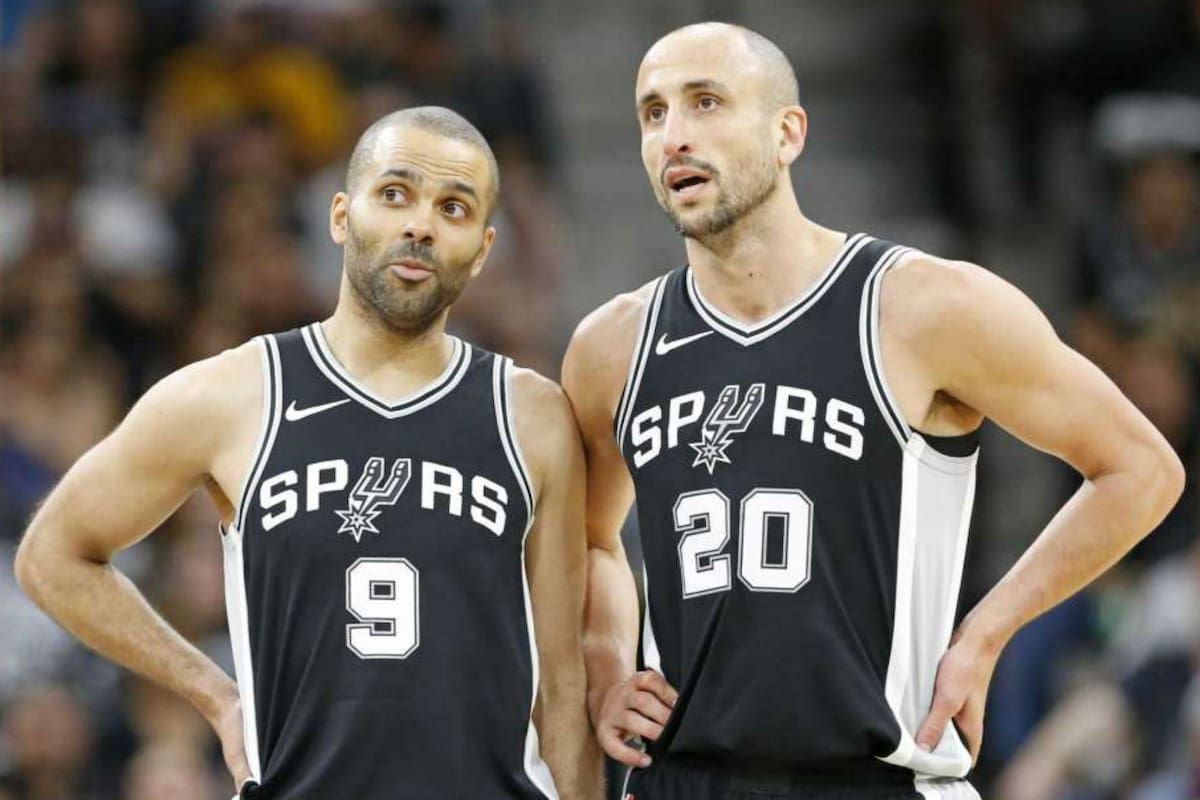
Manu Ginobili and Tony Parker: The Legacy of the Spurs’ Global Backcourt
The partnership between Manu Ginobili and Tony Parker remains the gold standard for international backcourts in NBA history. Together with Tim Duncan, they formed the winningest trio in league history, securing four championships. Thei...
The partnership between Manu Ginobili and Tony Parker remains the gold standard for international backcourts in NBA history. Together with Tim Duncan, they formed the winningest trio in league history, securing four championships. Their synergy combined Parker’s elite speed and paint penetration with Ginobili’s creative playmaking and clutch scoring ability.
Contents
The Foundation of a Dynasty: Arrival in San Antonio
The story of Manu Ginobili and Tony Parker is inseparable from the culture of the San Antonio Spurs, a franchise that revolutionized NBA scouting by looking beyond North American borders. While the league in the late 1990s was still largely domestic-centric, Spurs coach Gregg Popovich and General Manager R.C. Buford identified international prospects who possessed high basketball IQs and professional experience in European leagues.
Tony Parker arrived first, drafted as the 28th overall pick in the 2001 NBA Draft. A lightning-fast point guard from France, Parker was only 19 years old when he entered the league. His early years were defined by a "tough love" relationship with Popovich, who demanded disciplined floor leadership. Parker’s ability to navigate the pick-and-roll and finish at the rim with his signature "tear-drop" floater quickly made him a fixture in the starting lineup.
Manu Ginobili’s path was different. Drafted 57th overall in 1999, he remained in Italy for three more years, winning a EuroLeague title and MVP honors. When he finally joined the Spurs in 2002, he was a polished, 25-year-old veteran of international play. Ginobili introduced a chaotic, brilliant style of play to the NBA, popularized the "Eurostep," and proved that a star player could maintain maximum impact while coming off the bench as a "Sixth Man."
The Dynamics of the Backcourt Partnership
The success of Ginobili and Parker was rooted in their complementary skill sets. In the early 2000s, the Spurs were a defensive-minded team centered on Tim Duncan’s post presence. Parker and Ginobili provided the perimeter acceleration necessary to modernize the offense.
Tony Parker: The Engine
Parker functioned as the primary engine of the offense. His role was to push the pace and collapse the defense. By 2007, Parker had evolved from a pure speedster into one of the league’s most efficient mid-range scorers and paint finishers. His performance in the 2007 NBA Finals, where he averaged 24.5 points per game on 56.8% shooting, earned him the Finals MVP award—the first European player to receive the honor.
Manu Ginobili: The Catalyst
Ginobili was the ultimate "X-factor." While Parker provided consistent pressure, Ginobili provided unpredictability. He was a high-volume playmaker who could serve as a secondary ball-handler or a primary scorer in clutch moments. His willingness to sacrifice a starting role for the benefit of the team’s rotation became a hallmark of the "Spurs Way." Ginobili’s defensive instincts, characterized by opportunistic steals and charges taken, often shifted the momentum of playoff series.
Statistical Comparison and Career Milestones
The longevity of their partnership is nearly unparalleled in modern sports. They played 16 seasons together, a feat rarely seen in an era of frequent player movement. Their cumulative impact is best viewed through their accolades and their efficiency within the Spurs' system.
| Metric | Tony Parker | Manu Ginobili |
|---|---|---|
| NBA Championships | 4 (2003, 2005, 2007, 2014) | 4 (2003, 2005, 2007, 2014) |
| All-Star Selections | 6 | 2 |
| All-NBA Team Honors | 4 | 2 |
| Finals MVP | 1 (2007) | 0 |
| Sixth Man of the Year | 0 | 1 (2008) |
| Career Points per Game | 15.5 | 13.3 |
| Career Assists per Game | 5.6 | 3.8 |
| Hall of Fame Induction | 2023 | 2022 |
The Evolution to the "Beautiful Game"
While the duo won championships early in their careers (2003, 2005, 2007) based on defense and Duncan’s dominance, their greatest tactical achievement came later. Following a devastating loss in the 2013 Finals, the 2013-2014 San Antonio Spurs showcased what many analysts call the "Beautiful Game."
In this system, the traditional roles of Parker and Ginobili blurred into a continuous flow of motion and passing. Parker’s penetration forced rotations, and Ginobili’s vision exploited those rotations. During the 2014 Finals against the Miami Heat, the Spurs recorded a record-breaking offensive efficiency, largely driven by the chemistry between their veteran backcourt. This era proved that Parker and Ginobili could adapt their games as they aged, relying more on positioning and elite passing than raw athleticism.
Impact on the Global Game
The influence of Ginobili and Parker extends far beyond the city of San Antonio. They served as the primary proof of concept for the "globalization" of the NBA. Before their success, there was a prevailing skepticism regarding whether international guards could handle the physical intensity and pace of the American game.
Ginobili, representing Argentina, and Parker, representing France, also maintained rigorous international schedules. Ginobili led Argentina to a historic Olympic Gold Medal in 2004, famously defeating Team USA. Parker led France to a EuroBasket gold in 2013. Their ability to succeed at both the NBA and FIBA levels validated the quality of international basketball development, paving the way for future European and South American stars like Luka Dončić and Nikola Jokić.
Life After Basketball: The Status in 2026
As of 2026, both Ginobili and Parker have transitioned into the "elder statesmen" roles of the basketball world. Their jerseys (#20 for Ginobili and #9 for Parker) hang in the rafters of the Frost Bank Center in San Antonio.
- Manu Ginobili: Ginobili remains closely tied to the Spurs organization, serving as a special advisor to basketball operations. He has been instrumental in mentoring the next generation of Spurs talent, including 2023 number-one overall pick Victor Wembanyama. His focus remains on player development and maintaining the developmental culture he helped build.
- Tony Parker: Parker has pursued a significant career in sports ownership and business. He is the majority owner and president of ASVEL, a professional basketball club in France. Additionally, Parker has invested in various ventures, including wineries and tech startups, while occasionally appearing as a global ambassador for the NBA.
Both men were first-ballot inductees into the Naismith Memorial Basketball Hall of Fame (Ginobili in 2022, Parker in 2023), cementing their status as two of the greatest players to ever step onto a court.
Frequently Asked Questions
Why did Manu Ginobili come off the bench if he was a star?
Gregg Popovich decided to move Ginobili to a bench role to ensure the Spurs had an elite playmaker on the floor at all times. By starting Tony Parker and bringing Ginobili in midway through the first quarter, the Spurs maintained a constant offensive threat. This strategy allowed Ginobili to finish games during "crunch time" while leading the second unit, eventually earning him the NBA Sixth Man of the Year award in 2008.
Who was faster, Tony Parker or Manu Ginobili?
In terms of pure end-to-end speed and first-step acceleration, Tony Parker was widely considered the faster player. He was frequently cited as one of the fastest players in the league with the ball in his hands. Manu Ginobili, while athletic, relied more on deceptive changes of pace, lateral agility, and creative footwork to get past defenders.
How many games did the "Big Three" win together?
The trio of Tim Duncan, Tony Parker, and Manu Ginobili won 575 regular-season games together, the most by any trio in NBA history. They also hold the record for the most playoff wins by a trio (126), surpassing the legendary Boston Celtics trio of Larry Bird, Kevin McHale, and Robert Parish.
Did Tony Parker and Manu Ginobili ever play against each other?
They never played against each other in the NBA, as they spent the vast majority of their careers as teammates in San Antonio (Parker played his final season in Charlotte, but Ginobili had retired by then). However, they faced each other numerous times in international competition representing France and Argentina, most notably in Olympic and FIBA World Cup play.
What made their pick-and-roll so effective?
Their pick-and-roll effectiveness stemmed from their ability to read the defense. If the defense sagged, Parker would hit the mid-range jumper. If they pressured him, he would blow by for a layup. When Ginobili ran the pick-and-roll, his height allowed him to see over defenders and deliver cross-court passes to shooters, making the play nearly impossible to scout and stop consistently.
Final Recommendation
For those looking to understand the history of the modern NBA, studying the careers of Manu Ginobili and Tony Parker is essential. Their partnership demonstrates the value of sacrifice, adaptability, and international chemistry. To see their legacy in action, fans should watch archived footage of the 2014 NBA Finals, which serves as a masterclass in backcourt play and team-oriented basketball. Their influence continues to shape how teams scout international talent and how backcourts are constructed for long-term championship success.
Image Gallery