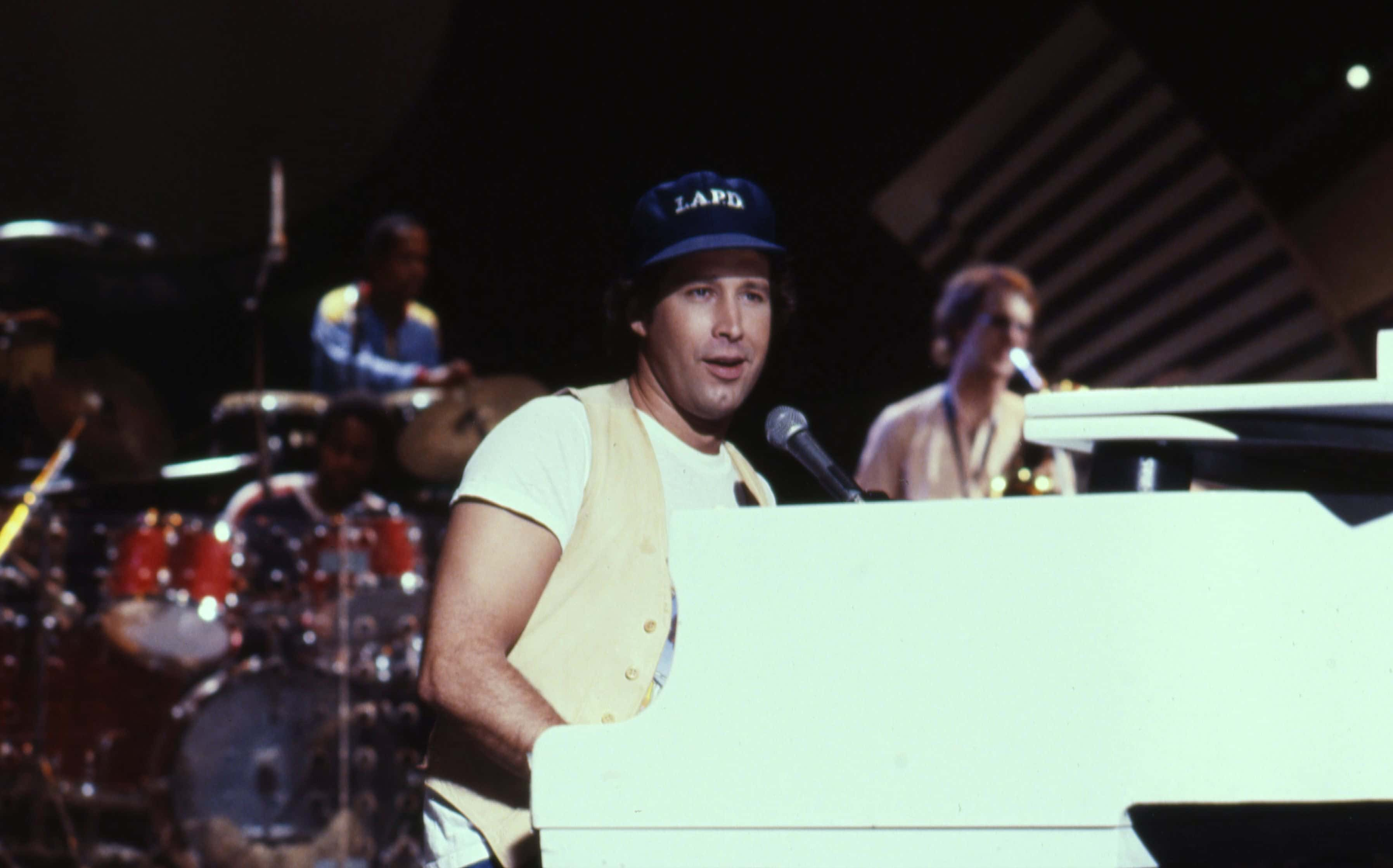
Chevy Chase Net Worth: Analyzing the Financial Legacy of a Comedy Icon
As of 2026, Chevy Chase’s net worth is estimated to be approximately $50 million. This substantial fortune is the result of a multi-decade career spanning his breakout success as the original star of Saturday Night Live, several blockb...
As of 2026, Chevy Chase’s net worth is estimated to be approximately $50 million. This substantial fortune is the result of a multi-decade career spanning his breakout success as the original star of Saturday Night Live, several blockbuster film franchises in the 1980s, and a high-profile television resurgence in the late 2000s.
Contents
While the name "Chevy Chade" frequently appears in search queries due to typographical errors, it refers to Cornelius Crane "Chevy" Chase, the American comedian and actor. Understanding his net worth requires looking beyond simple salary figures to examine his transition from a writer to a leading man, his real estate holdings, and the enduring royalties from his most iconic roles.
The Foundation of Wealth: Saturday Night Live and Early Success
Chevy Chase’s path to a $50 million net worth began not as an actor, but as a writer. He was the first breakout star of Saturday Night Live (SNL) when it premiered in 1975. During the inaugural season, Chase served as both a writer and the primary anchor for "Weekend Update." His signature catchphrase, "I'm Chevy Chase, and you're not," established his brand of smug, physical comedy that would define his career.
While his salary during the first season of SNL was modest by modern standards—estimated at less than $1,000 per episode—the "Weekend Update" platform was invaluable. It allowed him to secure a lucrative talent deal that led him to leave the show after only one year. This decision was controversial at the time, as his castmates felt he was abandoning the ensemble, but it was a calculated financial move. By exiting early, he was able to transition directly into Hollywood leading-man roles, a shift that his peers like Bill Murray and Dan Aykroyd would not achieve until years later.
The Golden Era of Cinema: 1980–1995
The bulk of Chase’s wealth was accumulated during the 1980s, a decade where he was one of the highest-paid actors in Hollywood. During this period, he starred in a string of hits that remain cultural touchstones.
The Vacation Franchise
The National Lampoon’s Vacation series is perhaps Chase's most significant financial asset. Playing Clark Griswold, Chase became the face of a franchise that spanned Vacation (1983), European Vacation (1985), Christmas Vacation (1989), and Vegas Vacation (1997). By the time of Christmas Vacation, Chase was commanding salaries in the range of $5 million to $7 million per film. Adjusted for inflation in 2026, these figures represent nearly $15 million to $20 million per project today.
Caddyshack and Fletch
Beyond the Griswold family, Caddyshack (1980) and Fletch (1985) solidified his status as a bankable star. Fletch, in particular, showcased his ability to carry a film based solely on his persona. His salary for Fletch and its sequel, Fletch Lives, contributed significantly to his mid-career net worth. These films also continue to generate "mailbox money" through syndication and streaming residuals, which have become a stabilized income stream in the 2020s.
Television Contracts and the "Community" Era
After a period of career stagnation in the late 1990s and early 2000s, Chase experienced a financial and critical resurgence when he was cast as Pierce Hawthorne in the NBC sitcom Community (2009–2014).
Chase’s contract for Community was reportedly substantial for an ensemble comedy. At the peak of his involvement, he was earning an estimated $100,000 per episode. Over the course of the seasons he appeared in, this totaled several million dollars. However, his tenure on the show was marked by tension with creator Dan Harmon and other cast members, leading to his eventual departure. Despite the rocky exit, the show’s cult status and subsequent acquisition by major streaming platforms ensure that Chase continues to receive royalty checks from the series.
Analyzing the 1993 Talk Show Failure
One cannot discuss Chevy Chase’s finances without mentioning The Chevy Chase Show, his ill-fated late-night talk show on Fox. In 1993, Fox signed Chase to a massive contract worth a reported $3 million for a six-week run. The show was intended to compete with David Letterman and Jay Leno but was canceled after just five weeks due to poor reviews and low ratings.
While the show was a professional setback, the contract was "pay-or-play," meaning Chase walked away with his multi-million dollar fee regardless of the show's longevity. This windfall helped bolster his net worth during a decade where his film roles began to see diminishing returns.
Real Estate and Personal Assets
A significant portion of Chase’s $50 million net worth is tied to his real estate holdings. Chase has long maintained a primary residence in Bedford, New York, an affluent area known for its high property values and celebrity residents (including Martha Stewart and Ralph Lauren).
The Bedford estate, which he has owned for decades, consists of a colonial-style home on several acres of land. Given the appreciation of real estate in Westchester County over the last 30 years, the property is estimated to be worth between $5 million and $8 million in the 2026 market. Unlike many of his contemporaries who overextended themselves with massive real estate portfolios, Chase has been relatively conservative with his holdings, which has helped preserve his wealth through various economic downturns.
Income Breakdown and Financial Estimations
The following table outlines the estimated earnings from some of Chevy Chase's most notable career milestones and asset categories.
| Career Phase / Asset | Estimated Earnings (Nominal) | Significance |
|---|---|---|
| SNL (Season 1) | ~$25,000 | Launched his career and brand identity. |
| Vacation Franchise | $15M - $20M+ | Total combined salary for four films. |
| Caddyshack | $1M | Established him as a comedy film lead. |
| The Chevy Chase Show | $3M | Payout for a 5-week talk show run. |
| Community (TV Series) | $4M - $6M | Total earnings over 4 seasons. |
| Real Estate Portfolio | $6M - $10M | Estimated value of Bedford property and other assets. |
| Residuals/Royalties | $500k - $1M Annually | Passive income from SNL, films, and streaming. |
The Role of Family Background
It is often noted by biographers that Chevy Chase came from a position of relative financial security. He was born into an elite New York family; his father, Edward Tinsley Chase, was a prominent Manhattan book editor and magazine writer, and his mother was an heiress to the Crane plumbing fortune. While Chase earned his $50 million through his own work, this background likely provided a safety net and social capital that helped him navigate the early years of his career in New York City.
Challenges to Wealth Preservation
Despite his success, Chase’s net worth has likely been impacted by several factors over the years:
- Declining Lead Roles: Since the late 90s, Chase has transitioned from a leading man to supporting roles or cameos, which command lower fees.
- Legal and Professional Disputes: Controversies on sets, particularly during Community, may have limited his "hireability" for high-budget commercial projects in his later years.
- Cost of Living and Management: Maintaining a multi-million dollar estate and paying a full team of agents, managers, and publicists over five decades requires significant cash flow.
Comparison with Peers
When compared to other SNL alumni of his generation, Chase’s net worth is respectable but lower than those who diversified into production or maintained a longer streak of box-office hits.
- Bill Murray: Estimated at $180 million, largely due to a more consistent film career and lucrative backend deals on indie hits.
- Dan Aykroyd: Estimated at $250 million, primarily driven by his co-founding of Crystal Head Vodka and the House of Blues franchise.
- Steve Martin: Estimated at $140 million, supported by his work as an author, playwright, and art collector.
Chase’s wealth is more characteristic of a "performer-first" career model, where income is derived primarily from services rendered rather than business ownership or brand ventures.
FAQs About Chevy Chase’s Net Worth
Why is Chevy Chase's net worth lower than some of his SNL co-stars?
While Chase was the first to become a superstar, he did not venture into business ownership (like Dan Aykroyd with House of Blues) or transition into consistent dramatic roles that extended his career longevity in the way Bill Murray did. His wealth is primarily based on his acting salaries from his 1980s peak.
How much does Chevy Chase make from "Christmas Vacation" every year?
While exact figures are private, National Lampoon’s Christmas Vacation is a seasonal staple. Between cable television broadcasts and holiday streaming on platforms like Max, Chase likely earns several hundred thousand dollars annually in residuals from this film alone.
Did the failure of his talk show ruin him financially?
No. In fact, the opposite is true. Because he signed a "pay-or-play" contract, he was paid his full multi-million dollar salary even though the show failed. This actually provided him with a significant financial cushion during the mid-90s.
Does Chevy Chase still act in 2026?
Chase is semi-retired. While he occasionally takes on voice-over work or small cameos in independent comedies, his primary focus is on appearances at fan conventions and legacy events. These appearances can earn him between $20,000 and $50,000 per weekend.
What is his most profitable movie?
In terms of salary-to-work ratio, Christmas Vacation or Fletch were likely his most profitable, as he was at the height of his "quote" (the standard fee an actor commands) during those productions.
Practical Recommendation for Fans and Researchers
To accurately track the financial status of legacy actors like Chevy Chase, it is important to look at royalty longevity. For those interested in the business of comedy, Chase's career serves as a case study in "first-mover advantage." By being the first SNL star to leave for Hollywood, he secured higher salaries than his contemporaries for several years. However, his career also highlights the importance of maintaining professional relationships; his reputation for being difficult on set may have truncated his earning potential during the 2000s when many of his peers were seeing a "late-career" pay bump.
Image Gallery