Samsung Galaxy S10e Versus Samsung Galaxy S10: A Comprehensive Technical and Practical Comparison
When Samsung launched its flagship Galaxy S10 lineup, the company introduced a tiered strategy designed to capture different segments of the premium smartphone market. At the heart of this strategy were two primary models: the standard...
When Samsung launched its flagship Galaxy S10 lineup, the company introduced a tiered strategy designed to capture different segments of the premium smartphone market. At the heart of this strategy were two primary models: the standard Samsung Galaxy S10 and its more compact, budget-friendly sibling, the Samsung Galaxy S10e. Choosing between the two devices requires weighing physical form factor, display technology, camera capabilities, and long-term value against individual daily usage patterns.
Contents
Identity and Scope of the Samsung Galaxy S10 Series
Released in early 2019, the Samsung Galaxy S10 series marked a decade of evolution for Samsung's flagship mobile division. Both the Galaxy S10e and the standard Galaxy S10 share the same core processing silicon—relying either on the Qualcomm Snapdragon 855 or the Samsung Exynos 9820 depending on the regional market—and run on identical software foundations. Despite these core internal similarities, Samsung tailored the exterior design and hardware feature sets of each model to appeal to distinct consumer preferences.
The Samsung Galaxy S10e was conceived as a direct response to consumers who preferred a smaller footprint, a flat screen, and a lower entry price without sacrificing flagship-tier performance. Conversely, the standard Galaxy S10 was engineered as a traditional no-compromise flagship, featuring curved display edges, an integrated ultrasonic fingerprint sensor, and a triple-lens rear camera array. Understanding how these differences manifest in everyday operation is essential for prospective buyers or tech enthusiasts evaluating the legacy of these devices.
Design, Build Quality, and Display Technologies
The most immediate distinction between the two smartphones lies in their physical dimensions and display engineering. The Galaxy S10e features a 5.8-inch Dynamic AMOLED flat display with a resolution of 2280 by 1080 pixels (FHD+). The standard Galaxy S10 steps up to a 6.1-inch Dynamic AMOLED curved display with a resolution of 3040 by 1440 pixels (WQHD+).
Both panels support HDR10+ certification, offering exceptional color accuracy, deep blacks, and high peak brightness levels. However, the physical implementation differs significantly:
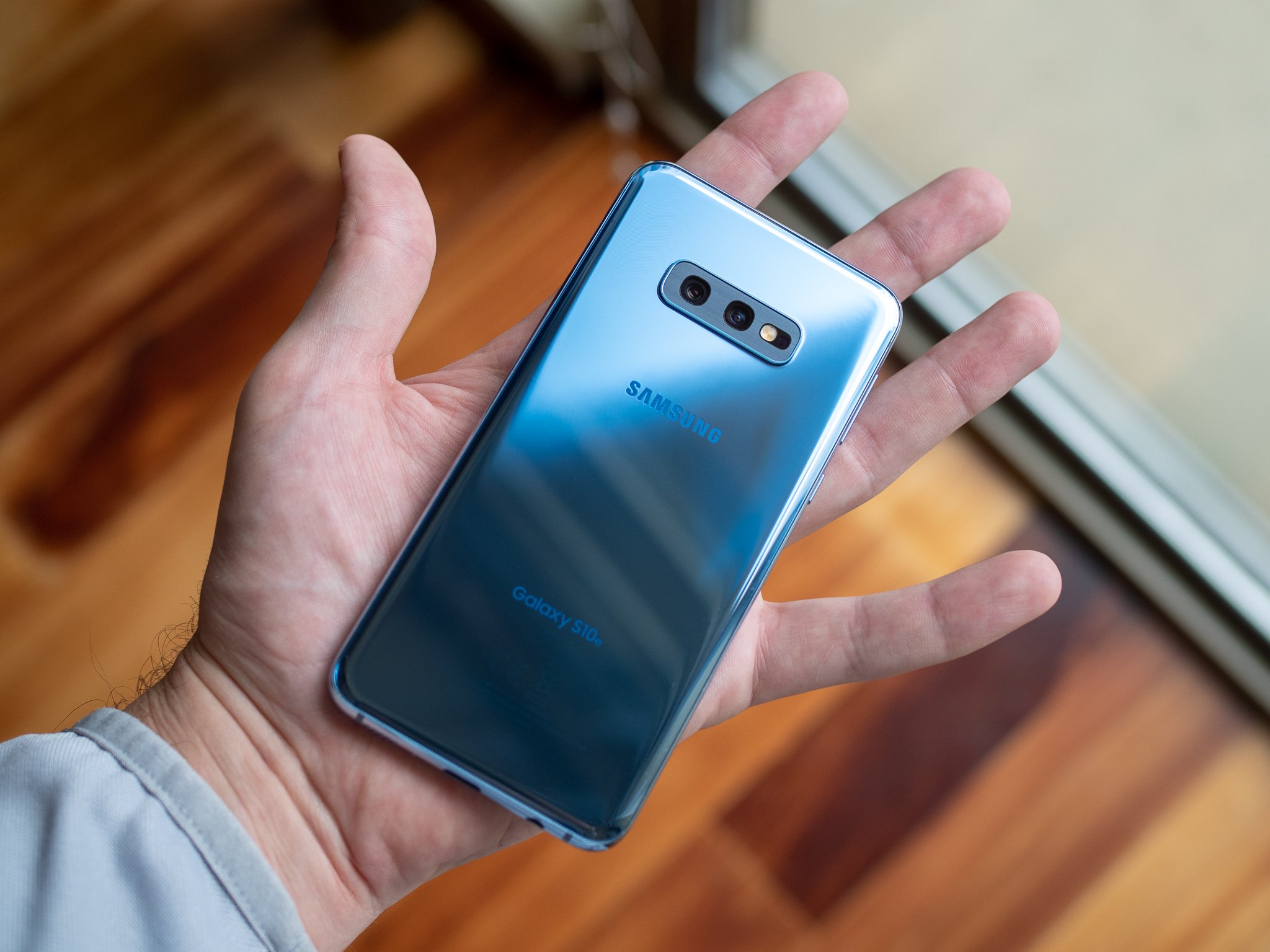
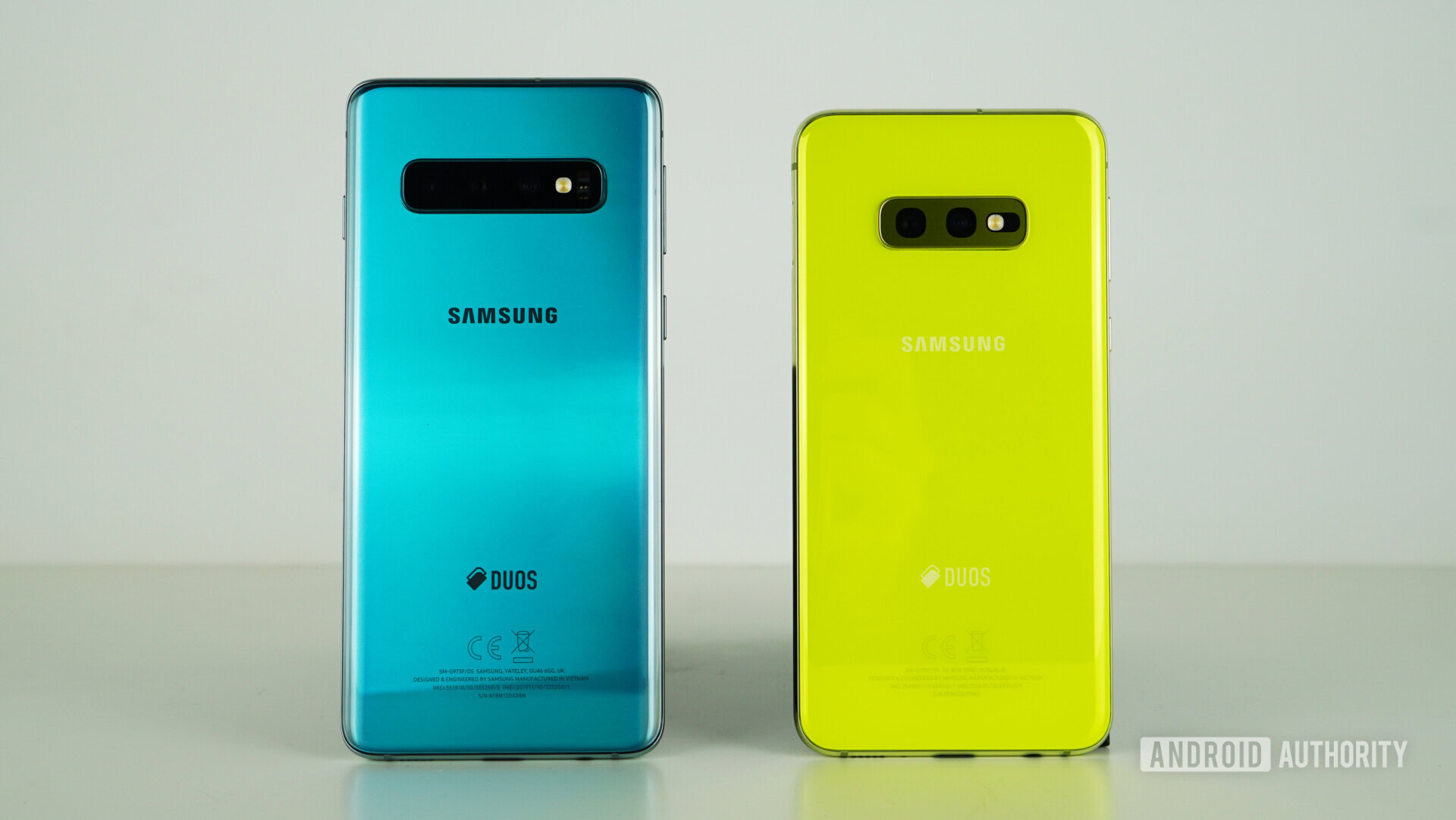
- Form Factor: The S10e is noticeably shorter, narrower, and lighter than the standard S10, making it exceptionally pocket-friendly and comfortable for single-handed navigation.
- Glass Curvature: The S10 features curved "Edge" glass that tapers into the metal frame, creating an illusion of a bezel-less profile. The S10e utilizes a completely flat glass panel, which reduces accidental palm touches and makes finding compatible screen protectors much easier.
- Durability: Both models utilize Corning Gorilla Glass 6 on the front and Gorilla Glass 5 on the back, sandwiched around an aluminum chassis, and both carry an IP68 dust and water resistance rating.
Biometric Security and Authentication Mechanisms
Biometric security implementation represents one of the most polarizing differences between the two devices. Samsung utilized entirely different hardware approaches for unlocking each phone, which directly impacts user experience.
The standard Galaxy S10 features an ultrasonic in-display fingerprint scanner embedded beneath the screen glass. This technology bounces ultrasonic sound waves off the user's finger to create a 3D topological map, theoretically offering enhanced security against flat optical replicas. However, early iterations of this sensor faced criticism for speed and reliability, particularly when paired with certain third-party screen protectors.
The Galaxy S10e features a capacitive fingerprint scanner mounted directly into the side power button on the right edge of the device. Many users find this side-mounted placement more natural and ergonomically immediate than an in-display sensor, as the thumb rests upon it naturally when picking up the phone. Both devices also support 2D facial recognition via the front-facing camera cutout, though this method lacks the security depth of dedicated infrared hardware.
Camera System Capabilities and Optics
While both smartphones share the same 10-megapixel front-facing camera housed in a punch-hole cutout, their rear camera configurations diverge in lens count and flexibility.
The Galaxy S10e is equipped with a dual-lens rear camera system:
- Main Wide Sensor: 12 megapixels with a dual-aperture mechanism (f/1.5 and f/2.4) and optical image stabilization (OIS).
- Ultra-Wide Sensor: 16 megapixels with a fixed-focus, 123-field-of-view lens.
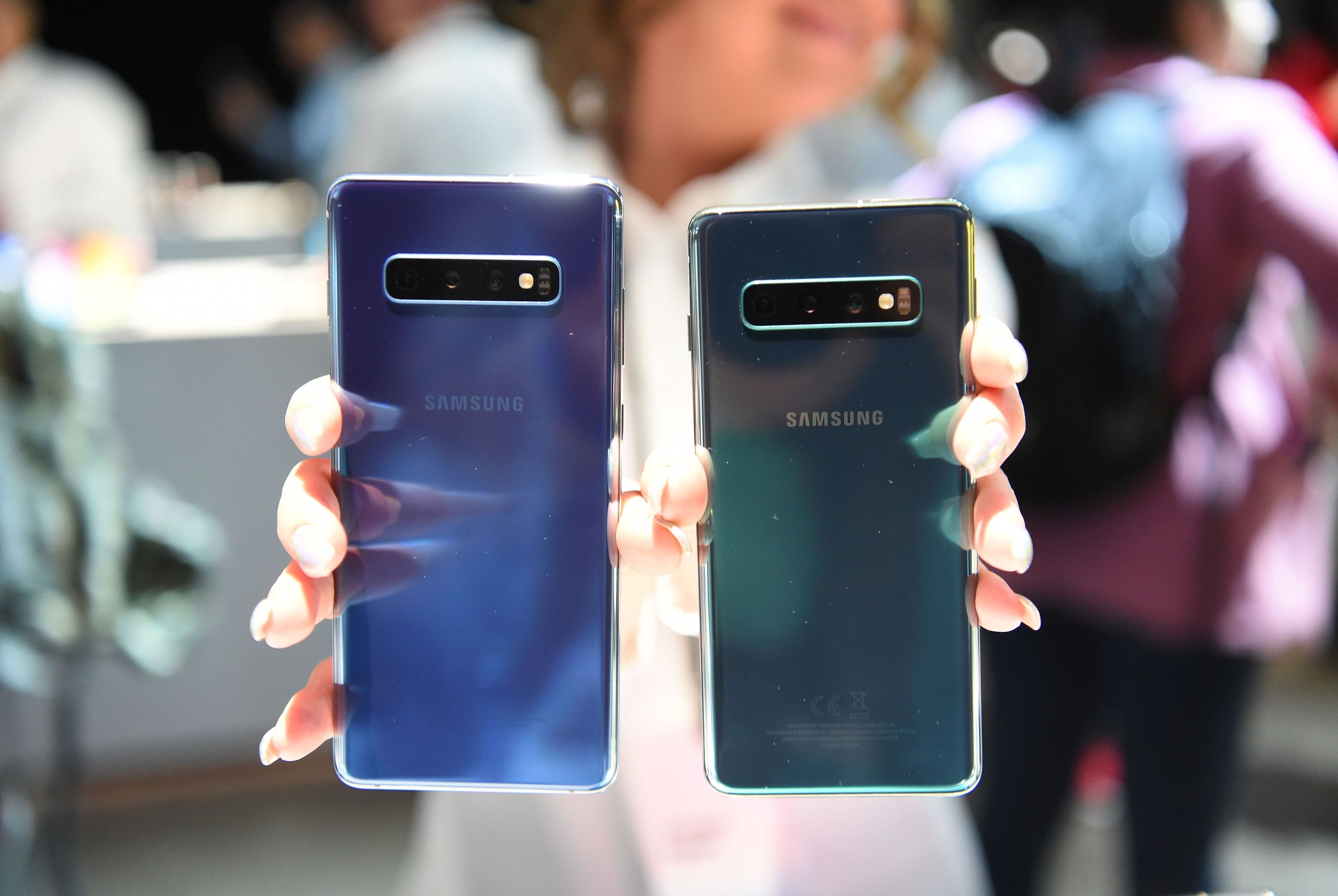
The standard Galaxy S10 adds a third lens to this configuration: 3. Telephoto Sensor: 12 megapixels with f/2.4 aperture, OIS, and 2x optical zoom capability.
In practical terms, both phones capture brilliant daylight and low-light imagery using Samsung's image processing algorithms. The primary and ultra-wide cameras perform identically across both models. Users who prioritize landscape photography or group shots will find the ultra-wide lens on the S10e identical to that of the standard S10. However, those who frequently rely on optical magnification for portraits or distant subjects will miss the dedicated telephoto zoom lens on the S10e.
Hardware Specifications and Performance Comparison
Underneath the glass and metal, both devices share identical processing architecture, RAM configurations, and storage options, ensuring that raw computational performance is virtually indistinguishable in daily tasks.
| Specification | Samsung Galaxy S10e | Samsung Galaxy S10 |
|---|---|---|
| Display Size & Type | 5.8-inch Flat Dynamic AMOLED | 6.1-inch Curved Dynamic AMOLED |
| Display Resolution | FHD+ (2280 x 1080, 438 ppi) | WQHD+ (3040 x 1440, 550 ppi) |
| Processor | Snapdragon 855 / Exynos 9820 | Snapdragon 855 / Exynos 9820 |
| RAM Options | 6GB or 8GB | 8GB |
| Internal Storage | 128GB or 256GB (Expandable via microSD) | 128GB or 512GB (Expandable via microSD) |
| Rear Cameras | Dual: 12MP Wide + 16MP Ultra-Wide | Triple: 12MP Wide + 16MP Ultra-Wide + 12MP Telephoto |
| Front Camera | 10MP Punch-Hole | 10MP Punch-Hole |
| Battery Capacity | 3,100 mAh | 3,400 mAh |
| Biometric Sensor | Side-Mounted Capacitive Fingerprint | Ultrasonic In-Display Fingerprint |
| Headphone Jack | Yes (3.5mm) | Yes (3.5mm) |
Battery Life, Charging, and Power Management
Battery capacity corresponds directly to the physical footprint of each device. The Galaxy S10e houses a 3,100 mAh battery, while the standard Galaxy S10 includes a slightly larger 3,400 mAh power cell.
Despite the smaller battery, the Galaxy S10e often achieves comparable daily battery longevity in real-world testing. This parity is driven by its smaller 5.8-inch display running at a default FHD+ resolution, which draws significantly less power than the S10's larger WQHD+ panel.
Both smartphones support fast wired charging via USB-C, Fast Wireless Charging 2.0, and Wireless PowerShare—a feature that allows the phone to act as a Qi-compatible wireless charging pad for accessories like wireless earbuds or other compatible smartphones.
Practical Suitability and Buying Guidance
Choosing between the Samsung Galaxy S10e and the Samsung Galaxy S10 depends entirely on hardware priorities:
- Choose the Samsung Galaxy S10e if: You prefer a compact device that can be easily operated with one hand, dislike curved display edges that distort media, favor a physical side-mounted fingerprint scanner, and want core flagship performance at a more accessible price point.
- Choose the Samsung Galaxy S10 if: You demand a higher-resolution, larger display for media consumption, require a dedicated telephoto zoom lens for photography, and prefer modern in-display biometric authentication technology.
Both models retain classic legacy features that modern flagships have largely abandoned, including a 3.5mm headphone jack and expandable storage via a microSD card slot supporting up to an additional 512GB. While software support has concluded, both devices remain fully functional for daily communication, media playback, and productivity tasks.
Frequently Asked Questions
Do the Samsung Galaxy S10e and S10 share the same processor?
Yes, both devices utilize the same system-on-chip—either the Qualcomm Snapdragon 855 or the Samsung Exynos 9820—depending on the geographic sales region. This ensures that app launch speeds, gaming performance, and user interface fluidity are identical across both models.
Does the Galaxy S10e have a headphone jack?
Yes, both the Galaxy S10e and the standard Galaxy S10 retain the traditional 3.5mm headphone jack, allowing users to plug in wired headphones without requiring a dongle or adapter.
Can I expand the storage on both phones?
Yes, both models feature a hybrid SIM tray that accommodates either a second Nano-SIM card or a microSD memory card for up to 512GB of expandable local storage.
Which phone has better battery life?
Real-world battery life is remarkably similar between the two devices. While the standard S10 has a larger 3,400 mAh battery, it also powers a larger, higher-resolution display. The S10e features a smaller 3,100 mAh battery paired with a smaller FHD+ screen, balancing out power consumption efficiency.
Are cases and screen protectors interchangeable between the S10e and S10?
No, accessories are not interchangeable. The Galaxy S10e is physically shorter, narrower, and features a flat screen, whereas the standard S10 is larger and features curved glass edges. Case dimensions and screen protector molds are specific to each individual model.
Image Gallery