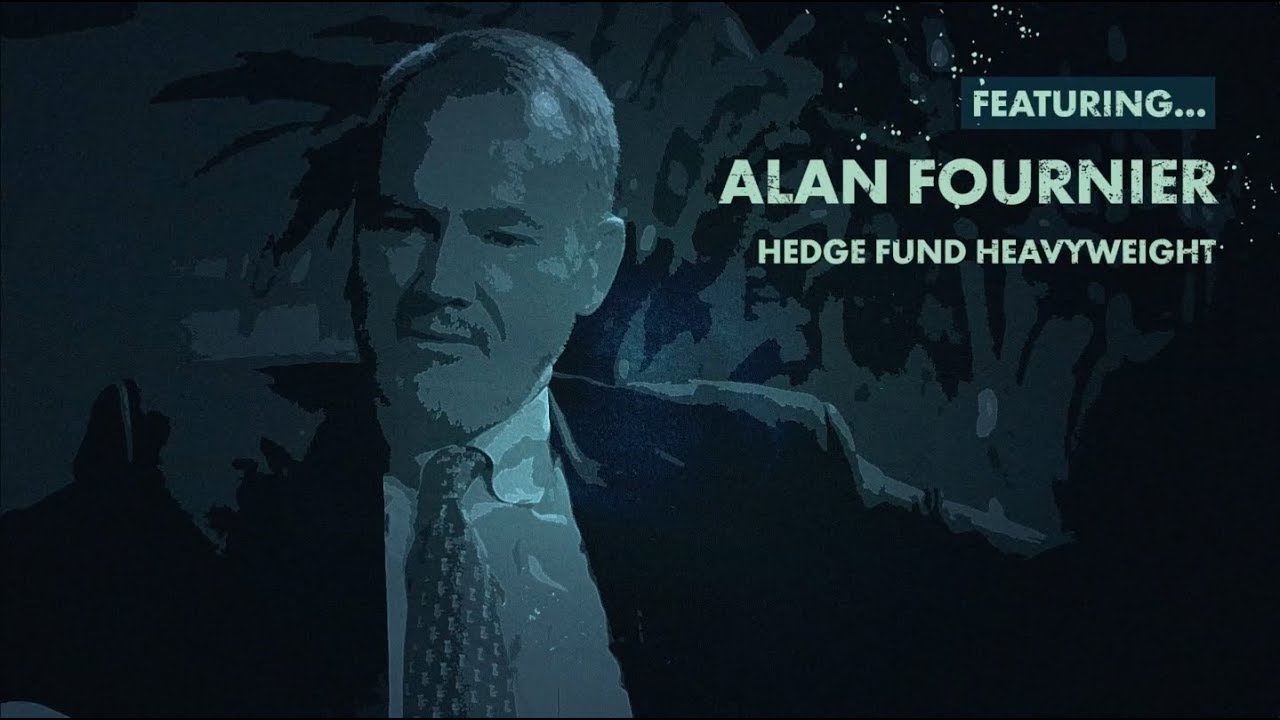
Alan Fournier Net Worth in Context: The Financial Legacy of a Hedge Fund Veteran
As of 2026, Alan Fournier’s net worth is estimated to be between $500 million and $1.1 billion. This valuation is primarily derived from his years as a high-performing portfolio manager at Appaloosa Management and his tenure as the fou...
As of 2026, Alan Fournier’s net worth is estimated to be between $500 million and $1.1 billion. This valuation is primarily derived from his years as a high-performing portfolio manager at Appaloosa Management and his tenure as the founder of Pennant Capital Management, which at its peak oversaw approximately $7 billion in assets.
Contents
The Foundation of Alan Fournier’s Wealth
To understand Alan Fournier’s net worth in context, one must look back at the pedigree of his early career. Fournier gained prominence in the 1990s as a senior professional at Appaloosa Management, working under the legendary David Tepper. During this period, Appaloosa became one of the most successful hedge funds in history, known for its distressed debt investments and opportunistic equity plays.
Fournier’s time at Appaloosa was more than just a job; it was a wealth-generation engine. In the hedge fund industry, senior partners often receive a significant percentage of the "performance fees" (typically 20% of profits). Given Appaloosa’s astronomical returns during the mid-to-late 90s, Fournier likely entered the 21st century with a substantial personal fortune before ever launching his own firm. This initial capital served as the "GP (General Partner) commitment" for his future ventures, allowing his personal wealth to compound alongside his clients' money.
The Pennant Capital Era: Scaling the Fortune
In 2001, Alan Fournier launched Pennant Capital Management, based in Summit, New Jersey. The firm specialized in a long/short equity strategy, focusing on fundamental research to identify undervalued companies and overvalued laggards.
Assets Under Management (AUM) and Fee Structures
At its zenith, Pennant Capital managed roughly $7 billion. In the traditional "2 and 20" fee structure common in the hedge fund world:
- Management Fees: A 2% fee on $7 billion would generate $140 million annually just to cover operational costs and salaries.
- Performance Fees: A 20% cut of annual gains meant that in years where the fund returned 10%, the firm would earn $140 million in pure profit.
As the founder and principal owner, a vast majority of the firm’s net profits—after paying analysts and overhead—accrued directly to Fournier. This period was the primary driver of his ascent into the ranks of the wealthiest financial professionals in the United States.
The Strategic Shift: Closing to Outside Investors
In 2018, Fournier made a pivotal decision that changed the "context" of his net worth: he decided to return outside capital to investors and convert Pennant Capital into a family office. This move followed a broader trend among veteran hedge fund managers, including Leon Cooperman and John Griffin, who chose to manage their own billions without the regulatory and administrative burdens of outside clients.
Why the Transition Matters for Net Worth
When a hedge fund becomes a family office, the manager’s net worth often becomes less transparent but more concentrated. By 2026, Fournier’s wealth is no longer tied to the fee-generating capacity of a multi-billion dollar firm but rather to the direct performance of his personal portfolio.
The move to a family office structure allowed Fournier to:
- Reduce Overhead: No longer needing massive investor relations or compliance departments.
- Extend Time Horizons: Managing personal wealth allows for long-term bets that might be too volatile for institutional pension funds.
- Privacy: Family offices are generally exempt from many of the public disclosure requirements mandated by the SEC for large investment advisers.
Investment Philosophy and Wealth Preservation
Fournier’s net worth is not just a static number; it is a reflection of a specific "value-with-a-catalyst" investment philosophy. Unlike high-frequency traders, Fournier built his wealth on concentrated bets in sectors such as healthcare, technology, and consumer services.
His strategy often involved identifying companies with strong cash flows that were being unfairly punished by the market. By 2026, his family office likely maintains a diverse array of holdings, including:
- Public Equities: Continued participation in the stock market using the same fundamental analysis that built Pennant.
- Private Equity: Direct investments in late-stage startups or private companies where he can exercise more control.
- Fixed Income and Cash: A significant portion of a billionaire’s net worth is typically held in liquid or low-risk assets to preserve capital during market downturns.
Comparative Financial Standing
To place Fournier's wealth in the broader context of the 2026 financial landscape, it is helpful to compare his trajectory with his peers and the broader hedge fund industry.
| Metric | Alan Fournier (Estimated) | Typical Mid-Tier Hedge Fund Founder | Top-Tier (e.g., David Tepper) |
|---|---|---|---|
| Peak AUM | $7 Billion | $1 - $3 Billion | $15 - $20 Billion+ |
| Primary Wealth Source | Performance Fees & Personal Capital | Management Fees | Compounded Personal Capital |
| Current Structure | Family Office | Active Hedge Fund | Diversified Conglomerate/Sports Ownership |
| Estimated Net Worth | $500M - $1.1B | $100M - $300M | $15B - $20B+ |
While Fournier may not appear on the very top of the Forbes 400 list, which is dominated by multi-billionaires like Tepper or Griffin, he sits firmly in the "upper echelon" of successful American financiers. His wealth is "contextualized" by his ability to exit the institutional game at his peak, preserving his capital rather than risking it in an era of diminishing hedge fund returns.
Sector Focus and Notable Investments
Throughout his career, Fournier's wealth was often tied to specific sectors. In the years leading up to the conversion of Pennant Capital, he was known for significant positions in companies like Alphabet (Google), TransDigm Group, and various healthcare insurers.
His success in the healthcare sector, in particular, demonstrated an ability to navigate complex regulatory environments—a skill he likely carries into his private investment activities today. In 2026, these legacy positions, if maintained or rotated effectively, would have benefited from the secular growth in AI and the aging demographic's impact on healthcare spending.
Impact of the 2026 Regulatory Environment
By 2026, the regulatory landscape for high-net-worth individuals and family offices has evolved. Increased scrutiny on "shadow banking" and family office disclosures means that even though Fournier manages personal capital, he must navigate a more complex tax and reporting environment than he did in the early 2000s.
However, his experience at the highest levels of institutional finance provides a significant advantage. His "net worth in context" is protected by a sophisticated legal and tax infrastructure that optimizes for long-term wealth transfer and philanthropic goals.
FAQ: Understanding Alan Fournier’s Wealth
How did Alan Fournier first become wealthy?
Fournier’s initial wealth was built as a portfolio manager at Appaloosa Management. Working under David Tepper during the 1990s allowed him to participate in some of the most profitable trades of that decade, earning significant performance bonuses that served as the seed money for his own firm, Pennant Capital.
Is Pennant Capital still active in 2026?
Pennant Capital Management closed to outside investors in 2018. While the entity may still exist as a family office to manage Alan Fournier's personal and family wealth, it no longer functions as a public-facing hedge fund that accepts new capital from institutional or individual investors.
Why did he return money to investors?
The decision to return capital is often driven by a desire for more flexibility and a reduction in the "administrative drag" of managing other people's money. At the time of the closure, Fournier indicated a desire to manage a smaller pool of capital (his own), which allows for a more focused and less scrutinized investment approach.
How does Alan Fournier's net worth compare to David Tepper's?
While both are highly successful, David Tepper's net worth is significantly higher, estimated in the tens of billions. Tepper's Appaloosa Management reached a much larger scale in terms of assets under management and has remained open to certain investors longer, compounding at a larger scale for a longer duration.
Where is Alan Fournier’s wealth invested now?
As of 2026, his wealth is managed through his family office. While specific holdings are private, historically he has favored long/short equity positions with a focus on fundamental value, particularly in the technology, industrial, and healthcare sectors.
Practical Recommendation for Observers
For those looking to understand the "context" of such a high net worth, the primary takeaway is the importance of pedigree and timing. Fournier’s career illustrates that working at a top-tier firm (Appaloosa) and then successfully scaling one's own business (Pennant) during a period of hedge fund expansion is a proven path to generational wealth.
For modern investors, the lesson is not necessarily to start a hedge fund—as the industry has become significantly more crowded and regulated—but to focus on fundamental analysis and the courage to transition into a family office structure once financial independence is achieved. This ensures that wealth is not just created, but successfully preserved and grown outside the volatility of the third-party asset management business.
Image Gallery