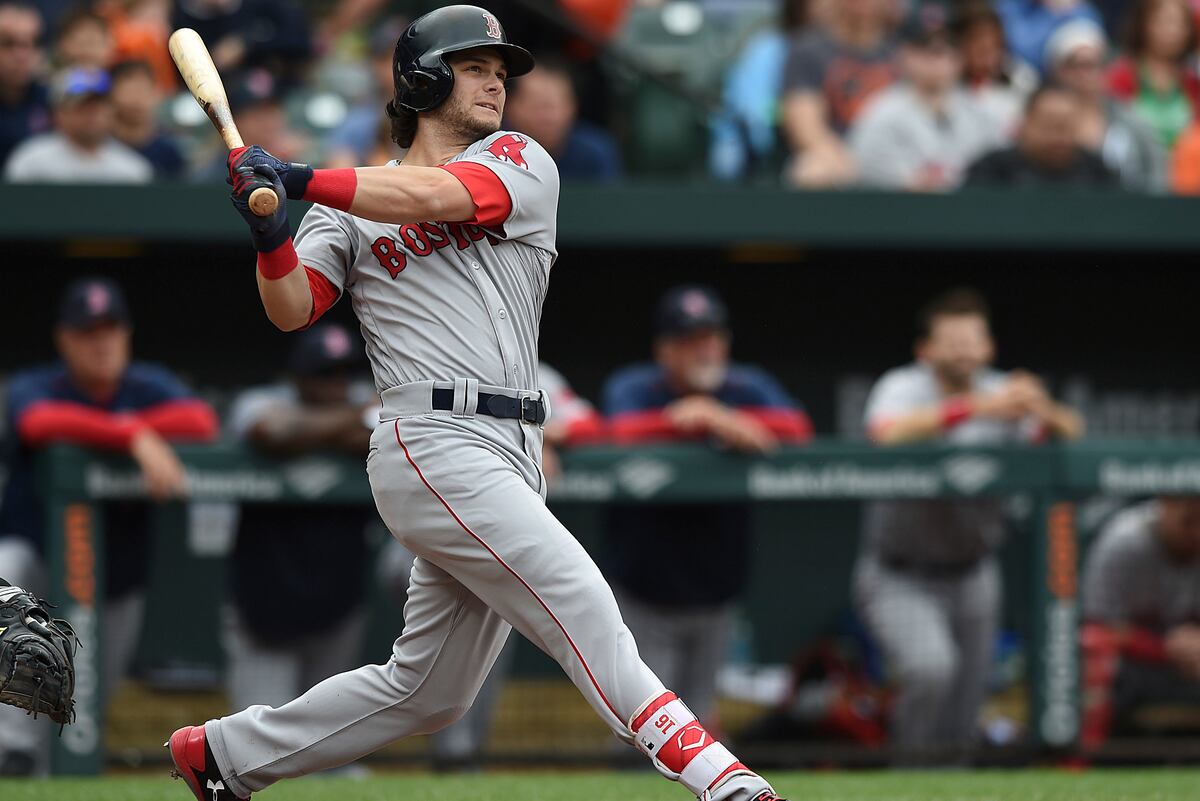
Andrew Benintendi Net Worth in 2026: Contract Breakdown and Career Earnings
As of 2026, Andrew Benintendi’s net worth is estimated to be approximately $40 million. This valuation is primarily anchored by his record-breaking five-year, $75 million contract with the Chicago White Sox, supplemented by career earn...
As of 2026, Andrew Benintendi’s net worth is estimated to be approximately $40 million. This valuation is primarily anchored by his record-breaking five-year, $75 million contract with the Chicago White Sox, supplemented by career earnings from the Boston Red Sox and Kansas City Royals, alongside strategic brand endorsements and investments.
Contents
The Evolution of Andrew Benintendi’s Financial Profile
The financial trajectory of Andrew Benintendi reflects the career of a high-ceiling prospect who successfully transitioned into a reliable Major League Baseball (MLB) veteran. To understand his 2026 net worth, one must look at the progression from his days as a first-round draft pick to his status as one of the highest-paid outfielders in Chicago White Sox history.
Benintendi entered the league with significant financial momentum. Selected 7th overall by the Boston Red Sox in the 2015 MLB Draft, he secured a signing bonus of approximately $3.6 million. In the world of professional sports, these initial bonuses serve as the seed capital for a player’s long-term wealth, often managed by specialized sports wealth management firms to ensure growth during the volatile early years of a career.
During his tenure with the Red Sox, Benintendi was a "pre-arbitration" player, meaning his salary was largely dictated by the league minimum, which scaled from $507,500 in 2016 to $717,500 by 2020. However, his performance on the field—including a World Series title in 2018—positioned him for significant raises once he became eligible for salary arbitration.
The Landmark Chicago White Sox Contract
The most significant contributor to Andrew Benintendi’s net worth in 2026 is the five-year, $75 million contract he signed in December 2022. At the time, this was the largest guaranteed contract in the history of the Chicago White Sox franchise, signaling both Benintendi’s value as a contact hitter and the team's commitment to his defensive versatility.
Contract Structure and Cash Flow
The contract was structured to provide immediate liquidity followed by sustained high-level earnings. It included a $3 million signing bonus, which was paid out shortly after the ink dried. For a professional athlete, a signing bonus is a critical component of net worth because it is guaranteed money, regardless of injury or performance fluctuations.
As we look at the 2026 season, Benintendi is in the fourth year of this agreement. The annual breakdown of the contract is as follows:
- 2023: $8,000,000 base salary + $3,000,000 signing bonus
- 2024: $16,500,000 base salary
- 2025: $16,500,000 base salary
- 2026: $16,500,000 base salary
- 2027: $14,500,000 base salary
By the conclusion of the 2026 season, Benintendi will have collected roughly $60.5 million in gross salary from the White Sox alone. When combined with his career earnings from Boston, Kansas City, and New York, his total career gross earnings exceed $75 million.
Comparative Career Earnings by Team
To appreciate the scale of Benintendi’s wealth, it is helpful to visualize his earnings across the different franchises he has represented. Each stop in his career represented a different phase of his earning potential, from rookie scales to arbitration and finally to unrestricted free agency.
| Franchise | Years | Estimated Total Gross Earnings | Primary Income Source |
|---|---|---|---|
| Boston Red Sox | 2015–2020 | $7,500,000 | Draft Bonus & Pre-Arb Salary |
| Kansas City Royals | 2021–2022 | $15,100,000 | Arbitration Awards |
| New York Yankees | 2022 (Partial) | Included in Royals total | Trade Transfer |
| Chicago White Sox | 2023–2026* | $60,500,000 | Free Agent Contract |
| Total Career (by 2026) | 2015–2026 | ~$83,100,000 | Cumulative MLB Income |
*Note: 2026 figures represent the projected earnings through the end of the current fiscal year.
Factors Influencing Net Worth: Taxes and Fees
While gross earnings are public record, a player’s actual net worth is determined by "take-home" pay. For a player like Benintendi, several factors deplete the gross amount before it reaches his investment accounts.
The "Jock Tax" and State Obligations
MLB players are subject to the "Jock Tax," which requires them to pay income tax in every state (and some cities) where they play a game. Since the White Sox are based in Illinois, a significant portion of Benintendi’s home-game earnings is taxed at the Illinois state rate. Furthermore, games played in high-tax jurisdictions like California or New York further reduce the net amount.
Agent and Professional Fees
Standard representation fees for MLB agents typically range between 3% and 5% of the contract value. For a $75 million deal, Benintendi’s representation likely earned between $2.25 million and $3.75 million. Additionally, high-net-worth athletes employ a suite of professionals, including business managers, tax attorneys, and wealth advisors, whose fees can account for another 1% to 2% of annual income.
Clubhouse Dues and Expenses
Though minor in comparison to taxes, MLB players pay daily clubhouse dues (often $50 to $100 per day) which cover meals and clubhouse staff tips. Over a 162-game season plus spring training, these costs add up, though they are usually negligible relative to a $16.5 million annual salary.
Endorsements and Off-Field Revenue
Andrew Benintendi’s net worth is not solely dependent on his MLB salary. As a former Gold Glove winner and a World Series champion, he has maintained a respectable portfolio of endorsements.
- Nike: Benintendi has long been associated with Nike for his footwear and apparel. These deals often include a base retainer plus performance bonuses for All-Star appearances or postseason success.
- Rawlings: As a defensive standout in the outfield, his partnership with Rawlings for gloves is a natural fit.
- Local Chicago Partnerships: Since moving to the Chicago market—one of the largest media markets in the United States—Benintendi has had opportunities for regional endorsements, including automotive dealerships and local beverage brands.
Estimates suggest that off-field earnings contribute between $500,000 and $1,000,000 annually to his gross income, helping to offset some of the professional fees mentioned earlier.
The Role of Performance in Financial Stability
In Major League Baseball, contracts are fully guaranteed. This means that even if Benintendi faces injury or a slump in performance, his $75 million deal remains secure. This financial security is a cornerstone of his $40 million net worth in 2026.
However, performance still dictates "future" net worth. By 2026, Benintendi is 31 years old. His performance during the 2026 season will determine his marketability for his next contract, which would likely begin in 2028. A strong 2026 campaign could lead to another multi-year deal, potentially pushing his career earnings well past the $120 million mark by the time he retires.
Real Estate and Asset Allocation
High-earning athletes like Benintendi typically diversify their wealth into tangible assets. While specific private real estate holdings are often shielded from the public, it is common for players of his caliber to own a primary residence in their team’s city (Chicago) and a permanent home in their offseason location (often in tax-friendly states like Florida or Tennessee).
Financial experts advising MLB players often recommend a portfolio split between:
- Fixed-Income Assets: To provide stability after retirement.
- Equity Investments: Diversified stocks to outpace inflation.
- Real Estate: Both residential and commercial holdings.
- Alternative Investments: Venture capital or private equity, which have become increasingly popular among professional athletes.
Comparison with Peer Outfielders
To contextualize Benintendi’s net worth, one can look at other outfielders who signed similar mid-market deals. Players like Brandon Nimmo or Nick Castellanos fall into a similar financial bracket. While Benintendi’s total net worth may be slightly lower than players who signed $100M+ deals, his financial management and consistent health have kept him in the upper echelon of MLB earners.
The "Benintendi model" of wealth—securing a massive mid-career contract after proving reliability in high-leverage markets like Boston and New York—is a blueprint often studied by younger players approaching free agency.
Frequently Asked Questions
What was Andrew Benintendi's biggest career contract?
His largest contract is the five-year, $75 million deal signed with the Chicago White Sox in December 2022. This remains his primary source of wealth as of 2026.
Does Andrew Benintendi lose money if he is injured?
No. MLB contracts are fully guaranteed. If Benintendi is placed on the Injured List (IL), he continues to receive his full salary as stipulated in his contract.
How much does Andrew Benintendi make per game in 2026?
In 2026, Benintendi earns a base salary of $16.5 million. Over a standard 162-game season, this breaks down to approximately $101,851 per game, regardless of whether he is in the starting lineup.
Is Andrew Benintendi's net worth expected to grow after 2026?
Yes. With a scheduled salary of $14.5 million in 2027 and the potential for a new contract thereafter, his net worth is projected to continue its upward trajectory, provided his investment portfolio remains stable.
What are Benintendi's main endorsement deals?
He is most notably associated with Nike and Rawlings. He also participates in various regional marketing campaigns within the Chicago area.
Financial Recommendation for Observers
For those tracking athlete wealth, it is important to distinguish between career earnings and net worth. While Benintendi’s career earnings are approaching $85 million by the end of 2026, his net worth of $40 million reflects the reality of taxes, agent fees, and lifestyle maintenance. For fans and amateur analysts, Benintendi’s financial journey highlights the importance of a "big" free-agent contract in securing generational wealth in professional sports.
Image Gallery