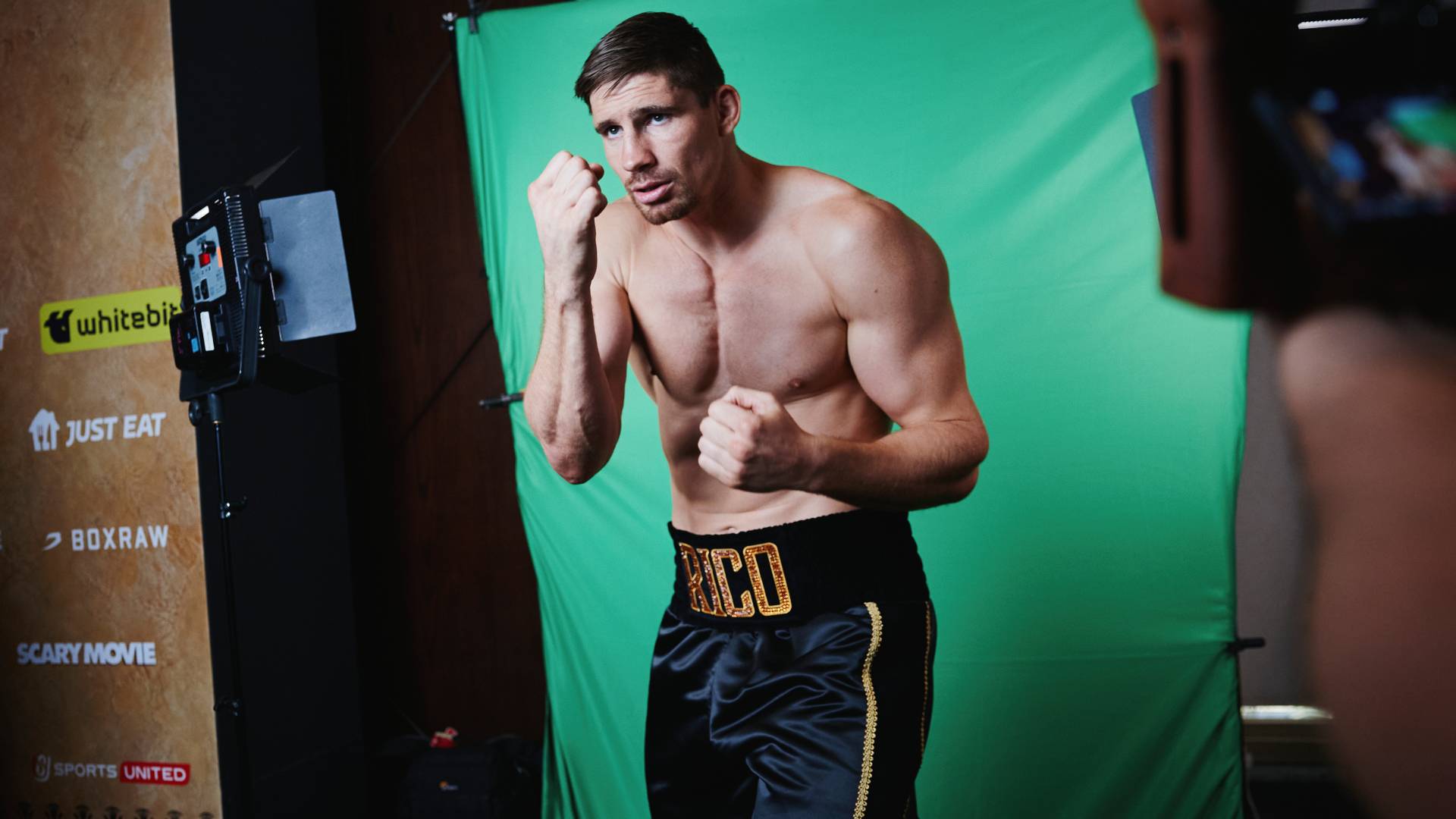
How Tall Is Rico Verhoeven? Height, Stats, and Fighting Reach Analyzed
Rico Verhoeven stands 1.96 meters tall (6 feet 5 inches) and typically competes at a fight weight of approximately 118 kilograms (260 pounds). Combined with a arm reach of 200 centimeters (78.7 inches), his imposing physical frame prov...
Rico Verhoeven stands 1.96 meters tall (6 feet 5 inches) and typically competes at a fight weight of approximately 118 kilograms (260 pounds). Combined with a arm reach of 200 centimeters (78.7 inches), his imposing physical frame provides significant structural advantages in leverage, distance management, and defensive coverage within heavyweight kickboxing.
Contents
Official Height and Physical Dimensions of Rico Verhoeven
In professional combat sports, an athlete's declared physical metrics serve as the foundation for strategic planning, division alignment, and physical conditioning. Rico Verhoeven, widely regarded as one of the dominant heavyweight kickboxers of his generation, possesses an ideal physical blueprint for modern striking disciplines. Standing at 6 feet 5 inches (196 cm), Verhoeven represents the modern evolution of the super-heavyweight kickboxer—tall enough to command distance, yet compact and muscular enough to retain elite movement speed, agility, and cardiovascular endurance.
| Metric | Measurement (Imperial) | Measurement (Metric) | Strategic Context in Glory Heavyweight Division |
|---|---|---|---|
| Height | 6 ft 5 in | 196 cm | Provides superior sightline control, head posture, and down-angle striking leverage. |
| Fight Weight | 258–262 lbs | 117–119 kg | Delivers maximum impact force while preserving 5-round cardiovascular stamina. |
| Reach | 78.7 in | 200 cm | Allows effective jab probing, outside distance management, and intercepting counters. |
| Leg Reach / Stance Width | ~43 in | ~109 cm | Supports low-kick leverage, deep stance anchoring, and high kick threat generation. |
| Chest / Frame Width | High Density Heavyweight Frame | Broad Shoulder Structure | Absorbs heavy body strikes while providing structural stability in tight clinch engagements. |
Verhoeven’s height-to-weight ratio is particularly notable. Unlike legacy heavyweights who often sacrificed mobility for raw bulk, Verhoeven maintains a lean physique despite weighing over 250 pounds. His height gives him a natural downward angle on punches against smaller opponents, while his center of gravity remains low enough to defend against sweeping leg kicks and body lock engagements.
How Height and Reach Shape Rico Verhoeven’s Fighting Style
Height alone does not guarantee victory in combat sports; rather, it is the practical application of physical range that determines a fighter's success. Rico Verhoeven has developed a striking system built directly around his 6-foot-5 frame, using physical leverage to dictate the tempo and spatial dynamics of every bout.
Distance Management and Jab Mechanics
Verhoeven's primary offensive weapon is his jab, which operates as both a scoring technique and a range-finding tool. Because his reach measures 200 cm (78.7 inches), he can land lead hand strikes while remaining outside the counter-punching range of shorter heavyweights.
- The Measuring Lead Hand: Verhoeven constantly extends his lead arm to obscure the vision of his opponent, preventing them from stepping inside his effective striking range.
- Downward Trajectory: Due to his height advantage over most opponents, his straight punches travel slightly downward, driving through the defensive guards of shorter fighters.
- Piston Teep Kicks: Leveraging his long legs, Verhoeven utilizes the front push kick (teep) to reset distance whenever opponents attempt to close the gap aggressively.
Guard Efficiency and Defensive Footwork
A tall fighter who stands upright can become an easy target for overhand rights and low kicks if their defense lacks discipline. Verhoeven mitigates this vulnerability through a high, tight Dutch-style guard combined with lateral footwork.
- High Dutch Block: Verhoeven keeps his gloves pinned to his temples. His broad shoulders and 196 cm stature create a barrier that absorbs high roundhouse kicks and hooks.
- Step-Back Countering: Instead of ducking under punches—which exposes a tall fighter's head to knees—he uses a simple rear-leg step-back to let punches miss by millimeters before returning fire with low kicks.
- Angle Cut Disengagements: When backed against the ropes, Verhoeven relies on lateral side-steps rather than rushing forward, keeping smaller opponents from trapping him in tight pocket exchanges.
Clinch Work and Weight Distribution
Under kickboxing rules, extended grappling is limited, but short clinch breaks and referee resets occur frequently. Verhoeven uses his heavy frame and height to lean on opponents during inside exchanges. By framing with his forearms against an opponent's shoulders and pressing his upper body weight down, he forces shorter fighters to carry his 118-kilogram mass. Over five rounds, this tactic wears down the shoulder and leg muscles of his competitors, diminishing their punching power in late rounds.
Comparative Analysis: Rico Verhoeven vs. Heavyweight Legends
To understand where Verhoeven fits in the spectrum of elite combat sports athletes, it is useful to compare his physical stature with other prominent heavyweights across kickboxing, mixed martial arts (MMA), and boxing.
| Athlete | Primary Sport | Height | Reach | Typical Weight | Distinctive Physical Trait |
|---|---|---|---|---|---|
| Rico Verhoeven | Kickboxing | 6 ft 5 in (196 cm) | 78.7 in (200 cm) | 260 lbs (118 kg) | Exceptional cardio on a massive 6'5" frame |
| Semmy Schilt | Kickboxing | 6 ft 11 in (212 cm) | 88 in (224 cm) | 290 lbs (132 kg) | Extreme height and range dominance |
| Badr Hari | Kickboxing | 6 ft 6 in (198 cm) | 81 in (205 cm) | 240 lbs (109 kg) | Lean, explosive striking build |
| Alistair Overeem | Kickboxing / MMA | 6 ft 4 in (193 cm) | 80 in (203 cm) | 255 lbs (116 kg) | Heavy upper-body muscularity |
| Francis Ngannou | MMA / Boxing | 6 ft 4 in (193 cm) | 83 in (211 cm) | 265 lbs (120 kg) | Wide chest width and extreme limb reach |
| Tyson Fury | Boxing | 6 ft 9 in (206 cm) | 85 in (216 cm) | 270 lbs (122 kg) | Long reach with fluid head movement |
Height Advantage vs. Extremely Tall Heavyweights
Throughout kickboxing history, fighters like Semmy Schilt (6 ft 11 in) demonstrated the sheer power of extreme height in the ring. While Verhoeven is not as tall as Schilt, his 6-foot-5 frame provides a more balanced center of gravity. Extremely tall fighters can sometimes struggle with foot speed or midsection vulnerability against fast hooks. Verhoeven’s slightly lower stature allows him to maintain rapid footwork and tighter defensive shell integration while retaining a height advantage over 80% of his division.
Frame Comparison vs. Power-Patterson Heavyweights
When pitted against explosive power hitters such as Badr Hari or Alistair Overeem, Verhoeven’s height structure offers distinct defensive advantages. Hari stands slightly taller at 6 ft 6 in but historically carried a leaner frame (around 240 lbs). Verhoeven carries roughly 20 additional pounds of lean muscle, giving him greater structural durability to absorb heavy strikes without being pushed backward.
Physical Conditioning: Maintaining a 260-Pound Championship Frame
Sustaining an elite fight weight of 118 kg at a height of 196 cm requires specialized physical preparation. In combat sports, carrying excessive muscle mass can drain oxygen reserves quickly, leading to fatigue in late rounds. Verhoeven is renowned for overcoming this limitation through rigorous, science-based conditioning protocols.
- VERHOEVEN'S ATHLETIC TRIAD
- HYPERTROPHY & DENSITY
- 196 cm skeletal capacity
- Lean tissue maintenance
- Joint/tendon reinforcement
- CARDIOVASCULAR ENGINE
- High VO2 max target
- 5-round pace management
- Active recovery tracking
- TACTICAL COMBAT ADVANTAGE AT HEAVYWEIGHT
- Absorbs heavy blows without displacement
- Maintains punch output rate across 15 minutes of action
- HYPERTROPHY & DENSITY
Weight Management and Lean Muscle Mass
Verhoeven’s strength and conditioning regimen focuses on functional strength rather than pure bodybuilding hypertrophy. Key components of his physical maintenance include:
- Compound Resistance Training: Utilizing deadlifts, squat variations, and weighted plyometrics to ensure his lower body can drive kinetic energy efficiently through his 6-foot-5 frame.
- Core and Neck Development: Strengthening the cervical spine and trunk muscles reduces kinetic rotational shock when taking head strikes from heavy opponents.
- Caloric Surplus & Nutrient Timing: Consuming a clean, protein-dense diet to sustain a 260-pound mass without accumulating body fat that would slow down his foot speed.
Cardio and Aerobic Capacity for 5-Round Fights
The standard weakness of tall heavyweights is anaerobic exhaustion. Verhoeven addresses this through high-volume aerobic threshold training, including long-distance cycling, rowing intervals, and swimming. This training enables him to maintain a high volume of jabs, low kicks, and foot movements across five three-minute rounds without experiencing dramatic drops in output.
The Role of Physical Metrics in Modern Heavyweight Kickboxing
The evolution of kickboxing has shifted away from undersized, hyper-aggressive brawlers toward larger, highly athletic strikers who utilize range as an offensive guard. In earlier eras of K-1 and European kickboxing, fighters under 6 feet 1 inch frequently captured world titles through high-volume inside boxing.
However, modern training methodologies have allowed taller fighters like Rico Verhoeven to bridge the speed gap. A fighter who stands 6 ft 5 in with refined technical fundamentals poses a dual threat:
- Denial of Pocket Exchanges: Shorter fighters must take significant physical risks to enter punching range, often walking through long jabs and low leg kicks to land inside strikes.
- Kinetic Force Generation: The length of Verhoeven’s limbs allows for a longer kinetic chain during punch execution. When a 6-foot-5 heavyweight rotates his hips into a straight right hand, the tip velocity of the glove reaches higher peak speeds compared to shorter levers, delivering heavy impact force.
Frequently Asked Questions About Rico Verhoeven’s Height and Physical Build
How tall is Rico Verhoeven in feet and centimeters?
Rico Verhoeven is officially measured at 6 feet 5 inches tall, which equals 196 centimeters.
What is Rico Verhoeven's reach?
Verhoeven has a reach of 200 centimeters (78.7 inches). This reach allows him to manage distance effectively against shorter heavyweight opponents using long jab and straight right combinations.
How much does Rico Verhoeven weigh during fight night?
Verhoeven typically weighs between 117 kg and 119 kg (258 to 262 pounds) when entering the ring. His weight is composed primarily of lean muscle mass, allowing him to absorb heavy strikes while maintaining high cardiovascular endurance over five championship rounds.
How does Rico Verhoeven compare in height to Semmy Schilt?
Semmy Schilt is noticeably taller than Rico Verhoeven, standing at 6 feet 11 inches (212 cm) compared to Verhoeven's 6 feet 5 inches (196 cm). While Schilt used his 6-inch height advantage for long-range front kicks and jabs, Verhoeven possesses greater foot speed, lateral movement, and overall athletic mobility.
Has Rico Verhoeven fought opponents taller than him?
Yes, Verhoeven has faced several opponents of equal or greater height throughout his career, including Badr Hari (6 ft 6 in / 198 cm) and Jamal Ben Saddik (6 ft 9 in / 205 cm). Against taller fighters, Verhoeven relies on tight defensive blocking, inside leg kicks, and high-tempo cardiovascular pressure to wear down their stamina.
Conclusion and Key Takeaways
Rico Verhoeven’s height of 6 feet 5 inches (196 cm) combined with his 260-pound frame forms the physical foundation of his championship career in heavyweight kickboxing. Rather than relying solely on raw size, Verhoeven has maximized these physical metrics through disciplined distance management, a durable defensive guard, and elite aerobic conditioning. By leveraging his 78.7-inch reach to control spatial distance, he consistently dictates the terms of engagement against opponents of all fighting styles and physical proportions.
Image Gallery