Mission: Impossible Films in Chronological Order: The Ultimate 2026 Viewing Guide
To watch the Mission: Impossible films in chronological order, follow the release sequence starting with Mission: Impossible (1996) through to the latest 2025 installment. Because the series follows the linear career of Ethan Hunt, the...
To watch the Mission: Impossible films in chronological order, follow the release sequence starting with Mission: Impossible (1996) through to the latest 2025 installment. Because the series follows the linear career of Ethan Hunt, the chronological and release orders are identical, tracking the IMF's evolution over three decades.
Contents
The Mission: Impossible franchise has evolved from a 1990s espionage thriller into a multi-billion-dollar action juggernaut. Unlike many modern cinematic universes that rely on prequels or non-linear timelines, the journey of Ethan Hunt (Tom Cruise) is a straightforward progression. As of 2026, the series consists of eight main installments that prioritize practical stunts, intricate spy craft, and a core team of Impossible Mission Force (IMF) operatives. Understanding the order is essential because, while the early films function as standalone entries, the later chapters—specifically from Rogue Nation onwards—build a continuous narrative arc involving recurring villains and high-stakes consequences for the IMF.
The Mission: Impossible Chronological Timeline
Viewing the films in order allows audiences to witness the technological evolution of the spy genre, moving from floppy disks and analog surveillance to the terrifying implications of autonomous Artificial Intelligence. The following sequence represents the canonical order of events in the life of Ethan Hunt.
| Order | Film Title | Release Year | Primary Director | Core Conflict/Theme |
|---|---|---|---|---|
| 1 | Mission: Impossible | 1996 | Brian De Palma | Internal mole and CIA betrayal |
| 2 | Mission: Impossible 2 | 2000 | John Woo | Biological warfare (Chimera virus) |
| 3 | Mission: Impossible III | 2006 | J.J. Abrams | Personal stakes and the "Rabbit's Foot" |
| 4 | Mission: Impossible – Ghost Protocol | 2011 | Brad Bird | Nuclear brinkmanship and IMF disavowal |
| 5 | Mission: Impossible – Rogue Nation | 2015 | Christopher McQuarrie | The Syndicate and anti-IMF ideology |
| 6 | Mission: Impossible – Fallout | 2018 | Christopher McQuarrie | The Apostles and nuclear recovery |
| 7 | Mission: Impossible – Dead Reckoning | 2023 | Christopher McQuarrie | Sentient AI (The Entity) |
| 8 | Mission: Impossible – The Final Reckoning | 2025 | Christopher McQuarrie | Conclusion of the Entity/Gabriel arc |
1. Mission: Impossible (1996)
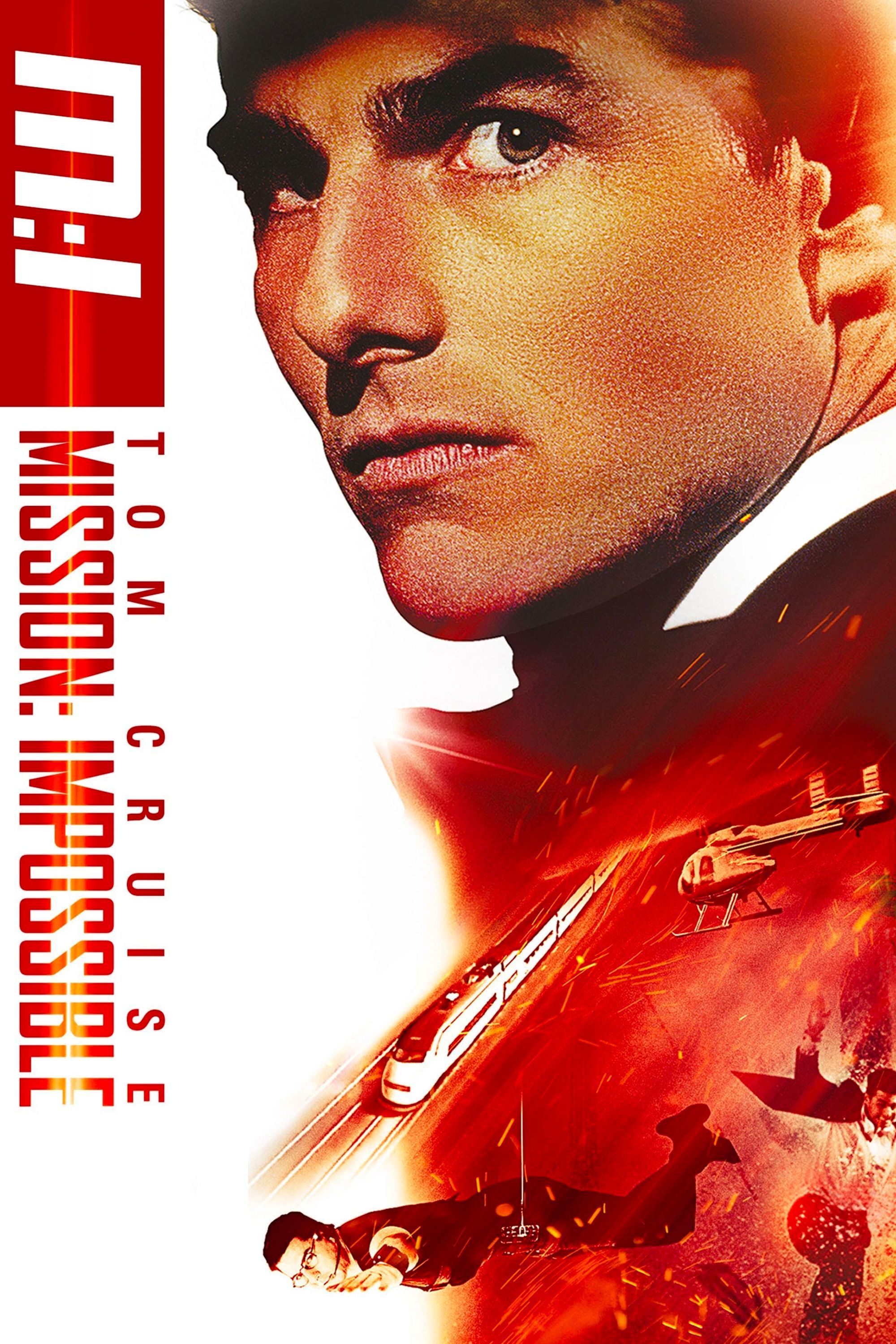
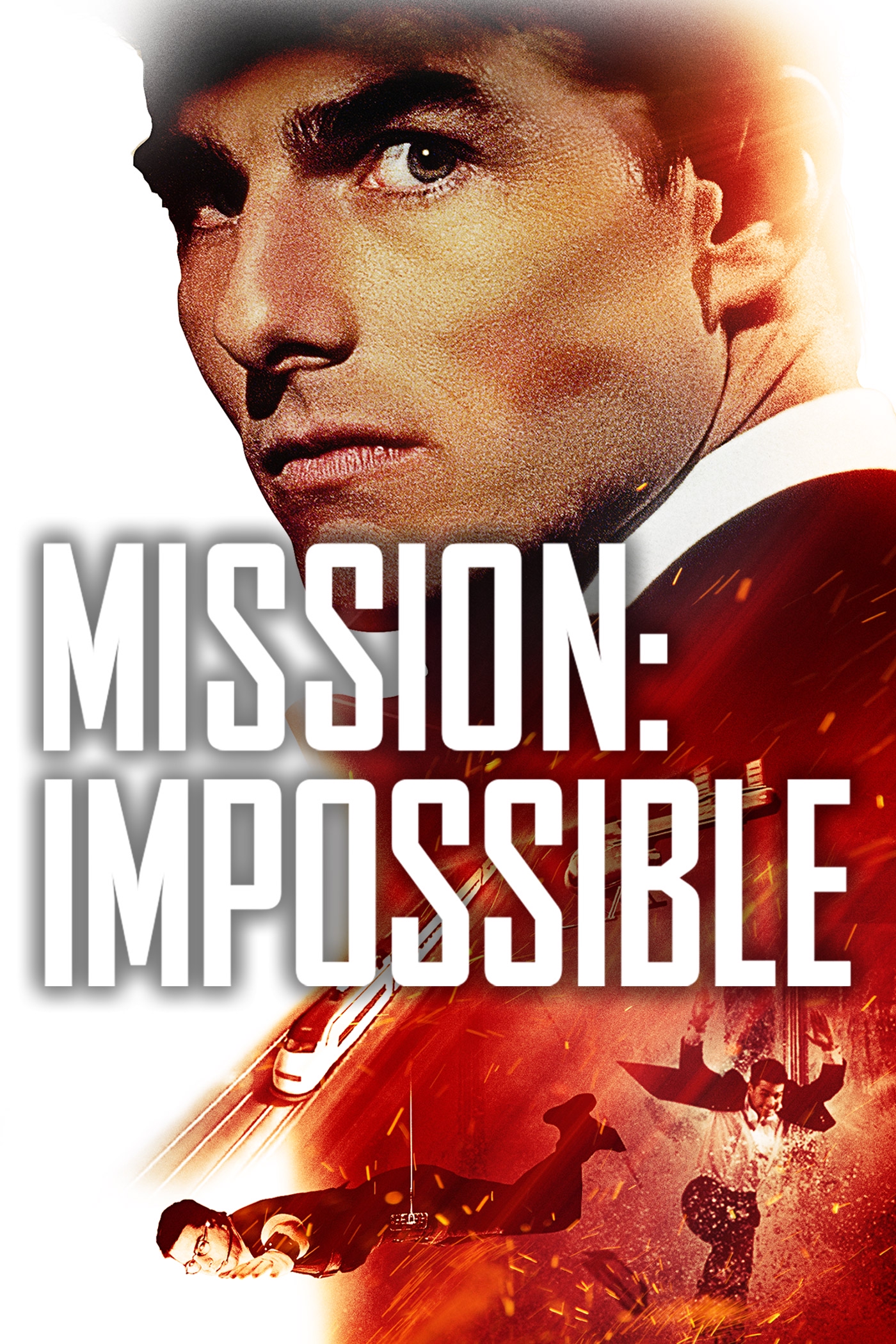
Directed by Brian De Palma, the first film serves as a bridge between the classic 1960s television series and the modern action blockbuster. In this installment, Ethan Hunt is framed for the murder of his entire IMF team during a botched mission in Prague. The story focuses on Hunt's desperate attempt to clear his name while uncovering a mole within the highest levels of the CIA.
This film is notable for its heavy emphasis on suspense and "the heist" rather than explosive action. The sequence in which Hunt hangs from the ceiling of a high-security vault in Langley remains one of the most iconic moments in cinema history. It establishes the "rules" of the IMF world: masks, voice modulators, and the concept of being "disavowed" if captured or killed.
2. Mission: Impossible 2 (2000)
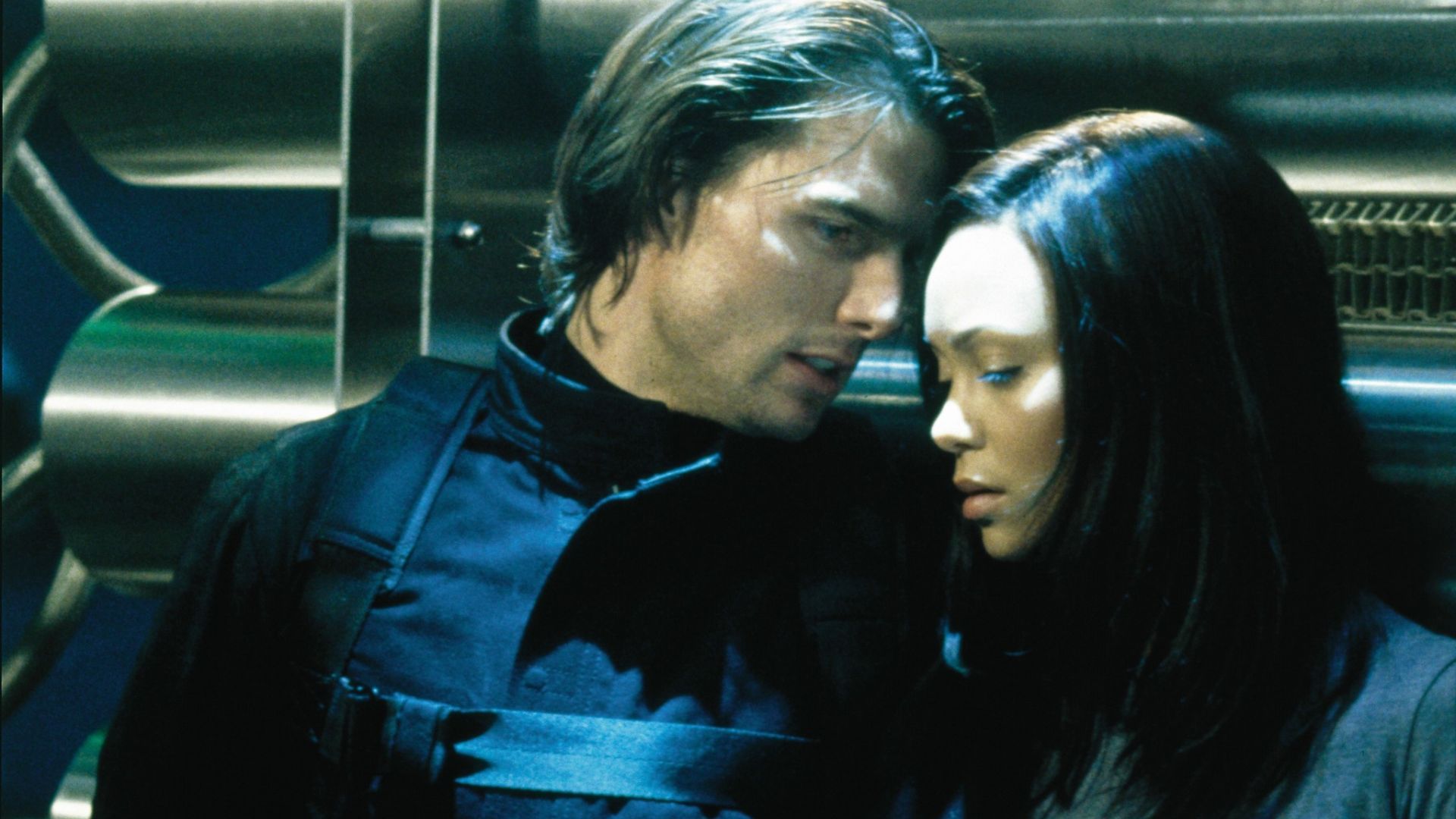
The second entry, directed by John Woo, represents a significant stylistic shift. This film leans into the "heroic bloodshed" aesthetic common in Hong Kong cinema, featuring stylized slow-motion, dual-wielding pistols, and elaborate motorcycle chases. The plot involves a rogue IMF agent, Sean Ambrose, who steals a deadly manufactured virus known as Chimera.
Ethan Hunt is tasked with recruiting a professional thief, Nyah Nordoff-Hall, to infiltrate Ambrose's inner circle. While often criticized for being the "outlier" in terms of tone, M:I 2 is a crucial piece of the chronological puzzle as it demonstrates Ethan's transition from a team operative to a legendary "super-spy" capable of world-altering feats.
3. Mission: Impossible III (2006)
J.J. Abrams took the helm for the third film, which is credited with grounding the franchise. For the first time, we see Ethan Hunt attempting to have a "normal" life. He is engaged to Julia Meade, a nurse who is unaware of his true profession. The primary antagonist, Owen Davian (portrayed by Philip Seymour Hoffman), remains one of the most chilling villains in the series.
The film introduces the "Rabbit's Foot," a mysterious MacGuffin that drives the plot, but the real focus is on the vulnerability of the IMF team. It also introduces Benji Dunn (Simon Pegg), who evolves from a technician into a field agent and becomes a core member of the franchise for the next two decades.
4. Mission: Impossible – Ghost Protocol (2011)
Directed by Brad Bird, Ghost Protocol revitalized the franchise by emphasizing the "team" dynamic over the "lone wolf" approach. After the Kremlin is bombed and the IMF is blamed, the President initiates "Ghost Protocol," effectively shutting down the agency. Ethan and a skeleton crew—including Jane Carter and William Brandt—must go rogue to stop a nuclear extremist.
This film escalated the series' reputation for death-defying stunts. The sequence featuring Hunt climbing the Burj Khalifa in Dubai became a global sensation. Chronologically, this film marks the point where the IMF begins to operate with more advanced, albeit often malfunctioning, technology, adding a layer of tension and humor that would define future installments.
5. Mission: Impossible – Rogue Nation (2015)
The fifth film began the long-standing collaboration between Tom Cruise and director Christopher McQuarrie. It introduces The Syndicate, a "Rogue Nation" of former intelligence officers from various countries who aim to destabilize the world order. This film also introduces Ilsa Faust (Rebecca Ferguson), a double agent whose loyalty remains a central mystery throughout the story.
Rogue Nation is pivotal because it moves away from the standalone mission structure. The threat of Solomon Lane and the Syndicate creates a narrative thread that carries directly into the subsequent films. The film's opening stunt, involving Ethan Hunt hanging onto the side of an A400M cargo plane during takeoff, set a new benchmark for practical effects in the 21st century.
6. Mission: Impossible – Fallout (2018)
Commonly cited as the pinnacle of the franchise, Fallout is a direct sequel to Rogue Nation. The remnants of the Syndicate, now calling themselves The Apostles, plan to use stolen plutonium cores to trigger a global catastrophe. Ethan Hunt must deal with the fallout of his past decisions, including the reappearance of Solomon Lane and his ex-wife, Julia.
The film is a masterclass in pacing and stunt work, featuring a high-altitude low-opening (HALO) jump and a helicopter chase in the mountains of Kashmir. From a chronological perspective, Fallout completes Ethan’s emotional arc regarding his past and solidifies the IMF team (Benji, Luther, and Ilsa) as a surrogate family.
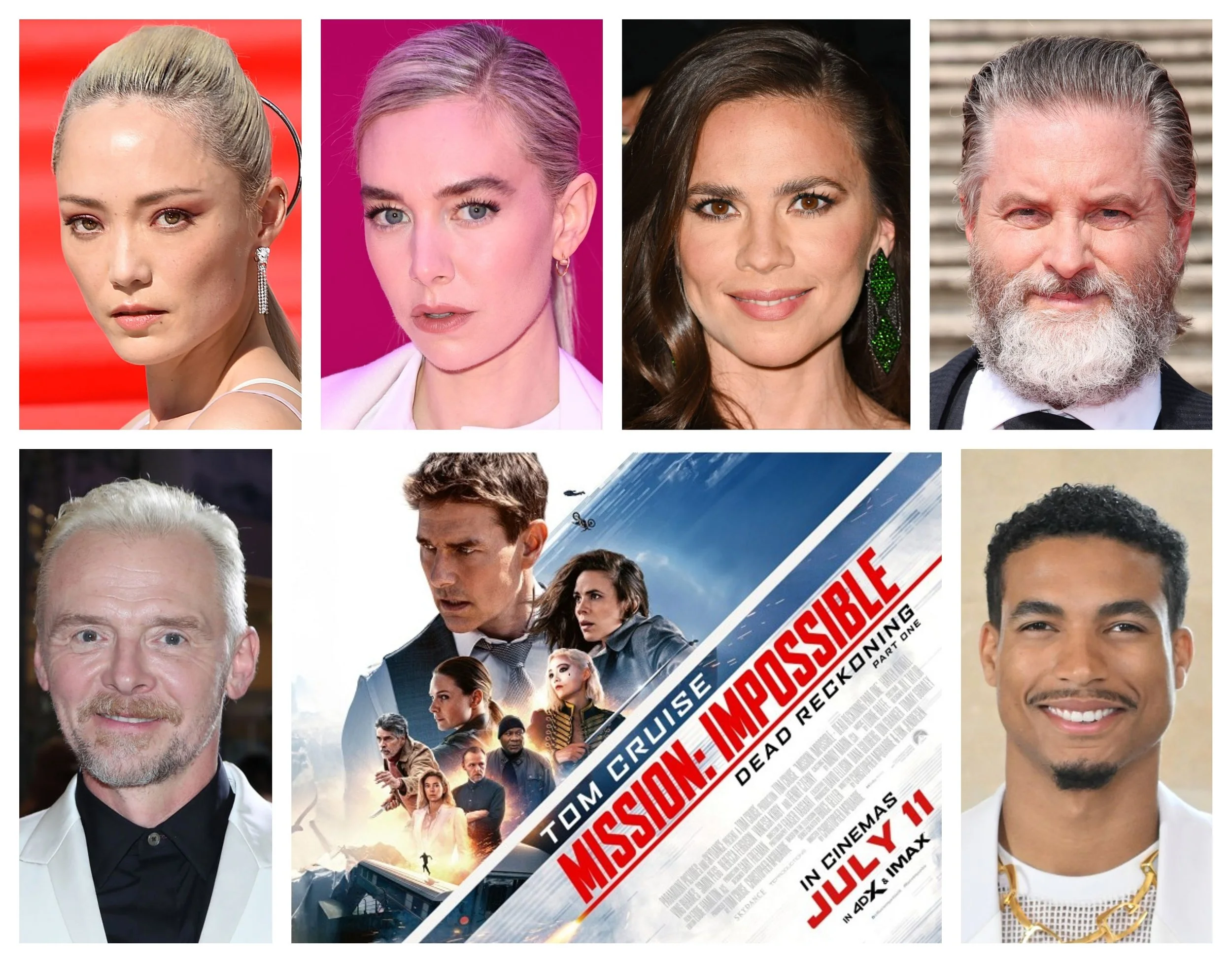
7. Mission: Impossible – Dead Reckoning (2023)
Originally released with "Part One" in its title, this film pits the IMF against a non-human threat: a sentient Artificial Intelligence known as The Entity. The Entity has the power to manipulate digital networks, predict human behavior, and erase itself from any surveillance system. Ethan realizes that traditional spy craft is the only way to fight a digital god.
The film introduces Gabriel, a figure from Ethan’s pre-IMF past, and takes the team across Rome, Venice, and the Orient Express. The stakes are shifted from physical destruction to the control of "truth" itself. The film ends on a cliffhanger, leading directly into the events of the eighth film.
8. Mission: Impossible – The Final Reckoning (2025)
Released in May 2025, this film serves as the definitive conclusion to the conflict with The Entity and Gabriel. Picking up immediately where the previous film left off, Ethan Hunt searches for the sunken Russian submarine Sevastopol, which holds the source code and the physical "heart" of the AI.
In the context of 2026, this film is recognized as the grand finale of the "McQuarrie Era." It resolves the long-standing questions about Ethan's origin and the true purpose of the IMF. The film leans heavily on the themes of human intuition versus algorithmic coldness, providing a timely commentary on the role of technology in society.
The Evolution of the IMF Team
A key component of watching these films in order is observing the growth of the supporting cast. While Ethan Hunt is the central figure, the franchise is defined by the chemistry of the recurring IMF operatives.
- Luther Stickell (Ving Rhames): The only character other than Ethan to appear in every single film. He begins as a disavowed hacker and ends as Ethan’s closest confidant and moral compass.
- Benji Dunn (Simon Pegg): Introduced in M:I III as a lab-bound technician, he becomes a full field agent by Ghost Protocol. His evolution reflects the audience's journey into the increasingly dangerous world of the IMF.
- Ilsa Faust (Rebecca Ferguson): Introduced in Rogue Nation, she provides a foil to Ethan—someone just as capable but forced to operate in the shadows of the British Secret Intelligence Service.
Why Chronological Order Matters for the Later Films
While you can technically watch the first three films in any order without much confusion, the sequence from Ghost Protocol to The Final Reckoning is highly serialized. Character motivations, such as the relationship between Ethan and the CIA directors (played by Alec Baldwin, Angela Bassett, and Henry Czerny), depend on the viewer's knowledge of previous events. Furthermore, the emotional weight of the final two films relies heavily on the "Found Family" dynamic established over the preceding decades.
For more information on the production history and official casting of the franchise, you can visit the official Paramount Pictures Mission: Impossible site.
Frequently Asked Questions
Do I need to watch the original 1960s TV show first?
No, the films are a reimagining rather than a direct continuation. While the first film uses the name of the show's lead character, Jim Phelps, it takes the story in a completely new direction. The films stand alone as their own distinct universe.
Is "Dead Reckoning" two separate movies?
Yes. Although the title of the 2025 film was eventually modified to The Final Reckoning, it is the direct narrative conclusion to the events started in the 2023 film. They are essentially one long story split into two parts due to the massive scale of the production.
Which Mission: Impossible film has the most stunts?
While each film attempts to outdo the previous one, Mission: Impossible – Fallout is often cited as having the highest volume of practical stunts performed by Tom Cruise, including the HALO jump, the Parisian motorcycle chase, and the helicopter pilot sequence.
Are there any spin-offs or prequels in the timeline?
As of 2026, there are no live-action prequels or spin-offs. The timeline is a single, straight line following Ethan Hunt's career from 1996 to 2025.
Why did the director change so often in the beginning?
Originally, the franchise was designed to have a different "visionary" director for each installment to give every film a unique aesthetic. This changed when Christopher McQuarrie took over for the fifth film, bringing a consistent visual and narrative style to the remainder of the series.
Recommended Next Action
For the best experience, start with the 1996 original to understand the foundation of the agency, but pay close attention starting with Ghost Protocol. If you are short on time, watching the "McQuarrie Trilogy" (Rogue Nation, Fallout, and the two-part Reckoning saga) provides the most cohesive and modern narrative experience in the franchise.
Image Gallery